
Snake plant watering is one of the most misunderstood parts of caring for this popular houseplant. Most beginners assume that because snake plants are tough and drought-tolerant, they can be watered on any schedule without much thought. The truth is that watering mistakes, especially overwatering, are the number one reason snake plants decline or die indoors.
The good news is that once you understand how snake plants actually absorb and use water, getting it right becomes straightforward. This guide covers everything you need to know about snake plant watering needs, from how often to water to how to read the signs your plant is sending you.
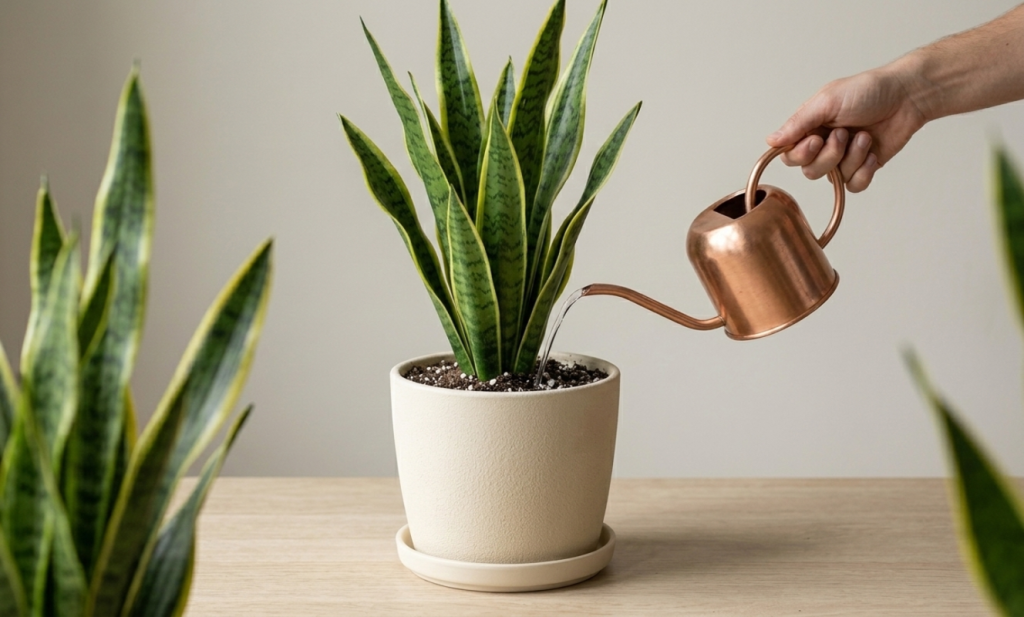
Understanding Snake Plant Watering Needs
Snake plants (Dracaena trifasciata, formerly Sansevieria) are succulents. Their thick, sword-shaped leaves store water, which means they can tolerate periods of drought far better than most houseplants. This storage ability is what makes them so forgiving, but it also makes it easy to give them too much water before they need it.
The roots of a snake plant are sensitive to sitting in wet soil for extended periods. When water does not drain properly or the soil stays damp for too long, root rot sets in quickly. Unlike plants that will bounce back from a soggy pot, a snake plant with advanced root rot rarely recovers fully.
Understanding this storage system is the foundation of good snake plant watering. The goal is not to keep the soil moist. Water deeply, then let the soil dry out almost completely before watering again.
Snake Plant Watering Frequency: How Often Is Often Enough?
There is no single watering schedule that works for every snake plant in every home. Snake plant watering frequency depends on several factors: pot size, soil type, season, humidity, and light exposure. What works in a sunny apartment in summer will not work in a dim room in January.
As a general starting point:
- In spring and summer (active growing season): water every 2 to 4 weeks
- In fall and winter (dormant season): water every 6 to 8 weeks, or even less
These ranges might feel wide, and that is intentional. The actual frequency should always be guided by what the soil tells you, not by a fixed date on a calendar. Many plant owners get into trouble by sticking rigidly to a weekly or bi-weekly schedule regardless of conditions.
Seasonal Snake Plant Watering Schedule
Snake plants slow down significantly in winter. Growth nearly stops, and the plant uses very little water. Continuing to water at a spring or summer frequency during colder months is a fast track to root rot.
Spring and Summer
This is when your snake plant is most active. Longer daylight hours and warmer temperatures mean the plant is growing and using water more consistently. Check the soil every 1 to 2 weeks, and water when the top 2 to 3 inches feel completely dry. In very warm or bright conditions, this might mean watering every 2 weeks. In a shadier or cooler spot, it might be closer to 3 to 4 weeks.
Fall and Winter
Reduce watering significantly as temperatures drop and daylight shortens. The soil will take much longer to dry out, so stretching intervals to 6 to 8 weeks is appropriate. Some snake plants in cool, low-light locations may only need watering once every couple of months through winter. Always check the soil before watering and never water on a schedule alone during this period.
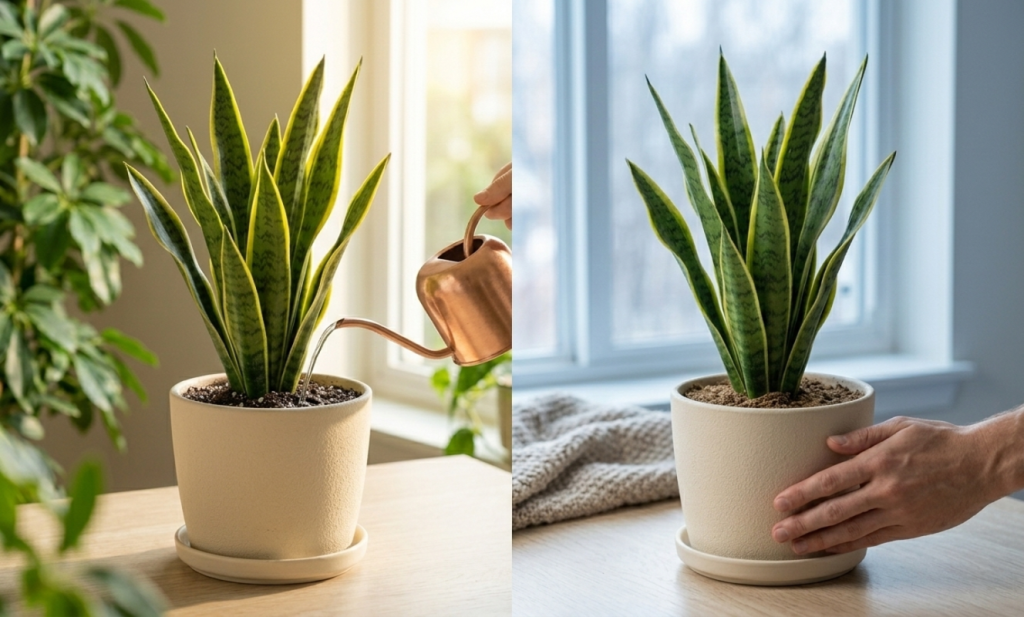
How to Check Soil Moisture Before Watering
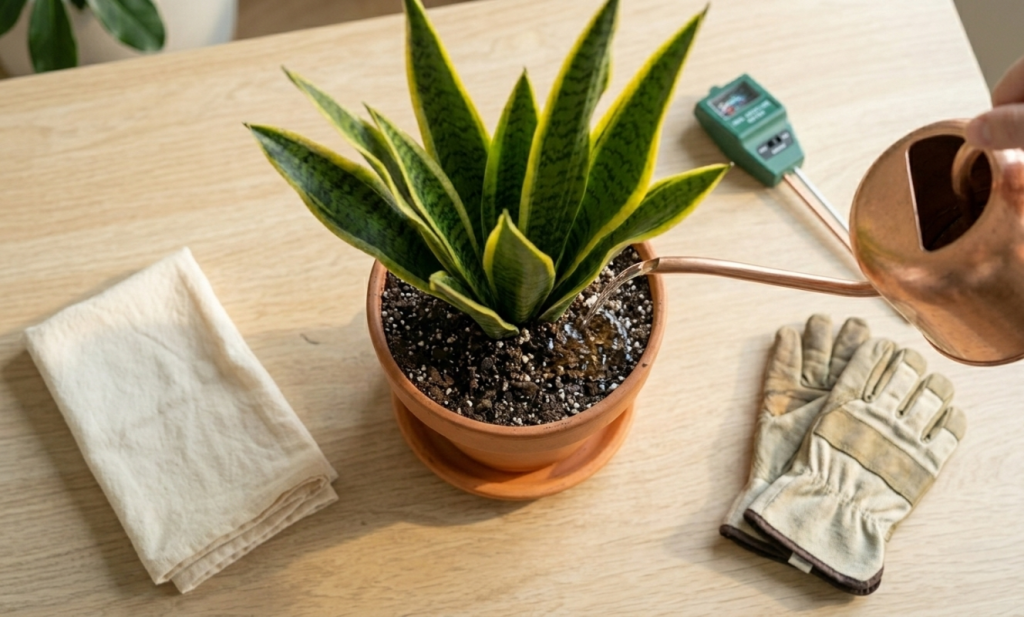
The simplest and most reliable method is the finger test. Push your finger 2 to 3 inches into the soil. If you feel any moisture at that depth, wait. If the soil feels completely dry, almost like dry sand, it is time to water.
For deeper pots, a wooden skewer or chopstick works well. Insert it to the bottom of the pot, leave it for 30 seconds, and pull it out. If soil sticks to it and the wood looks damp, the deeper layers still hold moisture. If it comes out clean and dry, watering is appropriate.
A moisture meter is another useful tool, especially for beginners who are not confident judging soil moisture by feel. A reading of 1 to 2 (dry) is the right time to water. Anything above 3 to 4 means the plant can wait.
Snake Plant Watering Guide: How to Water Correctly
How you water matters as much as when you water. Here is a step-by-step approach that works consistently:
- Water slowly and thoroughly. Pour water evenly across the surface of the soil until it drains freely from the bottom drainage holes.
- Allow all excess water to drain completely. Never let the pot sit in a saucer of standing water for more than 30 minutes.
- Empty the saucer after watering. Water pooling under the pot keeps the bottom of the soil wet and creates the conditions root rot thrives in.
- Use room temperature water. Cold water can stress tropical plants, so let tap water sit for an hour if it is very cold.
- Water the soil directly, not the leaves. Getting water inside the rosette of leaves can cause rot, especially at the base of the plant.
The goal of thorough watering is to wet the entire root zone evenly so the plant can absorb what it needs. Shallow watering, meaning just wetting the top inch of soil, encourages shallow root growth and does not serve the plant well.
How Pot Size and Drainage Affect Your Watering Schedule
A snake plant in a large pot will take much longer to dry out than the same plant in a smaller pot. More soil volume holds more moisture, which means a larger pot effectively reduces how often you need to water. This also increases the risk of root rot if the plant’s roots are not large enough to use the water available to them.
Choose a pot that is only slightly larger than the root ball, roughly 1 to 2 inches wider in diameter. This prevents excess moist soil sitting unused around the roots.
Drainage holes are non-negotiable. A snake plant in a pot without drainage will almost certainly develop root rot, no matter how carefully you water. If you love the look of a decorative pot without holes, use it as a cachepot. Place the plant in a plain nursery pot inside the decorative one and remove it to water.
How Humidity and Indoor Climate Affect Snake Plant Watering
Indoor humidity levels influence how quickly soil dries out. In a humid environment, such as a bathroom or during summer in a humid climate, soil stays moist longer, so you will naturally water less often. In dry indoor conditions, especially during winter when central heating reduces humidity, soil dries faster and you may water slightly more frequently than expected.
Temperature also plays a role. A snake plant near a heat vent or in a particularly warm room will use water more quickly than one in a cooler spot. Similarly, plants sitting in direct sun will dry out faster than those in indirect light.
Adjust based on what you observe, not just the calendar. If the soil is still moist at your usual check-in point, simply wait and check again in a few days.
Signs of Overwatering in Snake Plants
Overwatering is by far the more common problem with snake plants. Watch for these warning signs:
- Soft, mushy leaves, especially near the base of the plant
- Yellowing leaves, often starting with the lower or outer leaves
- Leaves that feel soggy or collapse easily when pressed
- A foul or musty smell from the soil
- Brown, soft roots when you check the root ball (healthy roots are firm and white to tan)
If you catch overwatering early, before root rot has set in, let the soil dry out completely and reduce your watering frequency. If roots are already mushy and dark, you will need to unpot the plant, cut away the rotted roots, and repot in fresh, dry soil.
Signs of Underwatering in Snake Plants
Underwatering is less common but does happen. Signs include:
- Wrinkling or puckering leaves, as the stored water inside the leaves is being depleted
- Curling or rolling leaves, since leaves curl inward to reduce moisture loss
- Dry, crispy leaf tips
- Soil that is pulling away from the sides of the pot and becoming hydrophobic
If soil has become extremely dry and hydrophobic, it may repel water rather than absorbing it. In this case, bottom watering works well. Place the pot in a basin of water for 20 to 30 minutes, allowing the soil to reabsorb moisture from the bottom up slowly. Then drain thoroughly.
Snake Plant Watering by Season
| Season | Watering Frequency | Soil Condition to Water | Signs to Watch For |
|---|---|---|---|
| Spring | Every 2 to 4 weeks | Top 2 to 3 inches fully dry | Soil drying faster as temps rise |
| Summer | Every 2 to 3 weeks | Top 2 to 3 inches fully dry | Watch for faster drying in bright spots |
| Fall | Every 4 to 6 weeks | Soil mostly dry throughout | Begin reducing frequency as light drops |
| Winter | Every 6 to 8 weeks | Completely dry throughout | Risk of overwatering is highest |
Common Snake Plant Watering Mistakes to Avoid
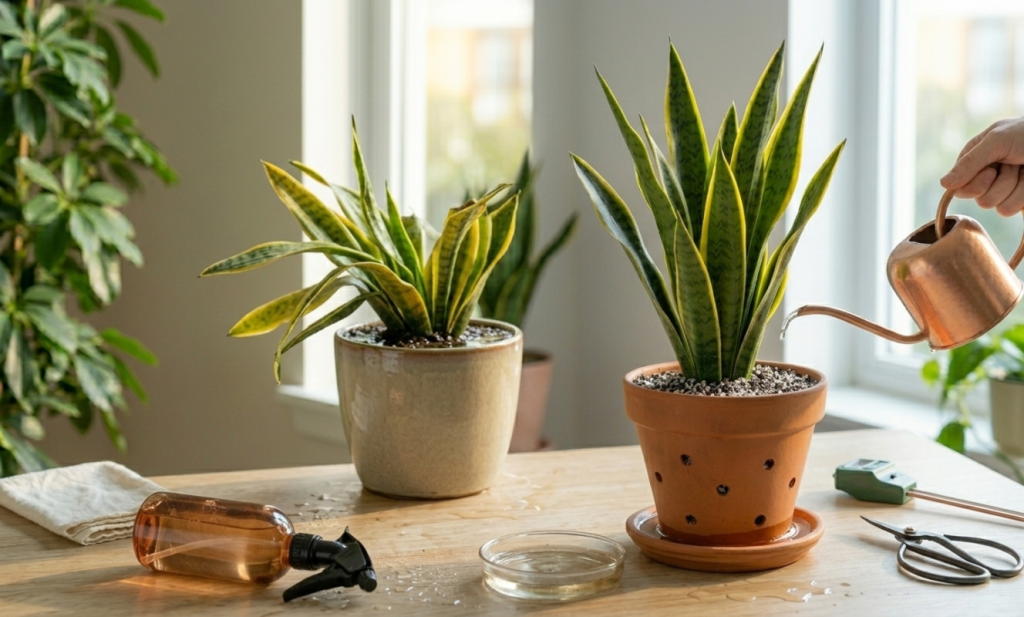
Watering on a fixed schedule. Marking “water snake plant” on the calendar and sticking to it regardless of soil condition is one of the most common errors. Always let the soil, not the calendar, guide you.
Using pots without drainage. No amount of careful watering can compensate for a pot with no way for excess water to escape. Always use pots with drainage holes.
Misting the leaves. Snake plants do not benefit from misting. It adds minimal humidity and can promote fungal issues on the leaves. Water the soil instead.
Watering the same amount year-round. Seasonal adjustment is essential. Continuing summer watering habits into winter is a guaranteed path to overwatering.
Assuming a little water often is safe. Frequent small amounts of water keep the top inch of soil perpetually moist, which is exactly the condition that invites root rot. It is better to water deeply and infrequently.
Frequently Asked Questions About Snake Plant Watering
Check the soil by pushing your finger 2 to 3 inches deep. If it feels completely dry, it is time to water. If there is any moisture, wait a few more days and check again. Wrinkling or softening leaves can also signal that the plant needs water.
For most indoor conditions, once a week is too frequent. Snake plants prefer infrequent, deep watering followed by a complete dry-out period. Watering weekly without checking soil moisture is a common cause of overwatering and root rot.
Either method works. Top watering is the most practical for routine care, so water thoroughly until it drains from the holes. Bottom watering is especially useful when soil has become very dry and is repelling water from the top. Always drain completely after either method.
Room-temperature tap water works fine for most snake plants. If your tap water is heavily chlorinated, letting it sit in an open container for an hour or two before using it allows the chlorine to dissipate. Some plant owners prefer filtered or rainwater, but it is not required for healthy growth.
Yellowing leaves after watering usually signal overwatering. The most likely cause is watering before the soil had time to dry out, or poor drainage keeping the roots wet. Check the roots. If they are soft or dark, root rot may be present. Allow the soil to dry out completely and reduce your watering frequency going forward.
The Key Takeaways on Snake Plant Watering
Snake plant watering comes down to one simple principle: water deeply, then wait. These plants are built to handle dry conditions between waterings, and the biggest mistake you can make is watering too often.
- Always check soil moisture before watering and never water on a fixed schedule alone
- Water thoroughly so the entire root zone is moistened, then let it drain completely
- Reduce watering frequency significantly in fall and winter
- Use pots with drainage holes, as it is not optional
- Watch for soft, yellowing leaves as a sign of overwatering, and wrinkling leaves as a sign of underwatering
- Adjust for your home’s humidity, light levels, and season
Once you get the rhythm of snake plant watering right, you will find it is one of the most low-maintenance plants you can keep indoors. Master the watering, and the plant will take care of the rest.