
Fiddle leaf figs remain a favorite for their bold presence in homes. These plants need precise attention to stay healthy. I’ve updated this fiddle leaf fig care guide with the latest tips from 2025-2026 sources, covering every essential point without missing a beat. From pests to pruning, it’s all here for thriving indoor growth.
What Is a Fiddle Leaf Fig Plant?
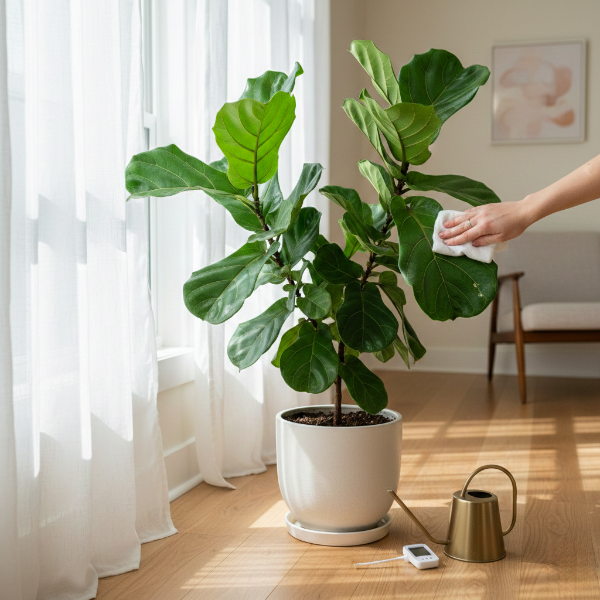
Ficus lyrata, the fiddle leaf fig plant, originates from West Africa’s tropical lowlands. It forms large evergreen trees in the wild, up to 50 feet tall. Indoors, the indoor fiddle leaf fig grows 6-10 feet with proper ficus lyrata care.
Leaves are shaped like violins, 12 inches long, leathery, and glossy green with prominent veins. Growth focuses at the top, slow at first, then accelerating to 12-24 inches per year in ideal spots. It branches sparingly unless pruned.
Fiddle Leaf Fig Care Basics
Follow this numbered list for foolproof daily habits. No point skipped here.
- Light requirements: Bright filtered indirect light, 12 hours daily. East or north windows ideal; sheer curtains for south/west. Rotate weekly to prevent leaning. Limited direct sun, max 2 hours in the morning.
- Watering schedule: Every 1-2 weeks when top 1-2 inches dry. Less in winter. Bottom-water, drain fully. Room-temp filtered water avoids chlorine shock.
- Soil type: Aroid mix: potting soil, coco coir/peat, perlite (1:1:1). pH 6.0-7.0. Premium blends with nutrients reduce early feeding.
- Pot and drainage: Holes essential, terracotta best for airflow. Saucer catches drips. Repot every 2 years, 2 inches larger. Check roots for circling.
- Temperature range: 65-85°F during the day, above 60°F at night. No drafts, AC, or heaters. Consistent warmth prevents shock.
- Humidity levels: 50-60% minimum. Mist daily, pebble tray, or humidifier. Group plants. Low humidity crisps edges.
- Fertilization: 3-1-2 NPK ratio (e.g., 9-3-6), half-strength every 4 weeks spring-fall. Flush soil first. Skip winter. Balanced 10-10-10 pinch-works.
- Pruning and shaping: Trim leggy tips spring with clean shears above node. Wipe leaves weekly for dust. Encourages bushiness.
- Cleaning leaves: Damp cloth monthly. Boosts photosynthesis. Soapy water for pests.
- Propagation: Stem cuttings in water/soil or air layering. Spring best.
- Pest checks: Weekly underside inspection. Neem oil is ready.
- Airflow and ventilation: Gentle fan prevents stagnation.
Ideal Growing Conditions for Healthy Growth
Fiddle leaf figs thrive when you recreate their rainforest home indoors. Filtered canopy light through sheer curtains mimics dappled sun, while high humidity around 60% keeps leaves plump. Use moist but well-draining soil, placing the pot 3-6 feet from windows to avoid harsh rays.
In dimmer rooms, reflective walls or mirrors bounce light effectively. Pebble trays with water boost humidity without mess, and steady 70-80°F temperatures prevent stress. Add gentle fan circulation to mimic breezes and ward off pests.
Grow lights fill any gaps during short winter days. Consistent conditions like these lead to steady, robust growth year after year.
Watering Guide for Fiddle Leaf Fig Care
Check the top inch of soil; if it’s dry, it’s time to water. Summer calls for weekly sessions, easing to biweekly in winter’s slower pace. Leaves shrink from thirst or turn yellow from excess, so always use your finger test.
Overwatering brings mushy stems and a sour rot smell, while underwatering causes wilting and brittle tips. Tweak for seasons: more in heat, less when dormant. Bottom-watering soaks roots evenly; pour out any standing excess after 30 minutes.
Filtered, room-temperature water prevents mineral buildup. This fiddle leaf fig watering approach keeps roots happy and avoids common pitfalls.
Light Requirements Explained
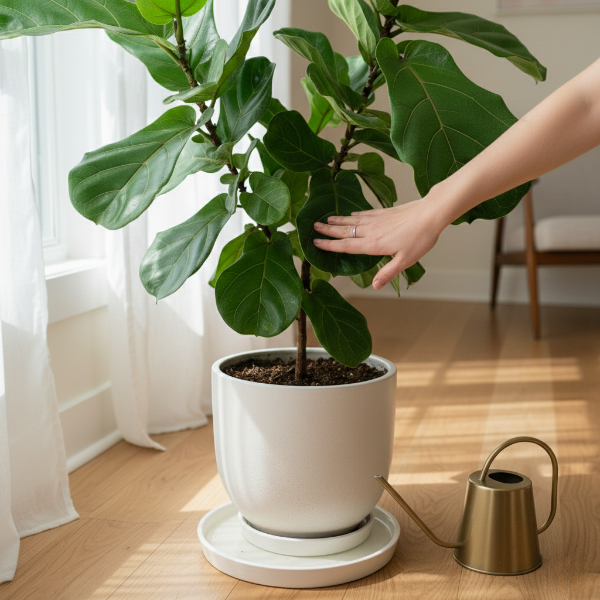
Stick to bright indirect light to prevent white burn patches from direct sun. East-facing windows offer perfect morning glow; north ones provide steady, gentle exposure all day. Rotate the plant every 7 days for even growth on all sides.
Low light shows in leggy, stretched stems and undersized new leaves. Position 3-5 feet from brighter windows or use sheer blinds on south/west exposures. These tweaks ensure full, vibrant foliage.
Supplement with full-spectrum LED grow lights for 12 hours if natural light falls short, especially in apartments. Proper light sets the foundation for healthy fiddle leaf fig care.
Common Problems and Solutions
Act fast on these with proven fixes. Each issue has a clear trigger and fix from years of hands-on experience.
- Brown spots: Fungal or bacterial from wet leaves or poor airflow. Trim affected areas with clean shears, apply neem oil spray, and keep foliage dry by watering from below. Watch for spreading; repeat treatment weekly until clear.
- Drooping leaves: Usually underwatering or sudden cold exposure. Soak the soil thoroughly until water runs out, then move to a warm spot away from drafts. Leaves should perk up within hours; maintain even moisture going forward.
- Yellowing foliage: Overwatering or insufficient light are top culprits. Let soil dry completely, improve brightness with better window placement, and avoid fertilizing until recovery. Lower leaves often drop naturally during adjustment.
- Leaf drop: Stress from repotting, moving, or temperature shifts. Stabilize all conditions (light, water, temp) for at least 4 weeks without changes. New growth at the top signals recovery; be patient.
- Root rot: Soggy soil leads to mushy, black roots. Unpot immediately, rinse roots under water, trim all rot with sterilized scissors, and repot in fresh sterile soil. Hold off watering for a few days to let wounds heal.
- Pest infestations: Mealybugs, aphids, spider mites, or scale hide on undersides. Wipe leaves with soapy water, follow with neem oil weekly for 2-3 weeks, and isolate the plant. Check neighbors to prevent spread.
- Bleached leaves: Direct sunburn from intense light. Install sheer curtains or relocate farther from the window right away. Trim severely damaged leaves; protect new growth to avoid repeat damage.
Fiddle Leaf Fig Care for Beginners
New to fiddle leaf figs? Head to a solid nursery and pick one that has perky, firm leaves, no brown spots or limp vibes. Bring it home and give it two weeks to settle in the same light and warmth as the store. That gentle transition cuts down on the drama of new-plant stress.
Build a quick routine: every week, poke the soil to check dryness, peek under leaves for bugs, and give it a quarter turn. Nail the core stuff first, bright indirect light and water only when that top inch feels dry. Snip any stretched-out tips come spring to coax out more branches.
Grab a notebook or snap weekly photos to log how it’s doing. Notice trends like winter slowdowns early on. Stick with it; these plants bounce back strong when you stay consistent.
Styling Tips for Indoor Spaces
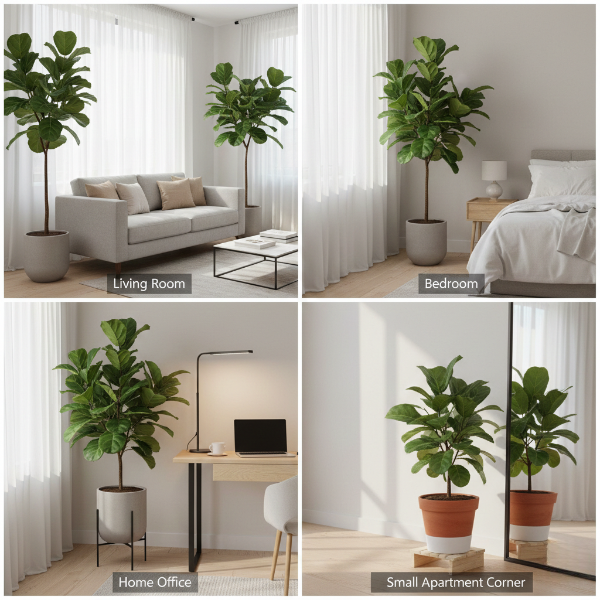
In the living room, place two fiddle leaf figs flanking a sofa for perfect symmetry and scale. They anchor the space without overwhelming, drawing eyes upward for drama.
Bedrooms work best with one in a window corner, at least five feet from the bed to minimize dust. It softens edges and improves air quality during sleep.
Offices benefit from a plant on a stand near your desk, paired with a grow light for consistent glow. It breaks up screens and boosts focus.
Small apartments shine with a mirror-backed corner setup; the reflection doubles light. Use risers to tuck pots under furniture, maximizing tight floors.
Quick Care Summary Table
FAQs
Every 1-2 weeks, top 1-2 inches dry. More in bright light, less winter.
Tolerates briefly but slows growth. Needs bright indirect for health.
12-24 inches/year with optimal care. Faster fertilized spring.
Stress from water/temp changes. Stabilize the environment quickly.
3-1-2 NPK, half-strength monthly growing season.
Conclusion
Fiddle leaf figs transform spaces when you get the care right, think lush, towering greenery that turns heads. This guide covers it all: precise light and watering, quick fixes for brown spots or pests, plus beginner tips and styling wins. Dial in bright indirect light, check soil weekly, and rotate for that full, even shape.
You’ll face tests like leaf drop or slow winter growth, but steady habits win every time. Repot every two years into fresh soil, prune leggy tips in spring, and watch new branches fill out. Propagation from cuttings gives you backups or gifts.
Stick with it, and your plant becomes a low-fuss statement piece. Snap progress pics, tweak for your setup, and soak in that rainforest vibe at home. You’ve got this.