
Winter brings a quiet calm to the garden, but for many plants, December is the perfect time to prune. While most gardeners assume pruning is only for spring, winter pruning offers major benefits, stronger spring growth, better flowering, disease prevention, and improved plant shape.
This detailed guide covers exactly which plants you should prune in December, including regional considerations, pruning techniques, and a month-by-month comparison. Whether you’re a beginner or a seasoned gardener, this guide will help you follow expert-level pruning strategies that boost plant health and garden productivity.
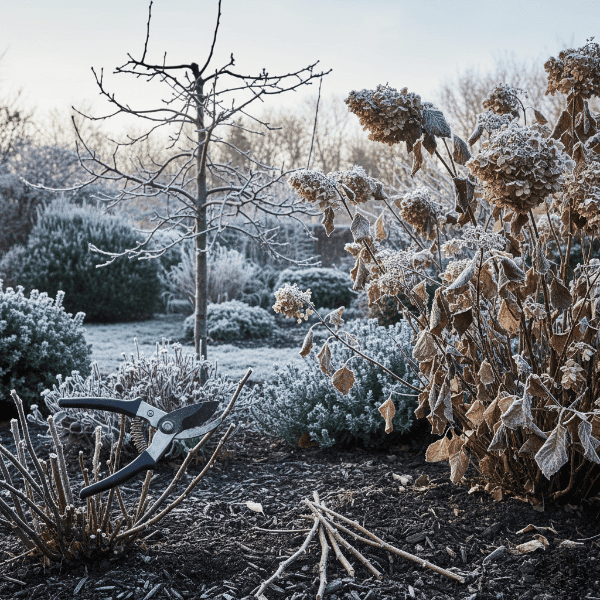
Why December Is a Good Month for Pruning
December pruning is especially useful because:
- Plants are dormant, less stress and faster recovery
- Cuts are cleaner and easier to see (no leaves in the way)
- Prepares shrubs for spring flowering and growth
- Helps control disease and pests
- Encourages stronger structural branches
However, not all plants should be pruned in December. Pruning the wrong plant at the wrong time can reduce next year’s flowers or even shock the plant.
Top Plants to Prune in December (USA Regions Included)
Below is a complete guide to plants that benefit from December pruning. This list is updated for 2025 U.S. garden conditions.
1. Roses (Dormant Pruning in Mild Climates)
Best For: USDA Zones 7–10
In warmer U.S. regions (California, Texas, Florida, Georgia, Carolinas), roses remain semi-active but still benefit from light shaping.
What to prune
- Remove dead, crossing, or damaged canes
- Cut back long stems that may snap in winter winds
- Remove spent flowers and dried hips
- Open the center for airflow
Avoid full hard pruning in December
Full hard pruning should be done in late January–early February.
2. Fruit Trees That Bloom in Late Spring
Best For: Apples, Pears, Persimmons
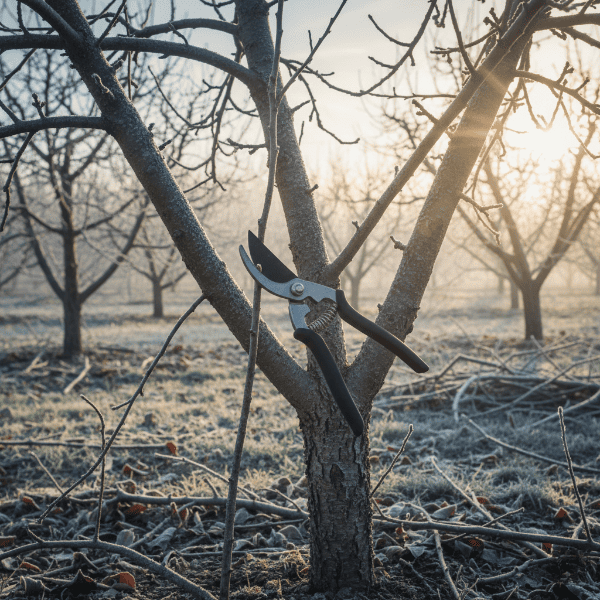
December is a prime month for dormant fruit tree pruning in Zones 6–9.
Why prune now?
- Encourages stronger fruiting wood
- Increases air circulation
- Removes diseased or weak branches
- Improves sunlight penetration
How much to prune
Keep branches growing outward, not inward
Remove about 20–25% of the canopy
Prioritize vertical “water sprouts”
3. Grape Vines
Best For: All U.S. Regions
Grape vines should always be pruned while fully dormant, December is perfect.
How to prune
- Keep only 1–4 main canes depending on your training system
- Remove up to 90% of last year’s growth
- Leave short spurs with 2–3 buds each
Grapes absolutely depend on heavy winter pruning for fruit production.
4. Hydrangeas (Specific Types Only!)
Not all hydrangeas should be pruned in winter.
These types can be pruned in December:
Hydrangeas safe for December pruning
| Hydrangea Type | Scientific Name | Blooms On | Safe to Prune in December? |
|---|---|---|---|
| Panicle Hydrangea | Hydrangea paniculata | New wood | ✔ Yes |
| Smooth Hydrangea | Hydrangea arborescens | New wood | ✔ Yes |
Hydrangeas NOT to prune in December
- Bigleaf hydrangea (H. macrophylla)
- Oakleaf hydrangea (H. quercifolia)
These bloom on old wood, so pruning now removes spring flowers.
5. Shrub Dogwoods (Red Twig Dogwood)
Zones 3–8
December pruning enhances red winter stem color.
What to prune:
- Remove 1/3 of oldest stems
- Keep new young stems (brightest red color)
- Remove weak or damaged branches
6. Deciduous Shrubs That Bloom on New Wood
The following shrubs respond VERY well to December pruning:
Plants to prune now:
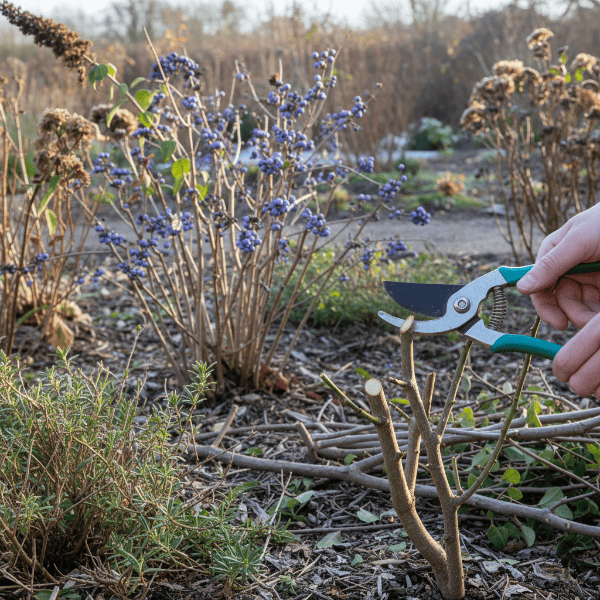
- Butterfly bush (Buddleia)
- Beautyberry (Callicarpa)
- Bluebeard (Caryopteris)
- Potentilla
- Rose of Sharon (light shaping only)
- Hypericum (St. John’s Wort)
Benefits:
- Fewer leggy stems
- More blooms in spring/summer
- Dense, compact growth
7. Ornamental Grasses
Most ornamental grasses go brown in late fall, making December perfect for pruning.
Grasses to cut back:
| Type | Cut-back Height | Notes |
|---|---|---|
| Switchgrass | 4–6 inches | Improves fresh spring growth |
| Miscanthus | 6 inches | Remove dry seed heads |
| Fountain Grass | 3–6 inches | Helps prevent rot |
| Little Bluestem | 4 inches | Stronger spring shoots |
8. Perennials That Die Back Completely
Many perennials go dormant and should be cut to the ground in December.
Prune these in December:
- Hostas
- Daylilies
- Peonies (cut to the soil level)
- Black-eyed Susans
- Coneflowers
- Bee Balm (helps reduce mildew)
Benefits:
- Removes pest and disease hiding spots
- Prevents fungal issues
- Encourages healthier spring growth
9. Evergreen Shrubs (Light Shaping Only)
Safe in December:
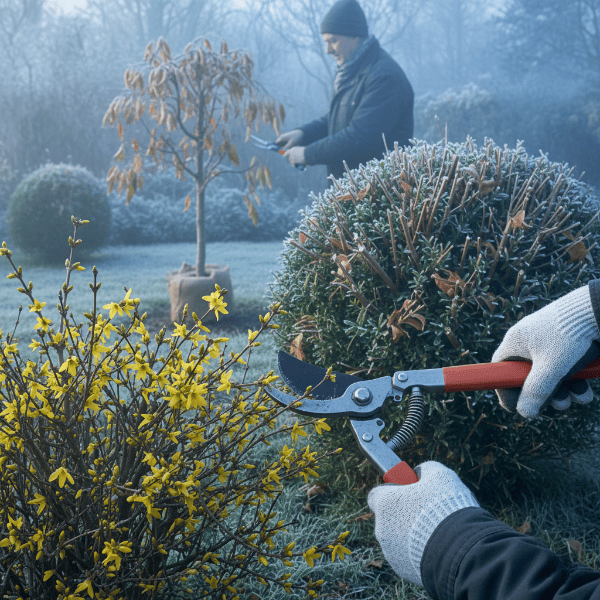
- Boxwood
- Holly (remove berries before pruning)
- Junipers
- Arborvitae (light shaping only)
Important:
Do not cut deep into old wood, evergreens don’t regrow from brown stems.
10. Trees for Structural Shaping
December is good for:
- Maple
- Oak
- Elm
- Crape Myrtle (remove deadwood ONLY!)
- Birch
- Redbud
Benefits of pruning trees now
- Reduces storm damage
- Encourages a strong spring canopy
- Makes structural pruning easier without leaves
USA Region-Specific Pruning Guide for December
Northern USA (Zones 3–6)
Plants that can be safely pruned:
- Apple and pear trees
- Dogwoods
- Grape vines
- Hydrangea paniculata
- Dormant perennials
- Hardy rose varieties
Avoid pruning tender plants, they may suffer winter damage.
Southern USA (Zones 7–10)

Plants safe for December pruning:
- Roses (light prune)
- Fruit trees
- Citrus (only remove dead/diseased wood)
- Tropical shrubs (light shaping)
- Ornamental grasses
- Summer-flowering shrubs
In warm regions, winter pruning boosts long growing-season performance.
Table: Plants You Should NOT Prune in December
| Plant | Reason | When to Prune Instead |
|---|---|---|
| Spring-flowering shrubs (Azalea, Lilac, Forsythia) | Bloom on old wood | Just after flowering (May–June) |
| Bigleaf Hydrangea | Buds form in late summer | Only prune dead wood in spring |
| Rhododendron | Late-winter frost damage risk | After blooming |
| Camellia | Cuts remove winter flower buds | After flowering |
| Lavender | Can winter-kill if pruned now | Early spring |
How to Prune Plants in December (Step-by-Step)
Step 1: Use Proper Tools
You will need:
- Bypass hand pruners
- Loppers
- Pruning saw
- Disinfectant spray
- Gloves
- Safety glasses
Sanitize tools between cuts to prevent disease spread.
Step 2: Remove the 3 D’s
Always prune:
- Dead branches
- Damaged branches
- Diseased branches
This alone improves plant health dramatically.
Step 3: Open the Center
For shrubs and fruit trees:
- Improve airflow
- Reduce fungal disease
- Help sunlight reach new growth
Step 4: Shape the Plant
Follow natural growth habits:
- Roses → Vase shape
- Fruit trees → Open center or central leader
- Shrubs → Rounded but not “meatball shaped”
December Pruning Benefits for USA Gardens
- Earlier spring growth
- More flowers and fruits
- Stronger plant structure
- Reduced pests and diseases
- Better air and light circulation
- A cleaner winter garden appearance
Common December Pruning Mistakes
Avoid these mistakes to protect next season’s growth:
- Pruning spring-bloomers
- You’ll remove next year’s flower buds.
- Cutting evergreens too deeply
- They may never grow back.
- Heavy pruning during a freeze
- Cuts may not heal properly.
- Pruning stressed or newly planted shrubs
- Let them establish first.
FAQs: Plants to Prune in December
No. December is one of the best months for pruning dormant plants, especially fruit trees, grapes, deciduous shrubs, and roses (in warm regions).
Yes, but only light shaping if you live in Zones 7–10. Hard pruning should wait until late winter.
Yes. It’s ideal for apples, pears, plums, and persimmons. Avoid pruning peaches until early spring to prevent disease.
You can prune during cold weather, but avoid cutting on the exact day of heavy frost or freezing rain.
Yes, especially hostas, peonies, coneflowers, and daylilies. Cut them to the ground to remove pests hiding in dead foliage.
Yes.
Northern states → Prune hardy trees and shrubs.
Southern states → Light prune roses and tropical shrubs.
Final Thoughts
Pruning in December is one of the smartest ways to prepare your garden for a successful spring. By focusing on plants that thrive with dormant pruning, like fruit trees, grapes, roses (in warm regions), perennials, and certain shrubs, you set the foundation for healthier growth, bigger blooms, and a more beautiful garden in 2025.