
Most “easy plant” lists are written by people who have never killed anything in their lives, and they show. They recommend plants as easy that actually need specific humidity, filtered water, bright indirect light, or a consistent watering schedule to look halfway decent. That kind of advice sends beginners home with a plant that looks sad within three weeks and convinces them they cannot grow anything. The easiest indoor plants are not the ones that look prettiest in a blog photo. They are the ones that survive irregular watering, imperfect light, average indoor humidity, and the occasional week when you completely forget about them. This list is that list.
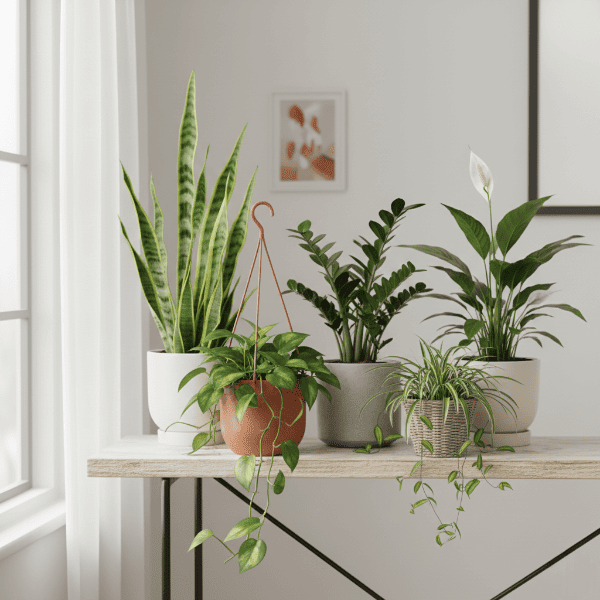
What Makes a Plant Truly Easy to Grow Indoors
Before getting into the actual picks, it helps to understand what separates the genuinely easiest indoor plants from the ones that just get labeled easy in passing. A truly low-maintenance plant meets at least four of these five criteria:
- Tolerates a range of light conditions, including low light
- Does not die if you miss a watering by several days
- Grows in standard potting mix without special amendments
- Does not demand high humidity or misting to stay healthy
- Recovers visibly and quickly from beginner mistakes
No plant is completely indestructible. But the plants on this list come close to that description, and each one has either been tested in my own home or recommended consistently to beginners with reliably good results.
Tier 1: The Truly Unkillable – Start Here If You Have Never Grown a Plant
These are the easiest indoor plants on earth for beginners. They tolerate neglect, low light, irregular watering, and almost every common beginner mistake without holding a grudge.
1. Snake Plant (Dracaena trifasciata)
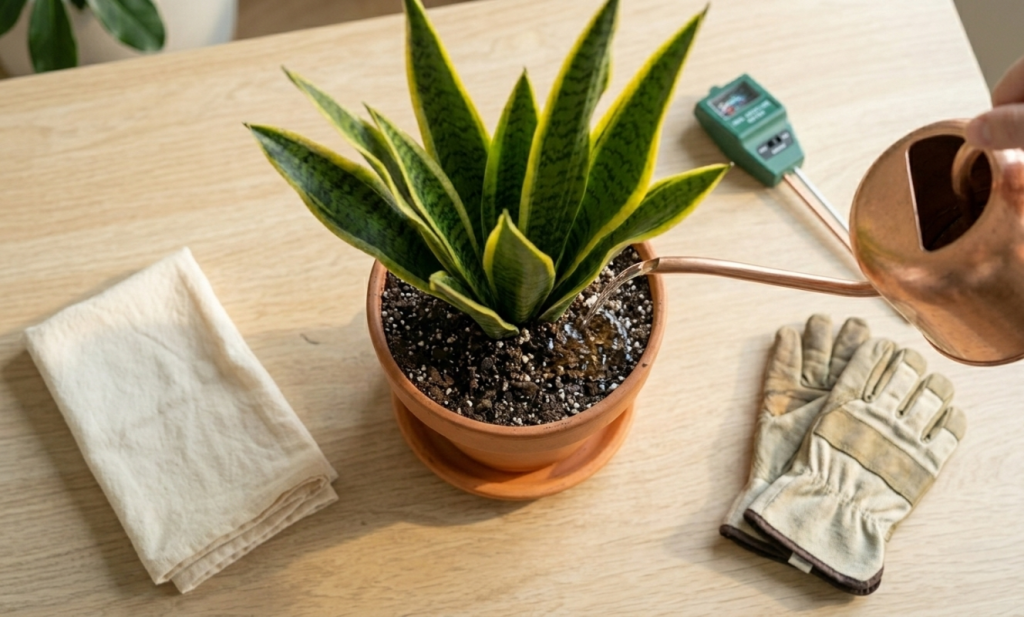
The snake plant is the single most recommended plant for beginners, and the reputation is fully earned. I have kept one in a bathroom with almost no natural light for fourteen months. It looked exactly the same at the end as it did at the beginning: upright, dark green, completely unbothered.
| Care Factor | Requirement |
|---|---|
| Light | Low to bright indirect tolerates near darkness |
| Water | Every 2-6 weeks depending on season |
| Humidity | Not needed average indoor air is fine |
| Soil | Well-draining; add perlite to standard mix |
| Pet Safe? | No toxic to cats and dogs (ASPCA) |
Who should grow this: Anyone who has killed plants before and needs a confidence-builder. Office workers who want a desk plant that survives weekends and vacations without special care.
For a full breakdown of watering frequency by season and common yellowing causes, our guide on snake plant care covers every detail you need.
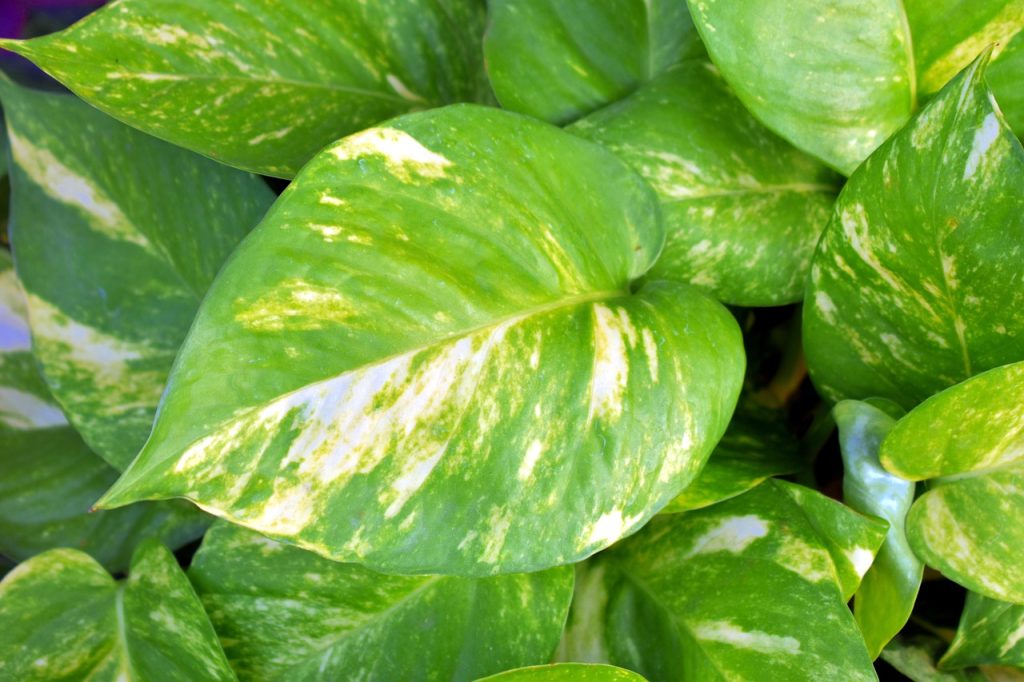
2. Pothos (Epipremnum aureum)
Pothos is the plant that turns beginners into plant parents. It grows fast enough to show visible progress week to week, it trails beautifully from a shelf or hangs in a basket, and it communicates clearly when it is thirsty by wilting slightly, then perking right back up after a good drink. Among the easiest indoor plants available at any price point, pothos is arguably the most rewarding for the effort it takes.
| Care Factor | Requirement |
|---|---|
| Light | Low to bright indirect |
| Water | Every 7-10 days in summer, 12-14 in winter |
| Humidity | Not needed |
| Soil | Standard potting mix |
| Pet Safe? | No toxic to cats and dogs (ASPCA) |
Who should grow this: Anyone who wants to see fast growth and learn basic plant care habits in real time. Great for trailing over bookshelves or in hanging baskets.
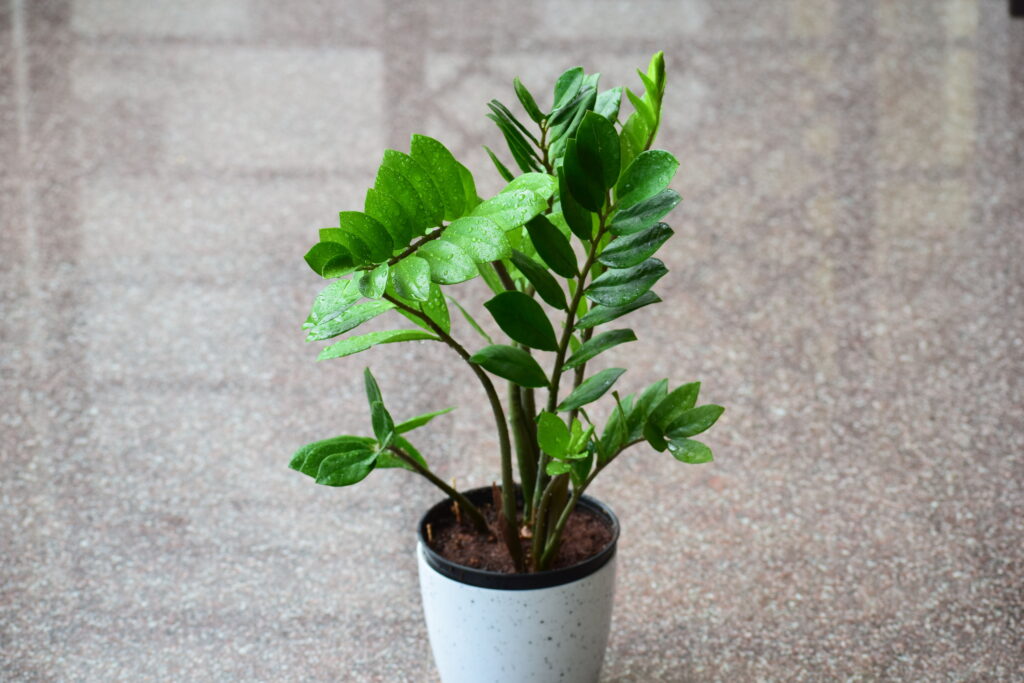
3. ZZ Plant (Zamioculcas zamiifolia)
The ZZ plant stores water in its thick rhizomes underground, which means it can go weeks without watering and barely notices. The leaves are dark, glossy, and stay looking good in a wide range of light conditions. It is one of the easiest indoor plants for rooms that do not get much natural light, which makes it popular for offices, hallways, and north-facing rooms.
| Care Factor | Requirement |
|---|---|
| Light | Low to medium indirect |
| Water | Every 2-4 weeks |
| Humidity | Not needed |
| Soil | Well-draining mix |
| Pet Safe? | No toxic to cats and dogs (ASPCA) |
Who should grow this: Anyone who travels frequently or has a notoriously dark room. The ZZ is one of the few plants that genuinely does well in low light without compromising its appearance.
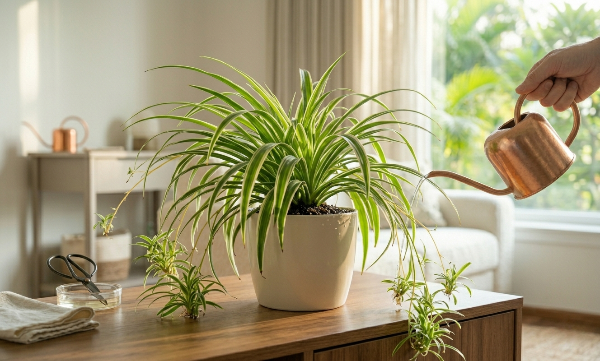
4. Spider Plant (Chlorophytum comosum)
Spider plants are one of the few easiest indoor plants on this list that are completely safe for cats and dogs, which makes them a standout choice for pet-friendly homes. According to the ASPCA, spider plants are non-toxic to both cats and dogs. They grow quickly, produce long hanging stems with baby plants called spiderettes, and adapt well to a wide range of light conditions.
| Care Factor | Requirement |
|---|---|
| Light | Low to bright indirect |
| Water | Every 7-10 days |
| Humidity | Average indoor levels are fine |
| Soil | Standard potting mix |
| Pet Safe? | Yes non-toxic (ASPCA) |
Who should grow this: Pet owners who want hanging or trailing plants without worrying about toxicity. Also excellent for beginners who want to learn propagation, since the spiderettes root incredibly easily in a glass of water.
Tier 2: Easy With Basic Attention – One Step Up From Beginner
These easiest indoor plants do require a little more consistency than Tier 1, but they are still well within beginner range. Each one is genuinely manageable if you check on it once or twice a week.
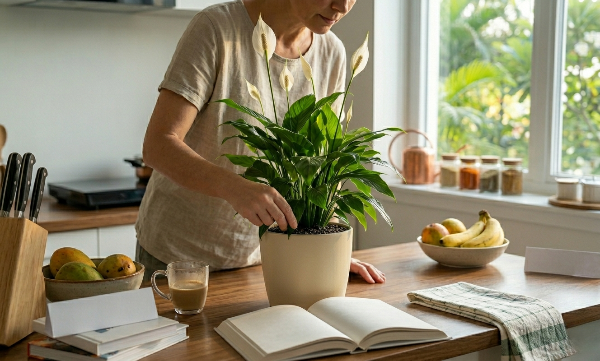
5. Peace Lily (Spathiphyllum)
The peace lily is one of the most popular easiest indoor plants for a reason: it tells you exactly when it needs water. The leaves droop noticeably when the plant is thirsty, usually about a day before real stress sets in, and they bounce back within hours of watering. You almost cannot miss the signal. It also blooms with white flowers in low to medium light, which is unusual for a shade-tolerant plant.
| Care Factor | Requirement |
|---|---|
| Light | Low to medium indirect one of the best shade plants |
| Water | When leaves begin to droop slightly |
| Humidity | Prefers moderate occasional misting helps |
| Soil | Rich, well-draining potting mix |
| Pet Safe? | No toxic to cats and dogs (ASPCA) |
Who should grow this: Anyone who wants a plant that blooms without intense sun. Also a strong pick for air quality: peace lilies consistently appear on lists of the best air-purifying indoor plants.
For a full peace lily care guide including why browning leaf tips happen and how to fix them, visit our peace lily care guide.
6. Rubber Plant (Ficus elastica)

The rubber plant has large, deep burgundy or dark green leaves and a sculptural presence that looks expensive in almost any room. It is more forgiving than the closely related fiddle leaf fig, tolerates a wider range of light, and does not throw a tantrum every time you move it slightly. Among the easiest indoor plants that also serve as a statement piece, the rubber plant is one of the best options at any budget.
| Care Factor | Requirement |
|---|---|
| Light | Medium to bright indirect |
| Water | Every 7-14 days depending on season |
| Humidity | Average indoor levels are fine |
| Soil | Well-draining potting mix |
| Pet Safe? | No mildly toxic to cats and dogs (ASPCA) |
Who should grow this: Anyone who wants a larger floor plant that looks striking but does not need the constant attention that fiddle leaf figs demand.
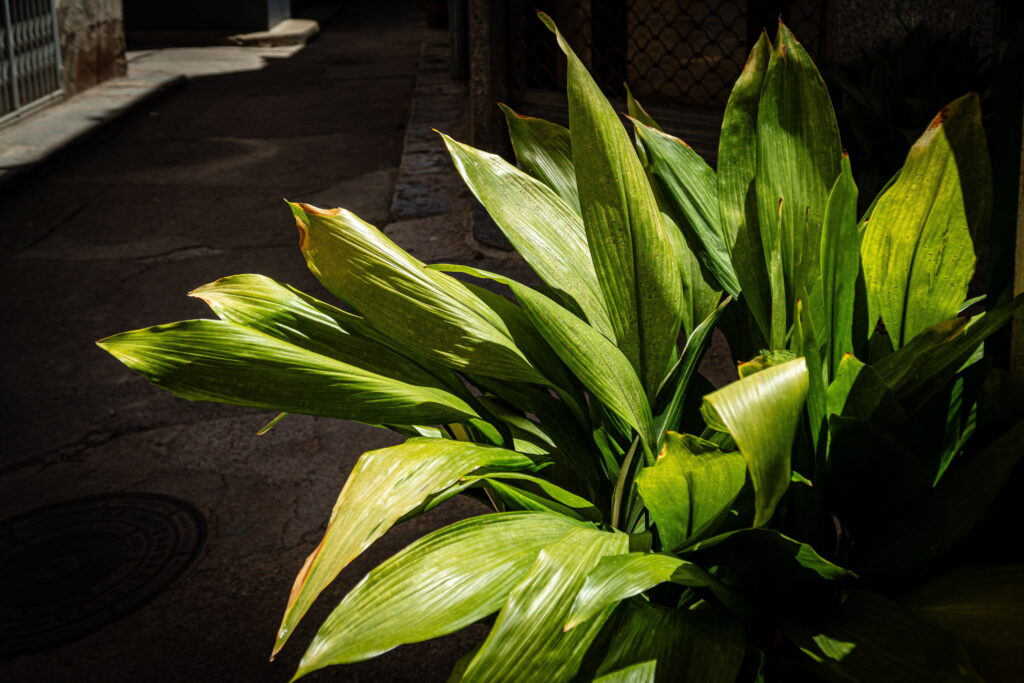
7. Cast Iron Plant (Aspidistra elatior)
The name says everything. The cast iron plant earned it by surviving conditions that would kill most other houseplants, including deep shade, irregular watering, temperature fluctuations, and low humidity. It grows slowly and does not produce dramatic foliage changes, but it never looks bad, and in the right dark corner it provides a consistently polished look that few other plants can match.
| Care Factor | Requirement |
|---|---|
| Light | Low to very low one of the most shade-tolerant plants |
| Water | Every 2-3 weeks |
| Humidity | Not needed |
| Soil | Standard potting mix |
| Pet Safe? | Yes non-toxic (ASPCA) |
Who should grow this: Anyone with a genuinely dark room, a north-facing window, or a shaded hallway where other plants have failed repeatedly.
8. Aloe Vera
Aloe vera is one of the easiest indoor plants for people who tend to forget about watering entirely. It stores water in its thick leaves and can survive weeks, sometimes months, without attention as long as it has good drainage and adequate light. It also has the practical benefit of usable gel in the leaves for minor burns and skin irritation, which makes it a genuinely useful plant to keep in the kitchen.

| Care Factor | Requirement |
|---|---|
| Light | Bright indirect to some direct sun |
| Water | Every 3-6 weeks let soil dry completely |
| Humidity | Low to average |
| Soil | Cactus mix or well-draining sandy soil |
| Pet Safe? | No toxic to cats and dogs (ASPCA) |
Who should grow this: Anyone who wants a functional plant in a bright kitchen or sunny windowsill. Also great for succulent beginners before moving on to more demanding species.
For a full guide on watering, propagating, and keeping aloe healthy year-round, our aloe vera plant care article covers everything in one place.
9. Chinese Evergreen (Aglaonema)
Aglaonema is one of the most underrated easiest indoor plants available at garden centers today. It comes in an extraordinary range of leaf colors, from deep green to silver, pink, red, and cream, and it tolerates low light far better than its colorful appearance suggests. The more vivid the leaf color, the more light it generally needs, but even the bright-pink varieties do well in medium indirect light that would struggle to sustain a pothos at full health.
| Care Factor | Requirement |
|---|---|
| Light | Low to medium indirect (green varieties); medium to bright (pink/red varieties) |
| Water | Every 7-14 days |
| Humidity | Moderate benefits from occasional misting |
| Soil | Well-draining potting mix |
| Pet Safe? | No toxic to cats and dogs (ASPCA) |
Who should grow this: Anyone who wants color and visual variety from a low-maintenance plant. Excellent for living rooms and offices where bold foliage is wanted without intense care requirements.
Tier 3: Easy but With One Specific Requirement
These plants earn their spot on a list of easiest indoor plants because they are genuinely forgiving across most care categories. Each one does have one specific requirement that matters more than everything else for that species.
10. Monstera deliciosa
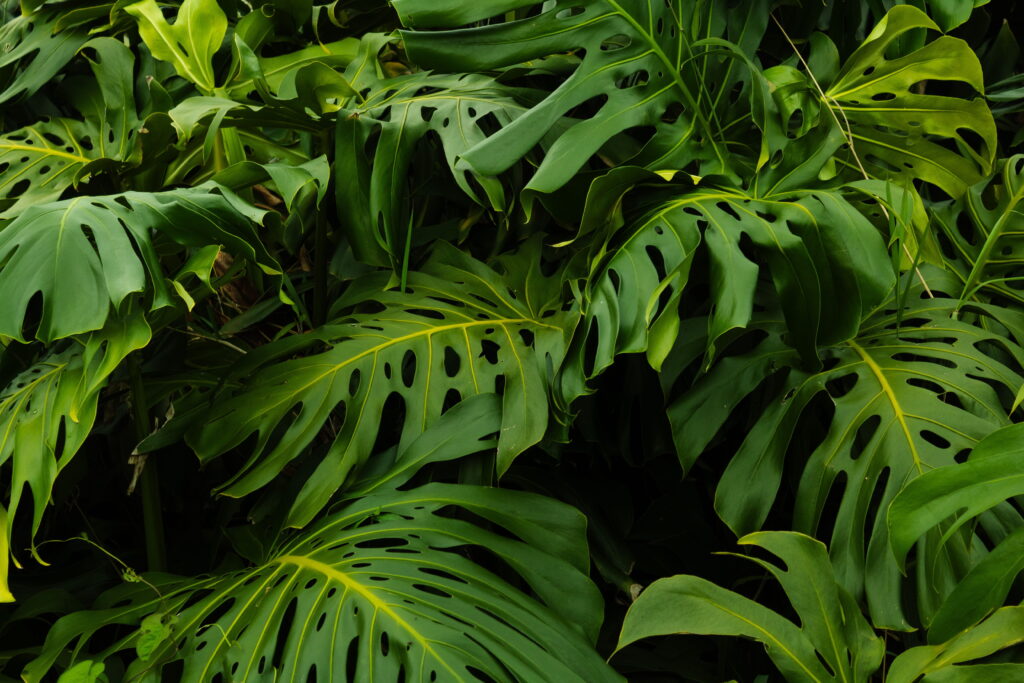
Monstera is one of the most popular houseplants on social media, and it holds up to the attention. It grows quickly in bright indirect light, produces those iconic split leaves that look architectural and dramatic, and tolerates missed waterings without visible distress. The one requirement that matters most: it needs genuine bright indirect light to produce the fenestrations (the holes and splits) that make it recognizable. In low light, the leaves come in smaller and solid without splits.
| Care Factor | Requirement |
|---|---|
| Light | Medium to bright indirect the more the better for split leaves |
| Water | Every 7-10 days, let top 2 inches dry |
| Humidity | Appreciates above 50% but manages with average |
| Soil | Well-draining mix with perlite |
| Pet Safe? | No toxic to cats and dogs (ASPCA) |
Who should grow this: Anyone with a bright room who wants a dramatic, fast-growing plant that looks impressive within one growing season.
Our monstera plant care guide covers the complete care routine including why the leaves are not splitting and how to encourage larger growth.
11. Heartleaf Philodendron (Philodendron hederaceum)
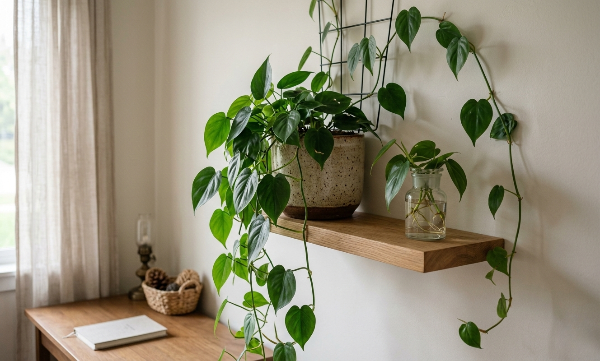
The heartleaf philodendron is so similar to pothos in appearance and care that the two plants are constantly confused with each other, which is actually reassuring for beginners because it means they are equally easy. The philodendron’s leaves are softer and more heart-shaped, and new leaves emerge with a distinctive bronze tint before turning green. The one thing to watch: it is slightly less forgiving of drought than pothos and prefers to stay more consistently moist.
| Care Factor | Requirement |
|---|---|
| Light | Low to bright indirect |
| Water | Every 7-10 days consistently |
| Humidity | Average indoor levels are fine |
| Soil | Standard potting mix |
| Pet Safe? | No toxic to cats and dogs (ASPCA) |
Who should grow this: Anyone who loves the look of pothos but wants something that climbs a support pole more naturally. Also excellent for hanging baskets.
12. Money Tree (Pachira aquatica)

The money tree is one of the easiest indoor plants in terms of light flexibility. It grows well in bright indirect light but handles medium light without major complaint, making it one of the more adaptable options for rooms that are not particularly bright. The braided trunk that most commercial plants come with is an aesthetic feature added by growers and does not affect care. The money tree needs one thing more than most plants on this list: a consistent watering schedule rather than the erratic approach that the ZZ plant or snake plant forgive easily.
| Care Factor | Requirement |
|---|---|
| Light | Medium to bright indirect |
| Water | Every 7-14 days; do not let soil dry completely |
| Humidity | Appreciates moderate levels |
| Soil | Well-draining potting mix |
| Pet Safe? | Yes non-toxic to cats and dogs (ASPCA) |
Who should grow this: Anyone looking for a pet-safe option that looks distinctive and holds cultural significance in many households. Also a good pick for gifting.
The Easiest Indoor Plants Compared at a Glance
| Plant | Light Need | Water Frequency | Pet Safe | Best For |
|---|---|---|---|---|
| Snake Plant | Low-Bright | Every 2-6 weeks | No | Total beginners |
| Pothos | Low-Bright | Every 7-10 days | No | Fast visible growth |
| ZZ Plant | Low-Medium | Every 2-4 weeks | No | Dark rooms, travelers |
| Spider Plant | Low-Bright | Every 7-10 days | YES | Pet-safe hanging plants |
| Peace Lily | Low-Medium | When drooping | No | Shade + flowering |
| Rubber Plant | Medium-Bright | Every 7-14 days | No | Statement floor plants |
| Cast Iron Plant | Very Low | Every 2-3 weeks | YES | Dark rooms, hallways |
| Aloe Vera | Bright | Every 3-6 weeks | No | Sunny kitchens |
| Chinese Evergreen | Low-Bright | Every 7-14 days | No | Color without effort |
| Monstera | Medium-Bright | Every 7-10 days | No | Dramatic fast growth |
| Heartleaf Philodendron | Low-Bright | Every 7-10 days | No | Climbing or trailing |
| Money Tree | Medium-Bright | Every 7-14 days | YES | Gift plants, pet homes |
Mistakes That Make Easy Plants Hard
Overwatering because “more care must be better.” Every plant on this list prefers to dry out somewhat between waterings. Wet soil sitting for days is the most common reason a supposedly easy indoor plant starts dropping leaves and declining. Check the soil before every watering, not the calendar. Our guide on overwatering vs underwatering explains how to tell the two apart quickly.
Putting low-light plants in truly dark rooms. Low-light tolerance is not the same as no-light tolerance. A snake plant or ZZ plant does fine in a room without direct sun, but a room with no windows at all will slowly kill even the toughest plants on this list. If the space needs artificial lighting to read comfortably, it needs supplemental plant lighting too.
Buying a plant that looks good rather than a plant that fits your conditions. Monstera and rubber plants are on this list of easiest indoor plants, but only for homes that can give them medium to bright indirect light. If your apartment has one small north-facing window, start with a ZZ plant or cast iron plant and work from there.
Neglecting drainage. Every plant on this list needs a pot with at least one drainage hole. Without drainage, water pools at the base, the roots suffocate, and even the most drought-tolerant plant will develop root rot within a few months.
Fertilizing aggressively to push faster growth. Most of the easiest indoor plants are slow to moderate growers that do not need heavy feeding. A half-strength balanced liquid fertilizer once a month from spring through early fall is enough. Our guide on best fertilizer for houseplants covers which products work best for beginner growers and which ones cause more problems than they solve.
FAQ
What are the easiest indoor plants for complete beginners?
The three easiest indoor plants to start with are the snake plant, pothos, and ZZ plant. All three tolerate low light, irregular watering, and average indoor humidity without needing any special care. The snake plant is the most drought-tolerant of the three. Pothos grows the fastest and gives the most satisfying visual feedback. The ZZ plant is the best choice for genuinely dark rooms.
What are the easiest indoor plants that are safe for cats?
The best pet-safe picks from the easiest indoor plants category are spider plant, cast iron plant, and money tree. All three are confirmed non-toxic to cats and dogs according to the ASPCA. Spider plants are the most versatile in terms of light range. Cast iron plants are the best choice for dark rooms. Money trees add a distinctive look and grow well in medium light.
How often should I water the easiest indoor plants?
Watering frequency varies by plant, but the general rule for most of the easiest indoor plants is to let the top 1 to 2 inches (2.5 to 5 cm) of soil dry out before watering again. Snake plants and ZZ plants can go two to four weeks between waterings. Pothos, spider plants, and heartleaf philodendrons typically need water every seven to ten days in summer. Always check the soil before adding water rather than following a fixed schedule.
Can easiest indoor plants survive in a room with no windows?
Most cannot survive long-term without any natural light. Low-light tolerant plants like snake plant, ZZ plant, and cast iron plant do well in rooms with minimal natural light, but completely windowless rooms require supplemental grow lights for any plant to stay healthy beyond a few months.
What are the easiest indoor plants that grow fast?
Pothos and heartleaf philodendron are the fastest growers among the easiest indoor plants, often pushing out several inches of new growth per week during spring and summer in good light. Monstera grows quickly in bright indirect light and produces dramatically large leaves within one growing season. Spider plants also grow at a good pace and produce baby plants that can be propagated easily.
Which of the easiest indoor plants needs the least water?
The ZZ plant and snake plant need the least water of any plant on this list. Both can go two to six weeks between waterings and store moisture in underground rhizomes or thick leaves. Aloe vera is also extremely drought-tolerant and can go three to six weeks between waterings in average indoor conditions.
Do easiest indoor plants need fertilizer?
A light fertilizing routine helps them grow better, but skipping it will not kill them. Apply a balanced liquid fertilizer at half strength once a month from spring through early fall. Stop fertilizing completely in winter when growth naturally slows down. Over-fertilizing causes more problems than under-fertilizing for most of the easiest indoor plants.
The easiest indoor plants are not a compromise. Snake plants, pothos, ZZ plants, and spider plants look genuinely beautiful in well-chosen pots in the right spots, and they do it without demanding much in return. The key is matching the plant to your actual conditions rather than buying whatever looks good on a shelf and hoping for the best. Check your light levels, be honest about how often you realistically water things, and pick from the tier that fits your life.
Start with one plant. Get comfortable. Add a second one. That is how every experienced plant person started, and the easiest indoor plants make that first step about as forgiving as it gets.
Happy planting!