
I used to think indoor hanging plants were just decorative filler for empty corners. Then I bought my first trailing pothos for a tiny apartment kitchen, and honestly, it changed the entire feel of the room within weeks. Suddenly the space felt softer, brighter, and far more alive without taking up valuable floor space.
What I love about indoor hanging plants is how versatile they are. Some thrive in low-light bathrooms, others spill beautifully from shelves in sunny living rooms, and a few are almost impossible to kill even if you’re still learning basic plant care. The trick is choosing the right plant for your lighting conditions and watering habits.
Why Indoor Hanging Plants Work So Well Indoors
Indoor hanging plants solve one of the biggest problems plant lovers run into: limited space.
If you live in an apartment, condo, or smaller home, floor space disappears quickly once you start collecting plants. Hanging baskets and wall planters let you add greenery vertically instead.
I’ve also found that trailing plants make a room feel more finished. A shelf with a cascading pothos or string of pearls instantly looks more styled and intentional.
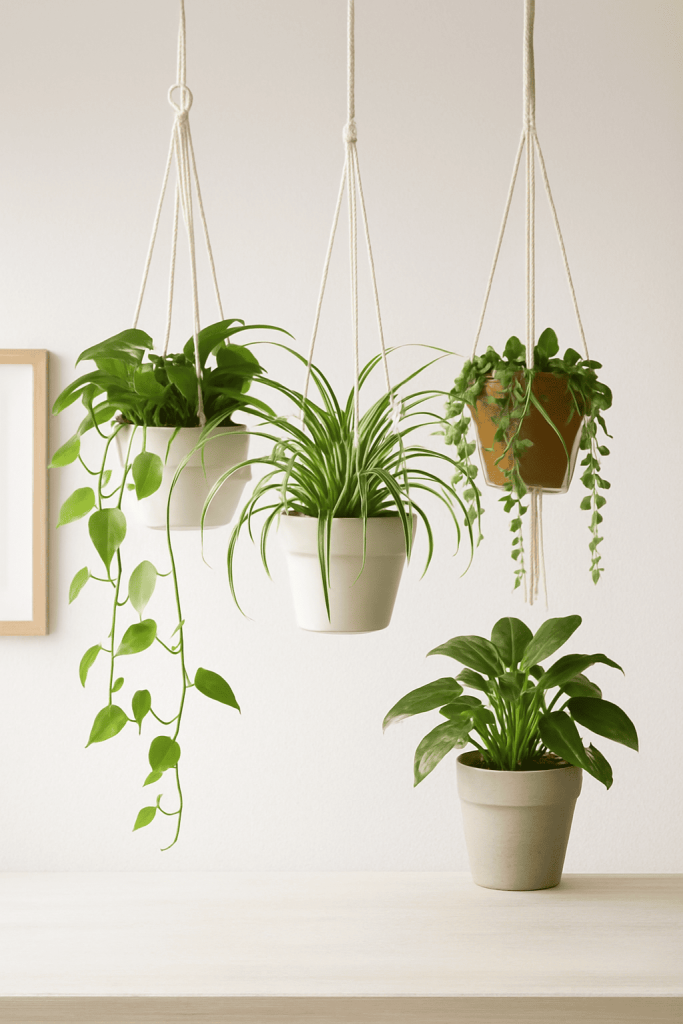
Another reason indoor hanging plants are so popular is flexibility. You can:
- Hang them near windows
- Place them on floating shelves
- Use macrame hangers
- Let vines trail from bookcases
- Add greenery to bathrooms and kitchens
Many varieties also grow surprisingly fast when conditions are right. That’s especially true for pothos, philodendrons, and spider plants.
If you’re new to plant care, I strongly recommend reading how to water houseplants for beginners because watering mistakes are still the fastest way to damage hanging plants indoors.
Best Indoor Hanging Plants for Beginners
Pothos
Pothos is still my favorite recommendation for beginners because it tolerates inconsistent watering better than most houseplants.
The vines grow quickly, the leaves stay attractive year-round, and it handles medium to low light surprisingly well.
Golden pothos is the easiest variety to find at Home Depot, Lowe’s, and Walmart Garden Center. You can usually start with a small hanging basket for under $20.
Spider Plant
Spider plants are another excellent choice for indoor hanging plants because the arching leaves naturally drape downward.
What I like most is how forgiving they are. Even if you forget to water occasionally, they usually recover quickly.
Mature spider plants also produce baby plantlets that hang from long stems, creating a dramatic cascading effect.
Heartleaf Philodendron
Heartleaf philodendron looks elegant without requiring much effort.
The vines stay softer and slightly more delicate-looking than pothos, which works well in bedrooms or offices where you want a calmer aesthetic.
These plants prefer temperatures around 65-80 degrees F (18-27 degrees C) and moderate humidity.
String of Pearls
String of pearls is stunning but definitely less beginner-friendly.
This succulent-like trailing plant needs:
- Bright light
- Fast-draining soil
- Less frequent watering
- Excellent airflow
One mistake I made early on was treating it like a pothos. That ended in root rot within a month.
If your home stays humid, you’ll want to understand overwatering vs underwatering signs before trying delicate trailing succulents.
Boston Fern
Boston ferns create a lush, classic hanging basket look.
They’re perfect for:
- Bathrooms
- Covered porches
- Humid kitchens
- Bright indirect light
The challenge is humidity. Dry indoor air often causes crispy fronds.
I’ve had the best results placing Boston ferns near humidifiers during winter.
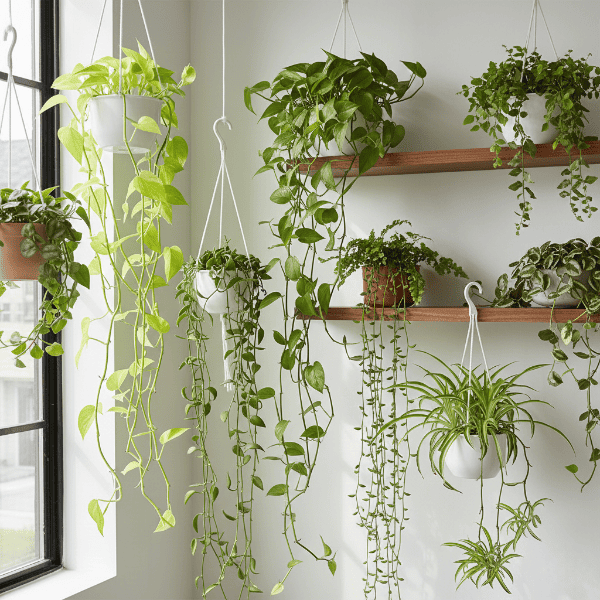
Best Rooms for Indoor Hanging Plants
Living Room
Living rooms usually provide the most flexible lighting.
Great options include:
- Pothos
- Philodendron
- Spider plants
- Monstera adansonii
- English ivy
Try placing hanging plants near east-facing or north-facing windows for softer indirect light.
Bathroom
Bathrooms are underrated for indoor hanging plants.
The extra humidity helps tropical plants thrive naturally. My pothos actually grows faster in the bathroom than anywhere else in the house.
Good bathroom choices:
- Boston fern
- Pothos
- Heartleaf philodendron
- Air plants
If your bathroom has little natural light, look into indoor plants for low light before buying tropical varieties.
Kitchen
Kitchens work beautifully for herbs and trailing greenery because warmth and humidity stay fairly stable.
I especially like hanging plants above sinks or near breakfast nooks where vines soften hard surfaces.
Bedroom
Bedrooms benefit from softer trailing plants with relaxed growth habits.
My favorites:
- Satin pothos
- Heartleaf philodendron
- String of hearts
Many readers also combine indoor hanging plants with calming greenery from best plants for bedroom to create a more relaxing space.
Light Requirements for Indoor Hanging Plants
The biggest mistake people make with indoor hanging plants is hanging them too far from windows.
Just because a plant hangs doesn’t mean it tolerates dark corners.
Here’s a simple breakdown:
| Light Level | Best Hanging Plants |
|---|---|
| Low Light | Pothos, philodendron, spider plant |
| Medium Light | Ferns, ivy, satin pothos |
| Bright Indirect Light | String of pearls, hoya, burro’s tail |
| Direct Sunlight | Limited indoor options, mostly succulents |
In my experience, east-facing windows are ideal for most indoor hanging plants because the morning sun is gentler.
South-facing windows work too, but sensitive plants may need sheer curtains.
Watering and Humidity Tips
Watering hanging plants can get messy fast if you aren’t careful.
I usually take hanging baskets down and water them in the sink or shower so excess water drains properly.
Most indoor hanging plants prefer:
- Slightly moist soil
- Good drainage
- Pots with drainage holes
- Watering only when the top 1-2 inches (2.5-5 cm) feel dry
Avoid letting water collect at the bottom of decorative hanging pots.
For soil, I usually use Miracle-Gro Indoor Potting Mix with added perlite for better airflow.
Humidity also matters more than many beginners realize. Tropical hanging plants generally prefer 40-60% humidity indoors.
Dry winter air can lead to:
- Brown edges
- Crispy leaves
- Slower growth
- Leaf drop
Styling Ideas for Indoor Hanging Plants
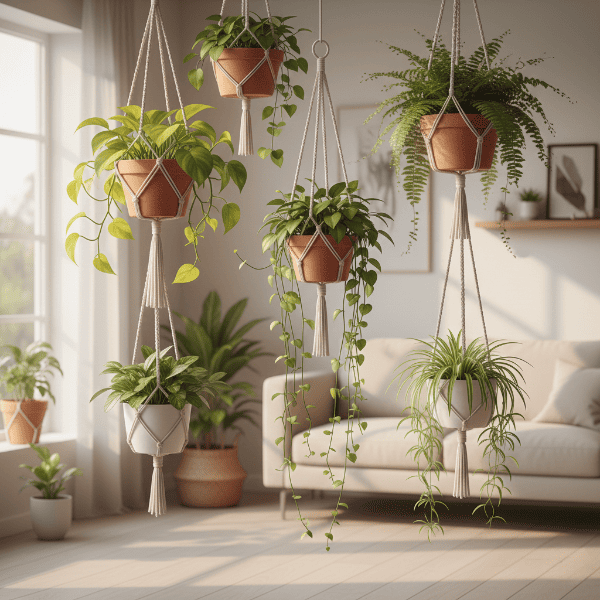
This is where indoor hanging plants really shine.
A few styling ideas I’ve personally tried:
- Hanging macrame planters near windows
- Floating shelves with trailing pothos
- Corner plant clusters with varying vine lengths
- Ceiling hooks above reading chairs
- Hanging baskets layered at different heights
One thing that helped my home look less cluttered was sticking to similar pot colors.
Terracotta, matte white, and woven baskets usually blend together well.
I also recommend rotating hanging baskets every couple of weeks so all sides receive even light.
Mistakes That Damage Indoor Hanging Plants
Hanging Plants in Dark Corners
Most indoor hanging plants still need decent light. Decorative placement should never come before plant health.
Overwatering
This is still the biggest killer of hanging houseplants.
Always check the soil before watering instead of following a rigid schedule.
Using Pots Without Drainage
Decorative containers without drainage trap moisture and encourage root rot.
Ignoring Humidity
Ferns and tropical vines often struggle in dry heated homes during winter.
Letting Vines Become Too Dense
Overgrown vines can reduce airflow and increase pest problems.
Trim plants occasionally to encourage fuller growth.
Skipping Pest Checks
Spider mites and fungus gnats love dense trailing foliage.
The University of Florida IFAS Extension recommends regular leaf inspections for indoor tropical plants to catch pest problems early.
Are Indoor Hanging Plants Safe for Pets?
Some indoor hanging plants are toxic to cats and dogs, while others are considered safer.
According to the ASPCA Toxic and Non-Toxic Plants Database:
- Pothos is toxic to pets
- Philodendron is toxic
- Spider plants are generally considered non-toxic
- Boston ferns are pet-friendly
If you have curious cats, I strongly recommend reading Indoor Plants Safe for cats before adding new hanging baskets around your home.
FAQs
What are the easiest indoor hanging plants for beginners?
The easiest indoor hanging plants for beginners are pothos, spider plants, and heartleaf philodendrons. These plants tolerate inconsistent watering and adapt well to average indoor conditions.
How often should I water indoor hanging plants?
Most indoor hanging plants should be watered when the top 1-2 inches (2.5-5 cm) of soil feel dry. Watering frequency depends on light, humidity, and the plant variety.
Can indoor hanging plants survive in low light?
Some indoor hanging plants handle low light surprisingly well, especially pothos, philodendron, and spider plants. However, growth may slow in darker rooms.
Which indoor hanging plants are safe for cats?
Spider plants and Boston ferns are commonly considered pet-safe options. Always verify plant safety using the ASPCA database before bringing new plants home.
Why are my indoor hanging plants turning yellow?
Yellow leaves usually happen because of overwatering, poor drainage, or insufficient light. Checking soil moisture before watering often fixes the issue.
Where should I hang indoor hanging plants?
Indoor hanging plants grow best near bright windows with indirect sunlight. East-facing windows are usually ideal for most trailing tropical plants.
Do indoor hanging plants improve air quality?
Some indoor hanging plants may help slightly improve indoor air quality, although their biggest benefit is creating a calmer and more inviting indoor environment.
What soil is best for indoor hanging plants?
A lightweight, well-draining potting mix works best for most indoor hanging plants. Many growers use mixes containing perlite, coco coir, or orchid bark for better airflow.
Final Thoughts
Indoor hanging plants make a home feel calmer, softer, and far more alive without requiring massive amounts of space. Even one healthy trailing plant can completely change the atmosphere of a room.
If you’re just getting started, begin with something forgiving like pothos or spider plants before moving into fussier varieties like string of pearls or delicate ferns. That’s honestly the approach that helped me keep plants alive consistently instead of replacing them every few months.
The biggest lesson I’ve learned is that placement matters just as much as watering. Give your plants enough light, avoid soggy soil, and let them grow naturally instead of forcing perfection.
Happy planting!