
If you’re searching for a low-maintenance houseplant that combines unique visual appeal with nearly indestructible resilience, the ponytail palm care is your perfect match. Despite its name, this quirky plant isn’t actually a palm, it’s a succulent that thrives on neglect, making it ideal for busy plant parents, frequent travelers, and beginners alike.
In this comprehensive ponytail palm care guide, you’ll discover everything you need to know about keeping this fascinating plant healthy and thriving for decades to come.

What Is a Ponytail Palm?
The ponytail palm (Beaucarnea recurvata) is native to parts of Mexico. It belongs to the Asparagaceae family, making it more closely related to yucca, agave, and even asparagus than to true palms. The typical ponytail palm consists of a large, domed “stump,” which tapers off into a thinner stem, with long, green, leathery leaves developing from the top.
This distinctive appearance has earned it several nicknames, including elephant’s foot palm and bottle palm. The base of the stems become swollen as they store water for use during dry periods, similar to a camel’s hump, which explains why this plant is so forgiving when you forget to water it.
In its natural habitat, ponytail palms can grow up to 30 feet tall, but indoor specimens typically remain under 4 feet, making them perfect for homes and offices.
Essential Ponytail Palm Care Requirements
Light Requirements
Ponytail palms need bright, direct sunlight to truly thrive. Place your plant near a south-facing window where it can receive at least 6-8 hours of bright light daily. While these plants can tolerate medium light conditions, they grow slower and may become leggy in lower light.
Pro tip: You can take it outside in warmer months to get more light, which will boost its growth and overall health. Just be sure to acclimate it gradually to prevent sunburn.
Watering Your Ponytail Palm
The golden rule for ponytail palm care is simple: when in doubt, don’t water. Ponytail Palm care doesn’t call for a lot of watering since the trunk stores water. Here’s your watering schedule:
Spring and Summer (Growing Season):
- Water every 2-3 weeks
- Allow the top 2 inches of soil to dry completely between waterings
- Water deeply until excess drains from the bottom
Fall and Winter (Dormant Season):
- Reduce watering to once a month or less
- The plant needs minimal moisture during this rest period
The most common mistake made with these plants is overwatering. The bulbous trunk acts as a water reservoir, making this plant incredibly drought-tolerant. Overwatering can lead to root rot, which is often fatal.
Warning signs:
- Overwatering: Yellowing leaves, soft or mushy trunk base
- Underwatering: Drooping leaves, dry and crispy leaf tips, shriveled appearance
Soil and Potting Mix
Use a fast-draining soil, such as a cacti and succulent potting mix. Standard potting soil retains too much moisture and can cause root rot.
DIY Soil Mix Recipe:
- 1 part potting soil
- 1 part perlite
- 1 part coarse sand
This combination ensures excellent drainage while providing enough organic matter for nutrients. Always use a pot with drainage holes at the bottom.
Temperature and Humidity
Ponytail palms are adaptable to typical household conditions:
- Ideal temperature range: 65-75°F
- Can tolerate: 50-85°F
- Avoid: Temperatures below 50°F for extended periods
- Humidity: Average room humidity (40-50%) is perfect
Ponytail palms do well in standard indoor temperatures and tolerate dry indoor air very well, making them excellent for homes with heating systems.
Fertilizing Schedule
Fertilize ponytail palm a couple of times a year in spring and summer. These slow-growing plants have low nutrient requirements, so less is definitely more.
Fertilizer Guidelines:
| Season | Frequency | Fertilizer Type |
|---|---|---|
| Spring/Summer | Once every 1–2 months | Balanced fertilizer (10-10-10) or cactus fertilizer |
| Fall/Winter | No fertilizer needed | Plant is dormant |
Dilute the fertilizer to half the recommended strength to prevent nutrient burn and brown leaf tips.
Repotting Your Ponytail Palm
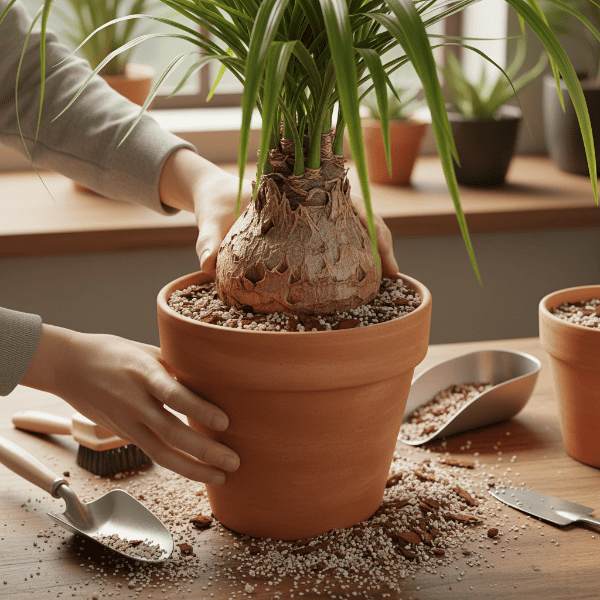
Ponytail palms can go for many years before needing to be repotted, with repotting every other year at the most. These plants actually prefer to be slightly root-bound.
When to repot:
- Roots growing out of drainage holes
- Plant becomes top-heavy and tips over
- You want the plant to grow larger
Repotting steps:
- Choose a pot only 1-2 inches larger than the current one
- Use fresh cactus/succulent potting mix
- Don’t bury the trunk deeper than it was previously
- Wait 3-4 weeks before fertilizing after repotting
- Water sparingly until the plant adjusts
Important: Moving to a larger pot allows for more growth, but keeping the plant in a smaller container will limit its size, perfect if you want a compact desktop plant.
Pruning and Maintenance
Ponytail palms require minimal pruning. Here’s what you need to do:
Regular maintenance:
- Remove any dead or yellowing leaves at the base
- Trim brown leaf tips with clean, sharp scissors
- Dust the leaves occasionally to improve photosynthesis
- Rotate the plant periodically for even growth
Safety note: Use caution when handling a ponytail palm, as its leaves have tiny serrated edges that can irritate skin.
Propagation Methods
Ponytail palms can be challenging to propagate at home. Rarely, a ponytail palm may produce an offset, a tiny baby plant that stems from the base of the adult plant.
If your plant produces offsets (pups):
- Wait until the offset is at least 4 inches tall
- Cut it off at the base with a clean, sharp knife
- Allow the cut to heal (callous over) for 24-48 hours
- Apply rooting hormone to encourage root development
- Plant in succulent potting mix
- Water sparingly until established
Most commercial growers propagate ponytail palms from seed, but indoor plants rarely flower or produce seeds.
Common Problems and Solutions
Brown Leaf Tips
Causes:
- Underwatering or inconsistent watering
- Over-fertilization
- High mineral content in tap water
- Low humidity
Solutions:
- Adjust your watering schedule
- Reduce fertilizer frequency
- Use filtered or rainwater if tap water is hard
- Trim brown tips with clean scissors for appearance
Yellow Leaves
Causes:
- Overwatering (most common)
- Poor drainage
- Root rot
Solutions:
- Allow soil to dry out completely
- Check drainage holes aren’t blocked
- Repot in fresh, well-draining soil if root rot is present
Soft or Mushy Trunk
Cause: Severe overwatering leading to stem rot
Solution: This is often fatal, but you can try:
- Stop watering immediately
- Remove plant from pot and cut away rotted sections
- Repot in completely dry soil
- Wait several weeks before watering again
Slow or No Growth
This is normal! Ponytail palms are naturally slow-growing plants. As long as the plant looks healthy, there’s nothing to worry about. Growth will be slower in lower light conditions and during winter dormancy.
Pest Management
Ponytail palms are not particularly susceptible to pests, but like any houseplant might have mealybugs, spider mites, or scale.
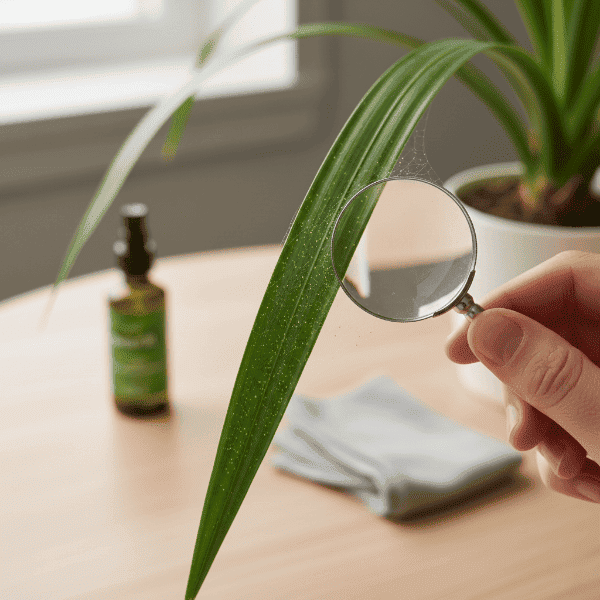
Common Pests and Treatments
Spider Mites:
- Signs: Fine webbing on leaves, yellow stippling
- Treatment: Increase humidity, spray with neem oil or insecticidal soap
- Prevention: Mist leaves regularly, inspect new plants
Mealybugs:
- Signs: White cottony masses in leaf axils
- Treatment: Dab with rubbing alcohol on a cotton swab
- Prevention: Regular inspection, isolate infected plants
Scale Insects:
- Signs: Small brown bumps on leaves and stems
- Treatment: Scrape off manually or use horticultural oil
- Prevention: Check plants regularly, especially under leaves
Root Rot:
- Signs: Yellowing leaves, mushy trunk, fungal growth on soil
- Root rot is the most common issue for a ponytail palm
- Prevention: Proper drainage, avoid overwatering
Is Ponytail Palm Pet-Safe?
Good news for pet owners! Ponytail palm is a great choice for pet owners because it is not toxic to dogs or cats. However, the sharp leaf edges can irritate a pet’s mouth, so it’s still best to keep the plant out of reach of curious pets who like to chew on plants.
Tips for Long-Term Success
- Embrace neglect: This plant thrives when left alone. Resist the urge to fuss over it
- Prioritize drainage: Never let the plant sit in standing water
- Maximize light: The brighter the location, the better the growth
- Keep it warm: Avoid cold drafts from windows and air conditioning vents
- Go easy on fertilizer: Over-fertilizing causes more problems than under-fertilizing
- Be patient: These plants can live for decades and even outlive their owners with proper care
Frequently Asked Questions About Ponytail Palm Care
Water every 2-3 weeks during spring and summer, allowing the soil to dry completely between waterings. Reduce to once a month or less in winter. Always check soil moisture before watering. If in doubt, wait another week.
Brown leaf tips usually indicate underwatering, over-fertilization, or mineral buildup from tap water. Entire leaves turning brown may be a natural aging process for older leaves. Adjust your care routine and trim brown tips for aesthetics.
Yes! Ponytail palms can be grown outdoors year-round in USDA hardiness zones 9-11. In cooler climates, you can move them outside during summer months for extra light, then bring them back indoors before the first frost.
Indoor ponytail palms typically grow to 3-4 feet tall, though they can reach 6 feet in ideal conditions. Their size is largely controlled by pot size, keeping them in a smaller container will limit their growth.
Ponytail palms are extremely slow-growing plants by nature. If your plant appears healthy with green leaves and a firm trunk, slow growth is completely normal. Growth will be even slower in lower light conditions or during winter dormancy.
The first sign of overwatering is yellowing leaves, followed by a soft, mushy trunk base. If you catch it early, stop watering immediately and allow the soil to dry completely. Severe overwatering can lead to fatal root rot.
Misting is not necessary. Ponytail palms are adapted to dry conditions and don’t require high humidity. Occasional misting can help deter spider mites, but it’s not essential for the plant’s health.
With proper care, ponytail palms are incredibly long-lived. Indoor specimens can easily live 20-30 years or more, often outliving their owners. In their native habitat, some specimens are over 350 years old!
Conclusion
Ponytail palm care is remarkably straightforward once you understand this plant’s desert origins and water-storing capabilities. By providing bright light, infrequent watering, well-draining soil, and minimal fertilizer, you’ll have a thriving, long-lived companion that adds architectural interest to any space.
Remember the two most important rules: give it plenty of light and don’t overwater. Follow these guidelines, and your ponytail palm will reward you with decades of low-maintenance beauty. Whether you’re a busy professional, a forgetful waterer, or simply looking for an easy-care plant that makes a statement, the ponytail palm is an excellent choice that truly thrives on benign neglect.