
If you’re looking for a tough, evergreen shrub that delivers all-year-round beauty with minimal maintenance, the Westringia plant should be at the top of your list. Native to Australia’s coastal regions, this hardy shrub is admired for its versatility, drought tolerance, and attractive foliage. Whether you live near the sea, in a suburban garden, or even in warmer regions of India, Westringia adapts beautifully with the right care.
What is Westringia Plant?
Westringia Plant, commonly called Coastal Rosemary, is an Australian native shrub belonging to the mint family (Lamiaceae). Despite its common name, it’s not a true rosemary, though its foliage and scent might remind you of it. The plant features fine, grey-green leaves arranged in neat whorls around the stems and produces small, delicate flowers, usually shades of white, blue, or mauve, throughout almost the entire year.
Its natural tolerance to salt-laden winds, drought, and poor soils makes Westringia a gardener’s favorite, particularly in coastal or low-water landscapes.

Growing Conditions for Westringia Plant
To get the best out of your Westringia Plant, you’ll need to understand the growing environment it prefers. This plant is remarkably tough, but a few conditions will ensure it thrives and flowers abundantly.
| Growing Factor | Ideal Condition |
|---|---|
| Sunlight | Full sun to partial shade (minimum 4–6 hours of sunlight) |
| Soil Type | Well-draining sandy or loamy soils; tolerates poor soils |
| Soil pH | Slightly acidic to neutral (6.0–7.5) |
| Watering | Drought-tolerant once established; water deeply every 7–10 days during dry periods |
| Temperature | Ideal between 10°C to 30°C; tolerates mild frost |
| Humidity | Adaptable, but prefers dry to moderately humid climates |
Tips for Different Climates
- Australian Conditions: Performs exceptionally well in coastal, inland, or Mediterranean-style gardens.
- Indian Conditions: In India, Westringia does best in semi-arid and subtropical regions. It handles the Indian sun well, but provide light shade in extreme summer heat. Make sure soil is not waterlogged during the monsoon.
Types of Westringia
There are several Westringia varieties, each with unique characteristics in growth habit, foliage color, and flower hue. Below are some of the most popular types to consider:
1. Westringia fruticosa (Coastal Rosemary)
The classic and most widely grown species. It forms a dense shrub with grey-green foliage and small white to pale lavender flowers. Excellent for hedging and coastal gardens.
- Height: 1–2 meters
- Spread: 1–2 meters
- Best for: Windy coastal sites, hedges, and topiary
2. Westringia Blue Gem
One of the most vibrant and colorful cultivars, Westringia Blue Gem produces striking deep blue-purple flowers over silvery-green leaves. It’s an eye-catching variety perfect for adding contrast in a native garden.
- Height: Up to 1.5 meters
- Flowers: Bright blue to violet
- Best for: Feature planting or color contrast in borders
3. Westringia Mundi (Westringia fruticosa Mundi)
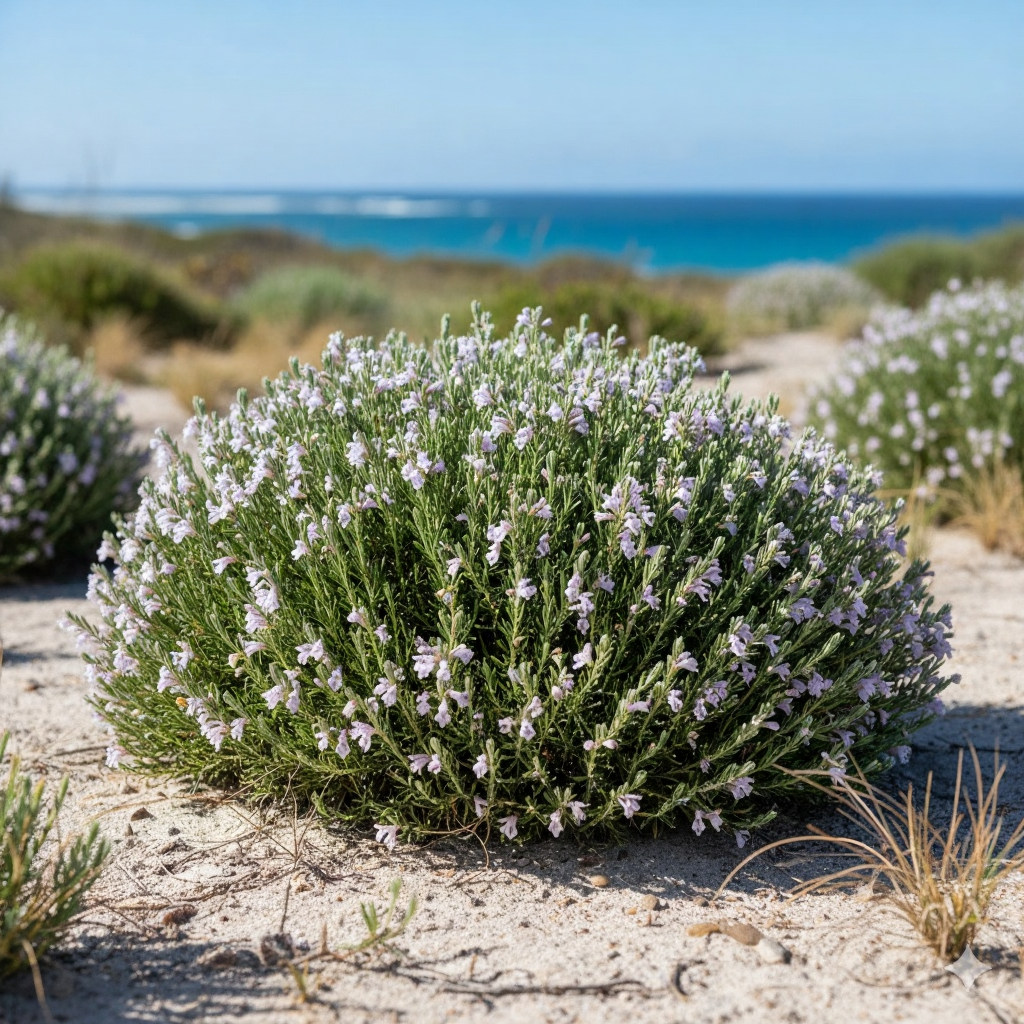
A compact ground-covering variety that’s ideal for erosion control, slopes, and low hedges. It maintains a neat, spreading habit without the need for frequent pruning.
Best for: Ground cover, rock gardens, retaining walls
Height: 30–40 cm
Spread: 1–1.5 meters
4. Westringia Grey Box
A dwarf and tidy cultivar that forms a compact ball-shaped shrub. It’s ideal for low borders, pathways, and mass plantings.
- Height: 30–45 cm
- Spread: 50–60 cm
- Best for: Formal hedges and small spaces
5. Westringia Morning Light
An elegant, variegated form with silver and green foliage that brightens shady corners. It has a graceful look and suits both native and cottage gardens.
- Height: Around 1.2 meters
- Spread: 1 meter
- Best for: Feature planting and mixed borders
6. Westringia Low Horizon
This ultra-compact variety is a true ground cover, staying low and dense even without trimming. It’s perfect for modern landscapes and mass plantings.
- Height: 30 cm
- Spread: 1 meter
- Best for: Pathway edging, garden borders, and low-maintenance designs
7. Westringia Smokey
This cultivar has beautiful silvery-grey foliage and soft mauve flowers. It’s hardy, tolerant of salt, and works wonderfully in coastal landscapes.
- Height: 1–1.5 meters
- Best for: Coastal gardens and low hedging
8. Westringia Wynyabbie Gem
A fast-growing hybrid known for its lush foliage and soft lavender flowers. It’s among the most adaptable and forgiving Westringias.
- Height: Up to 2 meters
- Best for: Quick-growing hedges and screening
Where Should I Plant My Westringia?
Westringia adapts well to a range of environments, but choosing the right spot ensures optimal health and flowering.
- Sunlight: Choose a sunny or lightly shaded position. Too much shade can reduce flowering.
- Soil Drainage: Ensure soil drains freely. If your garden has heavy clay, plant on raised mounds or add organic matter and coarse sand for better aeration.
- Exposure: Perfect for coastal and windy sites, Westringia Plant can handle salt spray better than most shrubs.
- Spacing: For hedges, plant 50–100 cm apart, depending on the variety.
For Indian gardeners, pick a slightly shaded area if your region faces harsh afternoon sun. Ensure the soil doesn’t remain soggy after rains.
Which Westringia Is Best for My Needs?
| Purpose | Recommended Variety | Key Benefit |
|---|---|---|
| Formal Hedge | Westringia Grey Box, Wynyabbie Gem | Dense foliage, easy to shape |
| Ground Cover | Westringia Mundi, Low Horizon | Low-growing, erosion control |
| Feature Plant | Westringia Blue Gem, Morning Light | Striking flowers or variegated foliage |
| Coastal Garden | Westringia Fruticosa, Smokey | Excellent salt and wind tolerance |
| Compact Pots/Small Spaces | Westringia Grey Box | Neat growth habit |
How Should I Prune My Westringia?
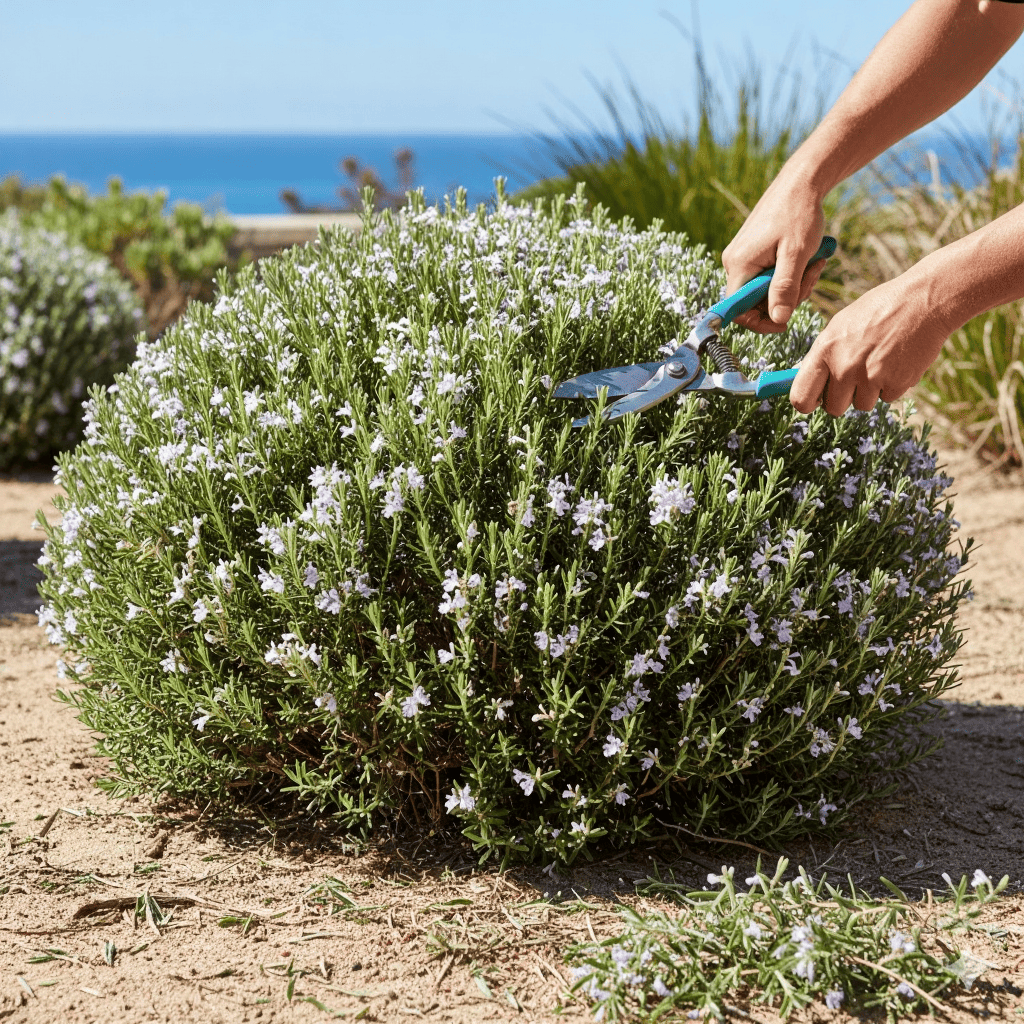
Pruning Westringia keeps it neat, dense, and encourages more flowering. It’s a forgiving shrub that responds well to regular trimming.
When to Prune
- Light pruning: After flowering in spring or early summer.
- Hard pruning: Every 2–3 years to rejuvenate older plants.
Pruning Tips
Apply a slow-release native fertilizer after pruning to boost regrowth.
Use clean, sharp shears.
Trim lightly after flowering to shape the plant.
For hedges, shear uniformly but avoid cutting into old wood.
In India, where Westringia may flower nearly year-round, you can prune lightly 2–3 times annually to maintain its shape and encourage healthy foliage.
The Challenge: Westringia in Heavy Clay Soils
While Westringia is tolerant of many soil types, heavy clay can be problematic due to poor drainage. This can lead to root rot or stunted growth.
How to Overcome Clay Soil Issues
- Improve Drainage: Mix coarse sand, compost, and gypsum into the soil.
- Raised Beds or Mounds: Plant your Westringia slightly above ground level to prevent waterlogging.
- Avoid Overwatering: Let the soil dry out between watering cycles.
- Container Planting Option: In very dense clay soils, grow Westringia in large pots with a native mix for better control.
Reasons to Love Westringia
There’s a reason this plant has become a landscaping favorite across Australia and beyond. Here’s what makes it special:
- Low Maintenance: Once established, it needs minimal water and care.
- All-Year Appeal: Evergreen foliage and frequent flowering add constant beauty.
- Wildlife-Friendly: Attracts bees, butterflies, and native pollinators.
- Tolerant and Tough: Handles salt, drought, heat, and wind like a champion.
- Versatile Uses: Ideal for hedging, ground cover, or feature planting.
- Long-Lived: Can thrive for many years with minimal intervention.
For Indian gardeners, Westringia is an ideal addition to drought-prone or coastal gardens. It’s a perfect alternative to foreign ornamentals that struggle in dry, sunny conditions.
Common Problems and Solutions
| Problem | Cause | Solution |
|---|---|---|
| Yellowing Leaves | Overwatering or poor drainage | Improve soil drainage, reduce watering |
| Sparse Growth | Lack of sunlight or pruning | Move to sunnier spot, prune lightly |
| Fungal Issues | Humid or waterlogged conditions | Ensure air circulation and dry soil surface |
| Lack of Flowers | Too much shade or excess nitrogen | Increase sunlight, avoid over-fertilizing |
Westringia Plant Care Summary
| Task | Frequency | Notes |
|---|---|---|
| Watering | Weekly (less in cool months) | Deep watering is better than frequent light watering |
| Fertilizing | Twice a year | Use native-plant fertilizer with low phosphorus |
| Pruning | 1–3 times a year | Light shaping after flowering |
| Mulching | Annually | Retain moisture and suppress weeds |
| Pest/Disease Check | Monthly | Rarely affected, but inspect for fungal issues |
Frequently Asked Questions (FAQs)
Yes, Westringia is one of the easiest native shrubs to grow. It’s drought-tolerant, low-maintenance, and thrives in poor soils.
Once established, water only during prolonged dry spells. Avoid soggy soil.
Absolutely. Compact varieties like Westringia Grey Box and Low Horizon do well in containers with well-draining potting mix.
Yes, it attracts bees, butterflies, and other pollinators due to its frequent flowering.
Yes, it grows well in semi-arid, subtropical, and coastal regions of India, provided the soil is well-drained and receives full sunlight.
With proper care, these shrubs can easily live for over 10–15 years.
Conclusion
The Westringia plant is truly a gardener’s dream, beautiful, durable, and incredibly adaptable. Whether you’re designing a coastal hedge in Australia or looking for a heat-tolerant shrub in India, Westringia fits the bill perfectly. With minimal care, it rewards you with lush foliage, soft flowers, and a structure that enhances any landscape style.
From Westringia fruticosa to Westringia Blue Gem, every variety brings something unique to your garden. Plant it once, prune occasionally, and enjoy year-round beauty with almost no effort.