
There is something almost irresistible about a cascading ivy on a shelf, all those lobed green leaves spilling over the edge, a little wild, a little romantic. It is no surprise that indoor ivy plants have become one of the most commonly purchased houseplants. They look approachable in garden centers, carry a forgiving reputation, and cost very little to start.
But here is what most beginner plant guides will not tell you: ivy is also one of the most commonly killed houseplants indoors.
Not because it is difficult. But the conditions in a typical home or apartment often work against it in subtle ways. Dry heating systems, stagnant air, and overwatering out of concern are the real culprits. And most care guides never get specific enough to help you navigate that. This article will.
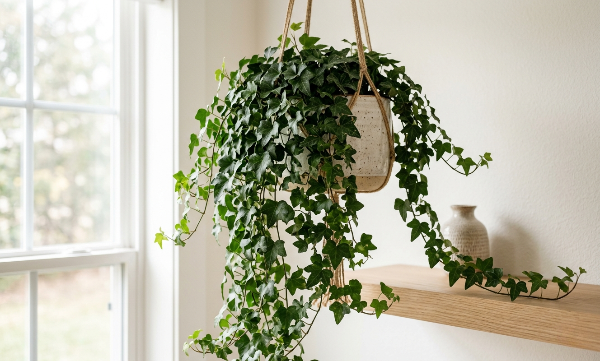
What Are Indoor Ivy Plants?
Ivy belongs primarily to the genus Hedera, a group of woody evergreen climbing and trailing vines native to Europe, western Asia, and North Africa. In nature, ivy anchors itself to walls, tree trunks, and rocky slopes using tiny aerial rootlets, climbing toward light while spreading wide across the ground.
Indoors, that same instinct makes ivy incredibly versatile. Without a wall to climb, it trails. Give it a structure, and it climbs. That dual behavior is why it works in hanging baskets, on shelves, trained up a moss pole, or simply left to drape from a windowsill.
The genus has roughly 15 species, and within those species exist hundreds of named cultivars. Most of what you will find at a nursery falls under Hedera helix (English ivy) or Hedera algeriensis (Algerian ivy), but there are a few others worth knowing about.
Why Indoor Ivy Plants Deserve a Place in Your Home
There are genuine reasons Ivy earns its reputation, and a few that get exaggerated.
- Aesthetic range: Few plants offer this level of visual variety at this price point. You can find deep forest green, silvery grey-green, creamy white variegation, and bold chartreuse all within one species.
- Trailing behavior: For shelves, hanging planters, and vertical spaces, ivy fills gaps that upright plants never could. It creates movement and softness in a room.
- Adaptability to indirect light: Unlike many dramatic-looking plants, ivy genuinely tolerates the kind of light most rooms actually have, not just “place near a sunny window.”
- Low fertilizing needs: A monthly feed during spring and summer is plenty. No complicated schedules required.
- Air quality: The old NASA study on ivy and air purification gets cited constantly. The practical reality is that you would need a houseful of plants to make a measurable difference, but ivy does contribute at a modest level.
- Fast propagation: Snip a stem, drop it in a glass of water, and you have a new plant in a couple of weeks. It is one of the easiest plants to multiply for free.
Types of Indoor Ivy Plants
Before picking a plant, it helps to understand the differences among varieties, as they do not all behave the same way indoors.
| Plant Name | Leaf Style | Growth Type | Best Indoor Use |
|---|---|---|---|
| English Ivy (Hedera helix) | Classic 5-lobed, small to medium | Trailing and climbing | Hanging baskets, shelves, moss poles |
| Algerian Ivy (Hedera algeriensis) | Large, glossy, 3-lobed | Vigorous trailing | Statement pieces, floor planters |
| Persian Ivy (Hedera colchica) | Large, heart-shaped, leathery | Climbing and spreading | Vertical structures, large shelves |
| Irish Ivy (Hedera hibernica) | Slightly larger than English, deep green | Vigorous trailing | Wide shelves, large hanging baskets |
| Japanese Ivy (Hedera rhombea) | Small, diamond-shaped | Slow, compact trailing | Small pots, terrariums, tight spaces |
| Canary Island Ivy (Hedera canariensis) | Large, glossy, often variegated | Moderate trailing | Decorative pots, bright rooms |
Best Indoor Ivy Plants for Home: A Practical Breakdown
1. English Ivy (Hedera helix)
The one you will see most often, and for good reason. Small, pointed leaves in dozens of cultivars, some solid green, many with cream, silver, or yellow edging. It adapts well to container life, stays manageable, and looks elegant in a ceramic pot on a bookshelf.
Best placement: Medium to bright indirect light. A spot 3 to 5 feet from an east or west-facing window is ideal. Difficulty level: Easy, but vulnerable to dry air and spider mites in heated indoor environments.
2. Glacier English Ivy (Hedera helix Glacier)
A variegated cultivar with silver-grey-green leaves edged in creamy white. One of the most striking varieties available and a favorite for decorative hanging baskets. It prefers slightly brighter light than solid green types to maintain its variegation.
Best placement: Bright indirect light. North-facing rooms may cause the variegation to fade to plain green over time. Difficulty level: Easy to moderate. Needs consistent humidity to look its best.
3. Needlepoint English Ivy (Hedera helix Needlepoint)
Very fine, deeply lobed leaves that almost look feathery. Growth is slower and more contained than standard English ivy, making it ideal for small apartments where you do not want a plant that takes over a shelf in one season.
Best placement: Medium indirect light works well. Difficulty level: Easy. One of the most forgiving indoor cultivars.
4. Algerian Ivy (Hedera algeriensis)
Noticeably different from English ivy. The leaves are larger, glossier, and have a more leathery texture. It is more tolerant of warmth, which makes it a better fit for apartments where temperatures tend to run above 70 degrees. The Gloire de Marengo cultivar features striking variegation with grey-green and creamy white patches.
Best placement: Bright indirect light. It fills space faster than English ivy, so give it room. Difficulty level: Easy. More heat-tolerant than most ivies.
5. Persian Ivy (Hedera colchica)
The largest-leaved of the common ivy species, with heart-shaped foliage that can reach up to 10 inches across. It has a naturally lush, tropical feel that works well as a bold statement plant. Growth is vigorous.
Best placement: Bright indirect light, with some space because it grows wide. Difficulty level: Easy, but needs consistent moisture more than smaller-leaved ivies.
6. Irish Ivy (Hedera hibernica)
Often confused with English ivy, Irish ivy has slightly larger, more rounded leaves with five lobes and a uniform deep green color. It is a stronger grower and fills a hanging basket quickly. Less variety in cultivars, but reliably healthy and low-drama indoors.
Best placement: Adapts to medium light better than most ivies. Difficulty level: Very easy. A solid choice for true beginners.
7. Japanese Ivy (Hedera rhombea)
Small, diamond-shaped leaves and a slow, compact growth pattern. This is the ivy for people who want the aesthetic without the sprawl. It works beautifully in small decorative pots, terrariums, or as a slow-climbing vine up a slender stake.
Best placement: Medium indirect light. Difficulty level: Easy, and slower growth means less maintenance overall.
Where Indoor Ivy Plants Actually Thrive: Room by Room
Most care guides will tell you “bright indirect light.” That is accurate but unhelpful in practice. Here is what actually works in different rooms.
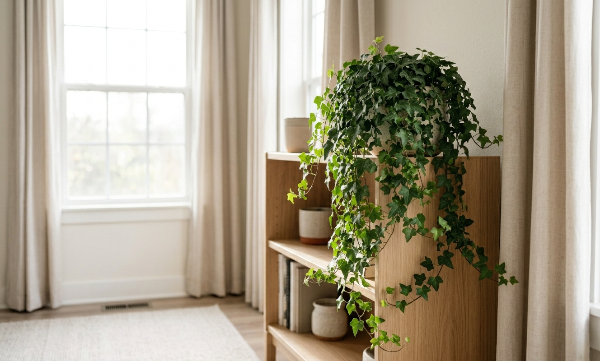
Living Room
An east-facing window ledge is one of the best spots you can offer an ivy plant. It gets gentle morning light without harsh afternoon intensity. A bookshelf near but not directly in front of a bright window is equally good. The plant trails down beautifully and gets enough reflected light to stay dense.
One important note: avoid placing ivy near heating vents or radiators. The dry air from central heating is probably the single biggest reason indoor ivy plants struggle during winter.
Bathroom
If your bathroom has a window, ivy can genuinely thrive there. The ambient humidity from showers gives it the moisture it craves without any effort from you. A small potted ivy on a bathroom shelf looks great and stays healthier than it would in a dry living room. Just make sure the window provides some real light. A frosted north-facing window alone will not be enough.
Hanging Baskets
Ivy is ideal for hanging planters because the trailing vines show off well and air circulates the entire plant. One practical note: soil in hanging baskets dries out faster than pots sitting on a surface. Check moisture more frequently. Letting ivy dry out completely for extended periods stresses the plant and invites spider mites.
Shelves and Vertical Decor
High shelves work well aesthetically because the vines hang down like a natural green curtain. But check the light situation honestly before placing ivy up high. If your shelf is in a dim corner, a pothos or heartleaf philodendron will serve you better. Ivy needs more light than people assume.
Desks and Home Offices
A small ivy near your workspace is manageable and pleasant. Just be realistic about natural light. If you are working in a room with one north-facing window and no supplemental grow light, opt for Irish ivy, and expect slower growth.
Common Mistakes That Beginner Growers Make with Ivy Plants
- Overwatering is the most common issue. Ivy roots do not like sitting in soggy soil. Water thoroughly, then let the top half-inch of soil dry before watering again. In winter, when growth slows, the interval between waterings should stretch considerably.
- Ignoring the humidity problem. Central heating in winter drops indoor humidity to desert-like levels. Ivy notices. Leaves will brown at the tips, drop prematurely, or develop a crispy texture. A pebble tray with water under the pot, or a small room humidifier nearby, makes a real difference.
- Placing it in too much shade. Ivy tolerates low light. It does not thrive in low light. In deep shade, growth slows dramatically, stems become leggy and sparse, and variegated cultivars lose their pattern. Medium to bright indirect light is the real target.
- Ignoring airflow. Ivy benefits from gentle air circulation. Crowded, still-air environments encourage fungal issues and create ideal conditions for spider mites, which are the plant’s most persistent pest. Keeping ivy somewhere with some natural air movement helps it stay healthier.
- Letting vines grow completely unchecked. Unpruned ivy prioritizes length over density, producing long bare stems with sparse leaves. A light trim a couple of times a year, cutting back leggy stems to just above a leaf node, encourages bushier, fuller growth. It feels counterintuitive but genuinely helps.
- Underestimating spider mites. Dry indoor air plus a stressed plant is basically a welcome mat for spider mites. Check the undersides of leaves regularly, especially in winter. If you notice fine webbing or tiny moving dots, act fast. A thorough rinse of the foliage with lukewarm water and consistent humidity are your first lines of defense.
Frequently Asked Questions About Indoor Ivy Plants
Are indoor ivy plants easy to grow?
Broadly yes, but with one honest caveat. They are easy outdoors where humidity, airflow, and temperature fluctuations exist naturally. Indoors, especially in heated apartments, they need a bit more attention to humidity and watering consistency than most “easy” plant labels suggest.
Can ivy grow in low light indoors?
It can survive in low light, but you will notice weaker growth, more stem stretching, and loss of variegation in patterned cultivars. Consistently low light over time also weakens the plant and makes it more susceptible to pests. Medium indirect light is a more honest minimum.
Is English ivy safe to have indoors?
English ivy is mildly toxic to humans and pets if ingested, typically causing mouth and stomach irritation. It is worth keeping out of reach of young children and curious cats or dogs. The sap can also cause skin irritation in sensitive people, so wearing gloves when pruning is a sensible habit.
How fast do indoor ivy plants grow?
Faster than you might expect in good conditions. Indoors, with lower light and more stable temperatures, you might see 1 to 2 feet of new growth per year under typical conditions, and faster in very bright spots.
Do ivy plants need support indoors?
Not necessarily. Trailing freely is perfectly fine. But if you want ivy to climb, it needs something to attach to: a moss pole, small trellis, or piece of natural bark. The aerial rootlets it uses to climb can leave faint marks on painted walls, so redirect vines before they reach surfaces you would rather protect.
Why do my indoor ivy leaves turn brown at the tips?
Almost always a humidity issue. Brown leaf tips on ivy are a classic sign of dry air, which is very common in winter when heating systems are running. Boost humidity around the plant through a pebble tray, a nearby humidifier, or gentle misting. Just avoid leaving leaves wet for extended periods, which can encourage fungal spots.
Conclusion
Indoor ivy plants are genuinely rewarding. They are fast-growing, visually versatile, and bring a kind of casual natural elegance to a room that few plants match at the same price. They are a good fit for beginners who are willing to pay attention to two or three key variables: consistent but not excessive watering, decent indirect light, and some awareness of humidity.
Where people run into trouble is treating ivy like a cactus, setting it in a corner and forgetting it, or going the opposite direction and watering it every few days out of worry. Neither approach works. Ivy wants consistency, not intensity.
If you live in an apartment with central heating and modest windows, start with Irish ivy or Needlepoint English ivy. Both are more forgiving than the average cultivar. Give them a spot near your brightest window, invest in a pebble tray for humidity, and trim them back lightly once or twice a year.
Done right, indoor ivy plants will reward you with years of growth, easy propagation, and the kind of living, breathing aesthetic that no artificial plant can replicate.