
Succulents have quietly taken over windowsills, office desks, and living rooms around the world and it is easy to see why. They come in an incredible range of shapes, colors, and sizes. Some look like tiny rosettes, others resemble stacked green coins, and a few even trail beautifully over the edges of shelves. Whether you live in a spacious house or a small apartment, there is almost always a succulent that fits your space perfectly.
But here is something most beginners do not hear often enough: succulents are easy to grow, but they are not impossible to kill. Most people lose their plants not from neglect, but from too much care mainly overwatering and placing plants in poor lighting spots.
The good news is that learning how to care for succulents is not complicated at all. Once you understand a handful of core principles, watering, light, soil, and the right pot, you will be well on your way to growing healthy, thriving plants that reward you for years. This guide covers everything you need, from choosing your first plant to troubleshooting common problems.
Meet Your Succulent: Popular Varieties for Beginners
Before diving into care basics, it helps to know a little about the plants you are working with. The word “succulent” describes any plant that stores water in its thick leaves, stems, or roots. That adaptation is what makes them so drought-tolerant and low-maintenance compared to most houseplants.
Some of the most popular and beginner-friendly types include:

String of Pearls – Instantly recognizable with its bead-like leaves that cascade downward like a living necklace.
Echeveria – Rosette-shaped beauties available in purple, pink, grey, and green. One of the most widely sold succulents worldwide.
Jade Plant – A classic houseplant with smooth, oval leaves. Very long-lived and easy to grow indoors.
Aloe Vera – Practical and beautiful. The gel inside its leaves is well known for soothing minor burns and skin irritations.
Zebra Haworthia – A compact, striped plant that tolerates lower light better than most succulents, making it ideal for apartments.
Burro’s Tail – A trailing succulent perfect for hanging baskets or high shelves.
Each of these varieties has its own personality, but they all follow the same basic care routine. That makes succulents one of the most versatile plant families a beginner can start with.
Succulent Care at a Glance
Use this quick-reference table to understand the core care needs for the most popular beginner succulents:
| Succulent | Sunlight (hrs/day) | Watering (Summer) | Watering (Winter) | Difficulty Level |
|---|---|---|---|---|
| Echeveria | 5 – 6 hrs | Every 10 days | Every 30 days | Easy |
| Jade Plant | 4 – 5 hrs | Every 10 days | Every 35 days | Easy |
| Aloe Vera | 5 – 6 hrs | Every 12 days | Every 35 days | Easy |
| Zebra Haworthia | 2 – 4 hrs | Every 14 days | Every 40 days | Very Easy |
| Burro’s Tail | 5 – 6 hrs | Every 10 days | Every 30 days | Moderate |
| String of Pearls | 4 – 5 hrs | Every 10 days | Every 35 days | Moderate |
Tip: These are general guidelines. Always check the soil before watering – if it still feels damp even slightly, wait a few more days.
Care Basics: The Golden Rule of Succulent Keeping
Every experienced succulent grower will tell you the same thing: these plants prefer neglect over attention.
It is genuinely true. Succulents evolved in dry, rocky environments where water was scarce. Their thick, water-storing tissues are a direct result of that tough upbringing. When you bring one indoors, you are not doing it a favor by watering it every day or moving it around constantly.
The basics of care for succulents come down to three things:
- Bright light
- Infrequent but thorough watering
- Fast-draining soil
Get those three right, and you have already solved 90 percent of common succulent problems.
Watering Succulents: Less Is Almost Always More
Watering is the area where most beginners go wrong. It is tempting to water succulents every few days, especially when the soil looks dry on top. But appearances can be misleading the soil deeper in the pot may still hold plenty of moisture.
The correct approach is the soak and dry method:
- Water thoroughly until it flows freely out of the drainage holes.
- Empty the saucer beneath the pot so the plant does not sit in standing water.
- Wait until the soil is completely dry all the way through before watering again.
During spring and summer, most indoor succulents need water roughly every one to two weeks. In autumn and winter, when growth slows significantly, you can reduce that to every three to four weeks.
Signs of Overwatering
Overwatering is the single most common cause of succulent death. Look out for:
- Yellow or translucent, mushy leaves
- Stems that feel soft or squishy at the base
- Leaves that fall off with the lightest touch
- A foul smell coming from the soil or roots
- Dark brown or black spots near the base of the plant
If you notice these signs, stop watering immediately, check the roots, and let the soil dry out completely before resuming your care routine.
Signs of Underwatering
On the other end of the spectrum, underwatered succulents also give clear signals:
- Wrinkled, shriveled leaves
- Dry, crispy leaf edges
- The plant is leaning or drooping
- Very slow or stunted growth
A little underwatering is far less dangerous than overwatering. When in doubt, wait a few more days before reaching for the watering can.
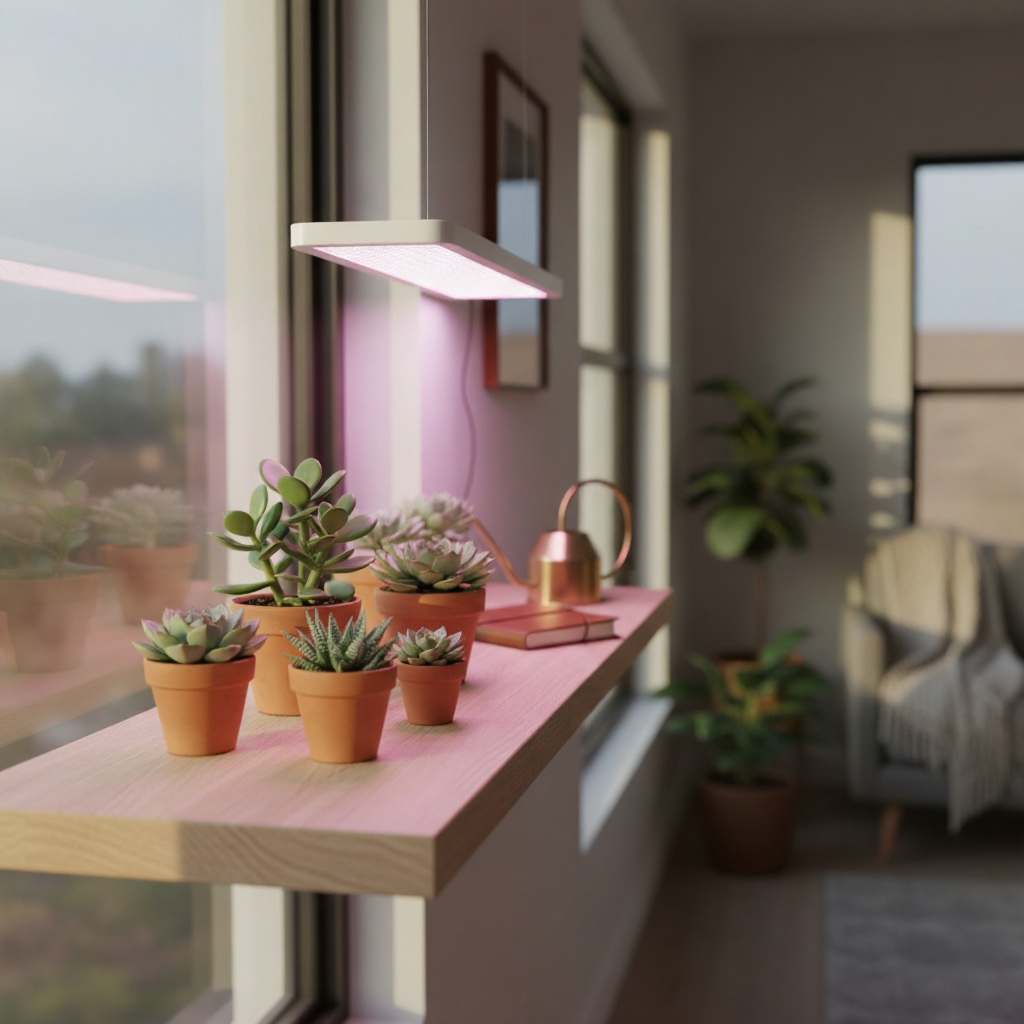
Lighting: Give Them the Sunshine They Love
Most succulents are sun worshippers. In their natural habitats, they bask in strong light for many hours a day. Indoors, replicating that environment is key to keeping them happy.
The ideal spot for most succulents is a south-facing or west-facing windowsill that receives four to six hours of bright light each day. If you cannot offer that, east-facing windows work reasonably well for less sun-hungry varieties like Haworthia.
Without adequate light, succulents begin a process called etiolation, commonly called “leggy growth.” The plant stretches its stem upward and outward in search of light, becoming tall, pale, and spindly. While not immediately fatal, leggy growth weakens the plant over time and is difficult to reverse.
Practical lighting tips:
- Rotate your pot a quarter turn every week so all sides receive even light exposure.
- Gradually introduce plants to stronger light rather than moving them suddenly from a dim corner to direct harsh sun.
- Consider a grow light if your home has limited natural light. Basic LED grow lights are affordable and can make a big difference.
- Keep an eye on delicate varieties during peak summer afternoons too much intense direct sun through glass can scorch leaves.
Soil for Succulents: Drainage Is Everything
Regular potting soil is designed to hold moisture for a long time which is exactly the opposite of what succulents need. Using standard potting mix is one of the quickest paths to root rot.
The best soil for succulents drains quickly, allows air to circulate around the roots, and dries out reasonably fast after watering. You have two main options:
Option 1: Buy a ready-made mix. Most garden centers and plant shops sell cactus and succulent potting mixes. These work well straight out of the bag for most beginners.
Option 2: Make your own mix. Combine equal parts of standard potting soil, perlite (a lightweight volcanic mineral that improves drainage), and coarse sand or pumice. This gives you full control over the texture and drainage quality.
A quick test: after watering, water should pass through the soil and out the drainage holes within a few seconds. If it pools on the surface and takes a long time to absorb, your mix is too dense.
Choosing the Right Pot
The pot you choose plays a bigger role than most people realize. Here is what to look for:
- Always choose a pot with drainage holes. No exceptions. Without drainage, excess water collects at the bottom and invites root rot.
- Terracotta pots are an excellent choice for succulents because the porous material wicks away excess moisture, helping the soil dry faster.
- Ceramic or plastic pots retain moisture longer. If you use these, you will need to water less frequently to compensate.
- Choose a pot that is only one to two inches larger than the root ball. Oversized pots hold too much soil and moisture for the plant to handle.
When repotting which is typically needed every one to two years use fresh succulent soil, handle roots gently, and avoid watering for several days afterward to let any disturbed roots heal.
Seasonal Succulent Care
Succulents are not static they respond to the changing seasons, even indoors.

Spring and Summer (Active Growth Season): This is when succulents grow most vigorously. Increase watering slightly, make sure they are getting maximum light, and consider giving them a light dose of diluted liquid fertilizer once or twice during this period.
Autumn and Winter (Rest Season): Growth slows down, and so should your watering. The combination of slower growth and slower evaporation means the soil stays moist for longer, raising the risk of root rot if you are not careful. Reduce watering frequency and hold off on fertilizing entirely.
Indoor heating during winter can dry the air, but most succulents handle low humidity very well, so this is rarely a concern.
Common Problems and How to Fix Them
Even well-cared-for succulents occasionally run into trouble. Here are the most common issues and their solutions:
Root Rot: Caused by overwatering or poor drainage. Remove the plant from its pot, trim any black or mushy roots, let them air dry for a day or two, then replant in fresh dry succulent soil.
Mealybugs: These tiny white, cottony pests love to hide in the crevices between leaves. Treat them by dabbing each bug with a cotton swab dipped in rubbing alcohol, or spray the plant with diluted neem oil.
Spider Mites: Almost invisible, they leave fine webbing on leaves. Improve airflow around the plant, wipe leaves clean, and use an insecticidal soap spray.
Sunburn: Brown or white patches on leaves after intense sun exposure. Move the plant to a spot with bright but filtered light.
Leggy Growth: Always a sign of insufficient light. Move the plant closer to a window or introduce a grow light.
Conclusion
Learning how to care for succulents is genuinely one of the most satisfying journeys a beginner gardener can take. These plants are forgiving, endlessly varied, and once you find your rhythm with them, they thrive beautifully with very little fuss.
Keep it simple: bright light, well-draining soil, and restrained watering. Master those three things, and your succulents will reward you with vibrant, healthy growth for years to come.
Do you have your own succulent care tips, a favourite variety, or a question about a struggling plant? Share your experiences in the comments below. The plant community loves hearing from fellow growers. Happy planting!