
Vine plants can completely change the feel of an indoor space, which is one reason Vine Plants Indoor has become a useful search topic for people decorating smaller homes and apartments. Let them trail from a shelf, climb a support, or spill from a hanging basket, and suddenly an otherwise empty corner feels much more alive. The best Vine Plants Indoor are not just decorative either. Many are surprisingly easy to care for, which makes them a good choice for beginners who want noticeable growth without turning plant care into a daily chore.
The main thing to get right with Vine Plants Indoor is choosing a vine that matches your room. A plant that loves bright filtered light may struggle in a dark hallway, while a shade-tolerant variety may grow perfectly well several feet away from a window. Watering habits, humidity, and the type of support you provide also make a difference.
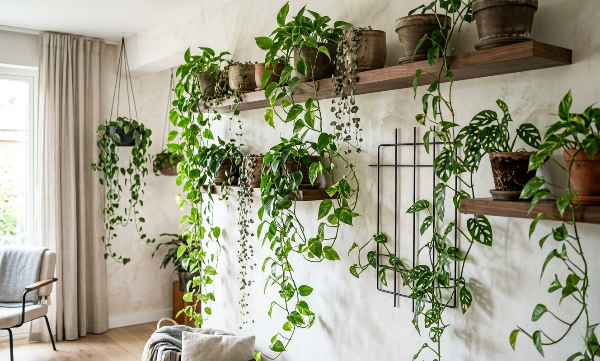
What Are Vine Plants Indoor?
Vine plants are plants with long, flexible stems that naturally trail, climb, or spread as they grow. Some use aerial roots or other structures to attach themselves to supports, while others simply cascade downward from shelves and hanging planters.
When choosing Vine Plants Indoor, think about how you want the plant to grow and how much space you can give the mature vines. Trailing varieties work beautifully in hanging baskets and on bookshelves, while climbing plants look better when trained around a trellis, moss pole, or other support.
For a small apartment, this vertical growth is especially useful because you can add greenery without sacrificing much floor space. ClassyPlants also covers this approach in its guide to indoor hanging plants, where trailing plants are used to make practical use of shelves, windows, and other small spaces.
Best Vine Plants Indoor to Grow
1. Pothos
For Vine Plants Indoor, pothos is probably the easiest place to start. It grows quickly, produces long trailing stems, and tolerates a range of indoor conditions. Golden, marble queen, and neon pothos all offer slightly different leaf colors and patterns.
Pothos can handle lower light, although growth is generally better with bright, indirect light. Let the top layer of soil dry before watering rather than keeping the pot constantly wet.
For more plant-specific advice, see the Pothos plant care guide.
2. Heartleaf Philodendron
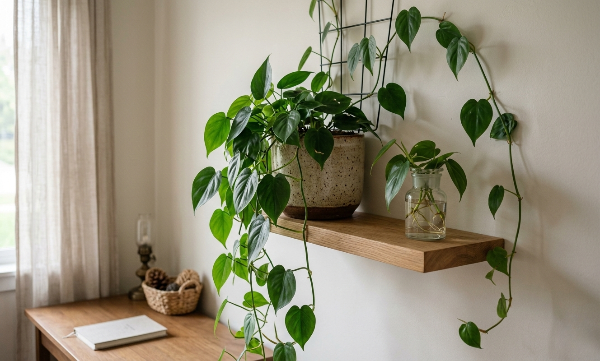
For Vine Plants Indoor collections, heartleaf philodendron has soft, heart-shaped leaves and long vines that look especially good cascading from a shelf. It is adaptable and generally forgiving when grown indoors.
Give it bright, indirect light for stronger growth, but it can tolerate moderate or lower light. Avoid leaving its roots in soggy soil.
3. String of Hearts
String of hearts is a beautiful choice if you want something more delicate. Its thin stems and small heart-shaped leaves can form surprisingly long trails.
This plant prefers plenty of bright, indirect light and a fast-draining potting mix. It also needs less frequent watering than moisture-loving tropical vines, so it is better suited to someone who tends to forget watering than someone who waters too often.
4. Hoya
Hoyas are often grown as trailing options among Vine Plants Indoor, although many can also be trained to climb. Their thick leaves store some moisture, making them more forgiving of occasional dry periods than plants with very thin foliage.
Bright, indirect light is ideal, and some varieties can eventually produce fragrant flowers when mature and given suitable conditions.
5. English Ivy
English ivy has a classic trailing appearance and is one of the more traditional Vine Plants Indoor choices for shelves and hanging baskets. Indoors, however, it needs good light and careful attention to watering.
It is not the best choice for a consistently warm, dry room if you are looking for a completely hands-off plant. Check the foliage regularly for pests, especially when conditions are dry.
6. String of Pearls
String of pearls has unusual bead-like leaves and can add a very different texture to a collection of Vine Plants Indoor. Because it is a succulent, its care is very different from that of pothos or philodendron.
Give it strong light, excellent drainage, and time to dry between waterings. A common mistake is treating it like a typical tropical vine and watering too often.
7. Monstera adansonii
Monstera adansonii is a climbing plant and one of the most distinctive Vine Plants Indoor options for people who want a foliage-heavy display. It can trail when grown in a hanging container, but it becomes more impressive when given a support to climb.
Bright, indirect light usually produces stronger growth. A moss pole or simple trellis can help the stems grow upward instead of becoming tangled.
8. Tradescantia
Tradescantia species are popular for their fast growth and colorful foliage. Depending on the variety, the leaves may feature shades of green, purple, silver, or pink.
These plants generally appreciate bright, indirect light. Too little light can make the stems stretch and the foliage lose some of its color.
9. Arrowhead Plant
Arrowhead plant, also called Syngonium, starts with a compact growth habit but can become a trailing or climbing plant as it matures. Its arrow-shaped leaves give it a different look from the more common heart-shaped vines.
It prefers bright, indirect light and evenly but lightly moist soil. A support can help keep the growth more upright.
10. Satin Pothos
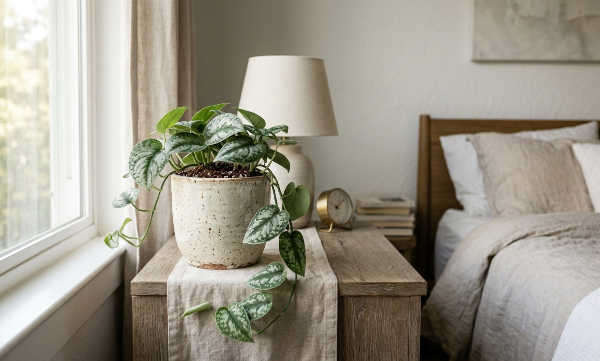
Satin pothos is not a true pothos, but its trailing habit makes it a popular indoor vine. Its dark green leaves have silvery markings that stand out particularly well against a plain wall.
It prefers bright, indirect light and should not be kept constantly wet. Allow the growing medium to dry somewhat between waterings.
11. Lipstick Plant
Lipstick plants produce long, cascading stems and can reward good care with colorful tubular flowers. They prefer bright, indirect light and moderate humidity.
Compared with pothos, they need a little more attention to light and watering, but they can make a striking hanging plant when conditions are right.
12. Creeping Fig
Creeping fig can be trained across a support or allowed to trail, although it generally looks best when its growth has something to attach to. It needs good light and consistent care to maintain dense foliage indoors.
Give it a stable location rather than moving it repeatedly, and avoid letting the soil remain saturated.
How Much Light Do Vine Plants Need?
Light is one of the biggest factors when choosing Vine Plants Indoor, because trailing plants can look similar while having very different tolerance levels. There is no single lighting requirement for every variety.
Pothos and heartleaf philodendron are more forgiving of lower light. String of hearts, string of pearls, and many colorful Tradescantia varieties usually perform better with brighter indirect light.
A useful rule is to look at the distance between the plant and the window. The farther away you move a plant from a natural light source, the less usable light it receives. A room that feels bright to your eyes can still be relatively dim for a plant.
For spaces with limited natural light, ClassyPlants’ low-light indoor plants guide is a useful companion when deciding which varieties are more likely to adapt.
How to Water Indoor Vines
For Vine Plants Indoor, watering should depend on the plant, pot, soil, season, and amount of light it receives rather than a fixed weekly schedule.
Before watering, check the soil with your finger. If the top layer is still damp, give it more time. When watering is needed, water thoroughly until excess moisture drains from the bottom of the pot.
This is particularly important for hanging planters because excess water can remain trapped inside decorative outer containers. Never assume a hanging plant needs more water simply because its leaves look slightly soft.
For a quick reference, the houseplant care chart can help you compare the basic light, watering, temperature, humidity, and soil needs of common houseplants.
What Soil Is Best for Vine Plants?
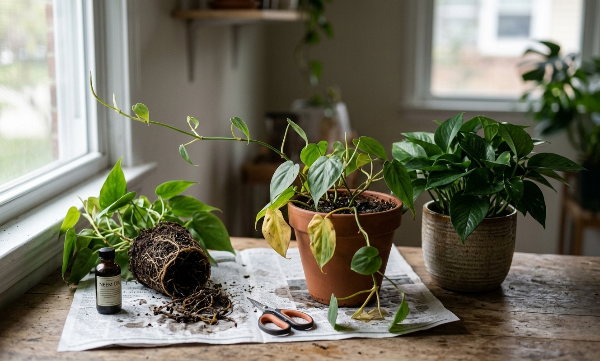
Most Vine Plants Indoor do better in a light, well-draining potting mix rather than heavy garden soil. The exact mix depends on the plant.
Tropical vines such as pothos and philodendron generally appreciate a mix that holds some moisture but still allows air to reach the roots. Succulent-style vines such as string of pearls need much faster drainage.
If you are unsure which mix to choose, the ClassyPlants guide to best soil for indoor plants explains how different houseplants respond to different growing mixes.
Should Vine Plants Climb or Trail?
This mostly depends on the plant and the look you want.
Trailing plants are ideal for:
- Hanging baskets
- Tall shelves
- Bookcases
- Window ledges
- Plant stands
Climbing vines are better suited to:
- Moss poles
- Trellises
- Wall supports
- Decorative arches
Some plants can do both. Pothos, philodendrons, hoyas, and Monstera adansonii can all be trained upward or allowed to cascade.
Common Problems With Vine Plants
Long, bare stems usually indicate that a plant is not receiving enough light or is growing in a way that leaves the lower portions of the vine without enough usable light.
Yellow leaves can have several causes, including overwatering, poor drainage, natural aging, or environmental stress. Brown, crispy leaves may point toward dry soil, low humidity, intense sunlight, or inconsistent care.
Do not automatically water a struggling vine when you notice a leaf problem. Check the soil and the plant’s light conditions first. A little diagnosis can prevent you from turning a minor issue into root damage.
How to Make Indoor Vines Look Fuller
If your vine looks thin or has long sections of bare stem, look at its light first. Insufficient light often leads to stretched growth with larger gaps between leaves.
Pruning can also encourage a fuller appearance. Instead of cutting only the longest stem at the very end, make cuts just above a healthy node. On suitable species, new growth can develop from these points and create a bushier plant.
You can also guide several stems back into the same pot. This works particularly well with pothos and philodendrons and gives the appearance of a fuller plant without needing a much larger container.
Do not remove large amounts of healthy growth at once, though. Gradual pruning is easier for the plant to recover from.
How to Choose the Right Vine for Your Room
Before buying Vine Plants Indoor, look at three things: available light, available space, and how often you realistically want to water.
For darker rooms, pothos and heartleaf philodendron are generally more forgiving. If you have a bright window and want something more unusual, string of hearts or string of pearls may be more suitable.
Think about your furniture too. A plant with aggressive trailing growth may quickly outgrow a narrow shelf, while a slower-growing vine can be easier to manage in a small apartment.
If you already have several houseplants, it can also help to compare their needs before adding another one. That way, plants with similar watering and light requirements can be grouped together.
Final Thoughts
The best Vine Plants Indoor are the ones that match your space, your available light, and your actual care routine. Pothos and heartleaf philodendron are excellent choices when you want something forgiving, while string of hearts, hoyas, Tradescantia, and Monstera adansonii offer more distinctive shapes and textures.
Start by looking at your available light, decide whether you want the plant to climb or trail, and choose a pot with proper drainage. Once the basic conditions are right, many indoor vines can grow into beautiful, living features that make a room feel much more finished.
Happy planting!