
Picture this: it’s 2:30 PM, your third coffee has worn off, your eyes feel like sandpaper from staring at a screen, and your open-plan office smells faintly of someone’s reheated lunch. Now imagine a small, leafy plant sitting right next to your monitor. Research from the University of Exeter found that adding plants to previously bare offices increased employee productivity by 15 percent and improved reported wellbeing considerably. The best plants for office spaces aren’t just decoration. They’re one of the cheapest performance upgrades you can make to your workspace.
The problem is that offices are genuinely hostile environments for most plants. Fluorescent or LED lighting only, zero humidity from central air conditioning, unpredictable watering because you’re not there on weekends, and temperature fluctuations from HVAC systems running constantly. So the question isn’t just which plants look good on a desk. It’s which plants can survive and grow under conditions that would stress most houseplants significantly.
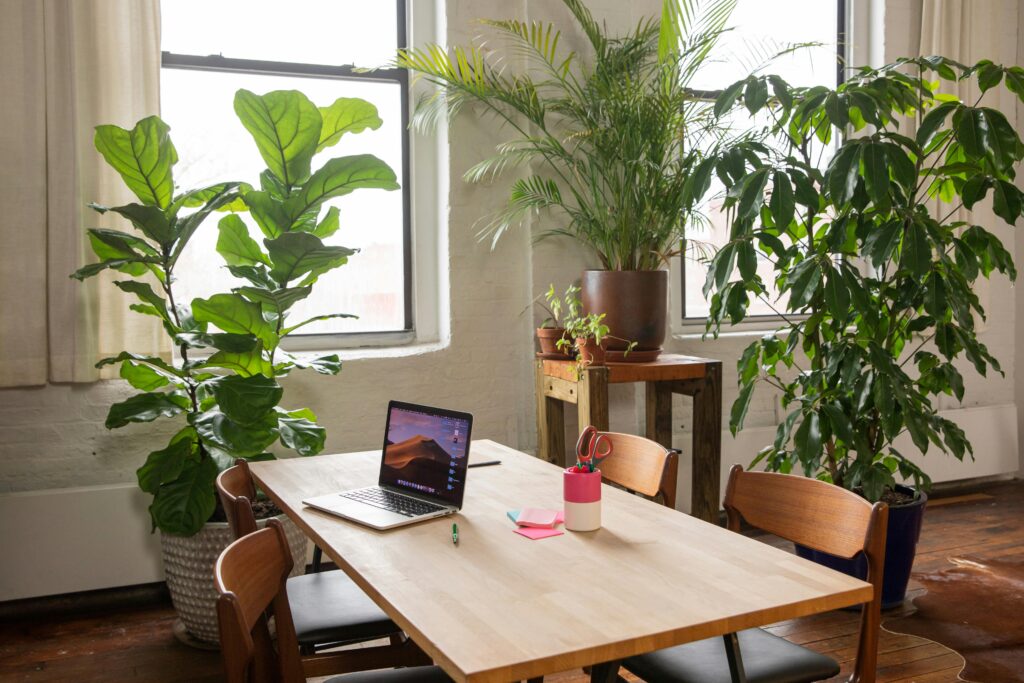
These 10 plants can handle it. And I’ve ranked them based on how well they perform in real office conditions, not ideal greenhouse conditions.
Why Office Conditions Are Harder Than You Think
Most plant care guides assume you’re home all day watching your plants. Offices break that assumption in several ways.
Artificial lighting produces a fraction of the energy that natural light does, even near windows. Central heating and air conditioning drop indoor humidity to 20 to 30 percent, far below what tropical plants prefer. Weekend and holiday gaps create irregular watering schedules. And the temperature drops when the HVAC shuts off at night or over weekends in many office buildings, which stresses heat-sensitive plants.
Add in the social reality of office life, which is that your plant competes for counter space with monitors, papers, coffee mugs, and chargers, and the case for compact, low-maintenance varieties becomes obvious.
The good news: several species evolved specifically to tolerate neglect, low light, and dry air. They’ve been surviving in offices for decades. They’ll survive yours too, as long as you pick the right ones.
The 10 Best Plants for Office Spaces, Ranked
1: ZZ Plant (Zamioculcas zamiifolia) – The Unbeatable Office Survivor
The ZZ plant earns the top spot because it handles everything offices throw at it without complaint. Artificial lighting only? Fine. Two weeks without water because of a holiday break? No problem. Dry air from constant air conditioning? It stores water in its rhizomes and simply doesn’t care.
I’ve seen ZZ plants sitting on office desks under fluorescent lights for years, looking identical to the day they were purchased. That’s not an exaggeration. Their growth rate is slow, which actually works in your favor in an office context: no repotting needed for 2 to 3 years, no surprise vines falling off your monitor, no visible decline between Monday and Friday.
Office setup: A 6-inch (15 cm) pot on any desk or shelf, no window required. Water once every 3 to 4 weeks. Do not fertilize more than once every 6 to 8 weeks during spring and summer.
One important note: ZZ plants are toxic to pets and mildly irritating to human skin. Wear gloves when handling and avoid home offices where pets roam freely.
2: Pothos (Epipremnum aureum) – The Fast-Growing Visual Impact Pick
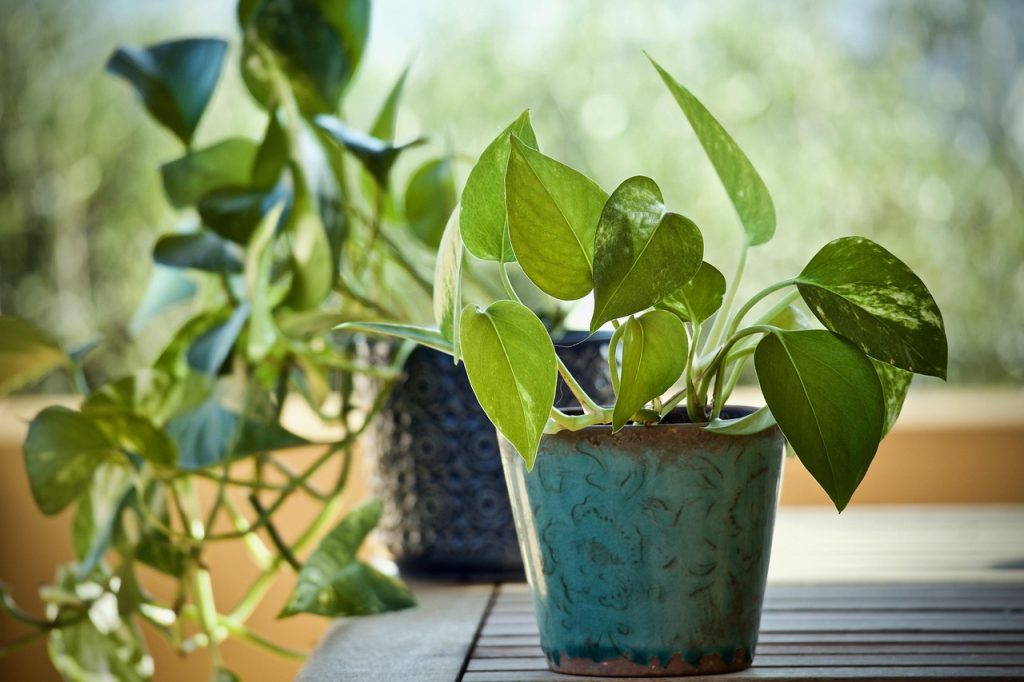
Pothos is the most common office plant in the world for a reason. It grows visibly fast even under fluorescent lights, which makes it psychologically satisfying to have on your desk. Watching a pothos vine extend a few inches over a week is genuinely rewarding in a way that slower plants aren’t.
Trail it along a desk edge, hang it from a shelf above your monitor, or let it cascade from a small planter on a filing cabinet. It filters formaldehyde, benzene, and carbon monoxide from office air, which matters more than most people realize in sealed office buildings where VOCs from furniture, carpet, and paint accumulate with no way out. air purifying plants
Office setup: Tolerates low to medium light. Water when the top 2 inches (5 cm) of soil dry out. In a dry office, that usually means every 7 to 10 days.
Worth noting: Toxic to pets. Not the right choice for home offices shared with cats or dogs.
3: Snake Plant (Sansevieria trifasciata) – The Structural Statement
Snake plants bring something most desk plants can’t: genuine architectural presence. A tall Sansevieria in a corner or beside a monitor adds clean vertical lines and a sculptural quality that makes your workspace look intentional rather than thrown together.
They filter toxins from office air through CAM photosynthesis, which means they continue working during the overnight hours when you’re not in the office. This makes them particularly effective in enclosed spaces with limited air exchange.
Pro Tip: In an office with only fluorescent lighting, place snake plants closer to the light source rather than in corners. They tolerate low light but grow faster and stay more attractive under moderate artificial light. snake plant care
Water every 3 to 5 weeks in a heated office. Moderately toxic to pets according to ASPCA Poison Control.
4: Peace Lily (Spathiphyllum) – The Allergy Sufferer’s Office Plant
Open-plan offices are allergy minefields. Dusty carpets, shared printers that emit ozone and fine particles, recycled air, and cleaning products used after hours all contribute to indoor air quality that’s measurably worse than outdoor air in most cases.
Peace lilies ranked among the top performers in NASA’s Clean Air Study for removing ammonia, benzene, formaldehyde, and trichloroethylene from enclosed spaces. For people who spend 8 to 10 hours daily in a shared office, that filtering function is worth having on your desk.
They also give clear watering signals. When a peace lily needs water, it droops. After watering, it stands back up within 30 minutes. For people who struggle with inconsistent watering schedules, a plant that tells you exactly when it’s thirsty removes the guesswork entirely.
Office setup: Low to medium indirect light. Tolerates the dim conditions near windowless interior desks better than most flowering plants. Toxic to pets, so keep away from any animals that access the office space. allure of peace lilies
5: Spider Plant (Chlorophytum comosum) – The Pet-Safe Desk Plant
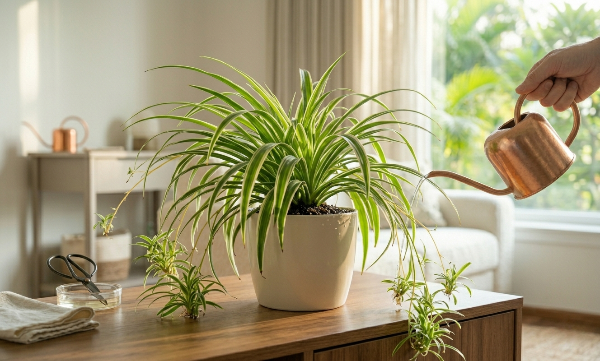
Spider plants are the correct choice for anyone with pets in a home office. They’re completely non-toxic to cats and dogs according to ASPCA Poison Control, which is a short list when you review most popular office plants. They also produce visible, satisfying growth in the form of trailing baby spiderettes that dangle from the parent plant over time.
The best plants for office spaces need to handle dry air from heating and air conditioning. Spider plants do this without leaf curl or browning edges, as long as you switch to filtered or distilled water if your tap water contains high fluoride. Brown leaf tips are almost always a fluoride issue, not a care failure.
Pro Tip: Place spider plants near your monitor where you’ll see them frequently. The visual reminder to take a quick break and focus on something green reduces eye strain better than any screen filter.
6: Chinese Evergreen (Aglaonema) – The Low-Light Color Option
Most low-light office plants are strictly green. Chinese evergreens break that pattern with varieties that range from deep forest green to silver, red, pink, and bright yellow-green. They add visual personality to a desk without demanding conditions that an office can’t provide.
They’re ranked sixth rather than higher because they’re mildly toxic to pets and slightly more sensitive to cold drafts from air conditioning vents than the plants above them. But for office placement away from direct AC flow, a well-chosen Aglaonema variety in a 4 to 6 inch (10 to 15 cm) pot is genuinely one of the most attractive options on this list.
Water every 10 to 14 days and keep away from cold air blowing directly on the leaves. Low to medium indirect light works well. Toxic to pets according to ASPCA Poison Control.
7: Rubber Plant (Ficus elastica) – The Statement Corner Piece
If your office has a corner with medium indirect light and you want a plant that makes the room look completely different, get a rubber plant. A 3 to 4 foot (90 to 120 cm) specimen in a clean ceramic pot transforms a dead corner into an intentional design element.
The large, glossy leaves filter formaldehyde from office air with impressive efficiency given how much surface area each leaf provides. Wipe leaves monthly with a damp cloth to remove dust, which builds up faster in offices than in home environments. Dust on leaves blocks photosynthesis and makes the plant look dull.
Office setup: Medium indirect light minimum. Tolerates being near a north-facing window but grows slowly without more light. Water when the top 2 to 3 inches (5 to 8 cm) of soil dry out. Mildly toxic to pets, and the milky sap can irritate skin during pruning large indoor plants for low light.
8: Succulents (Various) – The Windowsill-Only Desk Pick
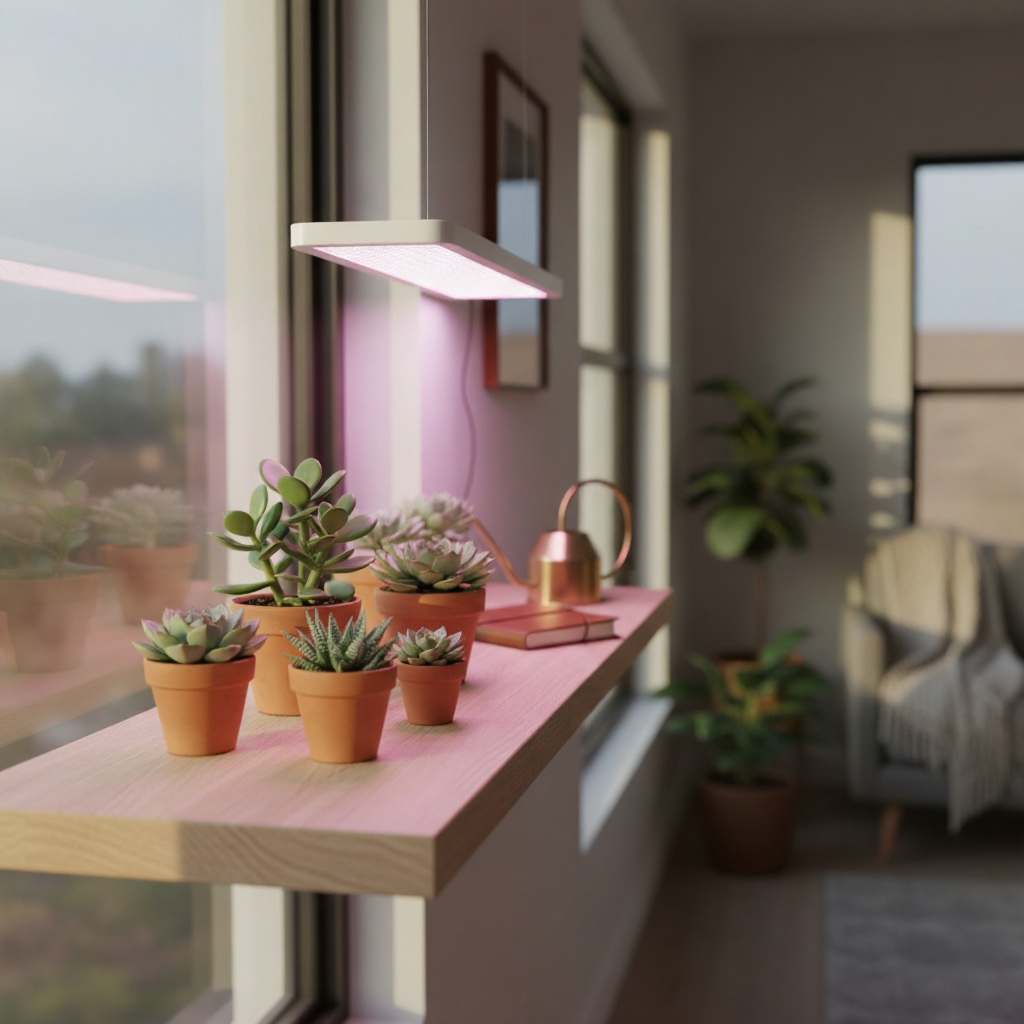
Succulents earn a spot on this list with a firm caveat: they only belong in offices with genuine window light, meaning at least 3 to 4 hours of natural light daily. Put a succulent under fluorescent lighting away from a window, and it will slowly stretch, lose its compact shape, and eventually collapse over the following months.
But for a desk that sits beside a south or east-facing window, a small succulent collection requires almost nothing. Water every 2 to 3 weeks, use cactus mix, and they’re done. They also fit in tiny spaces: a 2 to 4 inch (5 to 10 cm) pot on the corner of a keyboard tray, a row of small echeverias along a windowsill, or a single haworthia in a glass container as a desk centerpiece.
Most succulents are non-toxic to pets, though a few varieties like jade plants are mildly toxic. Check the specific variety against ASPCA Poison Control before placing in a pet-accessible home office.
9: Lucky Bamboo (Dracaena sanderiana) – The Zero-Soil Desk Option
Lucky bamboo grows in water, which makes it uniquely suited for desk placement. No soil, no drainage tray, no water running out the bottom. Set several stalks in a clean glass vase or ceramic container with 1 to 2 inches (2.5 to 5 cm) of room-temperature water and change the water every two weeks to prevent algae.
It handles low light and office air conditioning without browning or wilting. Yellow leaves mean too much direct light or too much fluoride in tap water. Switch to filtered water and move away from direct sun exposure if this happens.
Worth noting: Mildly toxic to cats and dogs if ingested. Not ideal for home offices where pets have desk access.
10: Cacti – The Neglect-Proof Window Plant
Cacti hold the last spot because they need window light and handle almost total neglect, which makes them specifically useful for frequent travelers or people with inconsistent schedules. Water once a month, place near a window, ignore them the rest of the time.
The best plants for office spaces ultimately depend on your specific conditions. Cacti work when others fail because they evolved to survive weeks without water in harsh, bright conditions. A small barrel cactus or columnar cactus on a windowsill requires almost nothing and lasts years without repotting.
Most cacti are non-toxic to pets, though spines are an obvious physical hazard. Keep out of reach of curious animals and high-traffic desk areas where accidental contact is likely.
Where to Place Plants in Your Office: Room-by-Room Logic
How you position the best plants for office use matters as much as which plants you choose. A few guidelines that hold up consistently:
- Desk plants should be compact (under 12 inches / 30 cm), low-maintenance, and positioned where you’ll actually see them without straining your neck. ZZ plants, small pothos, spider plants, and succulents fit this category. The psychological benefit of greenery requires that the plant is within your field of view, not tucked on a shelf behind you.
- Shelf and cabinet-top plants can be slightly larger and trailing. Pothos and spider plants with cascading vines look intentional from this position and don’t take up desk surface area.
- Floor corner plants need to be substantial enough to register visually from across the room: rubber plants, snake plants in tall pots, or peace lilies in medium floor containers. A small pot in a large corner looks abandoned. Go big or use the space for something else.
- Windowsill plants are strictly for light-demanding varieties: succulents, cacti, aloe vera, and orchids. Don’t waste a good windowsill on a ZZ plant or snake plant that would thrive equally well in lower light.
4 Office Plant Mistakes That Waste Money
- Buying plants based on aesthetics alone.
- That trailing string of pearls looks spectacular in the plant shop. In your interior office desk with fluorescent lighting, it’ll be dead within 6 weeks. Always match the plant to your actual light conditions before buying, not after.
- Watering on a fixed schedule instead of checking soil.
- Office environments vary week to week. The office is warmer in summer with windows open, cooler and drier in winter with heating running. A fixed “every Tuesday” watering schedule ignores those changes. Check soil with your finger every time. Water when it’s dry. Skip it when it isn’t.
- Placing plants directly under air conditioning vents.
- Cold, dry air blowing constantly on leaves causes rapid moisture loss and temperature stress. Move any plant at least 3 feet (90 cm) away from overhead AC vents. This single adjustment prevents more office plant deaths than any other change.
- Choosing high-maintenance plants because they look impressive.
- Maidenhair ferns, fiddle leaf figs, and calatheas are beautiful. They’re also demanding, sensitive to dry air, and unforgiving of irregular watering. An office environment is the wrong place for plants that require daily attention. Save those for home setups where you can monitor them closely.
Frequently Asked Questions
What are the best plants for office desks with no natural light?
ZZ plants, snake plants, and pothos are the three best options for offices with only artificial lighting. All three survive indefinitely under fluorescent or LED lighting without natural light. For longer-term health, rotate them to a brighter location at home every few months if possible.
Do office plants actually improve productivity?
Yes, according to multiple studies. Research from the University of Exeter found a 15 percent productivity increase in offices with plants compared to bare offices. A separate study in the Journal of Experimental Psychology found that plants improved concentration and reduced attention fatigue. The effect is real and measurable, even with just one or two small plants on your desk.
How do I keep office plants alive over long weekends and holidays?
Choose drought-tolerant varieties like ZZ plants, snake plants, or succulents that handle 2 to 3 weeks without water comfortably. For longer absences, self-watering pots or a simple slow-drip watering spike from any garden center extends watering intervals by 1 to 2 weeks self watering pots for indoor plants.
Are the best plants for office spaces safe for shared workplaces with allergies?
Most non-flowering office plants produce no significant pollen and don’t trigger typical airborne allergies. Peace lilies, spider plants, ZZ plants, pothos, and snake plants are all low-allergen options. If you or a colleague has known plant allergies, avoid flowering plants and stick to the foliage-only varieties on this list.
Can I keep plants in an office cubicle?
Yes. ZZ plants, pothos, and snake plants all survive cubicle conditions with minimal natural light. A small pothos in a hanging container at the top of your cubicle wall adds greenery without taking up desk space. Keep plants away from the interior of cubicle fabric walls where moisture can cause mildew.
How many plants should I have in my office space?
For a standard office desk area, one to three small to medium plants hits the sweet spot. Enough to experience the air quality and psychological benefits, not so many that plant care becomes its own task that adds stress. For a private office with a floor area of 100 to 150 square feet (9 to 14 square meters), NASA recommends three to four plants for meaningful air purification.
What’s the best low-maintenance plant for a home office?
The ZZ plant if you want zero effort. The pothos if you want visible growth that feels satisfying. Both handle the inconsistent watering schedules and artificial lighting that home offices often involve. The best plants for office use at home are the same ones that work in commercial offices: durable, forgiving, and attractive without demanding daily attention.
Should I fertilize my office plants?
During spring and summer, once a month with a half-strength balanced liquid fertilizer is sufficient. Skip fertilizer entirely from October through March. Plants in office conditions with lower light than ideal grow slowly, so they need even less fertilizer than the standard guidance suggests. Over-fertilizing slow-growing office plants causes salt buildup in soil and brown leaf edges.
Your Office Deserves at Least One Plant
The best plants for office environments aren’t rare or expensive. Most of them cost less than a lunch out and last years with minimal investment of time or attention. A ZZ plant on your desk, a pothos trailing from the shelf above your monitor, a snake plant in the corner beside your filing cabinet: any one of those changes the energy of a workspace in ways that are hard to quantify but easy to feel.
Start with one. Pick the right one for your light conditions using the quick guide below, let it settle in for a few weeks, and you’ll understand why office plant enthusiasts are evangelical about this.
| Your Situation | Best Pick |
|---|---|
| No windows, only artificial light | ZZ plant or snake plant |
| Window with some natural light | Pothos, peace lily, or spider plant |
| Want something that blooms | Peace lily or orchid |
| Pets in the home office | Spider plant (100% non-toxic) |
| Frequent travel or long absences | ZZ plant or cactus |
| Small desk, limited space | Small pothos, succulent, or lucky bamboo |
| Want a floor statement piece | Rubber plant or tall snake plant |
Happy planting!