
The peace lily is the single most dramatic houseplant you’ll ever own, and I don’t mean that as a compliment. Miss one watering and it collapses like it’s dying. Give it too much sun and the leaves burn. Put it in the wrong spot and it refuses to bloom for years. Peace lily care has a reputation for being easy, and it can be, but only after you understand this plant’s very specific set of demands.
I’ve been growing Spathiphyllum for over ten years now, and I’ll be honest: my first peace lily taught me more through failure than success. It drooped constantly, developed brown tips on every leaf, and didn’t produce a single flower for two full years. What turned things around wasn’t some secret trick. It was understood that this tropical plant communicates clearly when something is off. Once I learned to read those signals, peace lily care became genuinely effortless.
Here’s everything I’ve figured out, starting with a quick reference you can screenshot and check anytime.

| Aspect | Details |
|---|---|
| Botanical Name | Spathiphyllum (multiple species and hybrids) |
| Common Names | Peace lily, White sails, Spathe flower |
| Plant Family | Araceae |
| Native Region | Tropical Americas, Southeast Asia |
| Light | Low to bright indirect. No direct sun. |
| Water | When top inch of soil is dry, roughly every 7-10 days |
| Humidity | 50-60% ideal, tolerates 40%+ |
| Temperature | 65-80 degrees F (18-27 degrees C) |
| Soil | Well-draining mix: 2 parts peat-based potting soil + 1 part perlite |
| Mature Size | 1-4 feet (30-120 cm) depending on variety |
| Growth Rate | Moderate |
| Toxicity | Toxic to cats and dogs (ASPCA). Causes oral irritation, drooling, vomiting. |
| Difficulty Level | Beginner-Friendly |
| USDA Zones | 11-12 outdoors. Indoor plant everywhere else. |
Why Your Peace Lily Keeps Drooping (And How to Fix It)
If you’re reading this because your peace lily just collapsed into a sad, wilted heap, take a breath. It’s almost certainly fine.
The dramatic droop is this plant’s signature move. It’s not dying. It’s telling you it’s thirsty. Spathiphyllum leaves lose turgor pressure fast when the roots run out of moisture, and the whole plant flops over like it’s given up on life. Give it a thorough watering, and watch what happens. Within 2-4 hours, those leaves will stand back up like nothing happened.
I’ve found that new peace lily owners panic the first time they see the droop. By the third or fourth time, you’ll recognize it instantly and just calmly reach for the watering can.
That said, drooping can also signal overwatering or root rot if the soil is already wet when the plant wilts. Stick your finger in the soil before adding water. Dry soil plus drooping equals needs water. Wet soil plus drooping equals root problems, and that’s a different fix entirely (more on that below).
Peace Lily Care: The Watering Sweet Spot
Getting water right is the foundation of good peace lily care because this plant is surprisingly picky about moisture levels.
The method that works best: Water when the top 1 inch (2.5 cm) of soil feels dry. Pour slowly and evenly until water drains from the bottom of the pot. Empty the saucer after 15-20 minutes so the roots aren’t sitting in standing water.
For most homes, this works out to roughly every 7-10 days in spring and summer, stretching to every 10-14 days in fall and winter. But forget the schedule and trust the soil instead. If you want a complete framework for watering all your houseplants, read our guide on how to water houseplants for beginners.
The Water Quality Problem Nobody Warns You About
Peace lilies are sensitive to chemicals in tap water, especially fluoride and chlorine. These minerals accumulate in the soil over time and cause brown tips on the leaves, which is the single most common peace lily care complaint I hear from readers.
The fix is simple: let tap water sit in an open container for 24 hours before using it. This allows the chlorine to off-gas. If your area has high fluoride levels (check your local water quality report), switch to filtered water or rainwater. I started using filtered water on all my peace lilies about three years ago, and the brown tip problem disappeared almost entirely.
Read More: snake plant watering
The Light Situation (This Is Where Most Guides Mislead You)
Almost every peace lily care guide says this plant thrives in “low light.” That’s technically true, but it creates a misleading expectation. A peace lily will survive in low light. It will grow slowly, produce dark green foliage, and look decent. But it probably won’t bloom. And for most people, those elegant white flowers are the whole point of owning a peace lily.
Here’s what actually happens at different light levels:
- Low light (dim corners, north windows): The plant survives but rarely flowers. Leaves grow darker green, which some people actually prefer. Growth is slow. This is maintenance mode, not thriving mode.
- Medium indirect light (east window, a few feet from a south window): This is the sweet spot for peace lily care. Healthy growth, regular blooming from spring through fall, and good leaf color. My best-blooming peace lily sits about 5 feet (150 cm) from a south-facing window, and it puts out 4-6 flowers every year.
- Bright indirect light (near a window with a sheer curtain): Fastest growth, most blooms. But watch for leaf burn. If you see yellow or brown patches on leaves closest to the glass, move the plant back a foot or two.
- Direct sunlight: Never. Even an hour of direct afternoon sun through a west-facing window can scorch the leaves. Morning sun through an east window is borderline okay, but indirect is always safer.
Pro tip: If your peace lily hasn’t bloomed in over a year, light is almost always the issue. Move it to a brighter spot (still indirect) and give it a few months. I’ve seen non-blooming peace lilies produce their first flower within 6-8 weeks of being relocated to better light.
Soil, Pots, and Repotting
The right soil for peace lily care is simple: well-draining but moisture-retentive. That sounds contradictory, but it means the soil should hold water long enough for the roots to drink without staying soggy for days.
- My go-to mix: 2 parts peat-based indoor potting mix (Miracle-Gro Indoor works fine) plus 1 part perlite. This gives you the moisture retention the plant wants with enough drainage to prevent root rot.
- Pot choice: Any material works, unlike succulents, which strongly prefer terracotta. Plastic, ceramic, or terracotta are all fine as long as there are drainage holes. Peace lilies are tolerant here. I use a mix of all three across my collection and haven’t noticed a significant difference in plant health.
- When to repot: Every 18-24 months, or when roots start growing from drainage holes. Go up only 1-2 inches (2.5-5 cm) in pot diameter. Peace lilies don’t mind being slightly root-bound, and in fact, a slightly snug pot can encourage blooming. Repot in spring for best results.
Read more: best planters for indoor plants
Humidity and Temperature: What Your Peace Lily Actually Needs
Spathiphyllum comes from tropical rainforest floors, so it naturally prefers warm, humid conditions. But here’s the good news: it’s far more adaptable than most tropical houseplants.
Temperature: Keep it between 65-80 degrees F (18-27 degrees C). The plant stops growing below 55 degrees F (13 degrees C) and can suffer cold damage below 45 degrees F (7 degrees C). Keep it away from drafty windows in winter, exterior doors, and air conditioning vents that blow cold air directly on the leaves.
Humidity: 50-60% is ideal, but peace lilies handle average household humidity (40%+) better than calatheas or ferns. In the dry winter months when central heating drops humidity to 20-30%, you might notice brown leaf edges appearing faster. Grouping plants together, placing the pot on a pebble tray with water, or running a humidifier nearby all help.
One thing I don’t recommend: misting. I see this advice everywhere for peace lily care, but misting creates temporary moisture that evaporates in minutes. It doesn’t meaningfully raise humidity, and water droplets sitting on leaves can promote fungal issues. A humidifier or pebble tray is a far better long-term solution.
Getting Your Peace Lily to Bloom
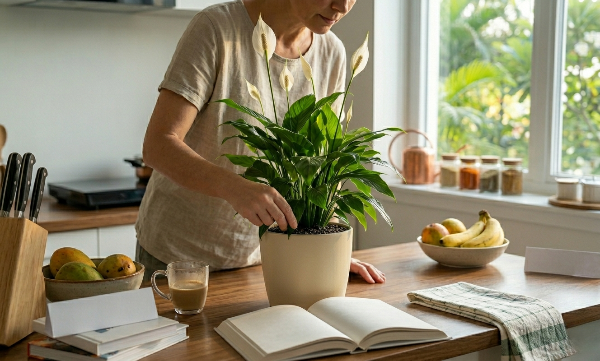
This is the question I hear more than any other. “Why won’t my peace lily flower?” After years of experimenting, I can tell you the answer almost always comes down to three factors.
- Factor 1: Light. The single biggest reason peace lilies don’t bloom indoors. They need medium to bright indirect light to produce flowers. If your plant has been sitting in a dark corner for months, it doesn’t have enough energy to bloom. Move it closer to a window.
- Factor 2: Age. Peace lilies from nurseries are often treated with gibberellic acid, a plant hormone that forces blooming. Your plant may have been artificially triggered to bloom when you bought it. Once that wears off, it takes 12-18 months for the plant to mature enough to bloom naturally on its own.
- Factor 3: Fertilizer. Feed with a balanced liquid fertilizer (Jack’s Classic 20-20-20 or Schultz at half strength) every 4-6 weeks during spring and summer. Phosphorus, the middle number in fertilizer ratios, supports flower production. Some growers switch to a high-phosphorus bloom fertilizer in spring. I’ve tried this with Espoma Organic Bloom Booster, and it did seem to produce slightly more flowers, though the effect wasn’t dramatic.
If all three factors are right and the plant still won’t bloom, be patient. Some varieties are just slower to flower than others. The ‘Sensation’ variety, one of the largest peace lilies, can take 2-3 years to produce its first bloom indoors.
Diagnosing Common Peace Lily Care Problems
Peace lilies are expressive plants. When something is wrong, they show it clearly. Here’s a quick diagnostic guide.
Yellow leaves: Usually means overwatering, but old leaves at the base of the plant naturally yellow and die. If multiple leaves are yellowing simultaneously and the soil stays wet for days, cut back on watering and check the roots for rot. Our article on plant leaves turning yellow covers this in more detail.
Brown leaf tips: The most common peace lily care complaint. Almost always caused by fluoride or chlorine in tap water, low humidity, or over-fertilizing. Switch to filtered water, boost humidity, and make sure you’re diluting fertilizer to half strength.
Brown spots in the middle of leaves: Direct sunlight burn. Move the plant away from the window or add a sheer curtain.
No blooms for 12+ months: Insufficient light (most common), plant immaturity, or lack of fertilizer. Move to brighter indirect light and feed regularly during growing season.
Root rot (mushy, brown roots): The result of chronic overwatering or soil that stays too wet. Remove the plant, trim all mushy roots with clean scissors, repot in fresh soil, and water less frequently going forward.
Drooping with wet soil: Different from normal thirst drooping. This signals root rot or waterlogged roots. Don’t add more water. Instead, check the drainage and root health.
Is the Peace Lily Safe for Pets?
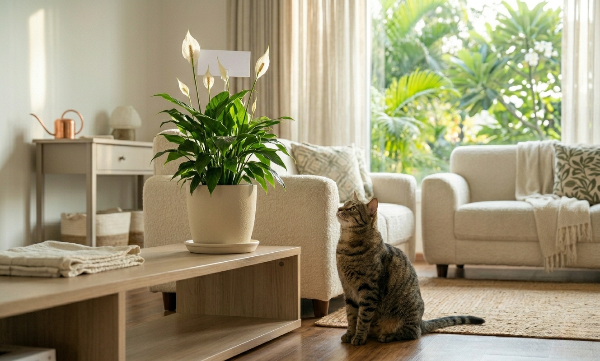
No. Peace lilies are toxic to cats and dogs according to the ASPCA. They contain calcium oxalate crystals that cause oral irritation, excessive drooling, difficulty swallowing, and vomiting if chewed or ingested.
The good news is that peace lily toxicity is rarely life-threatening. The calcium oxalate crystals cause immediate pain and burning in the mouth, which usually stops a cat or dog from eating more. But “rarely life-threatening” is not “safe,” especially with curious kittens or puppies.
If you have pets, either keep your peace lily on a high shelf or in a room your animals can’t access, or replace it with a pet-safe alternative. Spider plants, calatheas, and parlor palms offer similar low-light tolerance without the toxicity risk. See our full list of indoor plants safe for cats to find non-toxic options.
Read more: plants safe for cats
5 Peace Lily Care Habits That Do More Harm Than Good
1. Watering on a strict weekly schedule. Your peace lily doesn’t follow a calendar. Check the soil every time. Seasonal changes in temperature, humidity, and light all affect how fast the soil dries.
2. Misting the leaves daily. Doesn’t raise humidity meaningfully. Can cause fungal spots. Use a humidifier or pebble tray instead.
3. Putting it in a dark bathroom “because it likes humidity.” Yes, bathrooms are humid. But most bathrooms are also very dark. Your peace lily needs both humidity AND light. A bathroom with a window works. A windowless bathroom is too dark for long-term health.
4. Repotting into a much bigger pot after buying. Oversized pots hold extra moisture that can suffocate roots. Stick to 1-2 inches (2.5-5 cm) larger than the current pot. Slightly root-bound peace lilies actually bloom more.
5. Using undiluted fertilizer. Peace lilies are moderate feeders, not heavy ones. Full-strength fertilizer causes salt buildup and leaf burn. Always dilute to half the label recommendation.
FAQ
How often should I water a peace lily?
Water when the top 1 inch (2.5 cm) of soil is dry, which typically works out to every 7-10 days in spring and summer and every 10-14 days in winter. Always check the soil rather than following a fixed schedule, as watering needs change with seasons and room conditions.
Why are my peace lily leaves turning yellow?
The most common cause is overwatering. Check whether the soil is staying wet for more than a week. Old leaves at the base naturally yellow as they age, which is normal. If multiple leaves yellow at once and soil is soggy, reduce watering and inspect the roots for rot.
Is peace lily care difficult for beginners?
Peace lily care is beginner-friendly once you understand two key things: let the soil partially dry between waterings, and give it medium indirect light rather than a dark corner. The plant communicates clearly when it needs water by drooping, which makes it easier to learn than plants that show no signs until it’s too late.
How do I get my peace lily to bloom again?
Move it to brighter indirect light (the number one reason they stop blooming), feed with a balanced fertilizer every 4-6 weeks during spring and summer, and be patient. Plants bought from nurseries are often hormone-treated to bloom at purchase, and it can take 12-18 months for natural blooming to begin.
Can peace lilies grow in low light?
They survive in low light but won’t bloom and will grow slowly. For healthy growth and regular flowers, provide medium to bright indirect light. An east-facing window or a spot a few feet from a south-facing window works well.
Are peace lilies toxic to cats?
Yes. Peace lilies are toxic to cats and dogs according to the ASPCA. They contain calcium oxalate crystals that cause mouth pain, drooling, and vomiting. Keep the plant out of pet reach or choose non-toxic alternatives like spider plants or calatheas.
Why does my peace lily have brown tips?
Brown tips are almost always caused by chemicals in tap water (fluoride, chlorine), low humidity, or over-fertilizing. Let tap water sit out for 24 hours before using, run a humidifier during dry winter months, and always dilute fertilizer to half strength.
When should I repot my peace lily?
Every 18-24 months, or when roots grow from drainage holes. Repot in spring using fresh potting mix with perlite for drainage. Go up only 1-2 inches (2.5-5 cm) in pot size. For step-by-step instructions, follow our guide on how to repot houseplants without stress.
A Plant Worth the Drama
Peace lily care asks for three things: consistent moisture without overwatering, medium indirect light, and decent humidity. Give it those three and it rewards you with glossy green foliage, elegant white blooms, and one of the best air-purifying performances of any indoor plant (per the NASA Clean Air Study, it filters ammonia, benzene, formaldehyde, and trichloroethylene). That is why it is always included in our guide to air purifying plants.
Yes, it droops dramatically when it’s thirsty. Yes, the brown tips can be annoying. But after a decade of growing these plants, I can tell you that peace lily care gets easier every month as you learn to read what this plant is telling you. It’s one of the few houseplants that genuinely talks back, and once you start listening, you ‘ll wonder why you ever found it difficult.
Happy planting!