
If you are looking for a plant that laughs at the scorching sun and blooms when other plants are wilting, look no further than the Esperanza Plant (Tecoma stans). Also known as Yellow Bells, Yellow Elder, or Trumpetbush, this plant has become a superstar in modern landscaping due to its incredible resilience and brilliant, trumpet-shaped golden flowers.
Whether you want a small container plant, a massive privacy hedge, or a pollinator paradise, the Esperanza delivers tropical vibes with minimal effort. This master guide covers every aspect of the plant, from its deep history to modern care techniques.
Esperanza Plant Profile & Quick Stats
Before planting, it is essential to understand the biological needs of this tropical shrub.
| Feature | Details |
| Scientific Name | Tecoma stans |
| Family | Bignoniaceae (Trumpet Creeper Family) |
| Origin | The Americas (Texas, Arizona, Mexico, Argentina) |
| Hardiness Zones | Perennial in Zones 9–11; Annual in cooler zones |
| Sun Exposure | Full Sun (Crucial for blooming) |
| Water Needs | Low / Drought Tolerant once established |
| Bloom Time | Spring through first frost (Year-round in tropics) |
| Salt Tolerance | Moderate (Good for coastal gardens, but not beachfront) |
Esperanza Plant: History & Ethnobotany
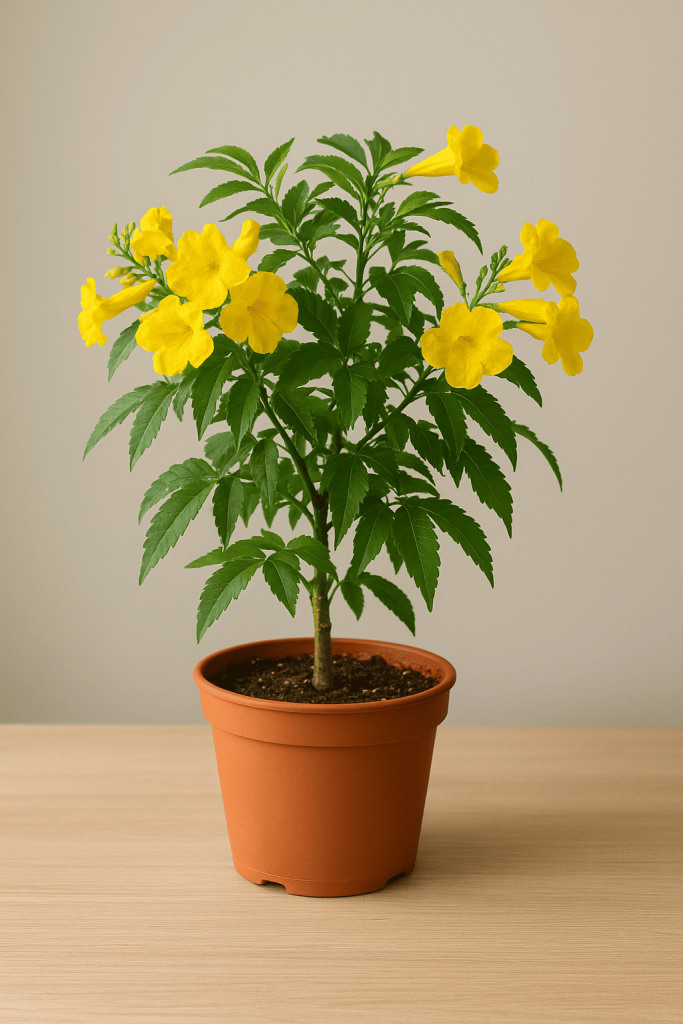
Why is it called “Esperanza”?
The name translates to “Hope” in Spanish. In horticulture, it represents the hope of rain or the resilience of life in the desert.
Traditional Uses:
While we grow it for beauty today, Tecoma stans has a rich history in traditional medicine across Mexico and Central America.
Disclaimer: This information is historical. Never ingest parts of the plant without consulting a medical professional, as it contains alkaloids.
The “Diabetic Shrub”: In traditional Mexican herbalism, teas made from the leaves and roots were used to treat high blood sugar and digestive issues.
Craftsmanship: Indigenous peoples historically used the strong, flexible wood of the wild Esperanza to make bows and weaving tools.
Esperanza Plant Varieties
In 2025, you have choices beyond the wild, unruly yellow bush.
- Tecoma stans ‘Gold Star’: The industry standard. Developed by Texas A&M, this cultivar is shorter (3–4 feet), blooms much earlier, and is highly heat-resistant.
- Tecoma ‘Orange Jubilee’: A taller, upright cousin with fiery orange-red flowers. Ideal for back-of-border screening.
- Tecoma ‘Bells of Fire’: The first true red variety. It stays compact and offers a deep crimson-red bloom that looks stunning against the bright green foliage.
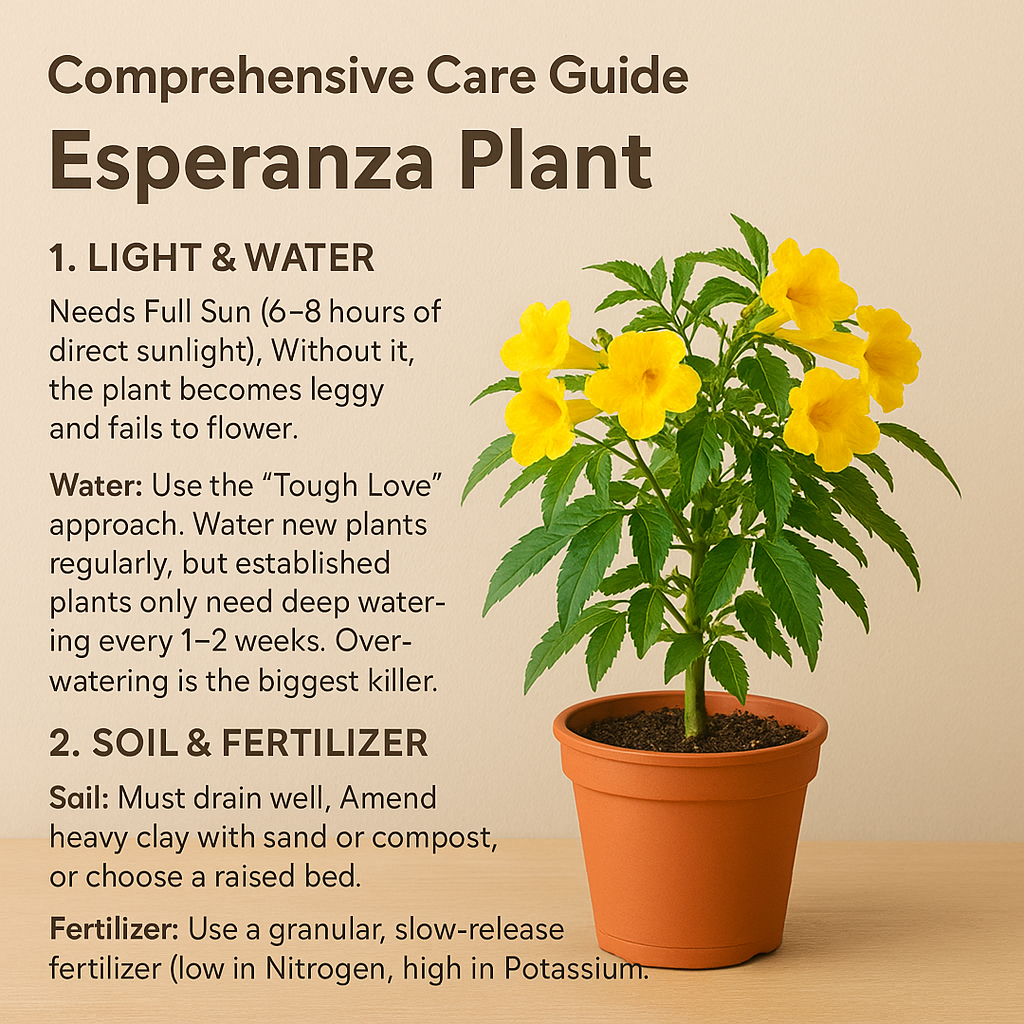
Advanced Container Gardening
Esperanza is fantastic in pots, but it behaves differently than in the ground.
- Pot Size: Use a large pot (minimum 5–7 gallons). The root system grows fast.
- Weight: Use a heavy ceramic or terracotta pot to prevent the top-heavy plant from tipping over in the wind.
- The “Saucer Rule”: Never leave water sitting in the saucer under the pot to prevent root rot.
- Refreshing: Every 2 years, prune the roots or repot to keep the plant vigorous.
Landscape Design Blueprints
Use these design blueprints to make your garden look professional.
- The “Poolside Tropical” Look: Esperanza is a clean plant, making it perfect for planting near swimming pools where litter is a concern.
- The “Privacy Screen”: Use the taller varieties (‘Orange Jubilee’) planted 3 feet apart. Within one season, you will have a dense, blooming green wall.
- Xeriscaping: Pair Esperanza Plant with other desert-tough plants like Agave, Yucca, and Red Yucca to soften the harsh, spiky landscape.
Pruning: The Secret to Constant Blooms
If left untouched, Esperanza can look scraggly. Pruning is the secret to a shapely, heavy-blooming plant.
1. The “Hard Reset” (Winter/Spring)
In late winter (after the threat of cold has passed), perform a Hard Chop.
- Cut the stems down to 6–12 inches above the ground.
- This removes old, woody stems and forces the plant to generate fresh new growth that will be covered in flowers.
2. Deadheading (Summer Maintenance)
- The Seed Pod Issue: After a bloom cycle, the plant produces long, green/brown bean-like seed pods.
- Action: Snip these pods off.
- Benefit: Removing the pods prevents the plant from diverting energy into seed production, prompting it to start its next flower cycle immediately.
Seasonal Maintenance Calendar (Warm Climate Focus)
This calendar is optimized for subtropical regions where growth is concentrated in the warm and monsoon months.
| Season/Months | Maintenance Activity | Goal/Reason |
| Late Winter / Early Spring (Feb-Mar) | The Hard Reset & Fueling | The beginning of the growing cycle. Hard prune to shape; apply slow-release fertilizer. |
| Hot Summer (Apr – June) | Intensive Deadheading & Water Watch | Peak blooming and high stress. Deadhead daily; increase deep watering frequency; watch for Aphids. |
| Monsoon / Peak Growth (July – Sept) | Shaping Prune & Stop Feeding | Rapid, often leggy, growth. Lightly prune tips for shape; stop fertilizing (Monsoon rain provides ample nitrogen). |
| Autumn / Cool Down (Oct – Dec) | Final Prep & Rest | Prepare for dormancy. Reduce watering; do not prune after October as this stimulates tender new growth that will be damaged by cold. |
Companion Planting: What Grows Well With It?
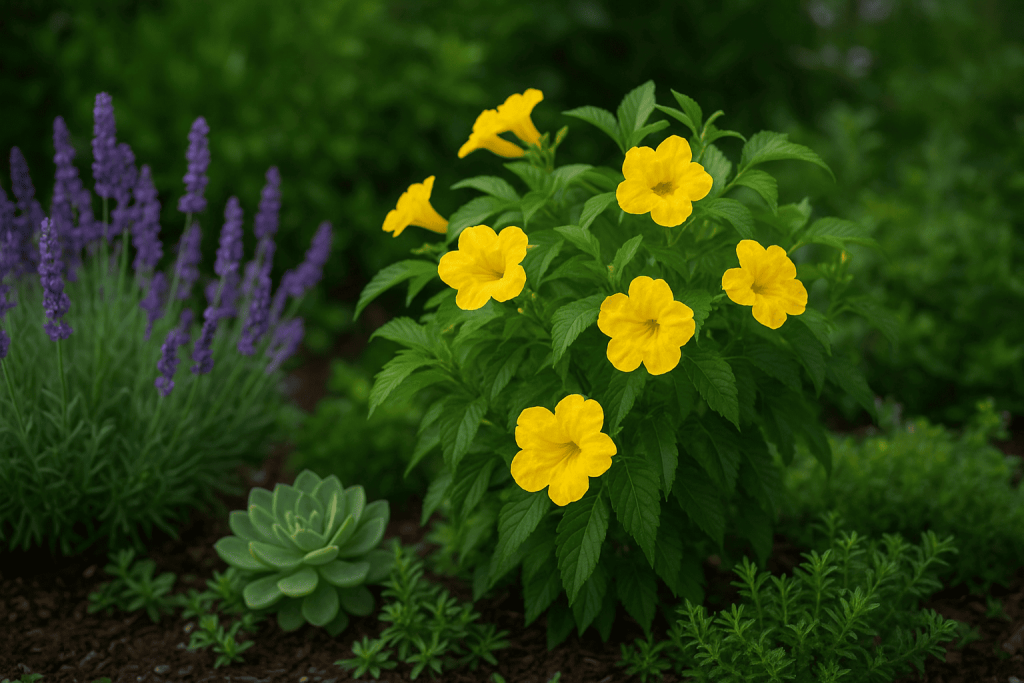
Create a stunning contrast by pairing your yellow Esperanza Plant with complementary colors:
- Purple Contrast: Mexican Bush Sage (Salvia leucantha) or Purple Trailing Lantana. The deep purple creates a dramatic visual pop next to the bright yellow.
- Red & Orange: Red Yucca or Firecracker Bush.
- Blue Ground Cover: Blue Daze (Evolvulus) to keep the soil cool and provide a low-growing blue accent.
Troubleshooting: Reading the Leaves
Your plant is constantly communicating its needs through its foliage.
- Leaves Turning Yellow (Chlorosis): Usually caused by iron deficiency due to overwatering. The wet soil locks up nutrients. Fix: Let the soil dry out completely before watering again.
- Sticky Leaves / Black Sooty Mold: Aphids or Scale Insects. Fix: Blast the plant with a strong jet of water or use Neem Oil.
Toxicity Warning
- Pets: Ingesting large amounts of the leaves or seed pods can cause vomiting and digestive upset in dogs and cats.
- Livestock: The plant is considered dangerous for cattle and goats.
Conclusion
The Esperanza Plant (Tecoma stans) is the definitive high-reward, low-effort plant. By adhering to the seasonal calendar, giving it full sun, and practicing careful watering, you ensure your plant remains vigorous, shapely, and covered in golden blooms from spring through the entire growing season.