
Roses have long been celebrated as the queen of flowers, admired for their fragrance, beauty, and symbolic charm. Whether you grow them in your balcony, terrace garden, or backyard, roses reward you with stunning blooms when cared for properly. This comprehensive guide covers the best and most updated rose plant care tips, helping you grow strong, disease-free plants with abundant flowers throughout the season.
From choosing the right variety to mastering watering, pruning, fertilizers, pest control, and seasonal care, this article gives you everything you need to help your roses thrive beautifully.
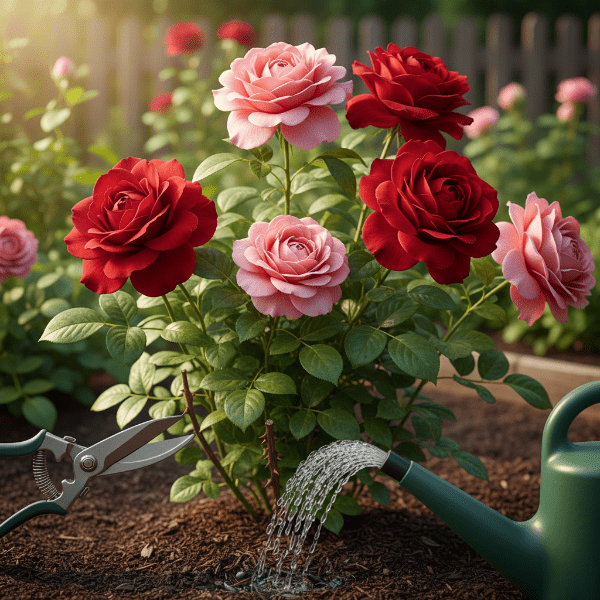
Why Rose Plant Care Matters
Roses are hardy plants, but they respond dramatically to good care. Healthy plants produce:
- Bigger and more frequent blooms
- Glossy healthy foliage
- Strong stems
- Better fragrance
- Improved resistance to pests and diseases
Proper care makes the difference between an average plant and a garden showstopper.
1. Choosing the Right Rose Variety
Before bringing a Rose Plant Care home, choose a variety that suits your location and gardening style.
Popular Types of Roses
- Hybrid Tea Roses – Large, classic-shaped blooms
- Floribunda Roses – Clusters of flowers, great for mass planting
- Miniature Roses – Perfect for balconies and indoor windows
- Climbing Roses – Great for arches, trellises, or fences
- Shrub Roses – Easy to maintain, suitable for landscaping
How to Select the Best Rose
- Choose disease-resistant varieties
- Pick roses suited for your climate zone
- Select plants with strong, green stems
- Avoid weak, yellowing, or wilted plants
2. Ideal Growing Conditions for Roses
Roses grow best when provided with the right environment. Here’s what they need:
Sunlight Requirements
Roses need at least 6 hours of direct sunlight daily.
Morning sunlight is ideal because it dries dew on leaves and prevents diseases.
Temperature
- Roses thrive between 18°C to 30°C.
- During extreme heat, provide shade during peak noon hours.
- In winter, protect young plants from frost using mulch.
Air Circulation
Good airflow reduces fungal infections, especially powdery mildew and black spot.
3. Best Soil for Rose Plants

Healthy roses start with healthy soil.
Roses grow best in well-draining, nutrient-rich loamy soil.
Ideal Soil Conditions
- High organic content
- pH range: 6.0 to 6.5
- Good drainage
Perfect Potting Soil Mix for Roses
You can prepare this balanced mix:
| Ingredient | Percentage | Function |
|---|---|---|
| Garden Soil | 40% | Base medium |
| Compost/Vermicompost | 30% | Nutrients for growth |
| Cocopeat | 20% | Retains moisture |
| Sand/Perlite | 10% | Ensures drainage |
4. Planting Rose Plants Correctly
Whether planting in pots or ground, proper planting ensures strong root development.
Steps for Planting Roses
- Choose a pot at least 12–15 inches deep.
- Fill with the prepared soil mix.
- Make a hole large enough for the root system.
- Place the plant ensuring the grafting node stays above soil level.
- Press soil lightly around the roots.
- Water thoroughly after planting.
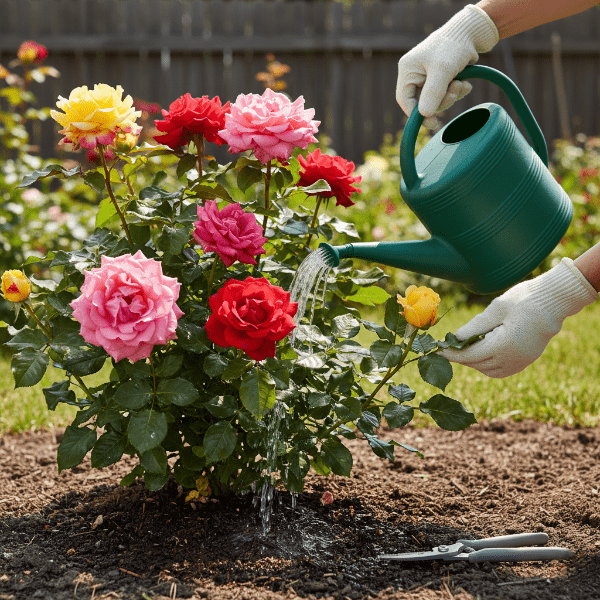
5. Watering Rose Plants the Right Way
Watering roses improperly is one of the biggest reasons for poor growth and diseases.
How to Water Roses
- Water deeply but less frequently.
- Ensure soil stays moist, not soggy.
- Always water at the base, not on leaves.
Watering Frequency
- Summer: Daily or every alternate day
- Monsoon: Water only when soil feels dry
- Winter: Twice a week
Important Watering Tips
- Use morning watering for best results.
- Avoid overhead watering to prevent fungal diseases.
- Ensure good drainage in pots.
6. Fertilizing Rose Plant Care for Maximum Blooms
Roses are heavy feeders and require regular nutrition.
Best Fertilizers for Roses
- Compost or cow dung manure
- Bone meal for strong roots
- Seaweed extract for blooming
- NPK 19-19-19 (once a month)
- Epsom salt (every 40 days to prevent yellowing)
Fertilizing Schedule
| Month | Fertilizer Type | Benefits |
|---|---|---|
| January–March | Organic manure + seaweed extract | Growth boost |
| April–June | NPK + bone meal | Flowering support |
| July–August | Light feeding | Avoid root rot in monsoon |
| September–December | Bloom boosters + compost | Maximum blooms |
7. Pruning Rose Plants for Healthier Growth
Pruning keeps roses in shape and encourages new blooms.
When to Prune
- Major pruning: Late winter or early spring
- Light trimming: Throughout the growing season
How to Prune Correctly
- Remove dead, damaged, or weak stems
- Cut just above an outward-facing bud
- Use clean, sharp pruning shears
- Trim crossing branches to improve airflow
Benefits of Pruning
- Increased flowering
- Healthy new shoots
- Fewer diseases
- Better plant shape
8. Common Pests and Diseases in Roses
Roses are prone to several pests and fungal issues, but most can be controlled early.
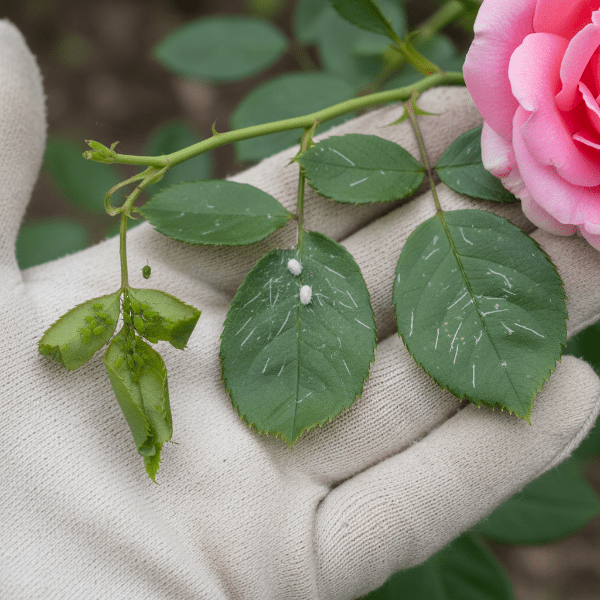
Common Rose Pests
- Aphids
- Mealybugs
- Spider mites
- Thrips
Control Methods
- Use organic insecticidal soap
- Spray neem oil solution (once every 7–10 days)
- Introduce ladybugs (natural predators)
Common Diseases
- Black spot
- Powdery mildew
- Rust
- Dieback
Preventive Measures
- Maintain good air circulation
- Avoid wetting the leaves
- Remove infected leaves immediately
- Use fungicides during humid seasons
9. Mulching for Moisture and Root Protection
Mulching helps keep the soil cool, reduces fertilizing needs, and prevents weed growth.
Best Mulching Materials
- Wood chips
- Coco husk
- Dry leaves
- Sugarcane bagasse
Apply a 2–3 inch layer around the base.
10. Seasonal Rose Care Tips
Roses need different care throughout the year.
Summer Care
- Provide partial shade during peak heat
- Increase watering
- Spray buttermilk or seaweed for stress relief
Monsoon Care
- Improve drainage
- Reduce watering
- Apply fungicide to prevent fungal infections
Winter Care
- Protect plants from frost
- Reduce watering
- Prune before spring
11. Growing Roses in Pots vs. Ground
In Pots
- Needs more frequent watering
- Use big pots for better root growth
- Regular fertilization required
In Ground
- Stronger growth and larger blooms
- Roots expand naturally
- Requires occasional pruning and feeding
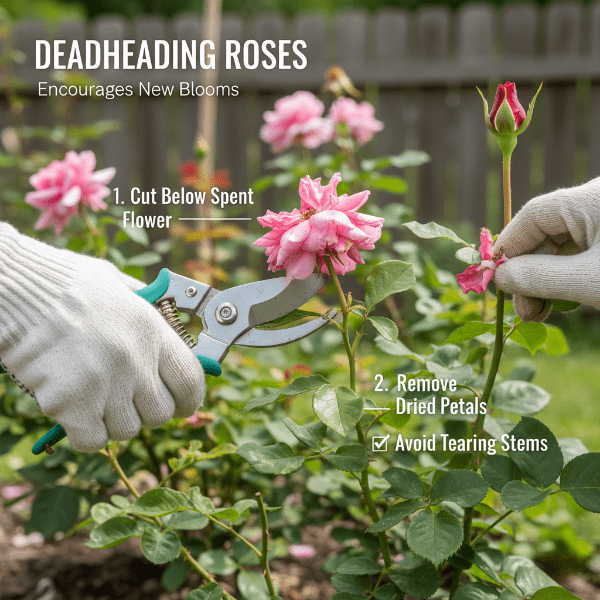
12. Deadheading Roses for Continuous Blooms
Deadheading means removing spent flowers.
This encourages the plant to redirect energy into producing new blooms.
How to Deadhead
- Avoid tearing stems
- Cut below the spent flower
- Remove dried petals
13. Organic Rose Plant Care Tips
If you prefer chemical-free gardening, these natural methods work well:
- Neem oil spray for pests
- Compost tea for growth
- Epsom salt to enhance foliage
- Banana peel fertilizer for blooming
- Eggshell powder for calcium
14. Troubleshooting Common Rose Problems
Yellow Leaves
- Overwatering
- Lack of sunlight
- Magnesium deficiency
Buds Dropping
- Heat stress
- Pest attack
- Nutrient imbalance
Slow Growth
- Poor soil
- Incorrect fertilizer
- Root-bound plant
15. Tips for More Flowers on Rose Plants
To maximize blooming:
- Give full sunlight
- Prune regularly
- Fertilize with bloom boosters
- Deadhead spent flowers
- Protect from pests
- Maintain healthy soil pH
- Water deeply and consistently
16. Indoor Rose Care Tips
While roses prefer outdoor conditions, miniature roses can grow indoors with proper care.
- Place near a bright, sunny window
- Maintain humidity with pebble trays
- Avoid temperature fluctuations
- Water only when the top soil is dry
17. Propagation Tips for Rose Plants
The easiest propagation method is stem cuttings.
Steps
- Take a healthy 6-inch cutting.
- Remove lower leaves.
- Dip in rooting hormone.
- Plant in moist soil.
- Keep in partial shade until roots form.
18. Rose Plant Care Tips for Beginners
Here are some simple reminders:
- Always choose disease-resistant varieties
- Give enough sunlight
- Water early in the morning
- Use quality soil and fertilizers
- Monitor for pests
- Prune regularly
- Don’t overcrowd your plants
Frequently Asked Questions (FAQs)
Water roses deeply 2–3 times a week, depending on the season. Summer may require more frequent watering.
Organic compost, bone meal, NPK 19-19-19, and seaweed extract work best for healthy growth and heavy flowering.
This may be caused by overwatering, poor drainage, lack of sunlight, or nutrient deficiency.
Miniature roses can grow indoors if given bright sunlight and proper humidity. However, most varieties prefer outdoor conditions.
Prune your roses in late winter or early spring before new growth begins.
Give proper sunlight, feed bloom-specific fertilizers, deadhead old flowers, and maintain good watering practices.
Conclusion
Growing beautiful roses is easy when you understand their needs. With the right soil, sunlight, watering schedule, pruning habits, and regular feeding, roses reward you with lush foliage and breathtaking blooms. Follow these rose plant care tips consistently, and your plants will stay healthy, vibrant, and full of flowers throughout the year.
This complete guide is designed to help your content rank well on search engines by offering detailed, engaging, and accurate information that readers find helpful.