
The Rubber Plant, scientifically known as Ficus elastica, is a powerhouse of a houseplant. Celebrated for its dramatic, glossy, deep-green to nearly black leaves, the Rubber Plant adds a touch of bold, architectural elegance to any indoor space. Its hardiness and relatively straightforward care make it a favorite for both novice plant parents and seasoned collectors across the United States.
However, mastering rubber plant care can sometimes feel tricky. While robust, this Ficus species has specific needs concerning light and watering that, if neglected, can lead to frustration.

Understanding Your Rubber Plant (Ficus Elastica)
The Rubber Plant originates from the tropical rainforests of South and Southeast Asia. In its native habitat, it can grow into a colossal tree. Indoors, while restricted, it maintains that desire for vertical growth, making it an excellent statement piece.
Key Varieties and Their Distinctive Looks
While the basic rubber plant care requirements remain the same, different cultivars offer unique aesthetics:
- Ficus elastica ‘Decora’: The classic variety with large, deep green, glossy leaves and a prominent reddish midrib.
- Ficus elastica ‘Burgundy’ (or ‘Abidjan’): Perhaps the most popular, featuring stunning dark red to black-purple leaves.
- Ficus elastica ‘Tineke’ (or ‘Tricolor’): Highly sought after for its variegated leaves with patches of green, cream, and pink/red edges. This variety needs slightly brighter light to maintain its colors.
- Ficus elastica ‘Belize’: Similar variegation to ‘Tineke’ but often with more pronounced pink coloration.
The Foundation of Excellent Rubber Plant Care
To achieve optimal growth, you must successfully replicate the high-light, well-draining environment the Rubber Plant naturally craves.
1. Light Requirements: Brightness is Best
Light is the single most critical factor influencing the health, size, and leaf color of your Rubber Plant.
- Ideal Light: Rubber plants require bright, indirect light to thrive. An east-facing window (providing soft morning sun) or a few feet away from a south or west-facing window (where light is strong but not scorching) is ideal.
- Variegated Varieties: The ‘Tineke’ or ‘Belize’ varieties, with their colorful white and pink sections, require brighter light than the solid green or burgundy types. Without enough light, the white/pink sections will revert to solid green (a process called etiolation).
- Low Light Tolerance: While often marketed as low-light tolerant, your Rubber Plant will merely survive, not thrive, in dim conditions. Low light leads to:
- Slower, stunted growth.
- Loss of lower leaves.
- Drooping and dull-looking foliage.
- An increased risk of overwatering (as the soil dries slower).
- Rotation: Rotate the pot every few weeks. Ficus plants are phototropic (they grow towards the light), and regular rotation ensures even, upright growth.
2. Watering: The ‘Ficus’ Balance
Watering is the area where most people struggle with rubber plant care. They hate being dry, but they are highly susceptible to root rot if overwatered.
The Ideal Watering Method
- Check Consistency: Only water when the top 1 to 2 inches (2.5 to 5 cm) of soil is completely dry. Use your finger or a moisture meter to check the dryness level.
- Soak Thoroughly: When watering, soak the soil until water freely drains out of the pot’s drainage holes.
- Crucial Drainage: Never allow the pot to sit in standing water. Empty the drainage saucer after 15–20 minutes.
| Season | Watering Frequency (General Guide) | Key Focus |
| Spring/Summer (Growing Season) | Every 5–7 days (or when soil is dry 2″ deep) | Maintain consistent moisture without saturation. |
| Fall/Winter (Dormancy) | Every 10–14 days (or when soil is dry 2″ deep) | Significantly reduce frequency as growth slows and light lessens. |
⚠️ Warning Signs:
- Overwatering: Drooping, yellowing lower leaves that turn brown/black and fall off.
- Underwatering: Drooping, wilting leaves that feel dry and brittle.
3. Soil and Potting: Drainage Above All
Good rubber plant care starts with the right foundation: the potting mix.
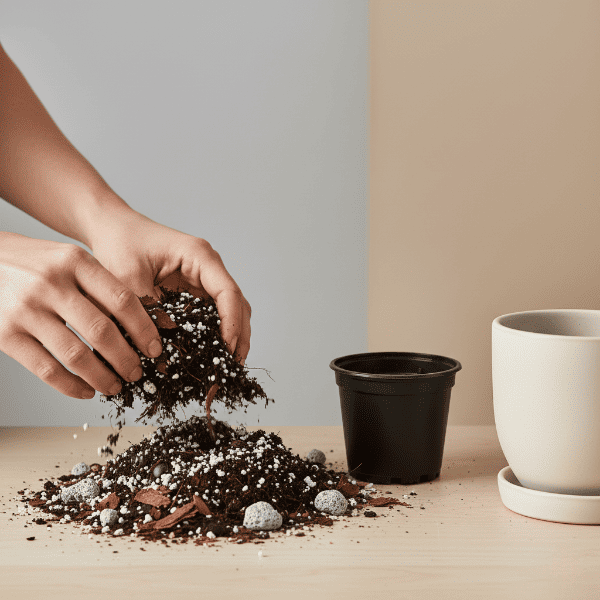
Soil Mix: Use a well-draining, slightly rich potting mix. A standard indoor potting mix is often too heavy.
Recommended Amendment: Amend standard potting soil with materials like perlite, pumice, or orchid bark to improve drainage and aeration. A mix of 60% potting soil and 40% amendment is a reliable ratio.
The Pot: Always use a container with a sufficient drainage hole. If using a decorative cachepot (a pot without holes), always place the plant in a nursery pot first so you can remove it for proper watering and draining.
4. Temperature and Humidity
As a tropical plant, the Ficus elastica thrives in warm, stable conditions.
- Temperature: Maintain a temperature range between 60°F and 75°F (15 °C to 24 °C).
- Cold Sensitivity: Rubber Plants are very susceptible to cold shock. Keep them away from cold drafts from windows, doors, or air conditioners. Temperatures below 50°F (10°C) can cause leaf damage and drop.
- Humidity: The Rubber Plant appreciates moderate to high humidity (40%–60%). While they can tolerate average indoor humidity, providing extra moisture will help prevent leaf crisping and encourage larger, glossier leaves.
- Use a humidifier near the plant.
- Place the pot on a pebble tray filled with water (ensuring the pot base is not touching the water).
- Group it with other houseplants to create a localized microclimate.
5. Fertilization: Fueling Growth
Feeding your Rubber Plant provides the nutrients needed to produce those large, impressive leaves.
- Timing: Only fertilize during the active growing season (Spring and Summer). Halt all feeding during the dormant Fall and Winter months.
- Type: Use a balanced, water-soluble fertilizer (e.g., 10-10-10 or 20-20-20). Some growers prefer a high-nitrogen blend to promote lush green foliage.
- Frequency: Apply the fertilizer once every two to four weeks at half the strength recommended on the product label. Over-fertilization can burn the roots and cause leaf drop.
Pruning, Cleaning, and Maintenance
Essential rubber plant care extends beyond watering and light, it involves active maintenance to keep the plant shapely and clean.
1. Pruning for Size and Shape
Pruning is essential for controlling the size of your plant and encouraging bushier growth.
- Timing: The best time to prune is in early Spring, just before the active growth period begins.
- Encouraging Bushiness: When you prune the main stem, you remove apical dominance. This forces the plant to branch out, resulting in a fuller, bushier plant rather than a single tall stalk.
- How to Prune: Use clean, sharp shears. Cut the stem just above a leaf node (the little bump where a leaf meets the stem).
- Handling Sap: All Ficus plants produce a white, sticky, milky sap (latex) when cut. This sap is mildly toxic and can be an irritant. Have a damp cloth ready to wipe the sap and wear gloves to protect your skin.
2. Repotting and Root Care
- When to Repot: Repot every 1–2 years or when the plant is visibly root-bound (roots circling the drainage holes or popping out the top).
- Pot Size: Only move up to a pot that is 1–2 inches larger in diameter than the previous one. Too large a pot holds excess soil and moisture, significantly increasing the risk of root rot.
- Method: Gently remove the plant, loosen any circling roots, and repot using fresh, well-draining soil.
3. Cleaning the Leaves
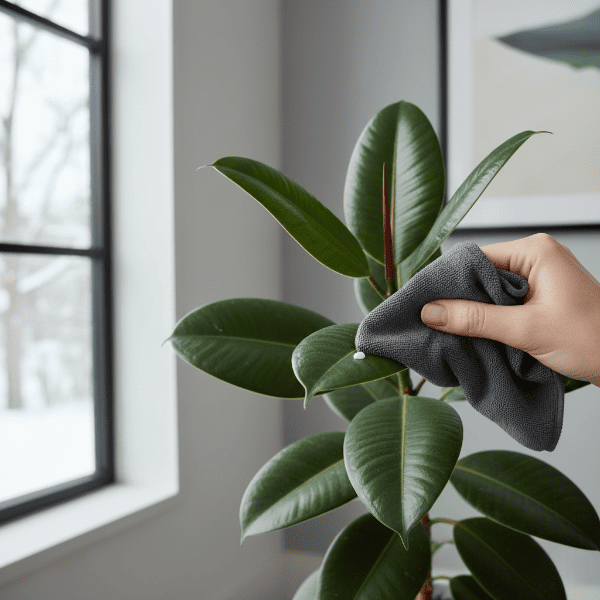
- Importance: Dust accumulation on the large leaves blocks sunlight, inhibiting photosynthesis. Cleaning is a vital, yet often overlooked, part of rubber plant care.
- Method: Use a damp, soft cloth or sponge to gently wipe down both the top and bottom surfaces of every leaf every few weeks.
- Shine: You can use a diluted mixture of milk and water, or a specialized leaf shine product, to enhance the natural glossiness of the foliage.
Troubleshooting and Common Problems
Issues with rubber plant care usually boil down to extremes in watering or lighting. Here is a guide to diagnosing the most common concerns.
1. Leaf Drop
Leaf drop is the Rubber Plant’s dramatic way of signaling stress.
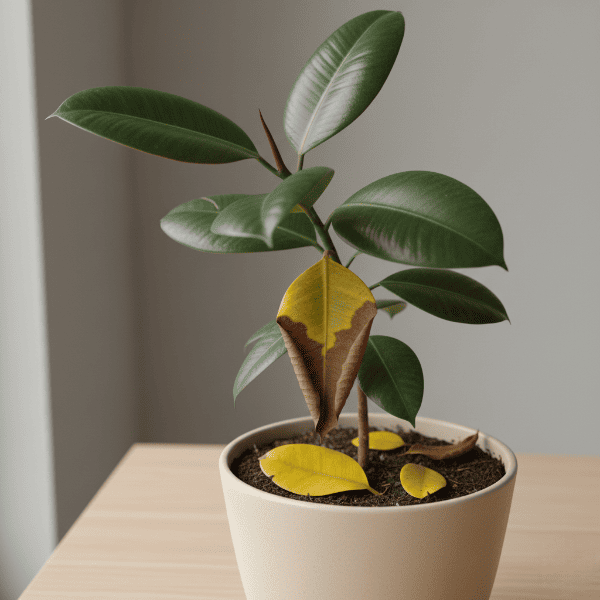
Lower Yellow Leaves Dropping: Overwatering. The roots are suffocating from lack of oxygen. Check the soil and allow it to dry out thoroughly before the next watering.
Leaves Dropping Suddenly and Uniformly: Environmental Shock. Ficus plants hate being moved. A sudden location change, temperature (especially cold drafts), or light can trigger massive leaf drop. Place the plant in a stable location and avoid moving it once it’s happy.
Crispy Brown Leaves: Underwatering or Low Humidity. Check the soil. If dry, soak thoroughly. Increase local humidity using a humidifier or pebble tray.
2. Pests
The sticky white sap helps deter some pests, but the large leaves are attractive to others.
| Pest | Identification | Control and Treatment |
| Spider Mites | Fine webbing on stems and leaves; tiny red or brown dots; speckled leaves. | Increase humidity. Spray the plant thoroughly with insecticidal soap or Neem Oil, paying close attention to the undersides of the leaves. |
| Mealybugs | Small, white, cottony clusters, usually in leaf joints or where the leaf meets the stem. | Dab the clusters directly with a cotton swab dipped in rubbing alcohol (70% isopropyl). Repeat weekly until clear. |
| Scale | Small, immobile, brown, or tan bumps stuck to the stems or midribs. | Manually scrape off the scales using a fingernail or a dull plastic tool. Treat with systemic insecticide for heavy infestations. |
3. Leaf Color Issues
- Loss of Variegation (Reverting): If your ‘Tineke’ or ‘Belize’ is losing its white/pink sections and turning solid green, it is receiving insufficient light. Move it to a much brighter location.
- Dull or Faded Color: Lack of nutrients (fertilizer) or too much direct, harsh sunlight (sunburn). Assess both your feeding schedule and light exposure.
Rubber Plant Propagation: Share the Love
Propagating the Rubber Plant allows you to create new plants from your existing one, often using the material gathered during pruning.
1. Stem Cuttings (Standard Method)
- Cut: Take a stem cutting that is 6–8 inches long and includes 2–3 leaves.
- Clean: Wipe the white sap from the cut end.
- Rooting Medium:
- Water: Place the cutting in a jar of clean water, ensuring at least one node is submerged. Change the water weekly. Roots typically form in 4–8 weeks.
- Soil: Dip the cut end in rooting hormone powder and plant in a small pot with moist, well-draining soil. Cover the cutting with a plastic bag (or put it in a propagator) to trap humidity.
2. Air Layering (Advanced, Reliable Method for Large Plants)
Air layering is often the most reliable way to root a large, mature stem and is a great technique for top-heavy plants.
- Wound: Choose a woody stem. Use a clean knife to make a small, angled cut about one-third of the way through the stem, just below a leaf node.
- Hormone: Dust the wounded area with rooting hormone powder.
- Wrap: Pack the wounded area entirely with damp sphagnum moss.
- Seal: Wrap the moss tightly with clear plastic wrap or aluminum foil, securing the ends with string or twist ties.
- Wait: Check the moss periodically. Once visible roots fill the moss (usually 1–3 months), cut the new rooted section off the parent plant, remove the plastic, and plant it directly into a pot.
Advanced Rubber Plant Care Tips
Temperature Stability: Ficus species are temperamental about consistency. Find a location they like and leave them there. Moving the plant often can cause stress and lead to leaf drop.
Dormancy Period: In the winter (dormancy), your rubber plant care should shift. Reduce watering frequency significantly and cease fertilization entirely. This rest period prepares the plant for robust growth in the spring.
Wound Healing: If you prune or accidentally damage a leaf, the white sap will ooze out. You can stop the flow by wiping the area with a damp cloth or applying cold water.
Frequently Asked Questions (FAQs) about Rubber Plant Care
Yes, the Rubber Plant (Ficus elastica) is considered mildly toxic to cats, dogs, and humans if ingested. The white, milky sap (latex) contains compounds that can cause oral irritation, stomach upset, and, occasionally, vomiting. Always keep the plant out of reach of pets and children.
The primary reason for smaller new leaves is insufficient light. Your plant is struggling to gather the energy needed to produce large foliage. Move the plant to a brighter location with more intense indirect light. Nutrient deficiency (lack of fertilizer) can also be a contributing factor.
Fertilization should occur only during the active growing season (Spring and Summer), typically every 2 to 4 weeks. Use a balanced liquid fertilizer at half the recommended strength. Stop feeding completely from late Fall until early Spring.
You need to prune it. Cut the main stem’s growing tip just above a leaf node. This removes the plant’s apical dominance and forces energy into dormant lateral buds, encouraging the plant to sprout new branches and grow wider instead of just taller.
The Rubber Plant can only be grown outdoors year-round in USDA Hardiness Zones 10 and 11 (e.g., parts of Florida, Hawaii, and Southern California). In all other zones, it must be brought indoors before temperatures drop below 50°F (10°C) to avoid cold shock.
Conclusion: Rubber Plant Care
The Ficus elastica is a magnificent specimen, rewarding dedicated care with a dramatic presence and stunning, lush leaves. While the challenges of rubber plant care often center around finding the perfect balance of light and water, the solution is always rooted in consistency.
By committing to bright, stable light, practicing the “soak and dry” watering technique, and providing warmth and occasional humidity, you can successfully bypass the common pitfalls of leaf drop and rot. View your rubber plant care routine as a commitment to stability; once you find its happy spot, the reward is a vigorous, beautiful plant that will likely become the statement piece of your home for many years to come.