
Monstera plant care gets overcomplicated by most guides online. You’ll read about recreating tropical rainforest conditions, misting schedules, and humidity targets that would require a greenhouse to hit. Here’s the truth: Monsteras are some of the most forgiving houseplants you can own, and proper monstera plant care in a real home is far simpler than the internet makes it look. I’ve been growing Monstera deliciosa for over six years, and the care routine that actually works looks nothing like the advice that goes viral on Pinterest. This guide is built on what genuinely produces a healthy, fast-growing, fenestrated plant.
| Aspect | Details |
|---|---|
| Botanical Name | Monstera deliciosa |
| Common Names | Swiss Cheese Plant, Split-Leaf Philodendron, Hurricane Plant |
| Plant Family | Araceae |
| Native Region | Tropical forests of southern Mexico and Central America |
| Light | Bright indirect light; tolerates medium light |
| Water | Every 1-2 weeks; allow top 2 inches of soil to dry out |
| Humidity | 50-70% preferred; tolerates 40% household average |
| Temperature | 65-85 degrees F (18-29 degrees C) |
| Soil | Well-draining aroid mix; perlite-amended potting soil |
| Mature Size | Indoors: 6-10 feet tall (1.8-3 meters); leaves up to 2 feet (60 cm) wide |
| Growth Rate | Fast under good conditions |
| Toxicity | Toxic to cats and dogs (ASPCA) |
| Difficulty Level | Beginner to Intermediate |
| USDA Zones | 10-12 outdoors |
The Core of Monstera Plant Care: Four Things That Actually Matter
Before diving into every detail, here’s what separates a thriving Monstera from a struggling one. Successful monstera plant care comes down to four non-negotiables: appropriate light, restrained watering, a fast-draining soil mix, and a pot with drainage. Get those four right, and the plant handles the rest. Every other care detail is refinement on top of that foundation.
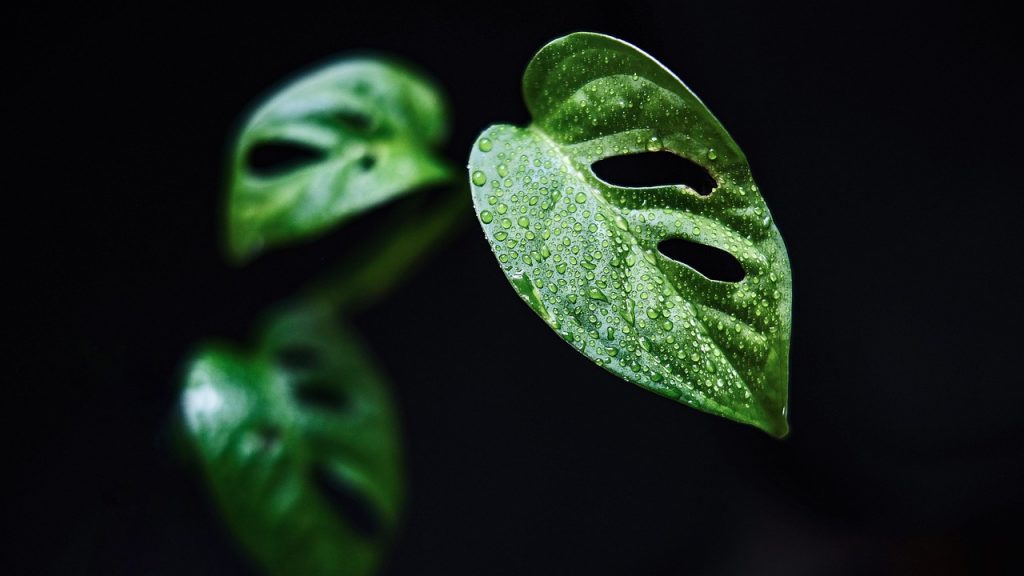
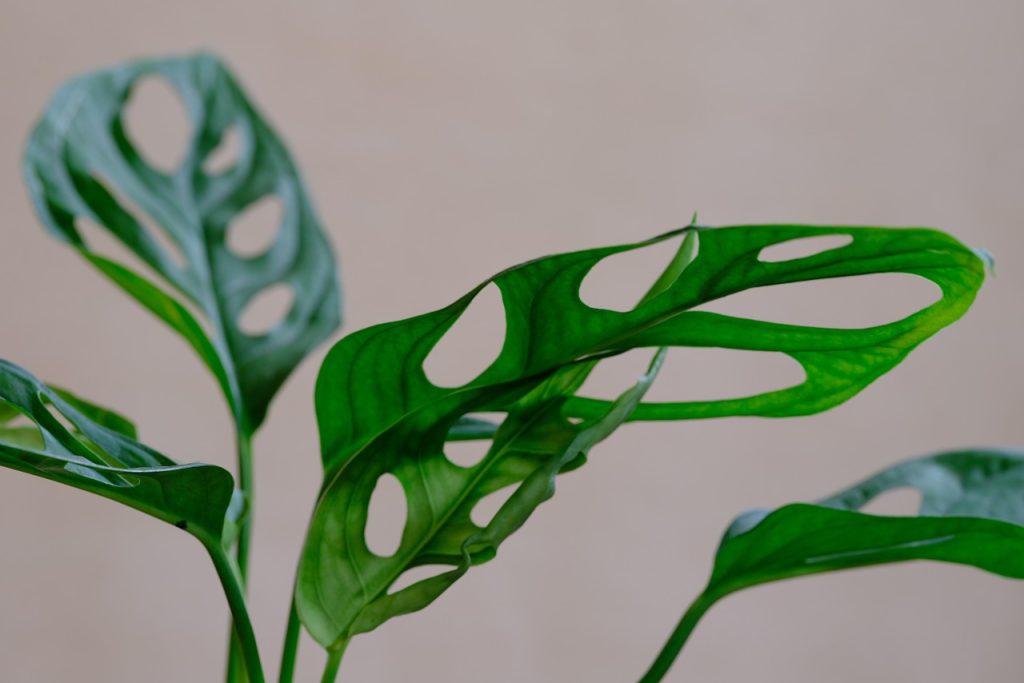
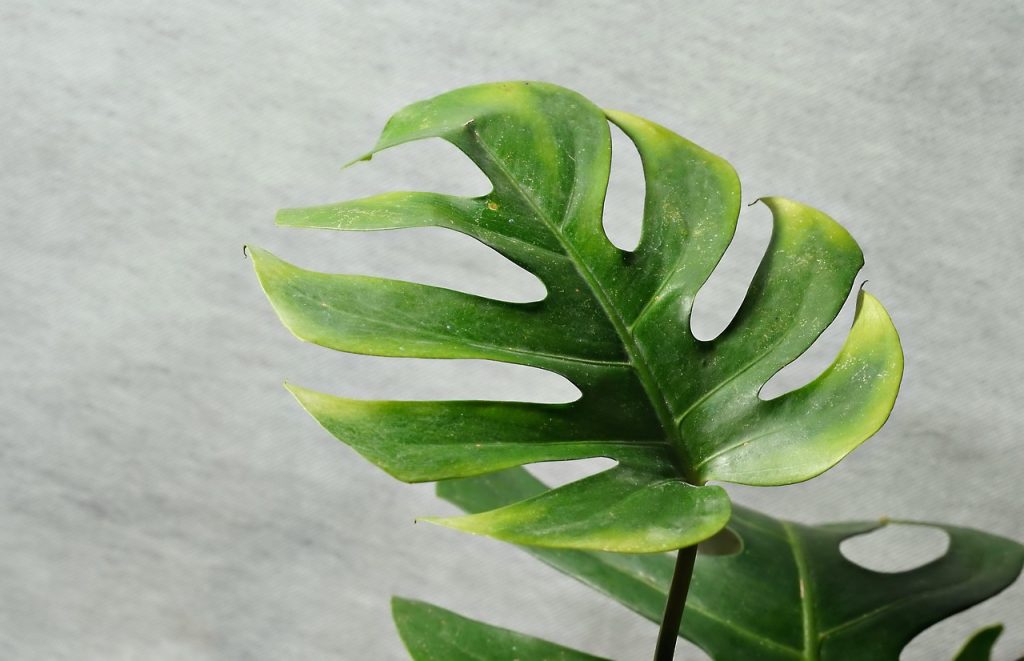
The iconic split leaves – called fenestrations – are not something you force. They develop naturally as the plant matures and receives adequate light. Young Monsteras often produce solid, undivided leaves first. If your Monstera has been growing for over a year without developing splits, insufficient light is almost always the cause.
Light Requirements for Monstera Plant Care
Here’s the myth that causes the most problems: Monsteras are low-light plants.
They’re not. They tolerate low light, and there’s a real difference between tolerating something and thriving in it. In a genuinely dim spot, your Monstera will survive but produce small, undivided leaves and very slow growth. That’s not the plant most people bought.
Good monstera plant care means providing bright indirect light for at least 6 hours a day. A north- or east-facing window is often ideal. West- and south-facing windows work well too, provided a sheer curtain diffuses direct afternoon rays. Unfiltered direct sun through glass can scorch leaves, leaving bleached patches that won’t recover.
Pro tip: Hold your hand about 12 inches above a sheet of white paper during peak daylight hours. A soft but distinct shadow means sufficient indirect light. No shadow at all, and that spot won’t cut it for a Monstera.
In my experience, positioning the plant 3-6 feet (90-180 cm) from a bright window is the sweet spot for indoor monstera plant care. Close enough to get good brightness, far enough to avoid harsh direct exposure.
Watering: The Part of Monstera Plant Care Most People Get Wrong
Overwatering is the single most common cause of Monstera death. Not neglect, not wrong light. Overwatering.
Monstera roots evolved to absorb heavy tropical rainfall, then dry out as the forest floor drains. They are not designed to sit in persistently moist soil. When roots stay wet too long, root rot develops quickly, and a rotting root system can’t deliver water or nutrients upward. The frustrating part: an overwatered Monstera often looks identical to a thirsty one – drooping, yellowing, generally unhappy.
The watering rule I follow for monstera plant care: water deeply, then wait. Push your finger 2 inches (5 cm) into the soil. If it still feels damp, walk away. If it’s dry at that depth, water thoroughly until it flows freely from the drainage hole, then leave it alone. In summer, that cycle runs every 7-10 days. In winter, especially with central heating reducing indoor humidity, it can stretch to every 14-21 days. The plant’s needs shift seasonally, and your watering should shift with them.
One important thing to watch out for: pots without drainage holes. A sealed pot is a slow disaster for Monsteras, regardless of how carefully you water. Always use a pot with at least one drainage hole, and empty the saucer after each watering session.
Signs your Monstera needs water: Leaves drooping slightly, soil completely dry 2-3 inches (5-7 cm) down, pot feels noticeably lightweight.
Signs of overwatering: Yellow lower leaves, mushy stems near the base, sour-smelling soil, fungus gnats around the pot.
Soil Mix and Potting for a Healthy Monstera
Standard bagged potting soil is too dense for Monsteras on its own. It holds moisture longer than Monstera roots prefer and doesn’t provide the aeration they need. The best monstera plant care starts with a mix that drains fast and breathes well. If you are not sure what to buy, our guide to the best soil for indoor plants covers exactly what to look for.
My go-to blend:
- 60% quality potting mix (Miracle-Gro or FoxFarm Ocean Forest both perform well)
- 30% perlite for drainage and aeration
- 10% orchid bark or coarse coco coir for structure
This combination drains excess water quickly, lets roots breathe, and still retains enough moisture so the soil doesn’t dry out in 24 hours. Perlite and orchid bark are available at Home Depot, Lowe’s, or on Amazon. Pre-mixed aroid soil is also sold if you’d rather skip the DIY approach.
Repot when roots start circling the drainage holes or growing out the bottom. For actively growing younger plants, that typically happens every 1-2 years. Move up one pot size at a time, 2 inches (5 cm) larger in diameter. Jumping to a much larger pot creates excess soil volume that stays wet and increases root rot risk significantly.
Pro tip: Terracotta pots are excellent for monstera plant care because the porous walls help soil dry out more evenly between waterings. If you tend to overwater, terracotta is a natural correction tool.
Humidity and Temperature: Separating Fact from Overblown Advice
The recommendation that Monsteras need 60-80% humidity is one of the most overcirculated pieces of care advice that genuinely misleads beginners. Yes, Monsteras appreciate higher humidity. But a healthy plant will grow well at the 40-50% humidity typical of most American homes year-round.
Where higher humidity does make a visible difference is in very dry winter conditions, particularly in homes with forced-air heating. If your indoor humidity drops below 30% in winter, a small humidifier nearby will help. What won’t help is daily misting. Misting wets the leaf surface without raising ambient humidity meaningfully, and it can encourage fungal spots on leaves if water sits too long. Skip the spray bottle.
Temperature is more consequential than humidity for most home growers. Keep your plant between 65-85 degrees F (18-29 degrees C). Below 55 degrees F (13 degrees C), growth stops and cold damage becomes a real risk. Position Monsteras away from exterior doors that open in winter, air conditioning vents blowing directly on leaves, and windowsills that get frigid overnight in cold climates.
Fertilizing Through the Growing Season
Monsteras respond well to regular feeding during spring and summer but don’t need heavy fertilizing to thrive. A balanced water-soluble fertilizer, such as Jack’s Classic 20-20-20 or Miracle-Gro All Purpose Plant Food, applied once a month at half the recommended strength is the right approach. I’ve consistently seen better results with diluted, frequent feeding than infrequent full-strength doses. For a full comparison of products that work across different houseplants, see our guide to the best fertilizer for houseplants.
Stop fertilizing entirely from October through February. The plant’s metabolism slows, roots absorb less, and excess fertilizer salts accumulate in the soil and cause brown leaf tips. If you notice a white mineral crust forming on the soil surface, flush the pot thoroughly with plain water to clear out the buildup.
Worth noting: yellowing leaves are not automatically a fertilizer deficiency. Before adding fertilizer, check for overwatering and low light first. Those are responsible for yellowing far more often than a lack of nutrients.
Seasonal Adjustments for Year-Round Monstera Plant Care
Spring is when your Monstera shifts into active growth. New leaves appear quickly, sometimes one every one to two weeks under good conditions. This is the best window for repotting if needed, starting a monthly fertilizing schedule, and taking stem cuttings for propagation. If you are moving your plant to a new pot, our guide on how to repot houseplants without stress will help you avoid transplant shock.
Summer brings the fastest growth but also means more frequent watering as temperatures rise and soil dries out faster. If afternoon sun becomes intense near your plant’s window, a sheer curtain becomes essential to prevent leaf scorch.
Fall is transition time. Pull back on fertilizing, start spacing waterings further apart, and move the plant away from walls and windows that get cold overnight.
Winter is maintenance mode for monstera plant care. No repotting, no fertilizing, careful and infrequent watering. In the dry winter months when central heating reduces indoor humidity, a pebble tray filled with water under the pot can add localized moisture near the plant without affecting the root zone. Aloe Vera Plant Care
Support and Pruning: Helping Your Monstera Reach Its Potential
Monsteras are natural climbers. In their native habitat they attach to tree trunks and grow toward the forest canopy. Indoors, a moss pole or a sturdy bamboo stake provides the support structure they’re built to use. Plants grown on a moss pole consistently produce larger leaves with more developed fenestrations compared to those left to sprawl.
Attach aerial roots to the pole using soft plant ties. Keeping the moss pole slightly moist encourages those aerial roots to grab on naturally. It’s one of the more satisfying parts of long-term monstera plant care to watch a plant climb steadily upward over months.
Pruning is primarily for size control and aesthetics. Cut just above a node (the bump where leaf meets stem) using clean, sharp shears. The cuttings can be rooted in water or soil. Monstera propagation from stem cuttings is one of the more reliable propagation methods among common houseplants.
5 Mistakes That Stall Monstera Growth
1. Dark placement. A dim corner will keep a Monstera alive but not thriving. Small, undivided leaves and near-zero growth are the result. Move it within 6 feet (1.8 meters) of a bright window.
2. Calendar-based watering instead of soil checks. Every home has different temperature, airflow, and humidity. Watering every seven days regardless of season will eventually cause overwatering. Check the soil, don’t stick to a schedule.
3. Oversized pots. Too much soil holds too much water relative to the root system. Go one pot size up at a time.
4. Misting as a humidity solution. It wets the leaves without raising ambient humidity. Use a humidifier or pebble tray instead.
5. Fertilizing in winter. The plant can’t use the nutrients efficiently during its slow period, and salt buildup damages roots. Stop from October through February. How to Get Rid of Spider Mites
FAQs: Monstera Plant Care
How often should I water my Monstera?
Check the soil rather than following a fixed schedule. Water when the top 2 inches (5 cm) of soil are dry, which typically works out to every 7-14 days in summer and every 14-21 days in winter. Pot size, soil mix, and your home’s temperature all affect how quickly the soil dries.
Why isn’t my Monstera developing split leaves?
Fenestrations develop with maturity and good light. If your Monstera has been growing for more than a year without producing splits, move it closer to a bright window. Low light is almost always the reason behind solid, undivided leaves on a mature plant.
Is monstera plant care hard for beginners?
It’s very manageable for beginners who learn one thing well: how to water correctly. Overwatering is responsible for most Monstera failures. Master the “check before you water” habit, provide a bright spot, and you’ll avoid the majority of problems that plague new plant owners.
Can Monsteras grow in direct sunlight?
Brief morning sun is fine, but direct afternoon sun through unfiltered glass will scorch the leaves. Bright indirect light is what good monstera plant care requires. A sheer curtain on south- or west-facing windows solves this without blocking too much light.
Why are my Monstera’s leaves turning yellow?
Yellow leaves most commonly point to overwatering or waterlogged soil. Check that the pot drains freely and that you’re not watering before the top layer of soil dries out. Less commonly, yellowing is caused by very low light, excess fertilizer salts, or root rot in advanced overwatering cases. For a complete troubleshooting breakdown, read our guide on Monstera leaves turning yellow.
Is Monstera toxic to pets?
Yes. According to the ASPCA, Monstera deliciosa is toxic to both cats and dogs. The plant contains insoluble calcium oxalates that cause oral irritation, drooling, and vomiting if chewed or eaten. Keep the plant out of reach of pets or choose a pet-safe alternative.
How large do Monsteras get indoors?
Under good conditions, indoor Monsteras typically reach 6-10 feet tall (1.8-3 meters) with leaves growing up to 2 feet (60 cm) wide. You can manage size by using a smaller pot, pruning stems back to a node, and reducing fertilizing.
Does monstera plant care require a moss pole?
Not strictly, but a moss pole produces noticeably better results. Plants supported on a pole grow larger leaves with more developed splits and stay more compact and manageable than those left to sprawl. If you want the best out of your plant, it’s worth adding one.
Monstera plant care rewards consistency more than perfection. Bright indirect light, patient watering, fast-draining soil, and a little structural support are the pillars. The plant will tell you when something is off, slow growth points to light, yellowing points to water, small undivided leaves point to both. Pay attention to what the plant is showing you, adjust one thing at a time, and you’ll have one of the most dramatic houseplants in any room.
Happy planting!
1 thought on “Monstera Plant Care: The Complete Guide for Thriving Plants”