
It’s a quiet Saturday morning, you’re doing your usual plant check, and you notice something off. Specks on the undersides of your monstera leaves. Fine, almost invisible webbing stretched between the stems. Yellow stippling where the leaf used to be solid green. If this sounds familiar, you’re dealing with How to Get Rid of Spider Mites on Indoor Plants, and you need to act fast because these pests multiply at a terrifying rate.
Here’s the quick answer on how to get rid of spider mites: isolate the plant immediately, blast the leaves with a strong stream of water, then treat with neem oil or insecticidal soap every 5-7 days for at least three weeks. That’s the emergency protocol. But if you want to understand why these pests showed up, how to confirm you’re actually dealing with spider mites and not something else, and how to make sure they never come back, keep reading.
I lost a beautiful Calathea and two ivy plants to spider mites before I finally figured out what actually works. That experience taught me more than any care guide ever could, and everything in this article comes from that hard-won knowledge.
The 60-Second Emergency Protocol
If you’ve just spotted spider mites and need a game plan right now, here’s what to do in order:
- Isolate the infested plant. Move it away from all other plants immediately. Spider mites spread by crawling between leaves that touch and even by floating on air currents.
- Take the plant to the shower or kitchen sink. Blast every leaf surface, especially the undersides, with a strong stream of room-temperature water. This physically knocks off a huge percentage of the mites.
- Mix your treatment spray. Combine 1 tablespoon neem oil + 1 teaspoon liquid dish soap + 1 quart (1 liter) of warm water in a spray bottle. Shake well.
- Spray every surface of the plant. Undersides of leaves, stems, where leaves meet stems, top of soil. Drench it. Spider mites hide in crevices.
- Repeat every 5-7 days for 3 weeks minimum. This is non-negotiable. You must break the egg cycle, and eggs hatch every 3-5 days.
That’s your lifeline. Now let me explain the full picture.
What Are Spider Mites and Why Should You Care?
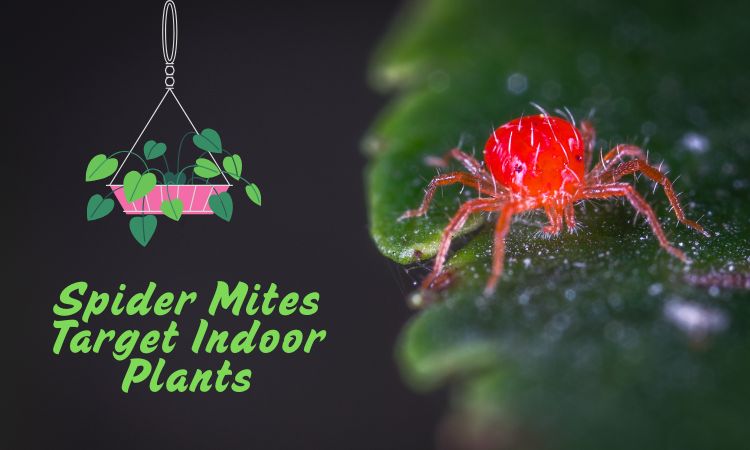
Spider mites aren’t actually insects. They’re arachnids, tiny relatives of spiders and ticks, and they’re nearly invisible to the naked eye. Most species are less than 1/50 of an inch (0.5 mm) in size. The most common type on houseplants is the two-spotted spider mite (Tetranychus urticae), which appears as a tiny yellowish or greenish dot.
Here’s the thing though. What makes them so destructive isn’t their size. It’s their reproduction speed. A single female can lay up to 200 eggs in her lifetime, and those eggs can hatch in as little as 3 days in warm, dry conditions. Do the math and you’ll understand why a small problem on Monday becomes a full-blown infestation by Friday.
They feed by piercing individual plant cells and sucking out the contents. Each bite leaves a tiny dead spot, and thousands of bites create that distinctive stippled, bronzed look on leaves. Left unchecked, they can kill a houseplant in a matter of weeks.
How to Confirm You’re Actually Dealing with Spider Mites
Before you start treating, make sure you’ve got the right pest. Misidentification wastes time and money.
The white paper test: Hold a piece of white paper under a leaf and tap the leaf firmly. If tiny dots fall onto the paper and start slowly moving, you’ve got spider mites. If nothing moves, it’s probably dust or mineral deposits.
Check for webbing. Fine, silky webs between stems and on leaf undersides are the clearest sign. But here’s something most guides don’t tell you: webbing only appears in moderate to heavy infestations. Early-stage spider mite problems often show zero webbing. By the time you see webs, the colony is already large.
Look for leaf damage patterns. Spider mite damage creates tiny yellow or white speckles on the top of leaves, almost like the leaf has been sprayed with bleach in a fine mist. This stippling usually starts near the midrib and spreads outward. The undersides of affected leaves often feel gritty or sandy when you run your finger across them.
Use a magnifying glass. Seriously. A cheap 10x loupe (about $5 on Amazon) makes identification instant. You’ll see the mites clearly, sometimes even their eggs, which look like tiny translucent spheres.
What Spider Mites Are NOT
Don’t confuse spider mites with these common lookalikes:
Fungus gnats are tiny black flies that hover around soil. They’re annoying but cause different damage. Mealybugs look like white cottony clusters, not fine webbing. Thrips are slender, elongated insects that leave silvery streaks, not stippling. Aphids cluster visibly on new growth and are much larger than spider mites.
4 Proven Ways to Get Rid of Spider Mites (Ranked by Effectiveness)
I’ve tested every treatment on this list across multiple infestations over the past five years. Here’s what actually works, ranked from most effective to situational.
Treatment 1: Neem Oil Spray (Best Overall)
Neem oil is my go-to and the treatment I recommend to everyone. It works as both a pesticide and a repellent, disrupting spider mites’ feeding and reproductive cycles. According to the University of Florida IFAS Extension, neem oil is effective against a wide range of plant pests while being safe for beneficial insects when used as directed.
My tried-and-tested recipe:
Mix 1 tablespoon cold-pressed neem oil, 1 teaspoon liquid dish soap (the soap acts as an emulsifier), and 1 quart (1 liter) of warm water. Shake vigorously before each use because neem separates quickly. Spray the entire plant, paying extra attention to leaf undersides and stem joints. Apply in the evening since neem can cause leaf burn in direct sunlight.
Repeat every 5-7 days for a minimum of 3-4 treatments. I usually do 4-5 rounds just to be safe.
You can find cold-pressed neem oil at Home Depot, Lowe’s, and Amazon. Brands like Garden Safe and Bonide are widely available. Make sure the bottle says “cold-pressed” or “100% neem oil,” not “neem extract,” which is weaker.
Treatment 2: Rubbing Alcohol Solution (Best for Small Infestations)
For a quick, targeted approach on plants with just a few affected leaves, rubbing alcohol works surprisingly well.
Mix equal parts 70% isopropyl alcohol and water in a spray bottle. Spray directly onto affected areas or wipe individual leaves with a cotton pad soaked in the solution. The alcohol kills mites on contact by dissolving their outer coating.
Worth noting: this method works best as a supplement to neem oil, not a replacement. It kills on contact but has zero residual effect, meaning any mites you miss will keep reproducing. I use this for spot-treating between my regular neem applications.
One important thing to watch out for: test on one leaf first and wait 24 hours. Some plants, especially those with thin or delicate leaves like calathea and ferns, can react badly to alcohol.
Treatment 3: Insecticidal Soap (Best for Sensitive Plants)
If your infested plant is delicate and you’re nervous about neem or alcohol, insecticidal soap is the gentlest effective option. It works by suffocating the mites on contact.
Buy a pre-mixed insecticidal soap spray (Safer Brand is the most popular and available at most garden centers), or make your own by mixing 1 tablespoon of pure castile soap (like Dr. Bronner’s) per quart (1 liter) of water. Avoid dish soaps with degreasers or added fragrances.
Spray thoroughly, let sit for a few hours, then rinse the plant. Repeat every 4-5 days for 3 weeks.
Pro tip: Insecticidal soap only works when wet. Once it dries, it has no effect on mites. This means thorough coverage is everything. Miss a spot? Those mites survive and keep breeding.
Treatment 4: Water Blast + Quarantine (Best First Response)
Sometimes the simplest approach is the most underrated. Before reaching for any product, take the plant to your shower and blast every leaf with a firm stream of water for 2-3 minutes. Focus on the undersides. Research from Colorado State University Extension shows that a strong water spray can physically remove up to 70% of spider mites from leaf surfaces.
This won’t solve the problem alone, but it dramatically reduces the population before you follow up with one of the treatments above. I always start with a water blast as step one, no matter which chemical treatment I’m planning to use.
Why Spider Mites Showed Up in the First Place
Understanding what attracted spider mites to your plants helps you prevent future infestations. These pests don’t appear randomly.
Dry air is the number one cause. Spider mites thrive in low humidity. In the dry winter months when central heating reduces indoor humidity to 20-30%, spider mite populations explode. I’ve noticed that 80% of my mite problems happen between November and March. If your home regularly drops below 40% humidity, your plants are at higher risk.
Stressed plants attract mites faster. An underwatered, overfertilized, or light-starved plant puts out chemical signals that actually attract pests. Healthy plants produce natural defenses that make them less appetizing. This is why the same plant in two different homes might get mites in one and not the other.
New plants bring hitchhikers. That gorgeous new pothos from the garden center? It might be carrying a small mite population you can’t see yet. This is the most common entry point for spider mites into a previously clean collection.
Open windows in warm months. Spider mites can drift in on air currents from outdoor plants, especially if you have a garden or live near agricultural areas.
How to Make Sure Spider Mites Never Come Back
Knowing how to get rid of spider mites is only half the battle. Prevention is where the real win happens, and it’s far easier than treatment.
Boost your humidity. Keep indoor humidity above 45-50% during winter. A humidifier near your plant collection is the single most effective preventive measure. Grouping plants also raises the ambient humidity around them naturally. Misting alone isn’t enough since the moisture evaporates within minutes.
Quarantine every new plant for 2-3 weeks. Before a new plant joins your collection, keep it isolated in a separate room. Check it weekly for signs of pests. This one habit would have saved me from my worst infestation. I skipped quarantine once. Once was enough.
Wipe leaves regularly. Run a damp cloth over both sides of your leaves every 2-3 weeks. This removes dust (which spider mites love), removes any eggs before they hatch, and lets you spot problems early. It takes five minutes per plant.
Keep your plants healthy. Proper watering, adequate light, and correct fertilization keep plants strong enough to resist pest pressure. A thriving plant is a less attractive target than a struggling one.
Read More: snake plant care
Monthly preventive neem spray. During winter months, I spray all my plants with a diluted neem solution once a month, even if I see no signs of pests. Think of it like taking vitamins. It won’t guarantee you never get sick, but it stacks the odds in your favor.
What About Badly Infested Plants? When to Let Go
This is the part nobody wants to write, but it’s honest advice.
If a plant is covered in dense webbing, most leaves are yellowed or bronzed, and the stems look thin and weak, the infestation is probably too far gone. You could spend weeks treating it, and the plant still might not recover. More importantly, keeping a heavily infested plant near your healthy collection puts everything else at risk.
I’ve learned to ask myself one question: “Is this plant worth potentially losing three others?” If the answer is no, I seal it in a trash bag and remove it from the house. It stings, but it’s the smart call.
That said, if the plant has sentimental value or is rare, go aggressive with treatment. Cut off all heavily damaged leaves, repot in fresh soil, treat with neem every 5 days, and keep it completely isolated for at least a month. It can work, but set realistic expectations.
Where Most Beginners Go Wrong
Treating only once. One spray kills the adult mites but does nothing to the eggs. You must repeat treatment every 5-7 days for 3+ weeks to break the lifecycle. This is the most common reason people think “nothing works” against spider mites.
Spraying only the tops of leaves. Spider mites live primarily on the undersides of leaves. If you’re only spraying the top surface, you’re missing 80% of the population. Flip those leaves.
Not isolating the infested plant. Spider mites spread fast. Leaving the infested plant next to healthy ones while you treat it is like quarantining someone in a crowded room. Move it to a completely separate area.
Waiting too long to act. “I’ll deal with it this weekend” turns a 15-minute problem into a 3-week battle. The moment you see stippling or webbing, act immediately. Every day you wait, the population roughly doubles.
Using too much neem oil. More isn’t better. Concentrated neem can burn leaves and clog stomata. Stick to the recommended dilution: 1 tablespoon per quart (1 liter) of water, with a teaspoon of soap as emulsifier.
FAQ
How long does it take to get rid of spider mites completely?
Expect a minimum of 3 weeks of consistent treatment. Spider mite eggs hatch every 3-5 days, so you need multiple rounds of treatment to catch each new generation. In severe infestations, it can take 4-6 weeks before the plant is completely clear.
Can spider mites spread to all my houseplants?
Yes, and quickly. Spider mites travel between plants through direct leaf contact and can even drift on air currents indoors. Isolate any infested plant immediately and inspect nearby plants daily for at least two weeks.
Does neem oil actually kill spider mites?
Neem oil is one of the most effective treatments for spider mites on houseplants. It works by disrupting their feeding and reproduction cycles. Cold-pressed neem oil applied every 5-7 days for 3-4 rounds consistently eliminates infestations in my experience.
How to get rid of spider mites without chemicals?
A strong blast of water removes up to 70% of mites physically. Follow up by wiping leaves with a damp cloth every 2-3 days. Raising humidity above 50% slows their reproduction significantly. These non-chemical methods work best for early-stage, light infestations.
Why do my plants keep getting spider mites every winter?
Low humidity is almost always the answer. Central heating drops indoor moisture levels to 20-30%, which is ideal for spider mite reproduction. Running a humidifier to maintain 45-50% humidity during winter months drastically reduces your risk.
Are spider mites harmful to humans or pets?
No. Spider mites feed exclusively on plant cells and cannot bite humans or animals. They’re strictly a plant pest. The treatments used (neem oil, insecticidal soap) are also generally safe around pets and children when used as directed.
What indoor plants are most prone to spider mites?
Plants with thin, delicate leaves tend to attract spider mites more. Calathea, ivy, roses, and fruit trees are frequent targets. Thick-leaved plants like snake plants, ZZ plants, and rubber plants tend to resist infestations better. For care tips on resistant varieties, see our spider plant care guide.
Can I use dish soap alone to kill spider mites?
Regular dish soap can work in a pinch (a few drops per quart/liter of water), but it’s harsher on plant leaves than insecticidal soap or neem oil. Soaps with degreasers or fragrances can damage foliage. If using dish soap, test on one leaf first and watch for 24 hours before spraying the whole plant.
Your Plants Are Worth Fighting For
How to get rid of spider mites comes down to three things: act fast, treat consistently, and prevent reinfestations through better humidity and regular leaf maintenance. Most people lose plants to spider mites not because the pests are unbeatable, but because they treat once and assume the job is done. Now you know better.
The biggest lesson I’ve taken from my own battles with these pests is that prevention beats treatment every single time. A $30 humidifier and five minutes of leaf wiping every couple of weeks save you from weeks of frustrating treatment later. Your plant collection is worth that small investment.
Got a plant that’s struggling after a spider mite infestation? Check out our guides on monstera plant care and calathea plants for recovery tips on two of the most commonly affected species.
Happy planting!