
The Swiss Cheese Plant, most commonly known as Monstera deliciosa, is the undisputed king of indoor foliage. Named for its massive, glossy leaves punctuated by natural holes (fenestrations), the plant brings a quintessential tropical vibe and dramatic visual appeal to any living space. Its popularity has surged in the USA, making “Swiss Cheese Plant Care” one of the most searched gardening terms.
While the Monstera is relatively robust, achieving those iconic, large, and deeply cut leaves requires specific environmental conditions. Issues like yellowing leaves, slow growth, or lack of fenestrations often signal problems in the basic care routine.
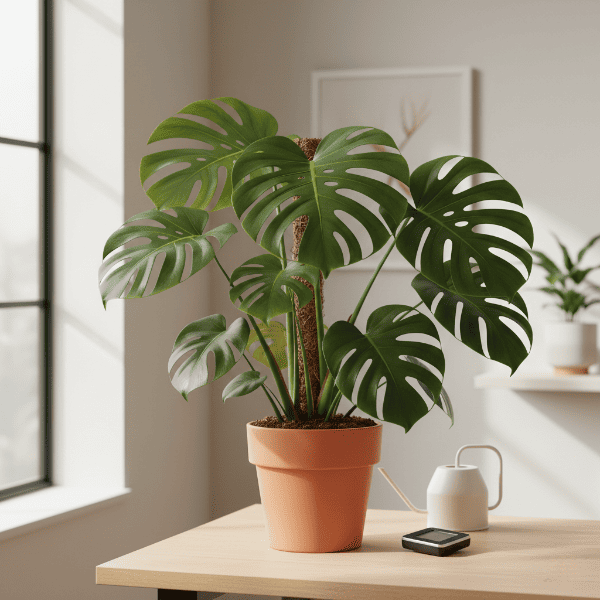
Understanding Your Swiss Cheese Plant (Monstera Deliciosa)
The Monstera deliciosa is a vining epiphyte native to the tropical rainforests of Southern Mexico and Central America. Epiphytes naturally grow on other trees for support, using their aerial roots to cling and absorb moisture and nutrients from the air. Understanding this vining, climbing nature is key to successful Swiss Cheese Plant Care.
The Mystery of Fenestration (The Holes)
The characteristic holes and deep splits (fenestrations) that give the plant its “Swiss Cheese” nickname serve several purposes in its native habitat:
- Wind Resistance: They allow strong winds to pass through the leaves, preventing tears.
- Water Channeling: They channel rainwater down to the aerial roots.
- Light Optimization: They help lower leaves receive filtered light in the dense jungle canopy.
Only mature, healthy leaves grown in optimal light conditions will develop these iconic splits.
The Essential Pillars of Swiss Cheese Plant Care
Optimal Swiss Cheese Plant Care involves replicating the warm, humid, and filtered light conditions of its jungle home.
1. Light Requirements: Bright and Filtered
Light is paramount for driving the deep growth and fenestration required for a spectacular Monstera.
- Ideal Light: Your Monstera needs bright, indirect light for 6 to 8 hours daily. A few feet away from a south or west-facing window, or right next to an east-facing window, is often perfect.
- Low Light Warning: In low-light environments, the plant will become leggy (stretched out), and its leaves will remain small, solid (no holes), and less vibrant.
- Direct Sun Caution: Never expose the leaves to harsh, direct midday sun, especially through a window. The intense heat can quickly scorch the leaves, resulting in large, brown, crispy patches.
- Fenestration Tip: If your plant isn’t developing holes on new leaves, it almost certainly needs more light.
2. Watering: Finding the Balance
The Monstera prefers consistent moisture but is highly susceptible to root rot if left sitting in saturated soil.
The “Slightly Moist” Method
- Check Consistency: Only water when the top 2–3 inches (5–7.5 cm) of soil is completely dry. The soil should never be allowed to dry out completely like a succulent, nor should it remain soggy.
- Soak Thoroughly: Drench the soil until water pours out of the drainage holes.
- Crucial Drainage: Empty the drainage saucer immediately. Waterlogged soil is the fastest killer of the Swiss Cheese Plant.
| Season | Watering Frequency (General Guide) | Key Factor |
| Spring/Summer (Active Growth) | Typically every 5–7 days | Maintain slightly moist soil; allow the top few inches to dry. |
| Fall/Winter (Dormancy) | Typically every 10–14 days | Significantly reduce frequency; cooler temperatures mean slower drying. |
3. Soil and Support: Epiphyte Essentials
Because the Monstera is an epiphyte, its roots need excellent aeration and structural support.
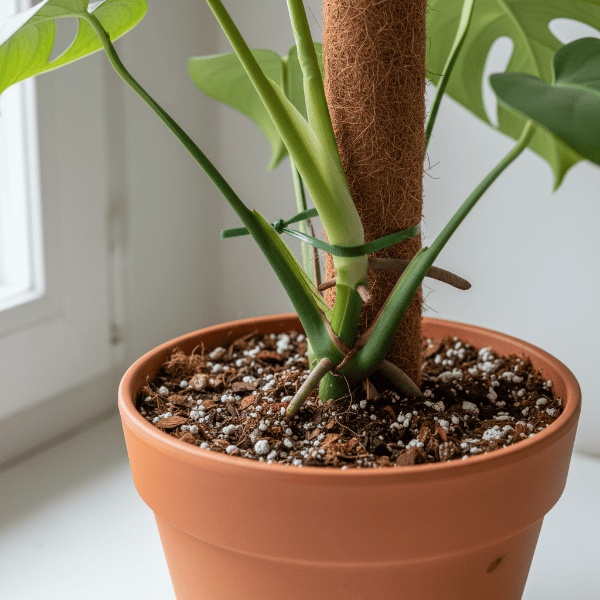
Soil Mix: Use a chunky, airy, and well-draining potting mix. A good recipe is 60% high-quality potting soil mixed with 40% amendments like perlite, coco coir, and orchid bark. This mimics the chunky debris they grow in naturally.
Support System: Providing a support structure is crucial for large, healthy leaves.
Use a Moss Pole or Coir Pole to allow the aerial roots to attach. This provides the climbing structure the plant needs and signals to the plant that it is in a “safe” position to produce larger, fenestrated leaves.
Tie the main stem gently to the pole until the aerial roots naturally begin to attach.
4. Temperature and Humidity
The tropical nature of the Monstera requires high warmth and moisture.
- Temperature: Maintain warm, stable conditions between 65°F and 80°F (18°C to 27°C). Avoid placing near cold drafts, doors, or windows in the winter, as cold shock can cause leaf drop.
- Humidity: High humidity (60% or higher) is essential for preventing brown, crispy leaf edges and tips.
- Use a humidifier near the plant.
- Mist the aerial roots frequently (not the leaves themselves) to encourage them to anchor and absorb moisture.
- Group the plant with other tropical plants.
5. Fertilization: Fueling the Growth
A fast grower like the Monstera is a heavy feeder during its active season.
- Timing: Fertilize once every 2 to 4 weeks throughout the Spring and Summer growing season. Stop all feeding in Fall and Winter.
- Type: Use a balanced, liquid fertilizer (e.g., 20-20-20 NPK) diluted to half strength. Nitrogen is important for promoting that lush green foliage.
- Application: Always apply fertilizer to moist soil to prevent chemical root burn.
Maintenance and Structural Care
Proper Swiss Cheese Plant Care includes actively encouraging its vining habit and keeping the large leaves clean.
1. Pruning and Trimming
- When to Prune: The best time is during the active growth period (Spring/Summer).
- Controlling Size: Prune back any overly long or leggy vines. Always cut just above a node (the bump on the stem) where a leaf or aerial root is attached.
- Removing Damage: Promptly remove any yellow, brown, or diseased leaves to redirect the plant’s energy to new growth.
- Caution: Pruning is also the first step in propagation!
2. Managing Aerial Roots
The long, brown, rope-like aerial roots are a natural, healthy part of the Swiss Cheese Plant.
- Do Not Cut: Avoid cutting the aerial roots unless necessary for aesthetics. They help the plant stabilize and draw moisture/nutrients.
- Directing: Direct the aerial roots toward the moss pole or directly into the soil to help anchor the plant and absorb extra water.
3. Repotting
- Frequency: Repot every 1–2 years or when the plant becomes severely root-bound (roots circling densely or emerging from drainage holes).
- Pot Size: Move up to a pot that is only 2 inches larger in diameter. Use the recommended chunky, airy soil mix.
- Timing: Repotting should always be done in the Spring.
Troubleshooting and Common Issues
Diagnosing problems is a key component of Swiss Cheese Plant Care. Most issues relate to light and water management.
1. Yellowing Leaves
- Lower/Older Leaves Turning Yellow: Overwatering is the most frequent cause, leading to root rot. Check the soil. Only water when the top few inches are dry.
- Yellowing with Brown Tips: Can indicate underwatering or, more commonly, low humidity.
2. Brown or Crispy Tips/Edges
- Cause: Low humidity or salt/chemical buildup from water or fertilizer.
- Solution: Increase humidity using a humidifier or pebble tray. If you suspect salt buildup, flush the soil thoroughly with clean water, allowing the water to drain completely for 30 minutes.
3. Lack of Fenestration (No Holes)
- Cause: Lack of light or the plant is immature.
- Solution: Move the plant to a much brighter location. Ensure the plant has a structural support (like a moss pole) to encourage the growth of mature leaves.
4. Pests
The most common pests for the Swiss Cheese Plant are sap-sucking insects.
| Pest | Identification | Control and Treatment |
| Spider Mites | Fine webbing on the undersides of leaves; leaves appear dusty or speckled. | Increase humidity. Wipe the leaves down and spray the plant with Neem Oil solution, focusing on the undersides. |
| Thrips | Small, slender black insects; leaves show silver-stippled damage. | Quarantine the plant immediately. Use systemic insecticide or repeat applications of insecticidal soap. |
| Mealybugs | White, cottony clumps usually found in the tight corners where the leaf meets the stem. | Dab directly with a cotton swab soaked in 70% rubbing alcohol. |
Propagation: Creating New Monsteras
Propagation is an easy and rewarding aspect of Swiss Cheese Plant Care.
Stem Cutting Selection: Choose a section of the stem that has at least one leaf and, crucially, one node (the bump where a leaf or aerial root emerges).
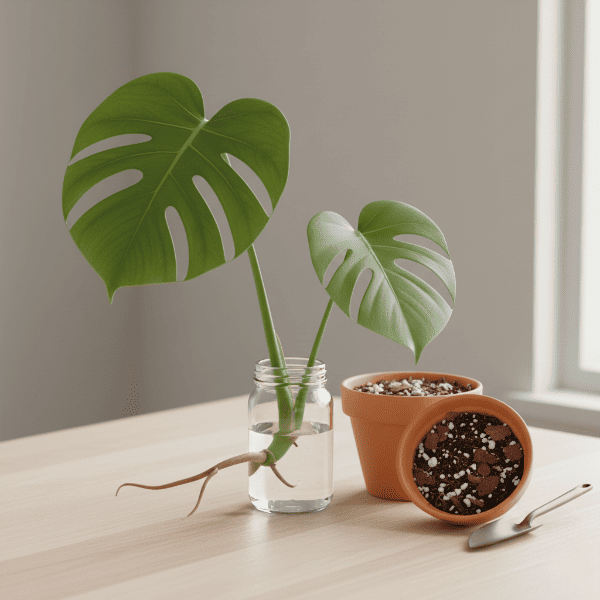
The Cut: Use a clean, sharp knife to cut the stem about an inch below the node.
Rooting Medium:
Water: Place the cutting in a jar of clean water, ensuring the node is fully submerged. Roots will appear from the node within a few weeks. Change the water weekly.
Sphagnum Moss: Place the cutting in a container of damp sphagnum moss and keep it in a warm, bright place until roots develop.
Planting: Once the roots are 2–3 inches long, plant the cutting in the recommended chunky potting mix.
Conclusion
The Monstera deliciosa, the iconic Swiss Cheese Plant, is an unforgettable houseplant, transforming any space into a tropical haven. While its initial care may seem complex due to its specific needs for high light, humidity, and drainage, the principles of Swiss Cheese Plant Care are ultimately straightforward.
By committing to bright, filtered light, maintaining consistent but not soggy moisture, and providing essential structural support (like a moss pole), you will create the ideal environment for your Monstera. This attention to detail will be rewarded with robust vertical growth and the magnificent, deeply fenestrated leaves that are the hallmark of a truly healthy and thriving Swiss Cheese Plant. Embrace the jungle environment, and watch your Monstera flourish.