
If you have ever looked at a healthy snake plant and thought “I want more of these without spending money,” you are already thinking like a plant person. Knowing how to propagate snake plant at home is one of the most satisfying skills you can pick up as an indoor gardener, mostly because it works, it costs nothing, and the snake plant is one of the few houseplants that tolerates a beginner making mistakes along the way.
That said, there is a surprising amount of confusion around snake plant propagation. People try the water method and wait months with nothing happening. Others plant a leaf cutting and watch it slowly go mushy. A few lose the beautiful yellow striping on their Laurentii because no one told them one critical detail before they started cutting.
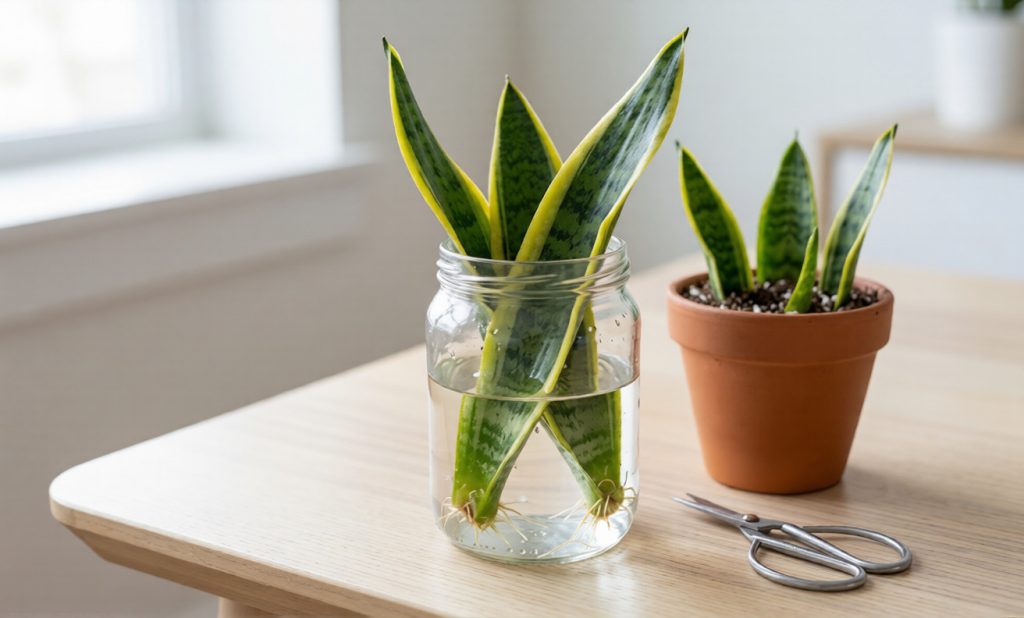
What Does It Mean to Propagate a Snake Plant?
Propagation means creating a new plant from an existing one. With snake plants, you are not planting seeds. You are either cutting a leaf and encouraging it to grow roots, or you are separating a section of the root system that already has its own roots and shoots.
The plant you start with is called the mother plant. What you end up with, if things go well, is one or more new plants that are genetically close to the original, depending on the method you choose.
People often ask: Can you propagate snake plant at all stages of its life? Yes. As long as the mother plant is healthy and has mature leaves, you can take cuttings or divide it at almost any point during the growing season.
Different Methods to Propagate Snake Plant
How do you propagate snake plant? There are three practical methods for home growers, and each one serves a different situation.
The first is water propagation, where you place a leaf cutting in water and wait for roots to develop. Popular with beginners because you can see what is happening inside the glass.
The second is soil propagation, where a leaf cutting goes directly into potting mix. Slower to watch but produces stronger roots and skips a tricky transplant step later.
The third is division, where you physically separate the root system of a mature plant into two or more sections. The fastest method and the only one that reliably preserves variegation.
Each method has a different use case. Choosing the right one upfront saves a lot of frustration.
Method 1: Propagate Snake Plant in Water
Learning how to propagate snake plants in water is where most people start, and it works well when done correctly. The issue is that a few small details make the difference between roots growing within weeks and a mushy, rotting failure.
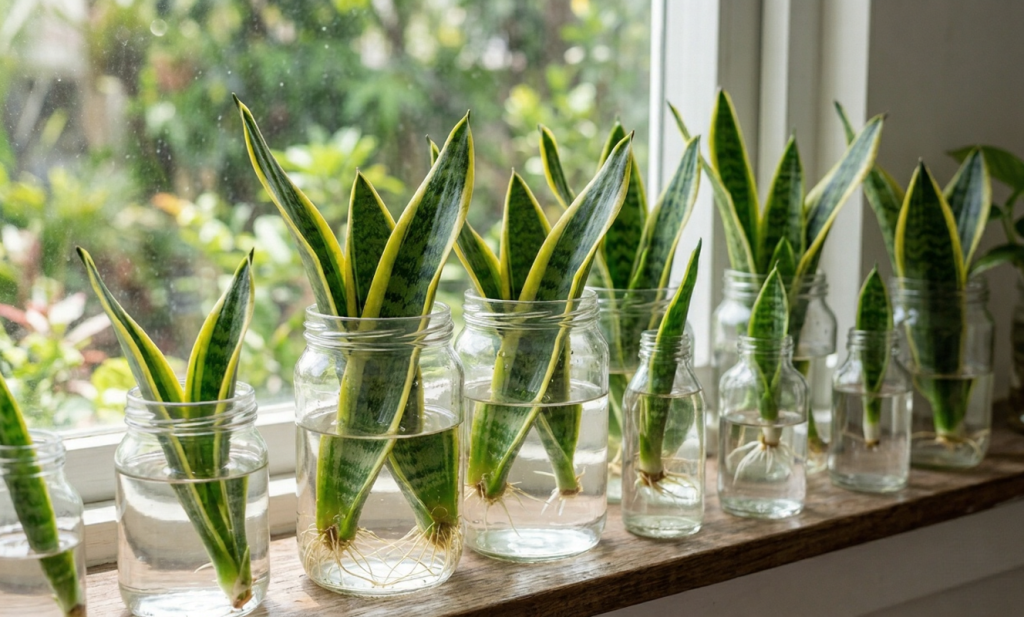
Cutting the leaf correctly
Choose a mature, healthy leaf that is firm, dark green, and free of damage or soft spots. Avoid cutting very young leaves near the center of the plant. They tend to root slowly and are more prone to rotting in water.
To propagate snake plant, cut the leaf as close to the soil line as possible using clean scissors or a sharp knife. If your tool has been used on other plants recently, wipe it with rubbing alcohol first. A dirty cut introduces bacteria that speed up rot.
Once cut, you can place the whole leaf in water, or cut it into sections of roughly 3 to 4 inches each. Sections give you more new plants but require more patience.
If you cut the leaf into sections, mark the bottom of each piece before you lose track. You can do this with a small notch or simply by keeping the pieces oriented the same way they grew. This matters more than most people realize. Planting a cutting upside down means roots will never form, no matter how long you wait.
Let the cut ends dry out for 24 hours before placing in water. This step is skipped constantly by beginners, but it significantly reduces the chance of the base turning mushy.
Setting up the water container
Use a clear glass or jar so you can monitor root development. Fill it with room temperature water. Filtered or distilled water gives slightly better results than straight tap water, especially in areas where tap water is heavily chlorinated.
Submerge only the bottom inch of the cutting. More than that, the leaf is more likely to rot. Place the jar in a spot with bright indirect light. A windowsill with morning sun or a well-lit shelf works well. Direct afternoon sun will warm the water too fast and encourage bacterial growth.
Change the water every 7 days without fail. Stagnant water is where most water propagations fail quietly.
What to expect and when
Roots typically begin appearing between 4 and 8 weeks. In cooler rooms or lower light, it can stretch to 10 to 12 weeks. Tiny white root threads will emerge from the cut base first, often so small you have to look closely to notice them.
Once roots reach about 1 to 2 inches long, transfer the cutting to soil. Do not wait too long. Roots that have grown in water for months become adapted to that environment, and the jump to soil can cause transplant shock. The plant may wilt or stall completely before eventually recovering.
After transferring to soil, small new pups will emerge from the base over the following weeks. The original leaf section may eventually yellow and shrivel, which is completely normal.
Method 2: Propagate Snake Plant in Soil
Knowing how to propagate snake plant in soil is worth learning because it skips the water-to-soil transition entirely. The roots that form in soil are also structurally stronger from the start.
How to do it
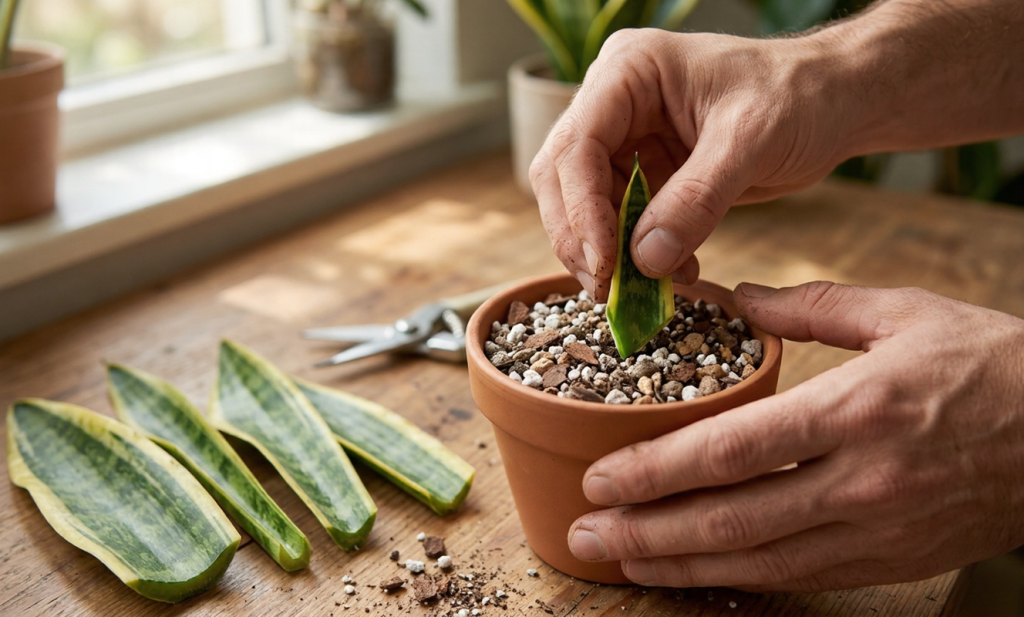
When you propagate snake plant in soil, cut and prepare your leaf sections the same way as described for water propagation. Let the cut ends callus for 24 to 48 hours by setting them on a dry surface out of direct sun.
Use a light, well-draining potting mix. A standard succulent or cactus mix is ideal. Regular houseplant soil tends to hold too much moisture and increases the chance of rot at the cutting base. If you only have regular potting mix available, add perlite at roughly a 1:1 ratio to improve drainage.
Make a small hole in the soil and insert the bottom end of the cutting about an inch deep. Firm the soil gently around it so the cutting stands upright on its own.
Watering and care
Water the soil very lightly after planting, just enough to dampen it. Then leave it alone for a week. The biggest mistake at this stage is tugging the cutting out to look for roots. This breaks any small roots that have started forming and sets you back significantly.
Water again only when the top inch of soil feels dry. In cooler months, this may mean watering once every 10 to 14 days or longer.
Roots and new growth timeline
Root development in soil takes longer to become visible since you cannot see beneath the surface. Expect 6 to 10 weeks before roots anchor the cutting firmly. You will know roots have formed when the cutting does not wiggle when you press on the soil around it.
New pups begin appearing at the base anywhere from 2 to 4 months after planting. A cutting that looks inactive for 8 weeks may surprise you with a cluster of new growth shortly after.
How to Propagate Snake Plant From a Leaf or Cutting
Many beginners wonder about the difference between propagating a snake plant from leaf sections versus a full-length cutting. Both work the same way. The term “cutting” usually refers to a section of leaf, not a separate type of propagation.
When you propagate snake plant cutting sections, you are essentially doing the same thing whether you use a full leaf or divide it into shorter pieces. The only real difference is quantity. A single full leaf cut into four sections can give you four new plants. One full leaf placed as a single cutting gives you one.
How to propagate snake plant leaves is straightforward: cut cleanly, let it callus, orient the bottom end correctly, and place it in water or soil. The method is the same regardless of section length.
One important note about how to propagate snake plant cutting pieces: shorter sections, under 2 inches, tend to have lower success rates because they carry less stored energy to push out new roots. Keep sections at least 3 inches long for consistent results.
Can You Propagate a Snake Plant From a Broken Leaf?
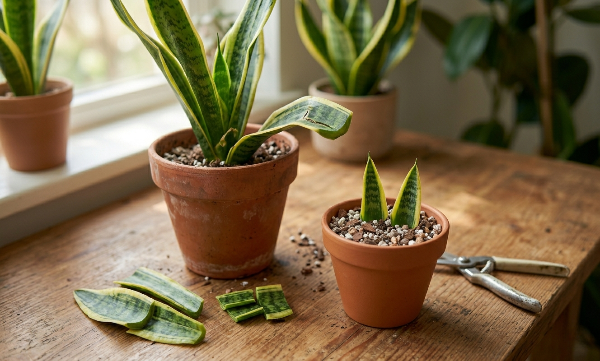
This comes up more than you would expect. Someone accidentally snaps a leaf, or a tall leaf falls over and breaks partway up. The question is whether it is worth trying to propagate snake plant broken leaf pieces.
The answer is yes, with conditions. If the broken section is at least 3 to 4 inches long, firm, and not damaged or soft at the break point, it can absolutely be used as a cutting. Trim the broken end cleanly with a sharp knife, let it callus for 24 to 48 hours, and proceed exactly as you would with a planned cutting.
If the break left a jagged, crushed, or mushy edge, trim above that damage to clean tissue before attempting propagation. A messy cut edge rots faster than a clean one.
Method 3: Propagate Snake Plant by Division
Division is the method to use when your snake plant has grown large, looks crowded, or has visible pups growing alongside the main plant. It is also the only reliable method if you want to preserve variegation.
Leaf cuttings from variegated snake plants will revert to solid green. The pigmentation lives in the meristem tissue, not the leaf cells. Division preserves the original pattern because each divided section keeps its own root and crown tissue.
How to divide safely
Water the plant lightly the day before so the roots are slightly pliable. Remove the plant from its pot and gently brush away loose soil from the root ball.
Use a clean, sharp knife or pruning shears. Cut through the rhizome connecting a pup to the mother plant. If both sections have roots, the separation is straightforward. If the pup has minimal roots, let the cut end callus for a day before potting it up.
Plant each division in fresh well-draining soil. Water lightly and place in indirect light. Skip direct sun for the first two to three weeks while the plant adjusts. New leaf growth typically resumes within 4 to 6 weeks.
Step-by-Step: How to Propagate Snake Plant
- Choose a healthy, mature leaf with no soft spots or discoloration.
- Use clean scissors or a sharp knife to cut the leaf near the soil line.
- Mark the bottom of each section clearly before cutting if dividing into pieces.
- Allow cut ends to air dry for 24 to 48 hours on a clean, dry surface.
- Choose your method: place in water with just the bottom inch submerged, or plant directly into succulent potting mix about 1 inch deep.
- For water: place in bright indirect light and change the water every 7 days.
- For soil: water very lightly and let the top inch dry before watering again.
- Wait without disturbing the cuttings. Roots take 4 to 10 weeks, depending on method and conditions.
- For water propagation: move to soil once roots reach 1 to 2 inches long.
- Watch for small pups emerging at the base of the cutting. These are your new plants.
How Long to Propagate Snake Plant: Realistic Timelines
Being honest about how long to propagate snake plant matters because this is where beginners give up prematurely.
Root formation from leaf cuttings takes 4 to 8 weeks in water and 6 to 10 weeks in soil under normal indoor conditions. In a warm room near a bright window during spring or summer, things move faster. In a cool dim room in winter, you could be waiting 3 to 4 months before seeing meaningful root development.
After roots form, new pups appear at the base of the cutting. That process takes another 4 to 10 weeks. So from the day you take a cutting to the day you have a recognizable baby plant with its own leaves, you are looking at 3 to 5 months in total.
Division is different. Divided sections are already established, so they recover and resume growth within a few weeks.
Snake plants are slow growers by nature. Expecting rapid visible progress is the main reason people declare their propagation a failure before anything meaningful has had time to happen.
Best Way to Propagate Snake Plant
| Method | Difficulty | Speed to Roots | Success Rate | Best For |
|---|---|---|---|---|
| Water propagation | Easy | 4 to 8 weeks | Moderate | Beginners wanting visible progress |
| Soil propagation | Easy to moderate | 6 to 10 weeks | High | Stronger roots, no transplant stress |
| Division | Moderate | Instant (already rooted) | Very high | Large plants, preserving variegation |
The best way to propagate snake plant for a complete beginner is water propagation simply because the visibility helps you understand what healthy progress looks like. For long-term results with less fuss, soil propagation edges ahead.
Common Mistakes That Stop Snake Plant Propagation
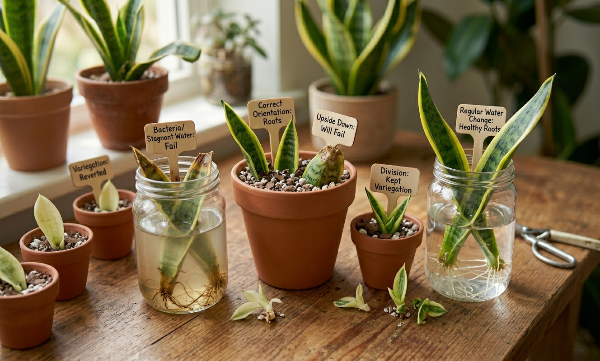
- Planting the cutting upside down. Roots only grow from the end closest to the soil. Mark your cuttings before you start.
- Overwatering soil cuttings. Consistently wet soil at the cutting stage causes the base to rot before roots can form.
- Using a damaged or very young leaf. Soft or old leaves do not have enough stored energy to push out new roots.
- Not changing the water regularly. Stagnant water grows bacteria quickly. Brown mushy ends in water are almost always caused by water that was not refreshed often enough.
- Disturbing the cuttings too early. Pulling a cutting out of soil to check for roots is the single most common reason for failure. Wait at least 6 weeks before doing any kind of root check.
- Propagating a variegated variety by leaf cutting and expecting to keep the pattern. It will revert to green. Use division if the variation matters to you.
Pro Tips for Better Results
- Spring and early summer are the best times to propagate snake plant because the plant is in active growth and roots form faster.
- Keep temperatures between 65 and 85 degrees Fahrenheit during propagation. Below 60 degrees, root development slows dramatically.
- Bright indirect light, not direct sun, gives the best results for cuttings in both water and soil.
- A small V-shaped notch cut into the bottom of a water cutting increases the surface area in contact with water and reduces the chance of the base sealing over before roots form.
- Using a terracotta pot for soil propagation helps excess moisture evaporate faster, which reduces root rot risk.
- Do not fertilize cuttings or freshly divided plants for at least 6 to 8 weeks. New roots are sensitive and fertilizer can burn them before they are established.
Frequently Asked Questions
Can you propagate snake plant from a single leaf?
Yes. A single leaf can produce multiple new plants if cut into sections of 3 to 4 inches each. Make sure each section is oriented correctly, bottom end down, and understand that variegated varieties will lose their patterning with this method.
Can I propagate snake plant in water if I am a complete beginner?
Yes, water propagation is actually the easiest starting point because you can watch the roots develop. Just remember to change the water every 7 days, keep only the bottom inch submerged, and move the cutting to soil once roots reach 1 to 2 inches.
How long does snake plant propagation take?
From cutting to visible baby pups, expect 3 to 5 months for leaf cuttings. Division produces results much faster, with new growth typically visible within 4 to 6 weeks.
Is water or soil better for propagation?
Soil produces stronger, more resilient roots and avoids transplant shock entirely. Water is more beginner-friendly because you can see what is happening. Both work well, but going straight to soil saves one extra step.
Why is my snake plant cutting not rooting?
The most common reasons are: the cutting was planted upside down, the room is too cold or too dark, the soil is staying consistently wet, or you are simply not waiting long enough. Check all four before giving up.
Can I propagate snake plant in winter?
It is possible but slower. If your home stays consistently warm and you have good indirect light, winter propagation can work. It just requires more patience than a spring or summer attempt.
Conclusion
If you have been hesitating, propagate snake plant at least once and you will understand quickly why this plant has such a loyal following. It tolerates imperfect conditions, roots without hormones or special equipment, and recovers from beginner mistakes more gracefully than most houseplants.
For true beginners, start with water. It is visual, low-cost, and shows you what healthy root development looks like. Once comfortable, switch to direct soil propagation for your next attempt since it skips the stressful transition step and builds stronger plants from the start.
If your snake plant is already large and you want multiple new plants quickly, division is the most reliable path and the only smart choice if variegation matters to you.
Whatever method you try, carry realistic patience into the process. Propagate snake plant once, do it right, and wait out the slow weeks without disturbing anything. The reward at the end, a cluster of fresh new pups pushing up through the soil, is genuinely worth it.