
Picture this: you are watering your pothos on a Sunday afternoon and a small cloud of tiny flies rises out of the soil. You wave them away, assume it was a fluke, and move on. Three weeks later, every plant in your living room has them. If that scenario sounds familiar and you are trying to figure out how to get rid of fungus gnats, you are dealing with one of the most persistent problems in indoor gardening. The frustrating part is not just that they are annoying. It is that most people treat only half the problem, see brief improvement, and then watch the gnats come right back.
This guide covers the full picture: what you are actually dealing with, why the infestation keeps cycling, and a layered, multi-method approach that eliminates fungus gnats for good.
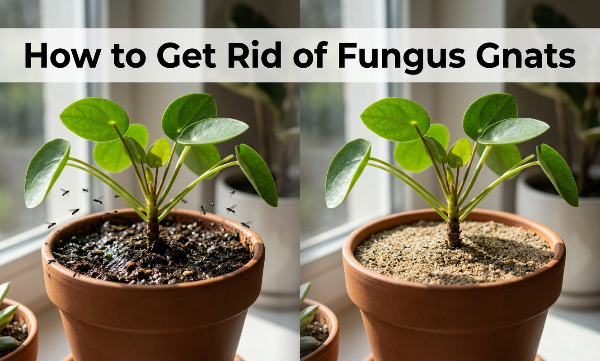
Identifying the Pest: Is It Actually a Fungus Gnat?
Getting rid of fungus gnats starts with knowing you actually have them, because not every tiny fly near your plants is the same pest. Misidentifying the insect leads to wasted treatment.
Fruit flies are rounder, yellow-brown or tan in color, and tend to congregate around overripe fruit, the trash can, or fermented liquids. Fungus gnats are dark gray to black, long-legged, slender, and almost exclusively tied to soil. Their wings are semi-transparent, and they have an erratic, low-to-the-ground flight pattern. Where fruit flies dart around your kitchen broadly, fungus gnats hover specifically near plant pots.
Two quick confirmation tests work well. Place a yellow sticky trap flat on the soil surface. If it collects dark, slender flies within a day, you have fungus gnats. Alternatively, press a coin-sized piece of raw potato directly onto the soil surface and leave it for 48 hours. Flip it over. Tiny white, thread-like larvae clinging to the underside confirm active fungus gnat larvae in your soil, which is the real problem you need to address.
The Biology Behind Fungus Gnats (And Why They Keep Coming Back)
Understanding the fungus gnat life cycle is the single most important step in treating an infestation properly.
Adult fungus gnats are mostly harmless to plants. They do not feed on foliage, they do not bite, and they do not cause structural damage. What they do is reproduce prolifically. A single female can deposit up to 300 eggs in the top inch or two of moist potting soil over her short lifespan. Those eggs hatch within days into larvae.
Fungus gnat larvae are white, semi-translucent, and about 1/4 inch (6 mm) long. They feed on decaying organic matter, fungal threads in the soil, and, when populations are dense, the fine root hairs of your plants. Young plants, seedlings, and any plant already stressed by overwatering or root rot are most vulnerable. Healthy, established plants can tolerate light larval feeding but will still decline if the infestation goes untreated for long.
Here is the cycle that trips people up: egg to adult takes roughly 3 to 4 weeks. Most people kill the adults they can see, notice improvement after a few days, and stop treatment. Meanwhile, the next generation of larvae is still developing in the soil. Two weeks later, new adults emerge and the whole infestation restarts. Getting rid of fungus gnats properly means breaking this cycle across multiple generations, not just eliminating the adults visible today.
How to Get Rid of Fungus Gnats: The 7-Method Treatment Plan
The best approach to how to get rid of fungus gnats combines at least two methods simultaneously: one targeting larvae in the soil and one targeting adults above it. Running them together, consistently, for 4 to 6 weeks is what actually ends an infestation.
Here are the seven methods that have the most evidence behind them, from the simplest habit changes to the most targeted biological treatments.
Method 1: Let the Soil Dry Out Between Waterings
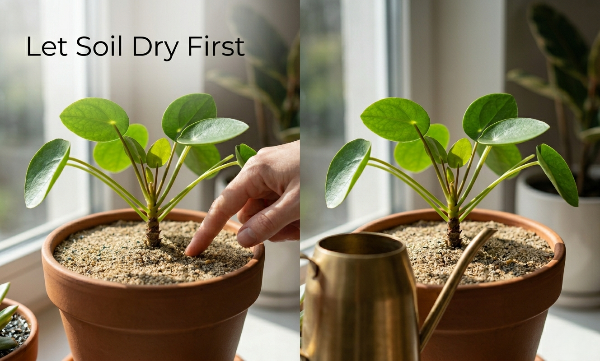
This sounds too simple, but it is the foundation every other method builds on. Fungus gnat eggs and newly hatched larvae cannot survive in dry soil. Female adults will not bother laying eggs in a pot where the top layer has dried out completely. If you are watering on a fixed schedule without checking the soil first, you are likely maintaining exactly the moist surface conditions gnats need to breed.
Let the top 2 inches (5 cm) of potting mix dry completely before watering again. For drought-tolerant plants, you can allow it to dry even deeper. For moisture-loving plants like ferns or calatheas, this requires more care, but even letting the very surface dry for a day or two between waterings disrupts egg-laying significantly.
Read More: snake plant watering guide
Method 2: Yellow Sticky Traps
Yellow sticky traps catch adult gnats through color attraction. Position them horizontally at or just above the soil surface, because adults hover low when searching for egg-laying spots. One trap per medium pot works well. Replace them every two weeks or sooner if they fill up quickly.
Traps do not eliminate larvae, so they cannot be the only method you use. What they do, very effectively, is reduce the adult population week over week. Fewer adults means fewer eggs being deposited. Check trap density over time: if you are catching significantly fewer gnats each week, your soil treatment is working.
Method 3: Hydrogen Peroxide Soil Drench
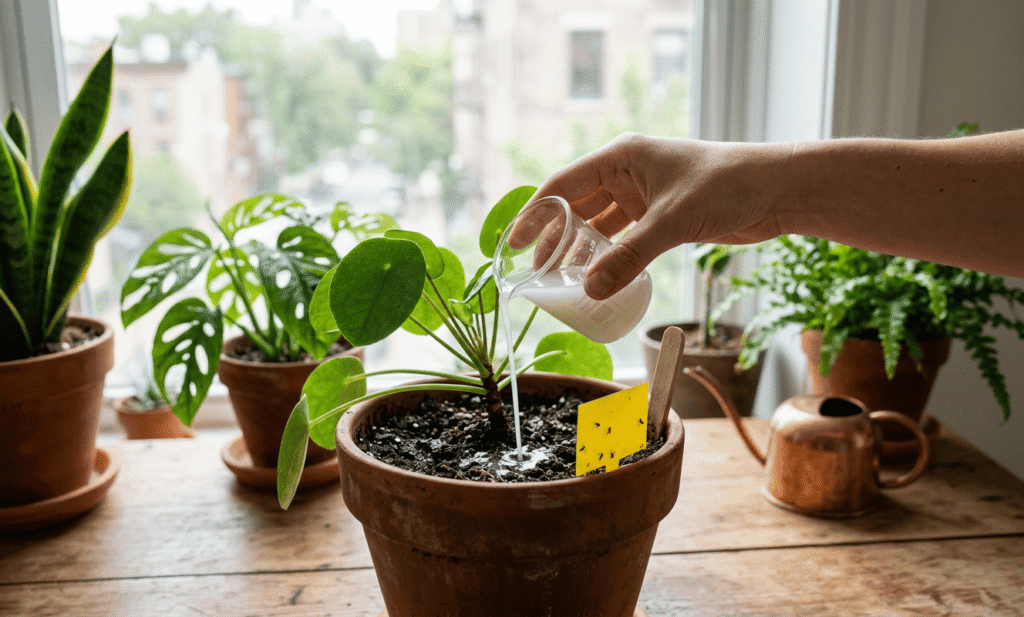
Mix one part 3% hydrogen peroxide with four parts water. Water your plant with this solution as you normally would, letting it drain from the bottom of the pot. The peroxide fizzes on contact with organic matter in the soil and kills fungus gnat larvae on contact. It breaks down into water and oxygen within a few hours, leaving no harmful residue.
This is one of the most effective methods for how to get rid of fungus gnats fast. Repeat every 7 to 10 days for three to four treatment cycles. Plant roots are not harmed at this dilution, though it is wise to water with plain water first if your soil is very dry to avoid any root shock before applying the solution.
Method 4: BTi (Bacillus thuringiensis israelensis) – Mosquito Bits
BTi is a naturally occurring soil bacterium that selectively kills the larvae of fungus gnats and mosquitoes. It poses zero risk to people, pets, beneficial insects, earthworms, or plant roots. This is the treatment recommended by university extension programs including Penn State Extension and the University of Florida IFAS for indoor plant gnat management.
Mosquito Bits, sold at Home Depot, Lowe’s, and Amazon, are the most accessible BTi product for indoor gardeners. Soak one tablespoon in a gallon of water for 30 minutes, then use that water to irrigate your plants. Larvae ingest the bacteria while feeding and die within 24 to 48 hours. Repeat every two weeks throughout your treatment period.
Pro tip: Some growers scatter a small amount of Mosquito Bits directly on the soil surface and water them in during normal irrigation. Both application methods deliver results. The water-soak approach tends to distribute BTi more evenly through the root zone.
Method 5: Neem Oil Soil Drench
Neem oil contains azadirachtin, a compound that disrupts the growth and reproductive cycle of many soil insects, including fungus gnat larvae. Mix neem oil into water according to label directions, typically about 2 tablespoons per gallon of water, with a few drops of dish soap to emulsify it. Use this as your regular watering solution.
Neem oil is a reliable tool for getting rid of fungus gnats as a secondary or follow-up treatment. It acts more slowly than hydrogen peroxide but has a longer residual effect in the soil. One practical note: neem oil has a strong sulfur-like odor indoors. It dissipates within a day or two but is worth knowing before you apply it to a dozen pots in your apartment.
Method 6: Diatomaceous Earth (Food Grade)
Diatomaceous earth is a fine white powder made from fossilized microscopic algae. At a microscopic level, the particles have sharp, abrasive edges that damage the exoskeleton of insects that crawl through it, causing them to dehydrate. Sprinkle a thin, even layer across the top of your potting soil.
This targets adults walking across the soil surface to lay eggs and larvae active near the top layer. Reapply after every watering because moisture renders it ineffective. Always use food-grade diatomaceous earth specifically, never pool-grade. Wear a dust mask during application, as the fine powder irritates airways even though it is physically harmless.
Method 7: Bottom Watering
Bottom watering flips the standard watering routine. Instead of adding water at the soil surface, place your pot in a tray or bowl with an inch or two of water and let the soil pull moisture up from the drainage holes. The top layer of soil stays dry, which disrupts egg-laying and makes your pots significantly less attractive to fungus gnat females looking for a breeding site.
This method will not eliminate an active infestation on its own, but it is one of the most effective long-term prevention habits once you have used other methods to how to get rid of fungus gnats from your existing plants. [see note: I should say “to get the initial infestation under control”] Bottom watering also encourages deeper root development, which is a nice side benefit.
Treatment Timeline: What to Expect Week by Week
| Week | Typical Results | Your Action |
|---|---|---|
| Week 1 | Adults still very active, traps filling quickly | Start hydrogen peroxide or BTi drench. Set sticky traps at soil level. |
| Week 2 | Small reduction in adult numbers | Second drench. Recheck potato test for larvae. |
| Weeks 3-4 | Noticeable drop in adult activity | Continue drench cycle. Switch to BTi every 2 weeks if using hydrogen peroxide initially. |
| Weeks 5-6 | Minimal to no adult activity | Final treatment pass. Shift to prevention habits. |
Do not stop treatment the moment adults disappear. Larvae and eggs may still be present at deeper soil levels. The most common reason an infestation restarts is stopping treatment one or two weeks too early.
Mistakes That Make Fungus Gnats Worse
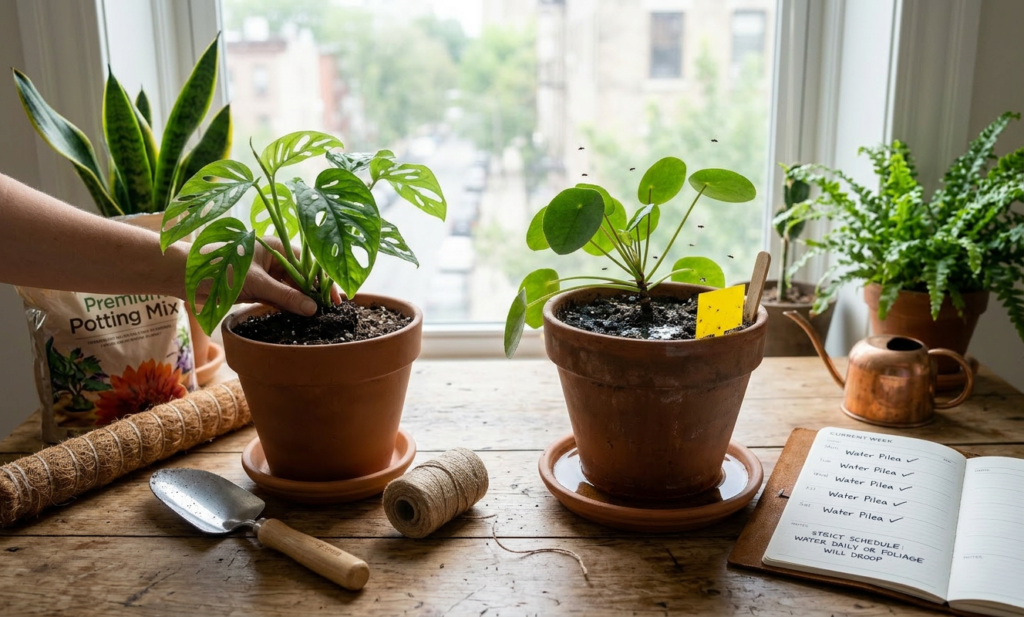
Figuring out how to get rid of fungus gnats is half the job. The other half is avoiding the habits that cause them to return. These are the mistakes that come up most often.
Targeting only the adults you see. Every treatment aimed at flying adults needs to be paired with a soil treatment. There is no shortcut around this. Adults are the symptom; larvae are the cause.
Quitting after the first sign of improvement. Seeing fewer gnats after 10 days feels like success, but the next larval generation may already be developing. Commit to 4 to 6 full weeks of treatment, no exceptions.
Keeping a fixed watering schedule. Watering every Sunday regardless of what the soil actually needs keeps surface moisture consistently available for egg-laying. Always check the top 2 inches (5 cm) before watering. If damp, wait.
Repotting into fresh soil and calling it solved. Moving a plant to a new pot does not kill larvae embedded in the root ball. The infestation moves with it. Treat the plant before or after repotting, not instead of treating.
Using peat-heavy potting mixes without amendment. Dense mixes that retain a lot of moisture stay inviting for gnats long after watering. Mixing in 20 to 30% perlite improves drainage significantly and helps soil surfaces dry faster between waterings.
Keeping Fungus Gnats Gone: Prevention After Treatment
Once the active infestation is cleared, staying gnat-free is mostly about soil moisture management and a couple of easy habits.
Always let the top 2 inches (5 cm) dry between waterings. Keep a yellow sticky trap somewhere in your plant area year-round as an early detection system. If you spot gnats starting to appear on the trap, you have caught the problem early, before it becomes a full infestation again.
Inspect new plants before bringing them indoors. Fungus gnat eggs can arrive in the potting soil of any new purchase from a garden center. Put new plants in quarantine for two weeks and check for signs of gnat activity before placing them near your existing collection.
In winter, when central heating lowers indoor humidity and growth slows down, plants need less water. Many plant owners continue their summer watering schedule into the colder months, which creates exactly the consistently moist soil that makes getting rid of fungus gnats necessary in the first place. Dialing back watering frequency in winter is one of the simplest preventive steps you can take.
Frequently Asked Questions
How do I get rid of fungus gnats in my houseplant soil quickly?
The fastest approach to how to get rid of fungus gnats in soil is the hydrogen peroxide drench: mix one part 3% peroxide with four parts water and irrigate your plant with it. Pair this with yellow sticky traps above the soil. You should see a meaningful drop in larval activity within the first week and a reduction in adults within two weeks.
Do fungus gnats actually hurt plants?
Adults do no harm to plant tissue. Larvae are the concern. In large numbers, fungus gnat larvae eat fine root hairs and can cause wilting, yellowing, and stunted growth. Seedlings and young plants are most at risk. Established plants can tolerate light infestations but will benefit from treatment before populations grow unchecked.
How long does it take to completely get rid of fungus gnats?
Plan for 4 to 6 weeks of consistent treatment. One complete gnat life cycle runs about 3 to 4 weeks, so you need to treat through at least one full cycle to interrupt egg-laying, larval development, and adult emergence. Seeing improvement early is encouraging, but full clearance takes time.
Does overwatering directly cause fungus gnats?
Overwatering does not summon gnats from nowhere, but it creates the moist soil conditions they need to breed successfully. Gnats can arrive via a new plant purchase or through an open window. Once present, an overwatered pot is an ideal breeding site. Fixing your watering habit removes the condition that makes your plants attractive to them.
Can I get rid of fungus gnats without chemical treatments?
Yes. BTi (Mosquito Bits), diatomaceous earth, and the hydrogen peroxide drench are all low-impact or organic solutions. Letting the soil dry between waterings and switching to bottom watering are entirely chemical-free strategies. Combining these gives you a fully natural approach to how to get rid of fungus gnats without reaching for any synthetic pesticide. Most indoor plant owners find this approach more than sufficient.
Which plants are most prone to fungus gnat infestations?
Plants that require consistently moist soil, like ferns, calatheas, peace lilies, and African violets, tend to attract gnats more frequently because their soil stays wet longer between waterings. That said, gnats will establish in any pot with a moist surface. No plant is immune, though drought-tolerant species that dry out quickly between waterings are far less susceptible.
Can fungus gnats spread between plants?
Absolutely. Adults fly freely and will lay eggs in any moist pot nearby. If one plant in your collection has an active infestation, treat every plant in the same space simultaneously. Treating only the visibly affected plant while leaving moist neighboring pots untouched is one of the most common reasons how to get rid of fungus gnats fail.
Is hydrogen peroxide or BTi better for getting rid of fungus gnats?
Both are effective, and many growers use them in sequence. Hydrogen peroxide works faster and kills larvae on contact, making it ideal for the first few weeks of treatment when you want quick reduction. BTi works more selectively and is better suited for ongoing maintenance and prevention. Starting with hydrogen peroxide for the first two to three weeks, then switching to BTi for the remaining treatment period, gives you both speed and thoroughness.
Putting It All Together
Getting rid of fungus gnats for good is a multi-week commitment, not a one-time fix. The gnats you see are only part of the problem. Address the larvae in the soil with a drench method, control the adults with sticky traps, and give your soil time to dry properly between waterings. Maintain that combination for 4 to 6 weeks and you will break the entire infestation cycle.
After that, the key to keeping them away is simple: water only when the soil needs it. Check before you water, not according to a calendar. That one habit, more than any spray or trap, is what keeps your plants gnat-free long term.
Your plants work hard. They deserve clean soil to grow in. Happy planting.