
The average bathroom hits 70 to 80 percent humidity after a hot shower. Most tropical houseplants need exactly that to thrive. While you’ve probably been fighting to keep plants alive in your dry living room with a humidifier, the best plants for bathroom environments have been waiting for you to notice your most plant-friendly room.
The catch is that not every plant handles bathroom conditions well. Low light, limited floor space, and sudden temperature swings after someone cracks a window in winter create a specific set of demands. The 10 plants below are matched to those exact conditions, with notes on which bathroom situation each one suits best.
What Makes Bathrooms Different (and Surprisingly Good) for Plants
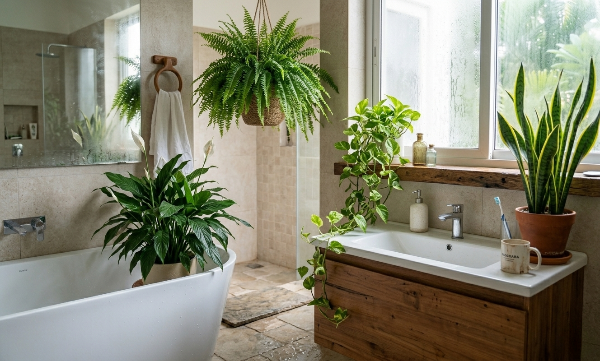
Bathrooms do three things that most rooms don’t: they produce consistent ambient humidity, stay warmer than average because of shower steam, and typically have small or frosted windows that block harsh direct sun.
For the average tropical houseplant, that’s a near-perfect setup. The problem is light. If your bathroom has no window at all, or only a tiny frosted one near the ceiling, your options narrow quickly. But they don’t disappear.
Here’s a simple way to assess your bathroom’s growing potential. Stand in the spot where you want to place a plant and hold your hand up at noon on a sunny day. A faint, blurry shadow means low light. A sharp, defined shadow means medium to bright indirect light. No shadow at all means the space relies entirely on artificial light. Knowing this narrows your choices before you spend money on a plant that won’t survive the first month.
The other variable is space. Small bathrooms favor countertop plants, hanging baskets, or wall-mounted displays. Larger bathrooms with corner space can handle statement floor plants like peace lilies or ferns in large pots.
The 10 Best Plants for Bathroom Spaces
1. Boston Fern (Nephrolepis exaltata) – The Humidity Maximizer
If any plant was specifically built for bathrooms, it’s the Boston fern. It demands high humidity, indirect light, and consistent warmth, which describes the average bathroom after a morning shower almost exactly. Most people struggle to grow Boston ferns in living rooms because they have to run humidifiers constantly. In a bathroom? The plant does better with zero extra effort.
NASA’s Clean Air Study ranked Boston ferns among the most effective plants for removing formaldehyde and xylene from enclosed spaces. For a room where cleaning products are used daily, that’s a real benefit on top of the visual impact.
Best for: plants for bathrooms with small windows and natural indirect light. Hanging baskets near (but not directly above) the shower work well. Water to keep the soil consistently moist but never waterlogged.
Pet safety: Non-toxic to cats and dogs according to ASPCA Poison Control. One of the safest choices on this list.
Pro Tip: If fern fronds start yellowing, it usually means inconsistent watering, not a light problem. Set a watering reminder for every 3 to 4 days while you establish the routine.
2. Pothos (Epipremnum aureum) – The Zero-Fail Trailing Option
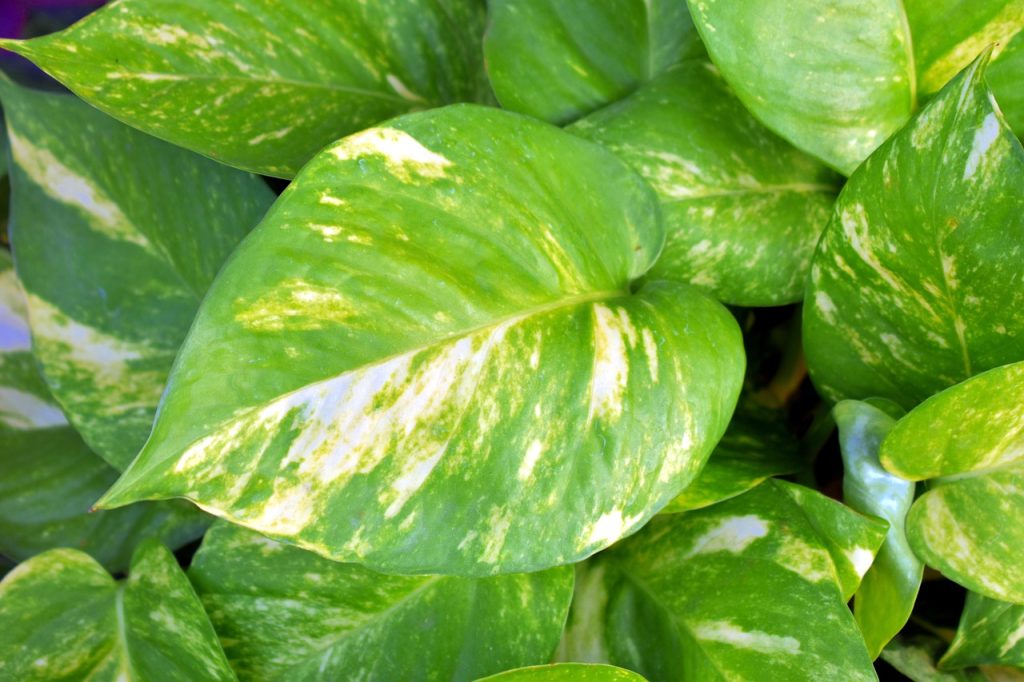
Pothos belong in every bathroom with low to medium light. They handle humidity without complaint, grow fast enough to be visually satisfying within weeks, and don’t need a schedule. I’ve had a pothos trail across a bathroom shelf for two years without a single yellow leaf. It gets no direct sun, inconsistent watering, and occasional complete neglect while I travel.
Hang one from a ceiling hook above the toilet or let it trail from a high shelf near the mirror. It filters formaldehyde, benzene, and carbon monoxide from the air while adding the kind of lush, green texture that most bathroom decor misses entirely air purifying plants.
Best for: Any bathroom type, but especially those with north-facing or frosted windows. Water when the top 2 inches (5 cm) of soil dry out.
Worth noting: Pothos are toxic to cats and dogs. If pets have access to your plants for bathroom, place this plant completely out of reach or choose a spider plant instead.
3. Spider Plant (Chlorophytum comosum) – The Pet-Safe All-Rounder
Spider plants are 100 percent safe for cats and dogs according to ASPCA Poison Control, which makes them the default recommendation for anyone with pets. They’re also one of the best plants for bathroom use if you want something that grows visibly and looks interesting, because the dangling baby spiderettes from a hanging basket are genuinely striking.
They adapt to low and medium light conditions equally well, and the humidity from showers actually helps them produce more spiderettes faster. Water regularly but let the soil dry slightly between waterings. Brown leaf tips mean your tap water has too much fluoride. Switch to filtered water and they’ll recover within a few weeks.
4. Orchid (Phalaenopsis) – The Elegant Windowsill Showpiece
Most people think orchids are fussy. In the right spot, they’re some of the easiest plants you’ll own. And that right spot is often a bathroom windowsill.
Phalaenopsis orchids need indirect light and high ambient humidity, both of which a bathroom with a window provides naturally. The daily shower steam handles moisture requirements without any extra misting or humidity trays. Under these conditions, a single orchid bloom spike can last 2 to 3 months.
The key difference from other plants for bathroom plants: orchids must not have wet roots. Plant them in bark, not standard potting mix. Water by setting the pot in a bowl of water for 15 minutes once a week, then drain completely. The air handles the rest common indoor plants.
Best for: Bathrooms with a natural light window, any direction except harsh south-facing direct sun.
5. Peace Lily (Spathiphyllum) – The Mold-Fighting Floor Plant
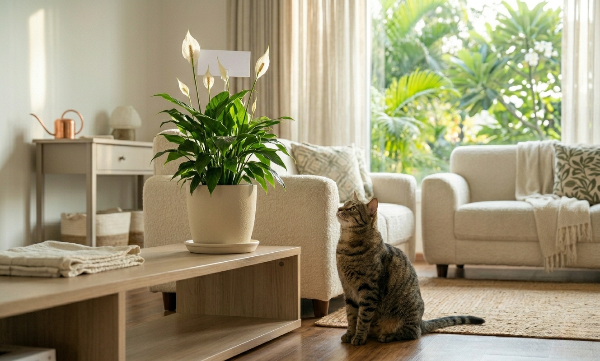
Peace lilies actively filter airborne mold spores, which is particularly relevant in bathrooms that run warm and damp year-round. NASA found they remove ammonia, benzene, formaldehyde, and trichloroethylene from enclosed spaces with notable efficiency. The white blooms are a bonus that most air-purifying plants can’t offer.
For bathrooms with enough floor space, a medium peace lily in a 6 to 8 inch (15 to 20 cm) pot creates a statement without taking up much room. They’re one of the best plants for bathroom environments that see minimal natural light, because they perform well in low-light conditions that would stop most flowering plants from blooming at all.
Water when the plant droops slightly. It’ll perk back up within 30 minutes of a drink, which makes watering timing very straightforward.
Worth noting: Toxic to pets and mildly toxic to children. Keep out of bathrooms where animals have access. Indoor plants safe for cats.
6. Air Plants (Tillandsia) – The No-Soil Bathroom Specialist
Air plants might be the most bathroom-appropriate plants that exist. They absorb moisture through their leaves, which means your daily shower basically waters them for you. No soil, no drainage holes, no pot required.
Mount them on a piece of driftwood, nestle them in a small glass container, or attach them to the wall with a small adhesive clip. They thrive in bright indirect light but tolerate low light conditions better than most flowering varieties. In a plant for bathroom without windows, give them a 20 to 30 minute soak in room-temperature water once a week to supplement what they absorb from the air.
Best for: Small bathrooms with no counter or shelf space. Wall-mounted air plants are genuinely space-zero. Safe for pets.
Pro Tip: After their weekly soak, shake off excess water and let them dry upside down for an hour before remounting. Water sitting in the base of the plant causes rot faster than anything else.
7. Aloe Vera – The Practical Windowsill Pick
Aloe vera needs light, which limits it to bathrooms with actual windows. But if you have a windowsill that gets 2 to 3 hours of indirect morning or afternoon sun, aloe vera is one of the most practical plants you can grow. The gel in the leaves handles minor burns, razor nicks, and dry skin, all of which are relevant in a bathroom setting.
The bathroom’s humid air actually helps aloe grow faster than in a dry living room. Water every 2 to 3 weeks, and the ambient humidity reduces how often you’ll need to intervene. Yellow leaves mean overwatering, not under-care. Use a cactus mix or standard potting soil with added perlite for drainage.
8. Lucky Bamboo (Dracaena sanderiana) – The Countertop Statement
Lucky bamboo grows directly in water, which makes it one of the lowest-maintenance options for a bathroom countertop. Place several cuttings in a glass vase or decorative container with 1 to 2 inches (2.5 to 5 cm) of fresh water. It handles low light, warmth, and high humidity without complaint.
Change the water every two weeks to prevent algae buildup. A small amount of liquid fertilizer once a month keeps the stalks green. This plant has no soil to overwater, no drainage holes to manage, and no complicated care routine. It’s also inexpensive at most grocery stores and plant shops.
Worth noting: Mildly toxic to cats and dogs if ingested according to ASPCA Poison Control.
9. Snake Plant (Sansevieria trifasciata) – The Low-Light Anchor
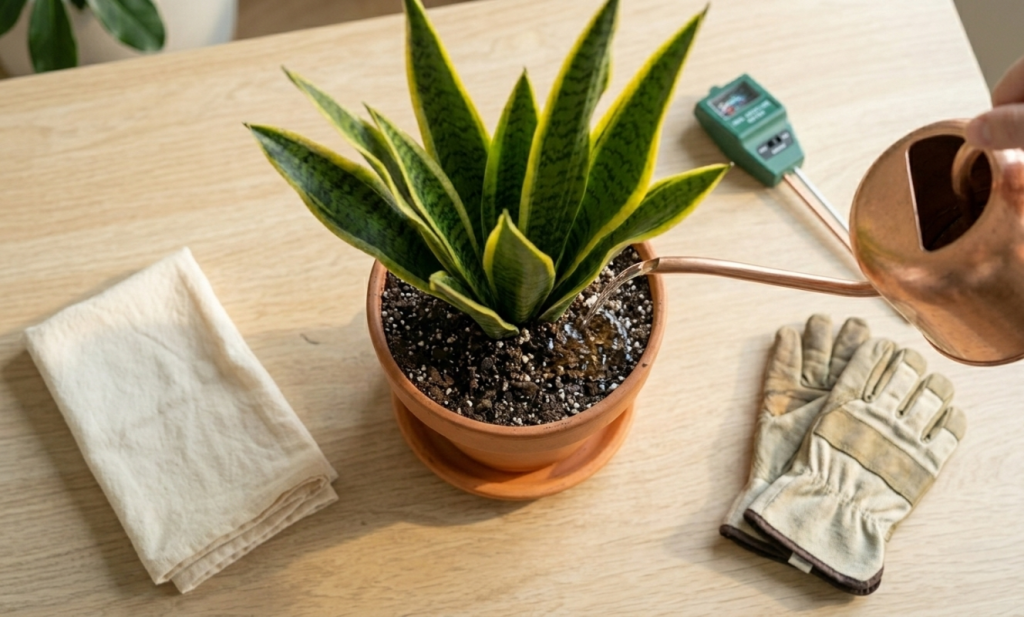
Snake plants tolerate the conditions that would stress most plants: no direct light, fluctuating temperatures, and irregular watering. They filter toxins from bathroom air and add clean vertical structure to corners that would otherwise feel empty.
One adjustment for bathroom placement specifically: water even less than the standard guidance suggests. High ambient humidity slows soil evaporation, so overwatering becomes a greater risk than in a drier room. In a humid bathroom, watering every 3 to 5 weeks in summer and every 6 to 8 weeks in winter is sufficient. snake plant care
Best for: Any bathroom with or without natural light. Handles zero-window bathrooms with only artificial light.
10. ZZ Plant (Zamioculcas zamiifolia) – The Zero-Window Survivor
No windows, only artificial lighting, and you still want a plant? The ZZ plant is the single best option. It stores water in its underground rhizomes, tolerates artificial light indefinitely, and grows slowly but steadily regardless of conditions. Water once a month in a low-light bathroom and it will look identical a year from now to the day you brought it home.
The best plants for bathroom use in a windowless space are a short list, and ZZ plants sit at the top of it. They also filter xylene, toluene, and benzene from enclosed spaces. The only real risk is overwatering. Yellow leaves are the warning sign. low light indoor plants
Worth noting: Toxic to pets and mildly irritating to human skin. Wear gloves when handling.
What NOT to Do: 5 Mistakes That Kill Bathroom Plants Fast
- Confusing air humidity with soil moisture.
- Bathroom humidity raises the moisture in the air around your plant, not the soil. Roots can still rot in a humid bathroom if you overwater. Always check soil with your finger before watering, regardless of how steamy the room feels.
- Choosing plants that need real sun.
- Succulents, lavender, and cacti need direct sun for hours daily. Most bathrooms can’t deliver that. Plants that need “bright indirect light” are different from plants that need actual direct sun. Don’t put a cactus on a frosted plants for bathroom window sill and wonder why it deteriorates.
- Using decorative pots with no drainage.
- Cute ceramic bathroom planters without drainage holes are everywhere. They also kill plants by trapping water at the root zone. Always use a nursery pot with drainage holes inside your decorative pot. Remove the nursery pot when watering, let it drain fully, then set it back.
- Placing plants in direct shower spray.
- Ambient steam benefits most tropical plants. Direct water repeatedly hitting leaves creates mold, bacterial rot, and damaged foliage. Position plants where they get the humid air from the shower, not the actual spray.
- Ignoring airflow in small bathrooms.
- Enclosed bathrooms with poor ventilation trap moisture around plant soil and leaves, increasing fungal issues. If you spot white powder, fuzzy mold, or yellowing at the base of stems, improve airflow. Run the exhaust fan for 10 to 15 minutes after every shower, or crack the door. The plants will thank you.
Matching Plants to Your Bathroom: Quick Reference
| Bathroom Type | Best Plant Picks |
|---|---|
| Window with indirect light | Boston fern, orchid, spider plant, aloe vera, peace lily |
| No windows, artificial light only | Snake plant, ZZ plant, pothos, lucky bamboo |
| Small bathroom, limited surface space | Air plants, lucky bamboo, small pothos in hanging basket |
| Pet-friendly bathroom | Boston fern, spider plant, air plants |
| Beginner with minimal care time | ZZ plant, pothos, snake plant |
| Wants something that blooms | Peace lily, orchid |
Frequently Asked Questions
What are the best plants for bathroom spaces with no natural light?
Snake plants, ZZ plants, and pothos are the top three. Lucky bamboo in a vase of water also works well. For any of these in a zero-light bathroom, aim to rotate them into a brighter area of your home every few weeks to maintain long-term health.
Do bathroom plants actually reduce mold?
Peace lilies and English ivy both filter airborne mold spores in enclosed spaces. They don’t stop mold growth on walls or grout, which requires good ventilation and moisture management. But for reducing mold in the air you breathe in an enclosed bathroom, peace lilies are a proven choice.
How often should I water plants in a humid bathroom?
Less often than you’d expect. Bathroom humidity slows evaporation from soil, so most plants need water 25 to 30 percent less frequently than the same plant in a dry room. Always check the top inch or two (2.5 to 5 cm) of soil before watering rather than following a set schedule.
Are the best plants for bathroom use safe for cats?
Boston ferns, spider plants, and air plants are fully non-toxic to cats and dogs according to ASPCA Poison Control. Pothos, ZZ plants, peace lilies, orchids, and lucky bamboo range from mildly to moderately toxic. If your cat or dog has bathroom access, stick to the pet-safe options.
Can I put succulents in my bathroom?
Only if your bathroom gets several hours of direct sunlight daily, which most bathrooms simply don’t provide. Succulents in low-light bathrooms stretch toward light (etiolation) and eventually collapse. Every other plant on this list handles typical bathroom light better than succulents do.
Do bathroom plants need fertilizer?
Yes, during the growing season. A half-strength liquid fertilizer once a month from April through September supports active growth. Skip it entirely from October through March when most houseplants slow down naturally. Plants in warm, humid bathrooms sometimes grow faster than expected, so fertilizing during spring and summer makes a visible difference.
My bathroom has a frosted window. Is that enough light for plants?
It depends on the window’s size and direction. A frosted window that faces south or east allows diffused natural light even through the frosting. That’s enough for pothos, snake plants, spider plants, and ZZ plants. Orchids and Boston ferns may struggle with frosted glass on north-facing walls. Start with the low-light-tolerant options and observe for 2 to 3 weeks before investing in more demanding varieties.
What size pot works best for bathroom plants?
Match pot size to surface area. For countertops, a 4 to 6 inch (10 to 15 cm) pot fits without crowding the space. Hanging baskets do well at 6 to 8 inches (15 to 20 cm). Avoid oversized pots in humid bathrooms because excess soil holds moisture much longer, raising root rot risk significantly.
The Right Plant Makes Your Bathroom Feel Different
A well-chosen plant on your bathroom counter or trailing from a shelf changes how the room feels. It’s the difference between a functional space and one that actually feels good to be in for a few minutes every morning.
The best plants for bathroom environments aren’t necessarily the most exotic or expensive. They’re the ones you match to your actual light conditions, your space constraints, and your care schedule. Start with one plant from this list based on your bathroom type. A ZZ plant in the corner if you have no windows. A pothos above the toilet if space is tight. An orchid on the windowsill if you want something genuinely beautiful.
Get that first one thriving, then build from there. Bathrooms reward you faster than other rooms because the conditions are already right. You just have to put the correct plant in the right spot.
Happy planting!