
I killed eleven houseplants in my first year. Every single one died from the same thing: too much water. Not pests, not bad soil, not wrong light. Just water, given too often, sitting too long in pots without proper drainage. I watered on a schedule, I watered because the leaves looked a little sad, I watered because two days had passed and that seemed like a long time. I had no idea what I was doing, and nobody ever explained the actual mechanics of how to water houseplants for beginners in a way that made sense. So I kept drowning plants until I eventually understood what I should have been taught from the start.
That’s what this guide is. Not a surface-level “water every seven days” post. The real explanation of what plants need from water, why overwatering kills them, and how to build a watering approach that works across every plant you’ll ever own.
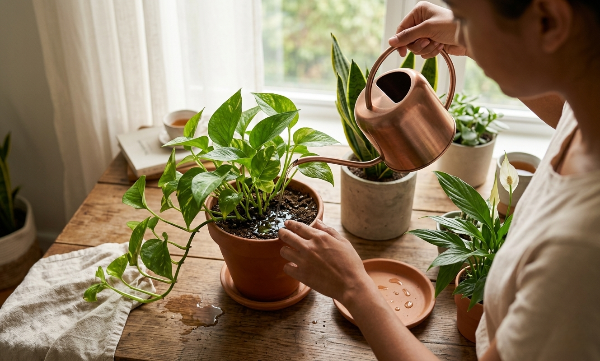
Why Overwatering Is the Number One Beginner Mistake
Before getting into technique, you need to understand the biology here, because once you do, every other piece of watering advice will make immediate sense.
Plant roots need two things to survive: water and oxygen. In well-draining soil that has partially dried out, both are available. The spaces between soil particles hold air, and the moisture content is enough to sustain root function. But when soil stays wet for too long, those air gaps fill with water. The roots are submerged. They can no longer access oxygen, begin to suffocate, and eventually rot.
Root rot doesn’t kill plants because of the rot itself. It kills them because rotting roots can no longer absorb water or nutrients, so the plant slowly starves in a pot full of moisture. That’s the cruel irony beginners run into: a dying, yellowing, drooping plant sitting in soaking wet soil that somehow looks like it needs more water.
Understanding this one concept changes how you think about watering entirely. Your job is not to keep the soil wet. Your job is to water thoroughly, let the soil partially dry out so the roots can breathe, and then repeat.
How to Know When Your Houseplant Actually Needs Water
This is the most practical guide to watering houseplants for beginners, with four reliable methods. Each has its place depending on your plant, your pot, and your confidence level.
The finger test is the standard starting point for most beginners. Push your finger one to two inches (2.5 to 5 cm) into the soil. If the soil at that depth feels cool and moist, wait. If it feels dry and crumbly, water. This works well for most common tropical houseplants kept in standard potting mix.
The wooden skewer method goes deeper than your finger can comfortably reach. Insert a bamboo skewer or chopstick into the soil all the way to the bottom of the pot, leave it for 30 seconds, then pull it out. Wet soil sticks to the wood. Dry soil leaves the skewer clean. This is particularly useful for larger pots, where surface dryness can be misleading and deeper moisture can linger much longer.
The lift test works by weight. Pick up your pot immediately after watering and notice how heavy it feels. Then lift it again a few days later when the soil has dried. A dry pot is noticeably lighter than a freshly watered one. After a few weeks, this becomes instinctive and you can gauge moisture levels without touching the soil at all.
A moisture meter removes the guesswork entirely. A basic soil moisture meter from Amazon costs between eight and fifteen dollars, inserts directly into the soil, and gives you a reading on a numbered scale. For beginners with a lot of plants or anxiety about getting it wrong, this tool is worth every dollar. Readings of 7 to 10 indicate wet soil. 4 to 6 is moist. Below 3 is dry and time to water, for most tropical houseplants.
Which method is best? That depends on the situation.
| Watering Method | Best For | Reliability | Cost |
|---|---|---|---|
| Finger test | Small to medium pots, tropical houseplants | Good | Free |
| Wooden skewer | Larger pots, plants in dense mix | Very good | Under $1 |
| Lift test | Any size pot after you’ve built feel for it | Excellent once learned | Free |
| Moisture meter | Beginners, large collections, succulents | Excellent | $8-$15 |
| Visual check (wilting/color) | Emergency detection only | Poor for prevention | Free |
One important thing to watch out for: do not rely on visual cues like drooping or leaf color changes as your primary watering signal. By the time a plant shows visible distress, the problem has already been going on for a while. Use one of the proactive methods above and you’ll rarely reach the distress stage.
Read more: overwatering vs underwatering houseplants
How to Water Houseplants for Beginners: The Actual Technique
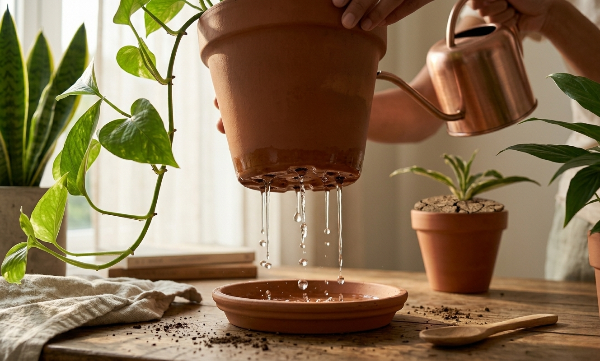
Knowing when to water is half the equation. Knowing how to water correctly is the other half. Most beginners pour a small amount of water on top of the soil and call it done. That approach leaves the lower root zone dry while the top layer stays damp, which is almost as problematic as never watering at all.
The right technique is to water slowly and thoroughly until water flows freely from the drainage hole at the bottom of the pot. Then stop. This ensures the entire root zone gets moisture, not just the top inch. The water moving through the pot also flushes out excess mineral salts from fertilizer, which is a benefit most beginners don’t realize they’re getting.
After watering, let the pot drain for five to ten minutes before returning it to its saucer. Never leave a saucer full of water sitting under the pot for more than an hour. That pooled water wicks back up through the drainage hole and keeps the bottom of the soil permanently wet, creating exactly the oxygen-deprived conditions that lead to root rot.
Water temperature matters more than most guides acknowledge. Cold water straight from the tap in winter, particularly in a home with cold plumbing, can cause stress in tropical species. Room-temperature or slightly lukewarm water is ideal. A simple habit is to fill your watering can after each session and leave it out overnight. By the next watering, it’s at room temperature and any chlorine in the tap water has had time to dissipate.
Watering by Pot Type: Why the Container Changes Everything
The pot your plant sits in has as much influence on watering frequency as the plant itself. Understanding how different materials affect moisture retention is a key part of how to water houseplants for beginners, and most guides skip it entirely.
- Terracotta pots are porous. Water evaporates through the walls of the pot, not just from the soil surface. This means the soil dries out significantly faster than in plastic, sometimes twice as fast in dry indoor air. If you’re using terracotta and watering on the same schedule as a plastic pot, you’re likely underwatering.
- Plastic pots retain moisture much longer because there’s no evaporation through the walls. The same plant in a plastic pot will need watering far less frequently than in terracotta. This makes plastic excellent for moisture-loving plants but risky for succulents or anything else that prefers to dry out fully between waterings.
- Glazed ceramic pots behave similarly to plastic because the glaze seals the clay. Drainage holes are essential with these, and watering frequency should mirror plastic rather than terracotta.
- Self-watering pots have a water reservoir at the bottom that plants draw from through capillary action. These work beautifully for moisture-loving species like pothos, ferns, and peace lilies. They are not suitable for succulents, cacti, snake plants, or anything that prefers dry conditions, as the constant bottom moisture is too much.
So when you’re figuring out how to water houseplants for beginners, the first questions should be: what pot is this plant in, and what is it made of? The same answer does not apply across all materials.
Read more: best planters for indoor plants
Watering by Plant Type: Different Plants, Different Needs
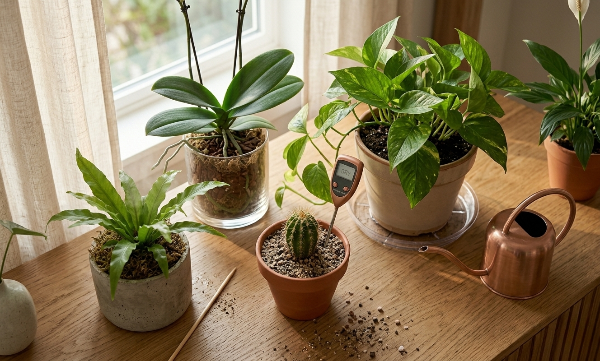
No single watering schedule works across all houseplants. Here’s how I think about the main categories.
Tropical foliage plants like pothos, philodendrons, monsteras, and peace lilies prefer consistently moist soil. They want to dry out slightly between waterings but not completely. For most of these, the finger test in the top one to two inches (2.5 to 5 cm) is reliable. When that depth is dry, water thoroughly.
Succulents and cacti want the opposite. Their soil should dry out completely before the next watering, all the way to the bottom of the pot. In summer, this might mean watering once every two to three weeks. In winter, many succulents can go a month or more without water. The wooden skewer or moisture meter method is the most reliable for these because their roots sit deeper and surface dryness doesn’t tell the full story.
Ferns and moisture-lovers like Boston ferns, calatheas, and nerve plants are the most demanding. These prefer consistently moist but never waterlogged soil and dislike the wild drying swings that work fine for pothos. Smaller, more frequent waterings in well-draining mix keep them happier than the thorough-soak-and-wait approach that suits most other plants.
Orchids sit in a category entirely their own. Phalaenopsis orchids are grown in coarse bark that dries much faster than potting mix. The most reliable watering signal for orchids is root color, visible through the clear nursery pot. Green roots mean moisture is present. Silver-grey roots mean time to water. Calendar schedules are almost useless for orchids.
Read more: Mastering Orchid Care
Seasonal Watering: The Adjustment Most Beginners Forget
This is the piece that trips up beginners who have started to figure things out. They develop a watering routine that works well through spring and summer, then watch plants decline in winter without understanding why.
Plants grow slower or stop growing entirely in winter. Lower light, shorter days, and cooler temperatures all reduce the plant’s water demand significantly. The soil stays moist much longer. But the watering schedule doesn’t change, and overwatering problems that never appeared in summer start showing up between November and February.
Here’s a simple seasonal framework that works across most tropical houseplants in a typical US home:
Spring and summer bring active growth, higher light, warmer temperatures, and faster soil drying. Most tropical houseplants need water every 7 to 10 days in this period. Check soil moisture and water when the top one to two inches are dry.
Fall and early winter mark a transition. Reduce watering frequency by extending the time between checks by a few days. Plants that needed water weekly may now need it every 10 to 14 days.
Winter is the period of greatest risk for overwatering. Central heating reduces indoor humidity, which can make leaves look slightly dry and fool you into watering more. But the roots are not actively drawing moisture because growth has slowed. Check soil before every single watering, no exceptions. Many plants will go 14 days or longer between waterings at this point, and that is completely normal.
Pro Tip: In winter, set a reminder to check your plants every 10 days rather than every 7. You’ll find most don’t need water yet, and checking more carefully prevents the reflex watering that damages roots during dormancy.
Mid-Article Q&A: The Questions I Get Asked Most
My plant is wilting but the soil feels wet. What’s happening?
This is almost certainly root rot. Wilting in wet soil means the roots have been damaged by prolonged moisture and can no longer absorb water. Take the plant out of the pot and look at the roots. Healthy roots are white or light tan. Rotten roots are brown, dark, mushy, and may smell sour. Trim away all damaged roots with clean scissors, let the root ball dry slightly for a few hours, and repot into fresh well-draining mix. It’s a rescue operation, not a guarantee, but many plants come back.
How do I know if I’m underwatering instead of overwatering?
Underwatering causes dry, crispy leaf edges, soil that is completely dry and pulling away from the pot walls, and a pot that feels noticeably light. Overwatering causes soft, yellowing leaves, a pot that stays heavy for a long time, and sometimes a faint sour smell from the soil. The key difference is in the soil. Dry and dusty means underwatered. Wet and compacted for days at a time means overwatered.
Should I water on a fixed schedule or check the soil every time?
Always check the soil. A fixed schedule is useful as a reminder to check, but it should never be the trigger to water. A plant that was watered eight days ago on a warm, bright week in June will need water. That same plant watered eight days ago during a cold, cloudy week in December probably will not.
What NOT to Do: Common Watering Mistakes in Plain Terms
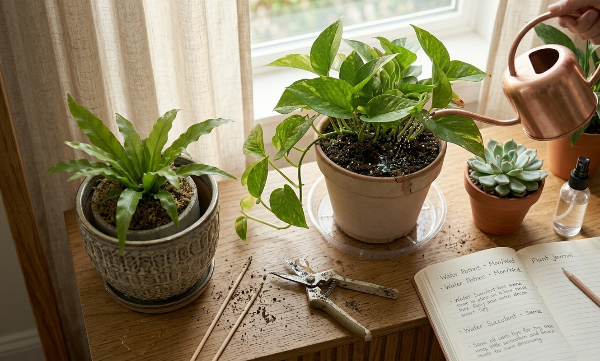
Using a watering schedule as a substitute for checking the soil is the most widespread mistake in how to water houseplants for beginners. Schedules are starting points, not rules. Every variable, including season, pot type, plant species, pot size, and room temperature, changes how quickly soil dries out.
Watering small amounts frequently is almost as damaging as consistent overwatering. When you add just a little water at a time, only the top inch or two of soil gets wet. The lower root zone, where most of the active roots are, never receives moisture. This creates an odd situation where the top of the soil looks damp and discourages you from watering while the plant is actually thirsty at the root level. Water thoroughly every time, reaching the entire root zone, then wait for partial drying before repeating.
Leaving the decorative pot sleeve on with no drainage holes is one of the most common causes of root rot in plants that appeared perfectly healthy at the store. Decorative ceramic, wicker, and foil sleeves look attractive but trap water at the base of the nursery pot. Always either remove the sleeve or ensure there are drainage holes at the bottom.
Watering all plants on the same day regardless of their individual needs is a habit that takes down multiple plants at once. A pothos and a succulent sitting side by side should almost never be watered on the same day, because their moisture needs are completely different. Check each plant individually.
And misting as a substitute for proper watering does nothing useful for most plants. It provides a brief surface dampness that evaporates within minutes and does not reach the roots. The only thing misting reliably does is temporarily raise humidity around the leaf surface, which some tropical plants benefit from, but it is not watering.
Pro Tip: Keep a simple plant journal for the first few months. Write down the date you checked each plant, whether the soil was dry or moist, and whether you watered. After six to eight weeks, you’ll have a real data-based picture of each plant’s actual drying cycle in your home, which is far more accurate than any generic schedule.
Read more: common indoor plants
FAQs
What is the best way to learn how to water houseplants for beginners?
The most practical approach to learning how to water houseplants for beginners is starting with the finger test and checking soil before every single watering for the first few months. This builds an instinctive sense of what dry soil feels like versus moist soil, and it teaches you the individual drying cycle of each plant in your specific home environment. No guide replaces hands-on observation over time.
How often should beginners water their houseplants?
There is no single correct answer because frequency depends on plant species, pot material, pot size, season, and room conditions. For most common tropical houseplants in plastic pots during summer, every 7 to 10 days is a reasonable starting point. In winter or for plants in terracotta, every 10 to 14 days is more common. Always check before watering rather than following a fixed calendar.
Is it better to overwater or underwater a houseplant?
Underwatering is almost always easier to recover from than overwatering. A thirsty plant can bounce back within hours of a good watering. A plant with root rot from chronic overwatering has sustained physical damage to its root system that may be irreversible. When in doubt, wait a day or two before watering.
What is the finger test for watering houseplants?
The finger test involves pushing your index finger one to two inches (2.5 to 5 cm) into the potting mix and feeling the moisture level at that depth. If the soil feels cool and moist, the plant does not need water. If it feels dry and crumbly, it’s time to water. This simple method works reliably for most tropical foliage houseplants.
How to water houseplants for beginners without killing them?
The core rule of how to water houseplants for beginners is to always check the soil before adding any water, water thoroughly when the top inch or two is dry, and never leave a saucer full of standing water under the pot. Most plants beginners kill die from too much water, not too little. When uncertain, wait an extra day and check the soil again.
Do different pots change how often I need to water?
Yes, significantly. Terracotta pots are porous and allow moisture to evaporate through the walls, so soil dries much faster than in plastic or glazed ceramic. A plant in a terracotta pot may need watering twice as often as the same plant in a plastic pot of the same size. Always adjust your watering frequency based on pot material, not just plant species.
What water temperature is best for houseplants?
Room-temperature water is best for most houseplants. Cold tap water, especially in winter, can shock the root systems of tropical species and cause sudden leaf drop or growth stalls. A simple solution is to fill your watering can immediately after each session and leave it out until the next watering. By then it will be at ambient room temperature and ready to use.
How do I fix an overwatered houseplant?
Remove the plant from its pot and check the roots. Trim any soft, brown, or mushy roots with clean scissors. Let the root system air dry for a few hours, then repot into fresh, well-draining mix. Hold off on watering for a week to let the plant stabilize. In mild cases of overwatering where root rot has not fully set in, simply reducing watering frequency and improving drainage is often enough for the plant to recover on its own.
Understanding how to water houseplants for beginners comes down to one fundamental shift in thinking: stop watering on instinct or schedule, and start reading the soil and the plant. That shift alone, from reflex watering to informed watering, is the difference between plants that struggle and plants that thrive. Every plant you own has a different drying cycle. Every season changes that cycle. Every pot material changes again. The moment you accept that there is no single universal answer, and start checking each plant individually before you water, the dying stops.
Give it six to eight weeks of checking before watering, noting what you observe, and adjusting. That’s all it takes. I went from eleven dead plants in year one to growing over sixty healthy species today, and the single biggest reason was learning this.
Happy planting!