
The cast iron plant (Aspidistra elatior) is one of the most durable and low-maintenance indoor plants available today. Known for its ability to survive poor light, irregular watering, temperature swings, and even neglect, this leafy evergreen has earned the reputation of being nearly indestructible. Whether you are a complete beginner or someone wanting a plant for challenging indoor spaces, the cast iron plant is one of the best choices you can grow.
What Makes the Cast Iron Plant Unique
The cast iron plant is well-loved for surviving situations where most plants fail. It naturally grows in the deep forest shade of Japan and China, where light levels are extremely low. Indoors, it maintains its deep green foliage year-round, even in spaces where sunlight is minimal.
Why It’s Called “Cast Iron Plant”
- Safe for pets
- Thrives in low or poor lighting
- Tolerates drought better than many indoor plants
- Handles dry indoor air without issues
- Grows well in homes, offices, and dark corners
- Lives for several decades

Its resilience and ease of care make it an excellent plant for apartments, low-light homes, workspaces, hotels, and commercial interiors.
Popular Varieties
The cast iron plant comes in several attractive types, each with a unique leaf pattern or shape. These varieties add both texture and visual interest indoors.
| Variety | Description |
|---|---|
| Milky Way | Rich green leaves with white speckling that resembles stars. |
| Variegata | Leaves with elegant white or cream striping. |
| Asahi | Leaf tips naturally fade to white as they mature. |
| Snow Cap | White splashes concentrated near the leaf tips. |
| Lennon’s Song | Thin vertical stripes for a narrow-leaf look. |
Variegated types need slightly brighter indirect light than the solid-green variety to maintain their patterns.
Ideal Growing Conditions
Creating the right environment ensures slow but steady growth and rich green foliage.
Light
The cast iron plant prefers:
- Low to medium indirect light
- Shade or dim corners
- North-facing windows
Avoid harsh, direct sunlight, which can easily scorch the leaves and cause pale patches.
Temperature
This plant does best in:
- 60–75°F (15–24°C) indoors
- Can tolerate slightly cooler nights
It is not frost-hardy, so if grown outdoors in pots, bring it inside before winter.
Humidity
Average indoor humidity is ideal. The cast iron plant is not fussy about moisture and grows perfectly in dry homes without misting or humidifiers.
Soil Requirements
The plant prefers soil that drains well while still retaining slight moisture.
Recommended Soil Mix
A good-quality indoor mix works, but these additions improve drainage:
- Potting soil
- Perlite
- Coco coir or peat moss
- Optional: orchid bark for added aeration
The soil should be loose, airy, and not compact. A pH range of 5.5 to 7.0 is ideal.
Watering Guide
Watering the cast iron plant is simple, but consistency matters. The plant can forgive missed waterings, but it cannot tolerate soggy soil.

When to Water
- Water when the top 2–3 inches of soil feel dry
- Reduce watering during winter
- Make sure the pot has drainage holes
Signs of Overwatering
- Soil with a sour or rotten smell
- Yellowing leaves
- Mushy stems
Signs of Underwatering
- Brown, crispy leaf edges
- Drooping leaves
- Slow or stunted growth
To avoid issues, always let the soil dry partially before watering again.
Fertilization
The cast iron plant grows slowly and requires very little fertilizer.
Fertilizing Routine
- Use a diluted liquid fertilizer once every 4–6 weeks
- Only during spring and summer
- Avoid heavy feeding, which can burn the roots
Balanced fertilizers (10-10-10 or 20-20-20) work well when used sparingly.
Repotting
This plant prefers to stay slightly root-bound and grows slowly, so repotting is not frequently needed.
When to Repot
- Every 2–3 years
- Only if roots circle the pot or soil drains poorly
Repotting Steps
- Choose a pot slightly larger than the current one
- Refresh with new well-draining soil
- Keep the crown slightly above soil level
- Water lightly after repotting
Overly large pots retain excess water, so gradual size increases are best.
Pruning & Maintenance
The cast iron plant requires minimal pruning. Most maintenance revolves around keeping the plant clean and healthy.
Basic Care Tips
- Remove old or yellow leaves at the base
- Wipe leaves monthly to remove dust
- Rotate the pot occasionally for even growth
Pruning does not encourage new growth, it only keeps the plant tidy.
Propagation
The cast iron plant cannot be propagated from leaf cuttings. The only reliable method is division.
Propagation by Division
- This method works well during repotting.
- Keep in low light until established
- Gently remove the plant from its pot
- Locate natural clumps with at least 2–3 stems
- Separate with your hands or a clean blade
- Replant each division in its own pot
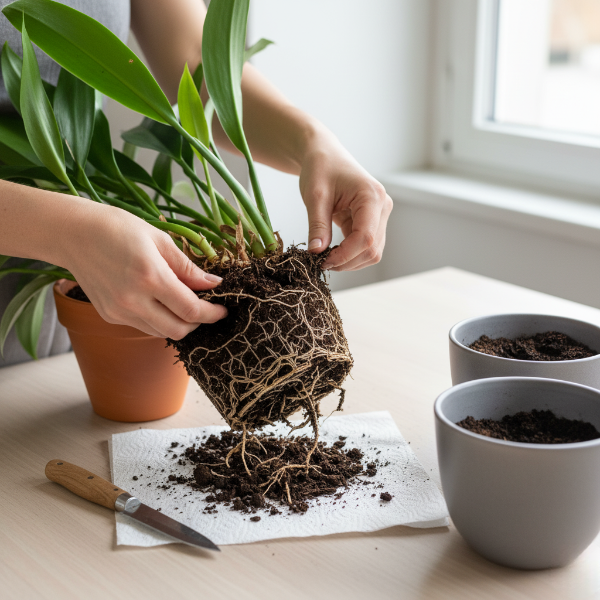
New divisions may take time to show growth due to the plant’s naturally slow pace.
Pests & Problems
While hardy, the cast iron plant can face a few occasional issues.
Common Pests
- Mealybugs
- Scale insects
- Spider mites
Treatment
- Apply neem oil
- Use insecticidal soap
- Increase airflow around the plant
Common Problems
| Issue | Cause | Solution |
|---|---|---|
| Yellow leaves | Too much water | Allow soil to dry |
| Brown edges | Low humidity or underwatering | Trim edges and adjust watering |
| Faded leaves | Direct sunlight | Move to shade |
| No new growth | Natural slow growth | Light feeding in spring |
Most issues resolve when lighting and watering are corrected.
Outdoor Growing Tips
The cast iron plant grows beautifully outdoors in warm regions, especially in USDA zones 7–11.
Outdoor Growth Conditions
- Full shade or dappled shade
- Moist but well-drained soil
- Mulching to protect roots in heat
- Protection from frost
It is ideal for shady landscapes, under trees, and areas where other plants struggle.
Styling & Decorative Uses
The cast iron plant’s tall, silky leaves create a classic, evergreen look that suits many decor styles.

Indoor Styling Ideas
- Perfect for offices and reception areas
- Tall ceramic planters for modern interiors
- Entryways, hallways, and bedrooms
- Paired with low-light favorites like ZZ plant or peace lily
Outdoor Styling
- Shade borders
- Along fences
- Under palms or large shade trees
- Tropical-themed gardens
Its upright form and dark foliage bring depth and structure to any environment.
Comparison Table
| Feature | Cast Iron Plant | Snake Plant | ZZ Plant |
|---|---|---|---|
| Light Tolerance | Low to medium | Low to bright | Low to bright |
| Water Needs | Low | Very low | Very low |
| Growth Speed | Slow | Moderate | Slow |
| Toxicity | Non-toxic | Toxic | Toxic |
| Best Use | Low-light spaces | Offices, bedrooms | Indoor low-light |
FAQs
Yes, it is completely non-toxic to cats and dogs, making it a great choice for pet-friendly homes.
Yellowing is usually caused by overwatering. Allow the soil to dry before watering again.
It thrives in low light, but it needs at least minimal indirect light—not complete darkness.
With proper care, it can live for multiple decades.
Yes, but the flowers are tiny, dull-colored, and appear near the soil surface. They are often hidden beneath the leaves.
Most indoor cast iron plants reach 2–3 feet in height and width.
Final Thoughts
The cast iron plant is a truly remarkable choice for anyone wanting hardy, fuss-free greenery. Its ability to thrive in low light, its resistance to neglect, and its long lifespan make it one of the best plants for modern indoor living. With the right soil, simple watering routine, and occasional cleaning, this plant will reward you with lush green leaves and year-round beauty.
If you want an evergreen indoor plant that survives almost anything, the cast iron plant is one of the most dependable and timeless options you can grow.