
Most tropical houseplants struggle long before they show obvious damage. I learned that the hard way after watching the edges of my calathea turn brown all winter, even though I watered it perfectly. The real issue was dry indoor air. Finding the best humidifier for plants completely changed how my indoor garden handled colder months and air conditioning season.
Indoor humidity matters far more than most beginners realize, especially if you grow ferns, calatheas, alocasias, orchids, or monsteras. After testing cheap ultrasonic models, large evaporative units, and even a few greenhouse humidifiers over the last several years, I’ve found that the right setup depends more on your room size and plant collection than fancy features.
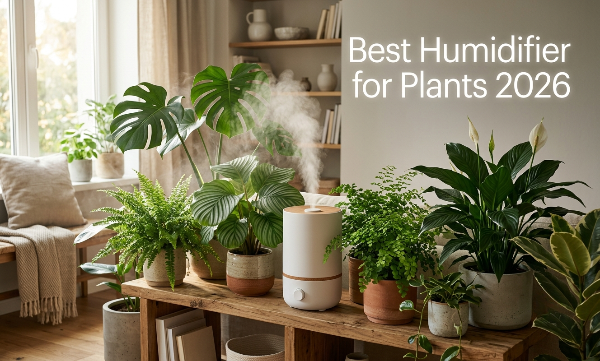
Why the Best Humidifier for Plants Matters Indoors
Most homes in the United States sit around 25 to 35 percent humidity during winter. Tropical plants usually prefer 50 to 70 percent humidity for healthy foliage and steady growth. Dry air causes crispy edges, curling leaves, stalled growth, and increased spider mite problems.
I first noticed the difference with my prayer plant collection. Once I added a humidifier near the shelves, new leaves unfurled without tearing. My ferns also stopped shedding constantly across the floor.
The best humidifier for plants helps by:
- Raising ambient moisture around foliage
- Reducing brown leaf tips
- Supporting healthy aerial roots
- Preventing excessive moisture loss through leaves
- Helping cuttings root faster
- Improving conditions for tropical houseplants
Humidity also works together with proper watering. Even a perfectly watered plant can struggle in extremely dry air. I explain this more in my How to water houseplants guide because many people mistake humidity stress for underwatering.
Types of Plant Humidifiers Compared
Not every humidifier works well for indoor plants. Some models leave white mineral dust everywhere, while others barely raise humidity at all. Here’s what I’ve personally found after running multiple units in plant rooms and enclosed shelving setups.
| Type | Best For | Pros | Cons |
|---|---|---|---|
| Ultrasonic humidifier | Small to medium rooms | Quiet, energy efficient, affordable | Can leave white dust with hard water |
| Evaporative humidifier | Large rooms | Natural humidity control | Louder fan noise |
| Warm mist humidifier | Winter use | Adds warmth | Uses more electricity |
| Cool mist humidifier | Most houseplants | Safe for foliage, efficient | Needs regular cleaning |
| Greenhouse humidifier | Large collections | Strong moisture output | Expensive for casual growers |
For most indoor gardeners, I recommend a cool mist ultrasonic humidifier with adjustable output and a tank large enough to run overnight.
If you grow plants on shelving units with grow lights, a smaller directional model often works better than oversized whole-room machines. I learned this after accidentally creating condensation problems on nearby windows one winter.
Best Humidifier for Plants 2026 Picks
After testing several brands from Amazon, Walmart Garden Center, Costco, and Home Depot, these are the models I’d personally recommend for different situations.
Best Overall
Levoit Classic 300S
This is the one I keep returning to for everyday indoor gardening. It runs quietly, the tank lasts through the night, and the humidity sensor stays fairly accurate. The app control also helps when I’m traveling.
Best for:
- Monstera collections
- Calatheas
- Prayer plants
- Medium-sized rooms
- Plant shelves
Best Budget Choice
AquaOasis Cool Mist Humidifier
If you’re new to houseplants, this is a solid starter option. It’s inexpensive but still raises humidity effectively in smaller bedrooms or offices.
I used one beside a grouping of pothos and peace lilies for nearly a year before upgrading. It handled the job surprisingly well for the price.
Best for Large Plant Rooms
Honeywell Evaporative Humidifier
Large plant collections need broader humidity coverage. Ultrasonic units sometimes create concentrated moisture zones instead of evenly humidifying the room.
This model works especially well if you grow multiple tropical species together alongside best grow lights for indoor plants setups.
Best for Cabinets and Small Shelves
Pure Enrichment MistAire Studio
Tiny plant cabinets dry out quickly under LED grow lights. A compact unit like this keeps humidity stable without soaking nearby leaves.
I’ve used it successfully with jewel orchids and baby alocasias inside enclosed IKEA cabinet setups.
How to Choose the Best Humidifier for Plants
Buying the wrong size humidifier is the mistake I see most often. A small desktop unit cannot properly humidify a large living room packed with plants.
Here’s what actually matters when shopping.
Room Size Coverage
Always check the square footage rating. If your room measures around 250 square feet (23 square meters), buy a unit rated slightly above that.
Undersized humidifiers end up running nonstop without making much difference.
Tank Capacity
A larger water tank saves frustration. Small tanks need constant refilling, especially during winter heating season.
For daily plant care, I prefer at least:
- 1 gallon (3.8 liters) for bedrooms
- 1.5 gallons (5.7 liters) for living rooms
- Smaller compact tanks for enclosed cabinets
Adjustable Humidity Output
Plants do not need rainforest conditions all the time. Adjustable settings help prevent mold and soggy soil.
I usually aim for:
- 50 to 60 percent for monsteras
- 60 to 70 percent for calatheas
- 40 to 50 percent for snake plants
- 50 percent for most philodendrons
If you already struggle with overwatering, read overwatering vs underwatering before dramatically increasing humidity levels.
Cleaning Requirements
Dirty humidifiers spread bacteria and mineral buildup. Models with wide tank openings are much easier to maintain.
I clean mine once every 5 to 7 days using diluted white vinegar and warm water.
Where to Place a Humidifier Around Plants
Placement affects results more than many people expect. I once placed a humidifier directly against my monstera leaves and ended up with fungal spotting from constant moisture sitting on the foliage.
The safest approach is positioning the humidifier:
- About 2 to 4 feet (60 to 120 cm) from plants
- Slightly elevated if possible
- Away from direct walls or curtains
- Near airflow for better humidity circulation
- Close to humidity-loving species
Avoid blasting mist directly into leaves for hours at a time. Tropical plants enjoy humidity, but stagnant moisture encourages disease.
Grouping plants together also boosts localized humidity naturally. My shelf filled with pothos, philodendrons, and ferns holds moisture much better than isolated plants spread across different rooms.
For especially sensitive plants like calatheas, pairing a humidifier with best soil for indoor plants improves consistency because moisture retention stays more stable overall.
Common Humidity Problems Plant Owners Face
Humidity can help plants thrive, but too much creates new problems. I learned this after sealing up a small plant room too tightly one winter.
White Dust on Leaves
Ultrasonic humidifiers often leave mineral residue if you use hard tap water. Distilled water fixes the problem almost immediately.
This matters most for dark foliage plants where residue becomes obvious.
Mold Around Windows
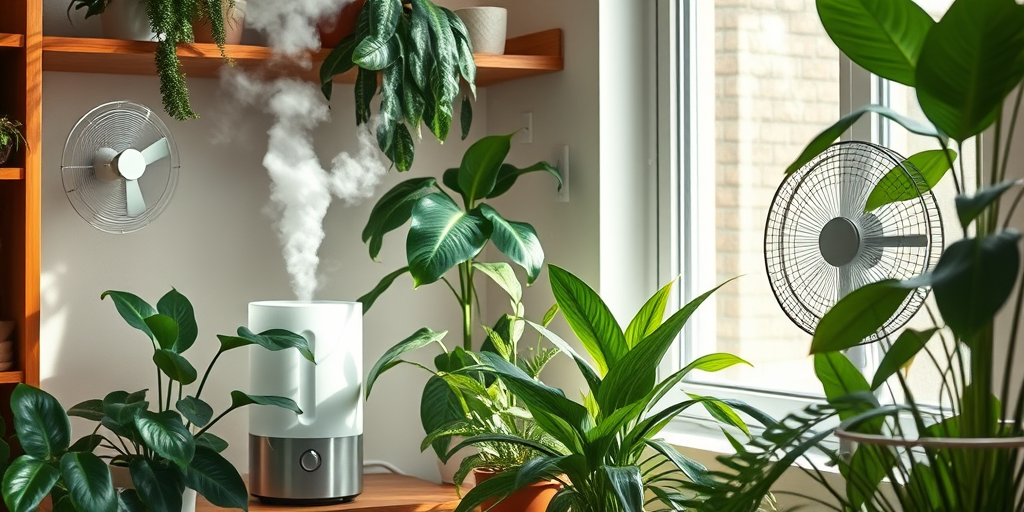
Excessive humidity combined with poor airflow creates condensation. Crack a door slightly or run a small fan nearby.
Humidifier Running but Humidity Staying Low
Large rooms absorb moisture quickly. Sometimes the humidifier is simply too small for the space.
A cheap hygrometer from Amazon helps confirm real humidity levels.
Yellow Leaves After Increasing Humidity
Higher humidity slows evaporation from soil. Plants may suddenly need less frequent watering.
I made this mistake with my peace lily collection and accidentally kept the potting mix too wet for weeks.
Rookie Errors That Are Easy to Avoid
One of the biggest mistakes beginners make is placing a Humidifier for Plants too close to their plants. Tropical houseplants love humid air, but constantly wet leaves are a different problem entirely. I made this mistake with a calathea shelf a few winters ago, and within two weeks I started seeing fungal spotting on newer leaves. Keep the humidifier about 2 to 4 feet (60 to 120 cm) away so the moisture spreads through the room rather than settling directly on the foliage. Good airflow matters as much. A small fan on low speed helps humidity circulate evenly and prevents damp, stagnant pockets of air from forming around plants.
Another issue many people overlook is water quality and maintenance. Hard tap water often leaves a white mineral dust on leaves, nearby furniture, and even grow lights over time. Using filtered or distilled water keeps both the Humidifier for Plants and your plants noticeably cleaner. It’s also easy to forget that humidifiers need regular cleaning. Tanks collect mineral buildup, bacteria, and mold surprisingly fast, especially during heavy winter use. I rinse mine every few days and deep clean it weekly with diluted white vinegar. Stable humidity around 50 to 60 percent usually works best for most indoor plants. Pushing humidity too high can encourage fungus gnats, mold growth, and constantly soggy potting mix.
Are Pebble Trays Enough Instead of a Humidifier?
Pebble trays help slightly, but they rarely raise humidity enough for sensitive tropical plants. I still use them under a few orchids, though mostly as a supplemental moisture source.
For tougher plants like snake plants or ZZ plants, pebble trays may be enough. Calatheas, maidenhair ferns, and alocasias usually benefit much more from an actual humidifier.
Plant grouping also helps naturally. My largest humidity-loving shelf almost creates its own little microclimate now.
If spider mites keep returning despite proper watering, improving humidity often helps significantly. I noticed fewer infestations after adding consistent moisture alongside my how to get rid of spider mites routine.
Best Humidifier for Plants for Different Plant Types
| Plant Type | Ideal Humidity | Recommended Setup |
|---|---|---|
| Monstera | 50 to 60 percent | Medium cool mist humidifier |
| Calathea | 60 to 70 percent | Ultrasonic humidifier near shelf |
| Snake Plant | 40 to 50 percent | Usually no humidifier needed |
| Orchids | 50 to 70 percent | Small directional humidifier |
| Ferns | 60 to 80 percent | Continuous cool mist setup |
| Philodendrons | 50 to 60 percent | Whole-room humidifier |
According to the NASA Clean Air Study, many tropical houseplants naturally transpire moisture into the surrounding environment, which partly explains why grouped plants feel more humid together.
FAQs
What is the best humidifier for plants in a small apartment?
A compact cool mist ultrasonic humidifier usually works best in apartments because it stays quiet and does not take much space. I’ve had great results with smaller Levoit and AquaOasis models near grouped tropical plants.
Can the best humidifier for plants help stop brown leaf tips?
Yes, especially for calatheas, ferns, and prayer plants. Brown tips often happen when indoor air becomes too dry during heating or air conditioning season. Increasing humidity helps leaves retain moisture more effectively.
How close should a humidifier be to indoor plants?
Keep it about 2 to 4 feet (60 to 120 cm) away from foliage. Direct mist constantly hitting leaves can encourage fungal problems instead of helping the plant.
Does every houseplant need extra humidity?
No. Snake plants, ZZ plants, and many succulents tolerate average indoor humidity very well. Tropical species usually benefit the most from additional moisture in the air.
Is warm mist or cool mist better for plants?
Cool mist is usually safer and more energy efficient for indoor gardening. Warm mist models work fine too, but they can slightly raise room temperature during extended use.
What humidity level works best for tropical houseplants?
Most tropical indoor plants grow well around 50 to 70 percent humidity. Calatheas and ferns often prefer the higher end of that range, while monsteras and philodendrons adapt more easily.
When should I run the best humidifier for plants?
Winter and summer are usually the most important seasons because heating and air conditioning dry out indoor air quickly. I run mine overnight during winter almost every day.
Why does my humidifier leave white powder everywhere?
That powder comes from minerals in hard tap water. Using distilled or filtered water prevents residue from collecting on leaves and furniture.
The best humidifier for plants does not need to be expensive or overly complicated. What matters most is matching the humidifier to your space, your plant collection, and your home’s natural humidity levels. A small shelf of pothos needs something very different from a room packed with calatheas and monsteras.
After years of trial and error, I’ve found that steady humidity beats extreme humidity every time. Plants respond better to consistency than sudden tropical conditions for a few hours each day. Once you dial that in, growth becomes healthier, leaves stay cleaner, and sensitive plants stop looking stressed all winter long.
If you only make one change this year for your indoor plants, improving humidity is probably the upgrade that delivers the fastest visible results.
Happy planting!