
Picture a late spring garden in May where most of the tulips have already finished. The Triumph tulips faded in early April, the Darwin Hybrids followed a few weeks later, and the garden is starting to look like spring has moved on. Then you see them: tall, slender stems topped with pointed, outward-arching petals in cream, orange, or deep purple that look less like tulips and more like lily blooms caught mid-opening. Those are lily flowered tulips, and they are one of the best-kept secrets in spring bulb gardening.
Lily flowered tulips bloom when the rest of the tulip season has already ended, they grow taller and more gracefully than most other tulip types, and their distinctive reflexed petals create a look that no other spring flower quite replicates. This guide covers everything you need to grow lily flowered tulips successfully from choosing the right varieties and planting depth to keeping them coming back year after year.
| Aspect | Details |
|---|---|
| Botanical Name | Tulipa spp. (Division 6) |
| Common Name | Lily flowered tulips, lily-shaped tulips |
| Plant Type | Hardy spring-flowering bulb |
| Native Origin | Central Asia (wild tulip ancestors) |
| Bloom Time | Late spring (April to May, zone dependent) |
| Height | 16-24 inches (40-60 cm) |
| Flower Shape | Goblet-shaped with pointed, reflexed petals |
| Light | Full sun (minimum 6 hours daily) |
| Soil | Well-draining, fertile, neutral to slightly acidic (pH 6.0-7.0) |
| Planting Time | Fall (September to November) |
| Planting Depth | 6-8 inches (15-20 cm) |
| Spacing | 4-6 inches (10-15 cm) between bulbs |
| USDA Zones | 3-8 (best in zones 4-7) |
| Toxicity | Toxic to cats and dogs — tulipalin A and B (ASPCA) |
| Perennial Reliability | More reliably perennial than Triumph and Darwin Hybrid groups |
| Best Use | Garden beds, containers, cut flower arrangements |
What Makes Lily Flowered Tulips Different From All Other Tulips
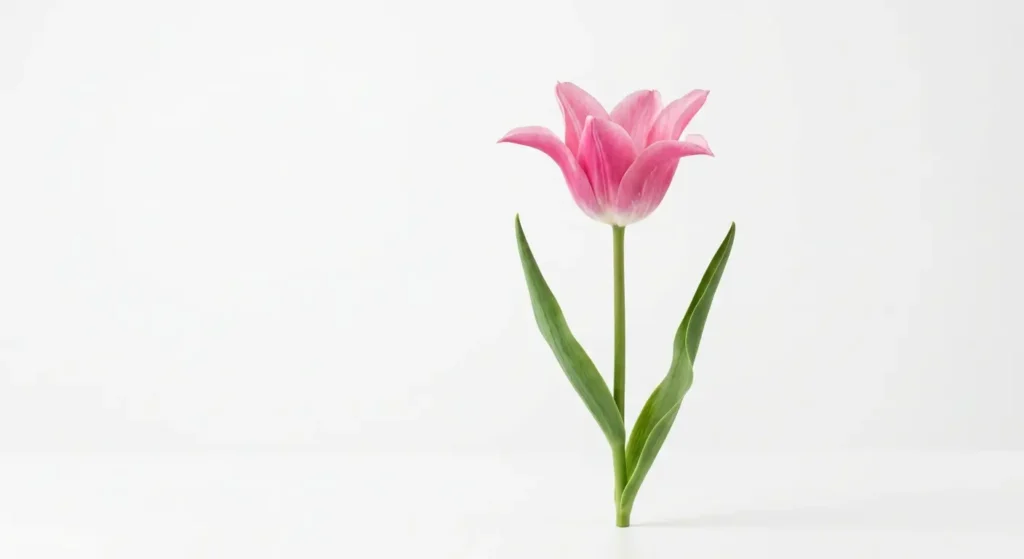
There are 15 official divisions in the tulip classification system, and lily flowered tulips occupy Division 6. What places them in their own category is immediately visible in the flower shape: while most tulips produce cup-shaped or egg-shaped blooms, lily flowered tulips produce a goblet-shaped flower with petals that come to a distinct elongated point at the tip, then arch gracefully outward. From a distance, the open bloom of a lily flowered tulip does genuinely look like a lily in mid-bloom — it is this resemblance that gave the group its name.
Lily flowered tulips are also among the last tulips to bloom in spring, which makes them strategically valuable in a garden where you want to extend the spring color season. Their late bloom time allows them to be paired with other late-blooming plants, ensuring a continuous display of color and interest in the garden. While early tulips finish in March and mid-season tulips wrap up in April, lily-flowered tulips peak in late April through May depending on your zone bridging the gap between spring bulbs and early summer perennials.
There is more chance of perennial success with varieties from the lily-flowered tulip group compared to many other tulip divisions. This relative longevity means a well-placed lily-flowered tulip planting can return for three to five years in favorable conditions, which is considerably better than the one to two years typical for Triumph tulips in most gardens.
Best Lily Flowered Tulip Varieties to Grow
The lily flowered group offers some of the most elegant named cultivars in the entire tulip catalog. Here are the varieties with the strongest reputations across US gardeners and bulb specialists:
| Variety | Color | Bloom Time | Height | Special Quality |
|---|---|---|---|---|
| White Triumphator | Pure white | Mid to late spring | 22 inches (56 cm) | Most popular white lily flowered tulip |
| Ballerina | Orange with scent | Late spring | 20 inches (51 cm) | Rare scented lily flowered variety |
| Marilyn | White with pink flames | Late spring | 20 inches (51 cm) | Large, ruffled, candy cane-colored flower |
| West Point | Bright yellow | Mid-spring | 20 inches (51 cm) | Best yellow in the lily flowered group |
| Queen of Sheba | Red-orange with yellow edge | Late spring | 22 inches (56 cm) | Two-toned, dramatic contrast |
| Aladdin | Red with yellow edge | Mid-spring | 18 inches (46 cm) | Classic bi-color |
| Purple Dream | Soft purple-violet | Late spring | 22 inches (56 cm) | Best purple in the lily flowered group |
| China Pink | Satiny rose-pink | Late spring | 18 inches (46 cm) | Reliable perennial return |
| Elegant Lady | Cream with violet edge | Late spring | 22 inches (56 cm) | Subtle, sophisticated color |
| Fly Away | Coral-orange | Late spring | 20 inches (51 cm) | Strong stems, great cut flower |
Ballerina stands out as the only notably fragrant lily flowered variety — a rare trait in the tulip world. If you have never grown lily flowered tulips before, White Triumphator and China Pink are the best starting points for reliable performance across a range of US climates. For cut flower use, Fly Away and West Point both produce stems that are strong enough to hold up well in arrangements.
How to Plant Lily Flowered Tulip Bulbs: Step-by-Step Guide
When growing lily flowered tulips, bulbs should be planted in the fall. Plant the bulbs in an area of full sun in fertile, well-draining soil in regions with cool winters and dry summers.
When to plant: The planting window opens when soil temperatures drop consistently below 55 degrees F (13 degrees C) typically September through November across most of the US. Planting at the right soil temperature matters more than the calendar date: bulbs planted in warm soil are more susceptible to fungal disease before establishing roots.
Step-by-step planting:
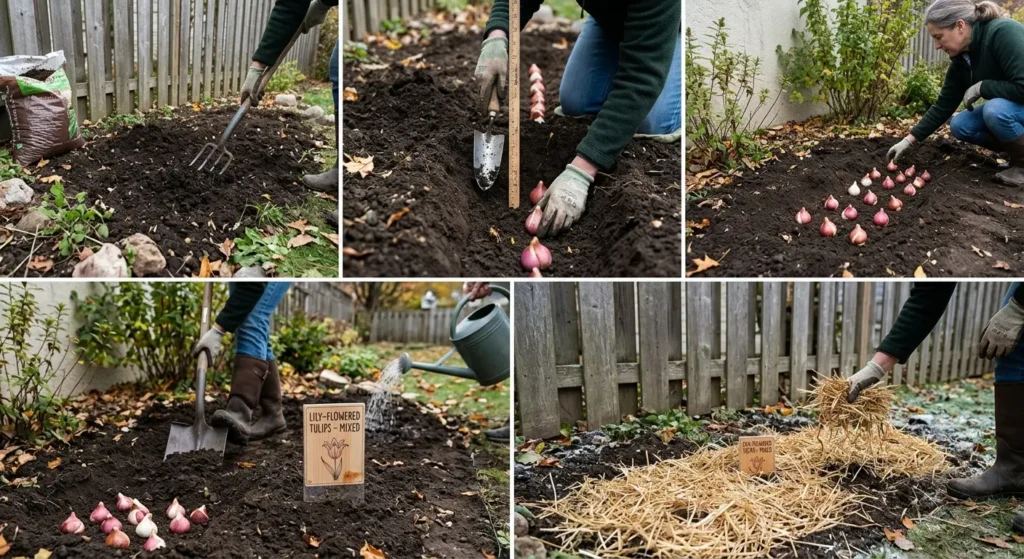
- Prepare the bed. Loosen soil to 12 to 15 inches (30 to 38 cm) deep using a garden fork. Remove weeds and large stones. Work in a 2-inch (5 cm) layer of compost or balanced bulb fertilizer and rake smooth.
- Dig to the correct depth. Set bulbs 6 to 8 inches deep with the pointed end facing up. Planting shallower than 6 inches (15 cm) reduces cold protection and increases the risk of the bulbs being pushed out of the ground during freeze-thaw cycles.
- Space correctly. Space bulbs 4 to 6 inches apart. For visual impact, plant lily flowered tulips in groupings of about 10 to 15 bulbs. Odd-numbered groupings (7, 11, 15) look more natural than evenly spaced rows.
- Choose a sheltered spot. Since the stems of lily flowered tulips are so fragile, plant them in an area that is protected from winds. A position against a wall, fence, or among taller shrubs provides natural wind protection without reducing light.
- Backfill and water. Replace the soil, firm gently, and water thoroughly. Mark the area clearly lily flowered bulbs take months to emerge and are easily damaged by accidental digging.
- Mulch after hard frost. Apply 2 to 3 inches (5 to 7.5 cm) of straw or shredded leaves after the ground has had its first hard freeze. This regulates soil temperature through the winter without trapping excess moisture around the bulbs. For guidance on protecting your garden plantings through hard winter conditions, our guide on how to protect your garden from frost covers mulching, timing, and cold protection techniques for bulb gardens.
Lily Flowered Tulip Care Through the Growing Season
Spring: When the Magic Happens
As temperatures warm in late winter, the flat, strap-like foliage of lily-flowered tulips emerges before most competing perennials have fully leafed out. Keep the area clear of overhanging plants that might shade the emerging growth. Apply a light top-dressing of balanced bulb fertilizer around the base of the emerging leaves not touching the foliage to support the developing flower stems.
Lily-flowered tulips open gradually: the bud stage, where the pointed form is most visible, is one of the most beautiful phases. Lily-flowered tulips reach 18 to 24 inches tall and thrive in full sun with well-drained soil.
After Blooming: Critical for Perennial Return
What happens after the flowers fade determines whether your lily-flowered tulips return next year. Two rules apply without exception:
Deadhead immediately after petals drop. Remove the seed head by snapping it off cleanly below the base of the flower, but leave the entire stem and all foliage intact. The leaves must continue photosynthesizing to replenish the bulb’s energy reserves for next year’s bloom.
Never cut the foliage until it is completely yellow and dry. Remember to leave the browning foliage on your tulips until every leaf has died down, usually by early summer. This allows the bulb to store more food and produce flowers the following year. Tying the foliage in knots or braiding it does not help and can actually reduce photosynthetic efficiency. The tidiest solution is to plant lily flowered tulips among perennials like catmint or salvia whose emerging foliage naturally covers the dying tulip leaves by late spring.
Summer Dormancy
Lily flowered tulip bulbs enter full dormancy by early summer. They prefer warm, dry soil during this rest period conditions that naturally occur in most US regions. In areas with very wet summers (parts of the Pacific Northwest or Southeast), consider lifting the bulbs after foliage dies back. Clean and dry them thoroughly, then store in a cool, dry location in mesh bags or a cardboard box until fall replanting. In typical summer climates across zones 4 to 7, leaving the bulbs in the ground is fine as long as drainage is excellent.
Growing Lily Flowered Tulips in Containers
Lily flowered tulips are among the most elegant container tulips available, and their taller stems create a striking vertical statement in large pots and planters. Container planting also allows you to move the display to a prominent position during peak bloom, then relocate the pot to a less visible spot while the foliage completes its die-back cycle.
Due to their height and graceful form, lily flowered tulips are well-suited for container planting. They can be grown in large pots or planters, where their distinctive blooms can be showcased up close. Containers allow for versatile placement, letting gardeners move the tulips to prominent positions during their peak bloom.
Container growing requirements:
- Pot size: Minimum 12 inches (30 cm) deep and 12 inches (30 cm) wide per grouping of 5 to 7 bulbs
- Drainage: Multiple drainage holes are essential lily-flowered bulbs in waterlogged containers develop fungal rot quickly
- Soil: Use a quality well-draining potting mix rather than garden soil, which compacts in containers and reduces drainage
- Chilling: In zones 7 and above, container lily flowered tulips need 12 to 14 weeks of chilling at 35 to 45 degrees F (2 to 7 degrees C) before planting to simulate natural winter conditions. A garage, shed, or refrigerator drawer (kept away from fruit) provides adequate chilling.
For choosing the right container material and size for outdoor bulb growing, our guide on best planters for indoor plants covers the material and drainage principles that apply equally well to outdoor container planting.
Lily Flowered Tulips as Cut Flowers
Lily flowered tulips make a stunning addition to cut flower arrangements thanks to their unique petal shape and vibrant colors. Their long stems and elegant blooms allow them to be used in both formal and casual bouquets. The flowers can last up to a week or more in a vase.
For the longest vase life from lily flowered tulips:
- Cut stems in the early morning when the buds are still partially closed
- Use a clean, sharp knife rather than scissors (scissors can crush the stem walls)
- Recut stems at a 45-degree angle underwater before placing in the vase
- Change the water every two days and recut stems each time
- Keep arrangements away from direct sun, ripening fruit (ethylene gas shortens flower life), and heating vents
Lily flowered tulips continue opening in the vase and reach their full beautiful reflexed shape within 1 to 2 days of cutting, making them ideal for arrangements that are meant to be seen for several days rather than just at the moment of cutting.

Companion Plants for Lily Flowered Tulips
Pairing lily flowered tulips with the right companion plants solves two problems at once: it provides attractive company during the bloom period and covers the dying foliage gracefully afterward.
Bloom-season companions:
- Forget-me-nots (Myosotis): Low-growing blue flowers beneath lily flowered tulips create a classic blue-and-white or blue-and-pink combination. Their foliage naturally covers the soil between bulbs.
- Alliums: Purple ball-shaped allium flowers emerge just as lily flowered tulips are finishing, extending the bulb display seamlessly.
- Late daffodils: Yellow late-season daffodils bloom at the same time as lily flowered tulips and complement the pointed tulip form.
- Catmint (Nepeta): Low-growing silver-blue foliage emerges at exactly the right time to cover dying tulip leaves while being attractive in its own right.
For garden structure alongside lily-flowered plantings: Our full guide to growing jasmine plants covers how to use climbing plants as backdrop structure for spring bulb displays, and our guide on low maintenance outdoor plants covers reliable ground-level companion plants that fill spaces between lily flowered bulbs through summer.
Common Lily Flowered Tulip Problems and Fixes
- Stem collapse or flopping: While lily flowered tulips have slender, graceful stems, their height and delicate flower shape can make them more susceptible to wind damage. Plant in a sheltered position or stake individual stems with thin bamboo stakes if flopping is a recurring issue. Choosing shorter varieties like Aladdin (18 inches) over taller ones like White Triumphator (22 inches) also helps in exposed positions.
- Botrytis (Tulip Fire): This fungal disease appears as brown, water-soaked spots on petals and foliage that spread rapidly. To prevent Botrytis, use only healthy bulbs and plant in sunny, well-aerated spots. Avoid overhead watering. Remove and destroy any infected foliage — never compost it. Rotate lily flowered planting locations annually and do not replant in affected ground for at least three years.
- No bloom in second year: Lily flowered tulips that bloomed strongly in year one but failed in year two have usually been denied the foliage die-back time they need. If the leaves were cut before they died back completely, the bulb did not store enough energy for the following season. Allow full natural foliage die-back next year and fertilize in fall and again in early spring.
- Bulbs eaten by squirrels or rodents: Squirrels commonly dig and eat tulip bulbs through the winter. Plant lily flowered bulbs under a layer of sharp gravel (squirrels dislike digging through it) or place wire mesh just below the soil surface over the planting area. Chicken wire with 1-inch (2.5 cm) openings lets shoots emerge while blocking access to the bulbs.
Lily Flowered Tulips: Are They Toxic to Pets?
Yes. Tulips, including lily flowered varieties, contain tulipalin A and tulipalin B compounds concentrated most heavily in the bulbs but present throughout all parts of the plant. These compounds are toxic to cats, dogs, and horses. Ingestion causes drooling, vomiting, diarrhea, and in cases of significant bulb consumption, more serious symptoms affecting heart rate and breathing. The bulbs represent the highest toxicity risk, which means safe handling during fall planting and storage is particularly important for pet-owning gardeners. Keep lily-flowered bulbs stored securely out of pet reach and consider enclosed raised beds in gardens where dogs have regular access. For confirmed non-toxic plant alternatives, our guide on indoor plants safe for cats covers 15 pet-safe options for indoor displays.
FAQ
What are lily flowered tulips and how are they different from regular tulips?
Lily flowered tulips belong to Division 6 of the official tulip classification system. They are distinguished from other tulip types by their elongated, goblet-shaped flowers with petals that come to a sharp point and arch gracefully outward — resembling an open lily bloom. Most lily flowered tulips bloom in late spring, after the main Triumph and Darwin Hybrid groups have finished, and grow taller (16 to 24 inches) than most other tulip types.
When should I plant lily flowered tulip bulbs?
Plant lily flowered tulip bulbs in fall, when soil temperatures drop consistently below 55 degrees F (13 degrees C) typically September through November across most of the US. Bulbs need to establish roots before the ground freezes, so earlier fall planting generally produces stronger spring performance than late planting.
How deep do I plant lily flowered tulip bulbs?
Plant lily flowered tulip bulbs 6 to 8 inches (15 to 20 cm) deep with the pointed end facing upward. This depth provides adequate cold protection and anchorage for the taller stems that lily flowered varieties produce. Shallower planting reduces frost protection and increases the chance of bulbs being pushed out of the soil during freeze-thaw cycles.
Will lily flowered tulips come back every year?
Lily flowered tulips are among the more reliably perennial tulip groups and can return for three to five years in favorable conditions. Perennial return depends on allowing the foliage to die back completely and naturally after bloom, applying bulb fertilizer in fall, and growing them in well-draining soil that dries during summer dormancy. In very hot or very wet summer climates, lifting and storing the bulbs after foliage dies back improves multi-year performance.
What are the best lily flowered tulip varieties for beginners?
White Triumphator and China Pink are the most reliable lily flowered tulip varieties for first-time growers. Both have proven performance across a wide range of US zones, produce strong stems, and return reasonably well in years two and three. Ballerina is an excellent addition if fragrance is important to you — it is one of the very few scented lily flowered tulip varieties available.
Can I grow lily flowered tulips in pots?
Yes, lily flowered tulips grow well in containers and their tall, graceful stems create a striking vertical display in large pots and planters. Use a container at least 12 inches (30 cm) deep with good drainage. In zones 7 and above, chill the bulbs for 12 to 14 weeks before planting. Move containers to a prominent display position during peak bloom and relocate while foliage completes its natural die-back cycle.
Which lily flowered tulip has the best fragrance?
Ballerina is the standout for fragrance in the lily flowered group. It produces warm orange blooms with a genuine sweet fragrance that is unusual among tulips, most of which have little to no scent. Plant groupings of 10 to 15 Ballerina bulbs near a path or seating area where the fragrance can be appreciated up close during its late spring bloom period.
Lily flowered tulips reward the patience that bulb gardening requires months of waiting through fall and winter, then a late spring display that outlasts most of the tulip season and stops people mid-stride on a May afternoon. Planting them in groupings, choosing the right companion plants to cover their dormant period, and allowing the foliage to complete its full cycle are the three habits that make the difference between a stunning display that returns annually and a one-season wonder. With a little planning in fall, lily flowered tulips become one of the most dependable investments in any spring garden.
Happy planting!