
The clocks have not changed yet, but the light already has. The windows are staying shut. The heating is back on. The angle of the sun through your window is different lower, warmer in tone, and gone by 5 PM. Fall does something specific to indoor plant conditions that summer never does, and the best houseplants for fall are not necessarily the same plants that looked their best in July.
This is not a generic plant roundup. Every plant on this list was chosen with one question in mind: does this plant specifically work better in fall than in any other season? Does it handle the shorter days, the drier heating-season air, the lower light, or the shift toward warmer interior palettes that make a home feel like autumn? If the answer is yes, it is on this list. If the answer is just “it is a popular houseplant,” it is not.
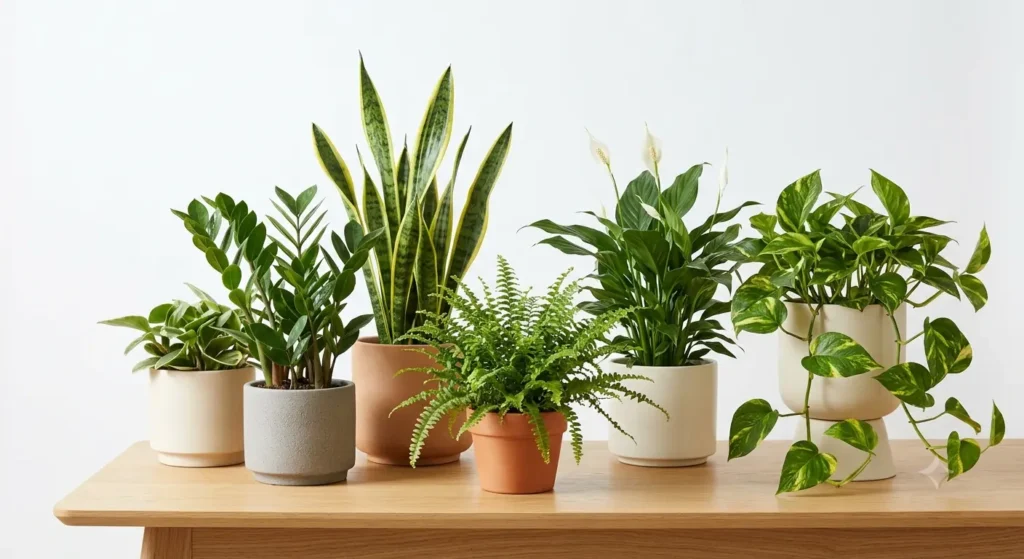
Here are 12 of the best houseplants for fall 2026 chosen for the season, not just for the shelf.
Why Fall Specifically Changes What Your Plants Need
Before the plant picks, a quick orientation on what fall actually does to indoor growing conditions, because most of what makes the best houseplants for fall different from summer picks comes down to these four shifts:
Light drops significantly. From late September onward, day length shortens and the sun sits lower in the sky. A spot that received 5 hours of bright indirect light in July may receive only 2 to 3 hours by October. Plants that were just managing in marginal light conditions in summer will begin to struggle.
Heating season starts. Central heating reduces indoor relative humidity from a summer average of 50 to 60 percent down to 25 to 40 percent in many US homes. This dry air affects plants very differently some tolerate it completely, others develop brown tips and wilting within weeks.
Watering needs decrease. Cooler temperatures, lower light, and slowed plant growth in fall all reduce water demand. Plants that needed water every 7 days in summer may now need it every 12 to 14 days. The most common fall plant mistake is overwatering through the seasonal transition.
Aesthetic expectations shift. Fall interiors shift toward warm, earthy tones burgundy, rust, deep green, terracotta, gold. The best houseplants for fall either match this palette with their foliage colors or provide the architectural drama that complements it.
The 12 Best Houseplants for Fall 2026
1. Croton – The Plant That Was Made for Autumn
No other houseplant looks more like fall than a healthy croton. The leaves of Codiaeum variegatum cycle through vivid red, burnt orange, deep yellow, and dark green on the same plant — a living version of the foliage happening outdoors. Croton thrives in bright indirect light, which makes a south-facing window in fall genuinely one of its ideal positions. The rich colors intensify rather than fade in the lower-angle autumn light.
Why it works for fall: It matches the seasonal palette without any styling effort. As outdoor trees change color, your croton is doing the same thing indoors.
What it needs: Stable placement (no moving it), consistent moisture, and humidity above 40 percent. As heating season dries indoor air, run a small humidifier nearby. See our complete croton plant care guide for the full routine.
2. Snake Plant – The Low-Light Survivor
Fall’s shorter days make low-light tolerance more valuable than almost any other trait in a houseplant. Snake plant (Dracaena trifasciata) handles this better than virtually any other option. It can maintain healthy growth in conditions that would cause most houseplants to stall entirely a genuinely important capability as light levels drop between September and December.
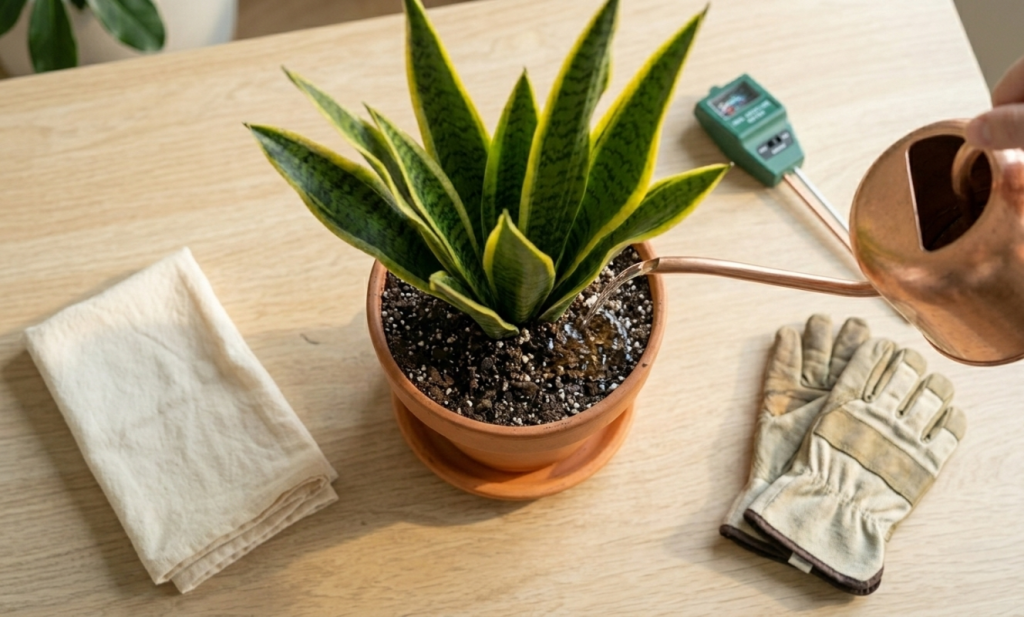
Why it works for fall: When your brightest window gets only a few hours of pale autumn sun, the snake plant does not notice or complain.
What it needs: Dramatically reduced watering in fall every 3 to 5 weeks is realistic once the heating season begins. A snake plant overwatered in fall is a snake plant in trouble by December. Our full snake plant care guide covers the seasonal watering adjustment in detail.
3. ZZ Plant – Handles the Heating Season Better Than Almost Anything
Zamioculcas zamiifolia stores water in its rhizomes and thick stems, making it exceptionally tolerant of the dry, heated air that fall and winter heating creates in US homes. While other plants develop brown tips from low humidity, ZZ plants barely register the change.
Why it works for fall: The glossy, deep green leaves provide visual depth and richness that suits darker fall lighting and warm interior palettes. It requires so little attention during the season that it suits the busier pace of September and October.
What it needs: Water every 3 to 4 weeks. No fertilizing from October onward. Keep it away from cold drafts near windows.
4. Monstera – Dramatic Enough for the Season
Fall interior design leans toward the dramatic, layered textures, warm tones, and larger scale pieces. Monstera (Monstera deliciosa) delivers exactly this. The large, split leaves create substantial visual impact that suits the rich, layered aesthetic of autumn interiors better than small, delicate plants.
Why it works for fall: It earns its place as a statement piece when rooms shift toward darker, more layered styling.
What it needs: Bright indirect light is important. Monstera is one of the picks on this list that suffers most from fall’s light reduction. Move it closer to the brightest window you have. Reduce watering by about 30 percent from your summer schedule. Full care details at our monstera plant care guide.
5. Peace Lily – Blooms When Other Plants Slow Down
Peace lily (Spathiphyllum) blooms in response to reduced light and slightly cooler temperatures conditions that fall provides naturally. A peace lily that did not flower through summer will often produce white spathes in September or October as the light shifts, making it one of the few plants that actually performs better in fall than in peak summer.
Why it works for fall: The white flowers against dark green foliage create a striking contrast that photographs beautifully in autumn light.
What it needs: Keep the soil consistently moist but not soggy. Increase humidity if brown leaf tips appear. Our peace lily care guide covers how to encourage blooming specifically.
6. Calathea – Rich Patterning for Darker Months
Calathea’s ornate leaf patterning dark green, cream, burgundy, and sometimes silvery purple translates beautifully into fall interiors. These plants move their leaves up during the day and lower them at night, a behavior called nyctinasty that is more pronounced as days shorten in fall.
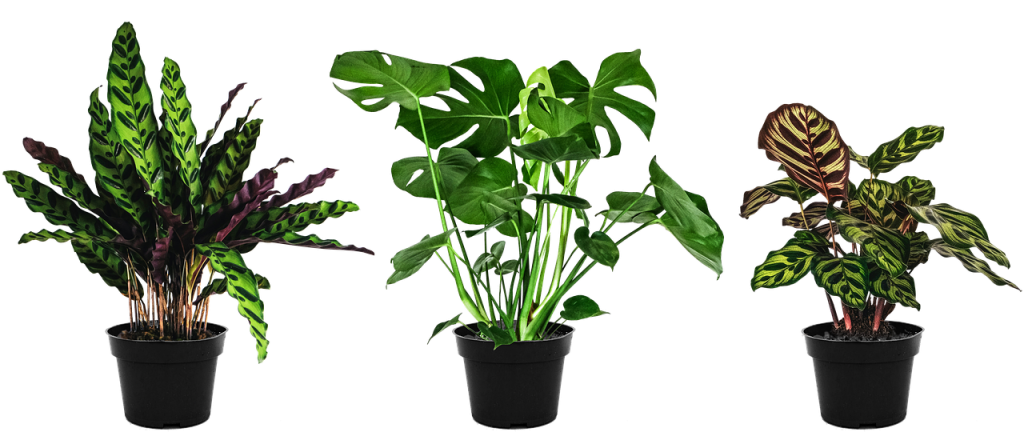
Why it works for fall: The rich, dark-toned foliage patterns suit the moodier aesthetic of autumn rooms. The leaf movement is also genuinely interesting to observe during the longer indoor hours of fall evenings.
What it needs: Consistent moisture without waterlogging, and significantly more humidity than fall’s dry heating air provides. This is where a humidifier becomes essential. Our best humidifier for plants guide covers which options suit tropical plants during winter.
7. Pothos – Reliable Through Every Seasonal Change
If the best houseplants for fall included a reliable foundation pick something that simply works regardless of how the season unfolds, it would be pothos. Golden Pothos specifically handles the full range of fall conditions: lower light, dry air, reduced watering, and the general busyness of the season that can lead to occasional neglect.
Why it works for fall: It keeps trailing and producing new leaves even as other plants stall. Its green and yellow coloring coordinates with fall palettes, and it requires less attention during a season when schedules tend to tighten.
What it needs: Reduce watering to every 10 to 14 days as temperatures drop. No fertilizing after September. Full seasonal care in our pothos plant care guide.
8. Chinese Evergreen (Aglaonema) – Fall Colors Without the Fuss
Chinese evergreen varieties with red, pink, and burgundy foliage such as Aglaonema ‘Red Siam’, ‘Creta’, and ‘Sparkling Sarah’ deliver fall color that holds through the entire season without dropping leaves or requiring specific seasonal conditions to maintain their color.
Why it works for fall: The warm-toned varieties look deliberately seasonal without any styling effort. They also handle lower light better than most plants with colorful foliage.
What it needs: Medium to bright indirect light for the colored varieties; lower light acceptable for green varieties. Reduce watering in fall. Keep away from cold window drafts.
9. Bird of Paradise – Statement Scale for Autumn Interiors
Strelitzia nicolai (the white bird of paradise) and Strelitzia reginae (orange bird of paradise) both bring the kind of scale and architectural boldness that fall interiors benefit from. Large, paddle-shaped leaves stand upright and create immediate drama in any corner.
Why it works for fall: When rooms gain more furniture, soft furnishings, and layered decor in fall, a large statement plant anchors the space rather than competing with it.
What it needs: Bright light is non-negotiable. Move it to the best available window. Reduce watering. The bird of paradise is not a low-light plant — do not place it in a corner just because it looks good there. Our full bird of paradise plant care article covers fall care specifically.
10. Rubber Plant – Classic Fall Aesthetics
Ficus elastica in its burgundy or dark red varieties specifically ‘Burgundy’ and ‘Tineke’, is one of the few plants that looks designed for autumn. The deep wine-red leaves against any warm backdrop create exactly the rich, moody aesthetic that defines fall interior styling.
Why it works for fall: The leaf color is inherently autumnal. It also handles the drier air of heating season better than many tropical plants.
What it needs: Medium to bright indirect light. Water when the top 2 inches are dry. Fall is not the time to repot wait until spring.
11. Spider Plant – Low Maintenance for Busy Fall Schedules
September through November is busy for most households. School, work schedules, holidays approaching, shorter evenings. The spider plant (Chlorophytum comosum) requires so little attention that it fits naturally into the season’s rhythm. It also produces spiderettes (baby plants on long runners) in fall and winter, which can be propagated as gifts appropriate for the season.
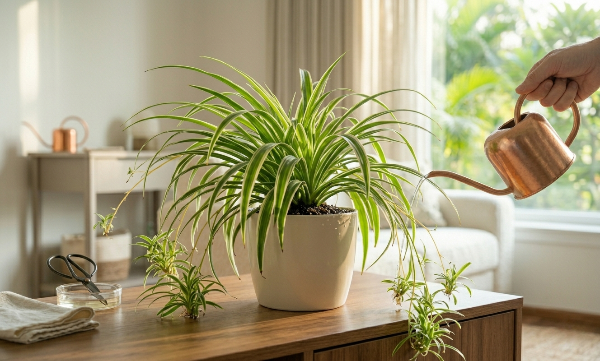
Why it works for fall: It does not penalize the occasional missed watering. It stays green and healthy as light drops. And it is one of the few plants confirmed to be completely safe for cats and dogs, which matters for homes with pets spending more time indoors as the weather cools. For more confirmed pet-safe options, our indoor plants safe for cats guide has 15 verified choices.
What it needs: Any light condition, water when the top inch is dry, no fertilizer after September.
12. Norfolk Island Pine – The Preview of What’s Coming
Araucaria heterophylla does not look like other houseplants. Its symmetrical tiered branching pattern and soft needles make it look like a small, indoor Christmas tree which, for many households, it will eventually become. Placing it in your home in September lets it establish and flourish through fall before becoming the centerpiece decoration of November and December.
Why it works for fall: It grows beautifully as a seasonal preview plant, becomes the holiday plant without any transition needed, and tolerates the dry heating-season air better than most soft-needled species.
What it needs: Bright indirect light. Consistent moisture without waterlogging. Higher humidity than most homes provide naturally in winter pair it with a pebble tray or humidifier.
How to Care for Houseplants for Fall Begins: The Seasonal Transition Checklist
The shift from summer to fall is when many plant problems begin, not because fall conditions are harsh, but because growers do not adjust their routines to match them.
- Reduce watering frequency across all plants. As temperatures drop and growth slows, soil stays moist significantly longer. A good default: add 3 to 5 extra days between waterings starting in September. Check the soil before every watering rather than following your summer schedule. Our guide on how to water houseplants for beginners covers how to check soil correctly across different pot materials and plant types.
- Move plants closer to windows. As the sun’s angle lowers, the light that reaches interior spots of a room decreases more than the light directly at the window. Plants that were 4 to 6 feet back from the window in summer often need to be at the windowsill by October to receive equivalent light.
- Add a humidifier. This is the single most impactful care upgrade for fall. Central heating drops indoor humidity to levels that stress most tropical houseplants within weeks. A mid-size humidifier running near your plant collection addresses the primary environmental challenge of the season.
- Stop fertilizing. Most houseplants should receive their last fertilizer application of the year in August or early September. Fertilizing through fall and winter pushes growth the plant cannot sustain in lower light, and unused nutrients accumulate as mineral salts in the soil.
- Watch for pest increases. Spider mites thrive in dry, heated indoor air. The same conditions that make fall difficult for plants are perfect for pest development. Check leaf undersides monthly and treat at the first sign of fine webbing or stippling rather than waiting for a visible infestation.
If you notice yellowing developing as the season changes, our guide on plant leaves turning yellow covers whether the cause is the seasonal light change, overwatering carried over from summer habits, or dry air affecting the root system.
Styling the Best Houseplants for Fall: Making the Season Visible Indoors
The best houseplants for fall earn their place not just through care suitability but through visual contribution to the interior. A few practical styling approaches for autumn:
Group by warm tones. Place croton, rubber plant (Burgundy variety), and Chinese evergreen (red varieties) together in a single corner to create a deliberate fall color cluster. The grouping also raises local humidity through shared transpiration.
Use height contrast. Pair a tall snake plant or bird of paradise with a trailing pothos and a compact ZZ plant. The variation in height creates the layered visual depth that autumn interior styling depends on.
Terracotta and ceramic pots. If you have been using plastic or plain white pots, fall is the right time to repot into terracotta or warm-toned ceramic containers. The earthy colors reinforce the seasonal palette and terracotta’s natural drainage properties help prevent overwatering as growth slows.
Bring outdoor plants inside before the first frost. Any tropical plants that spent summer outdoors — hibiscus, mandevilla, citrus need to come inside before nighttime temperatures drop below 50 degrees F (10 degrees C). Allow two weeks of transition time in a bright indoor spot before fully integrating them into your main plant display.
FAQ: Best Houseplants for Fall
What are the best houseplants for fall to buy right now?
The best houseplants for fall 2026 to buy in September are croton, Chinese evergreen (red varieties), peace lily, ZZ plant, and Norfolk Island pine. Croton and Chinese evergreen provide immediate fall color. Peace lily often blooms in fall’s natural light reduction. ZZ plant and Norfolk Island pine handle the dry heating season air better than most alternatives available at garden centers right now.
Do houseplants need different care in fall?
Yes. The three main fall care adjustments are: reduce watering frequency by 30 to 50 percent as growth slows, stop fertilizing by early September, and move plants closer to windows as daylight hours shorten. Adding a humidifier becomes important once central heating starts running regularly.
Which houseplants are best for fall with low light?
The best houseplants for fall in low-light conditions are snake plant, ZZ plant, pothos, and spider plant. All four handle the significantly reduced natural light that fall brings without visible decline. Snake plant tolerates the lowest light of the four and is the safest choice for rooms that receive minimal direct or indirect natural light from October through February.
Are there houseplants that actually bloom in fall?
Peace lily is one of the best houseplants for fall blooming it responds to reduced light and slightly cooler temperatures by producing white flowers. Christmas cactus also blooms in late fall and early winter if given the correct light treatment starting in October. Both are available at Home Depot, Lowe’s, and Trader Joe’s in September and October.
How do I prepare my indoor plants for fall and winter?
The key steps are: reduce watering frequency, stop fertilizing, move plants to the best available light position, add humidity support (humidifier or pebble tray), check all plants for pest activity before closing windows for the season, and bring any outdoor tropical plants inside before the first frost. Do these five things in September and most houseplant problems through fall and winter are preventable rather than reactive.
The best houseplants for fall 2026 are the ones that work with what the season actually provides shorter days, drier air, warmer interior palettes, and a natural shift in pace. Every plant on this list earns its spot not because it is currently trending or because it photographs well on social media, but because fall specifically suits it. Find the ones that match your light, your aesthetic, and your schedule, and the season becomes one of the most rewarding times of year to be a plant person.
Happy planting!