
I have killed more plants from forgetting to water them than from anything else. Not from bad soil, not from the wrong light, not from pests. Just plain forgetting, and then coming home three days later to a pot of dry, cracked soil and a plant that looked like it had already accepted its fate. That is exactly why I started researching and testing the best self-watering pots for indoor plants about three years ago, and my plant-loss record has improved dramatically since then. This guide covers what actually works, which products earn their price, and which plants should never go near a sub-irrigated container.
How Self-Watering Pots Actually Work
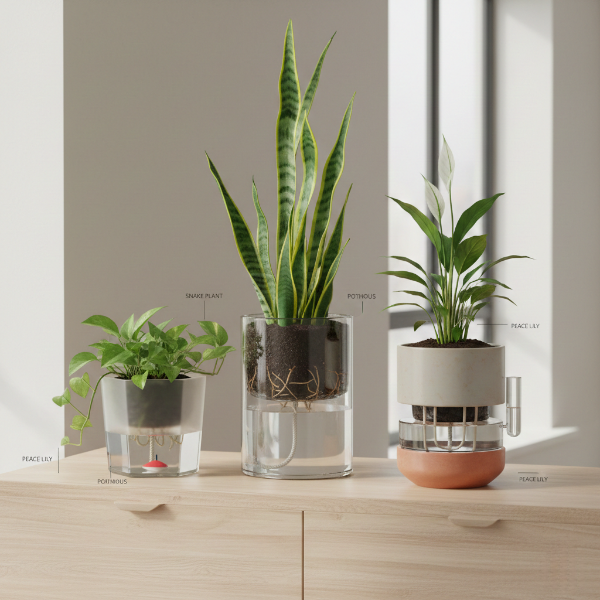
Self-watering pots use a system called sub-irrigation. Instead of adding water to the soil surface, water sits in a reservoir at the base of the pot and the soil draws moisture upward through capillary action as the roots need it. The root zone stays consistently moist without sitting in standing water, which means no soggy soil, no root rot from overfilling, and no stress from the soil drying completely between your attention.
Most of the best self-watering pots for indoor plants have three main parts. The inner pot holds the potting mix and the plant’s root system. The water reservoir sits underneath or around the base and stores the supply. A wicking mechanism, either a cotton wick, a soil wick, or direct soil-to-water contact through a riser, connects the reservoir to the root zone. A fill tube runs down from the top so you can top up the water without disturbing the plant or the soil.
The reservoir typically holds enough water to last one to three weeks depending on the plant, pot size, season, and light levels. In my experience, a medium pot in summer near a bright east-facing window empties in about 10 days. That same pot in winter, when growth slows and the plant draws far less water, can last nearly three weeks on a single refill. According to the University of Florida IFAS Extension, sub-irrigation systems reduce water loss through evaporation and improve water use efficiency compared to surface watering, which matters especially in dry, heated indoor spaces.
Who Actually Benefits From Self-Watering Pots
When I first started looking into the best self-watering pots for indoor plants, I assumed they were mostly for forgetful people. They are, but that is not the whole picture. They work well in several specific situations that have nothing to do with forgetfulness.
If you travel regularly or work unpredictable hours, the reservoir gives your plants a buffer of several days to over a week without your attention. Calatheas, ferns, and peace lilies that struggle with inconsistent moisture do noticeably better in sub-irrigated containers than in standard nursery pots. If you have a plant that has given you persistent yellowing leaves from uneven watering, and you have already ruled out the usual suspects covered in our guide on overwatering vs underwatering, moving it to a self-watering setup removes that guesswork entirely.
They also work well for kitchen herbs. Basil, mint, and parsley are heavy drinkers, and keeping them consistently moist without waterlogging is genuinely tricky in a standard pot. A self-watering herb planter handles that balance automatically and keeps the herbs producing longer.
Best Self-Watering Pots for Indoor Plants: Top Picks
These are the five options I have either personally tested or recommended to other plant owners with consistently good feedback. All of them are available at Home Depot, Lowe’s, Amazon, or directly from brand websites.
| Pot | Best For | Reservoir Size | Price Range | Water Indicator |
|---|---|---|---|---|
| Lechuza Classico Color | Premium tropicals, long-term use | Large (holds 1.5 liters) | $40-75 | Yes, float indicator |
| Santino Asti | Everyday indoor plants, beginners | Medium | $12-22 | Yes, dipstick |
| Mkono Set of 3 | Small desk plants, herbs | Small | $15-20 | No |
| HC Companies Self-Watering Planter | Kitchen herbs, shallow roots | Medium | $10-18 | No |
| Bloem Saturn Self-Watering Planter | Larger floor plants, peace lily | Large | $20-35 | Yes, window strip |
Lechuza Classico Color is the pot I personally use for my larger pothos and monstera. The engineering shows in the details: a float indicator tells you exactly when the reservoir is empty, an overflow drainage hole prevents roots from sitting directly in water if you overfill, and the matte outer shell holds up for years without cracking or fading. The price is the highest on this list, and it earns it.
Santino Asti is where I send beginners who are not ready to spend $50 on a single pot. The wick system works reliably, sizes range from 4 inches (10 cm) to 10 inches (25 cm), and the design is clean enough to look intentional rather than purely functional. I have seen these last three to four years with normal use.
Mkono Set of 3 is the best value for small plants. Each pot comes with a cotton wick and a separate saucer. They work well for small moisture-lovers like African violets and small ferns. For the self-watering pots for indoor plants function to work reliably, stick to plants that actually want consistent moisture.
HC Companies offers the most practical solution for kitchen herbs at under $15. The shallow reservoir design suits the root depth of basil and cilantro better than a deeper pot would. Available at Walmart Garden Center and Amazon.
Bloem Saturn fills the gap for larger plants that need a sub-irrigated container but are too heavy for smaller options. The water level indicator is a visible strip on the side rather than a separate dipstick, which I find more convenient when checking multiple pots at once.

Which Plants Thrive in Self-Watering Pots for Indoor Plants
Not every plant belongs in a sub-irrigated container, but the ones that do best share a common trait: they prefer consistently moist soil and react badly when the moisture level swings too far in either direction. These are the plants worth moving over first.
Plants that do well in self-watering containers:
- Peace lily
- Calathea and prayer plant
- Ferns, including Boston fern and maidenhair fern
- African violet
- Pothos (all varieties)
- Spider plant
- Herbs: basil, mint, cilantro, parsley
- Most vegetable seedlings and lettuces
If you want specific care details for any of these, the peace lily care guide on this site goes deep into exactly how much consistent moisture this plant needs and why irregular watering causes more problems than any other care factor.
Which Plants Should Stay Out of Self-Watering Pots
This is the section most product roundups leave out, and it matters more than the product recommendations themselves. Self-watering pots keep soil consistently moist. For plants that need to dry out fully or partially between waterings, that steady moisture will cause root rot within a few weeks.
Keep these plants in standard pots with top watering:
- Succulents and cacti of all types
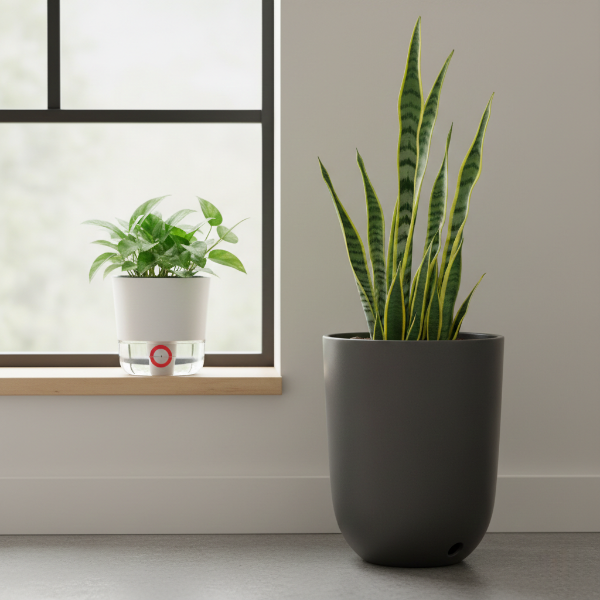
- Snake plant
- ZZ plant
- Fiddle leaf fig
- Orchids in bark mix
- Pothos (technically fine in Self-Watering Pots for Indoor Plants, but it tolerates drought well and most growers prefer standard watering)
If you are already dealing with root rot treatment issues on a plant before switching it to a self-watering pot, stop and fix the root situation first. Placing a plant with damaged roots into constant moisture will make things worse, not better.
What to Look for When Buying
The best self-watering pots for indoor plants are not all built equally. A few specific features separate the ones that work long-term from the ones that look good in product photos and disappoint after a month.
Water level indicator. A float or dipstick showing how much water is left removes all guesswork. Pots without an indicator require you to judge by weight or insert a chopstick into the fill tube to check. It is a small feature, but after using both types, I would not go back to one without it.
Overflow drainage. If you accidentally overfill the reservoir, the excess water needs somewhere to go before it reaches the root zone. The best self-watering pots for indoor plants include an overflow hole that sits just above the reservoir bottom, so water drains before the roots can be affected.
Reservoir size relative to pot size. A reservoir that holds less than a third of the pot’s volume needs refilling every few days. For plants that genuinely benefit from sub-irrigation, like calatheas and ferns, you want a reservoir that sustains the plant for at least a week between refills.
Material. Plastic pots are lighter, more durable, and hold up better long-term. Ceramic self-watering pots look better on a shelf but can crack if water inside freezes, which matters if you move plants to a cooler space seasonally. Terra cotta self-watering pots exist, but the porous walls pull moisture out of the reservoir faster than the plant can use it, which largely defeats the purpose.
For a broader comparison of materials across all indoor container types, the best planters for indoor plants guide covers every option with honest trade-offs.
Mistakes That Hurt Results With Self-Watering Pots
- Putting drought-tolerant plants in them.
- This is the most common mistake, and it usually plays out slowly enough that people do not connect it to the pot. Succulents, cacti, snake plants, and ZZ plants need soil that dries completely between waterings. Placed in a self-watering pot, the constant moisture causes root rot from the bottom up over the course of a month or two. The top of the soil looks fine the whole time. By the time the plant shows visible distress, the roots are already gone.
- Never cleaning the reservoir.
- After several months of use, algae and mineral deposits build up inside the reservoir and fill tube. If your tap water is hard, you will see white crusty buildup along the waterline. Empty the reservoir completely once a month, rinse it out, and refill with fresh water. Persistent algae clears quickly with a small amount of hydrogen peroxide diluted in the water, which will not harm the plant.
- Using standard potting mix without amendment.
- Miracle-Gro Indoor Potting Mix or FoxFarm Ocean Forest work fine in self-watering pots, but adding 20 to 30 percent perlite improves the wicking action and prevents the soil from compacting over time. Dense, compacted soil loses its ability to draw water up through capillary action within one growing season.
- Assuming a full reservoir means a happy plant.
- A full reservoir does not guarantee the plant is absorbing water. If the wicking system clogs with mineral deposits or compacted soil, the plant can sit above a full reservoir and still be thirsty. Check the actual soil moisture every couple of weeks even when using sub-irrigation.
- Buying a pot that is too large for the plant.
- Excess soil around a small root ball stays wet far longer than the roots can absorb. This creates the same root rot problem you were trying to avoid. Match the pot size to the root ball, not to how big you hope the plant will eventually grow.
FAQs
What are the best self-watering pots for indoor plants for beginners?
For beginners, the Santino Asti and the Mkono set of 3 are the most approachable options among the best self-watering pots for indoor plants. Both have reliable wick systems, are available on Amazon for under $25, and work well straight out of the box without any setup adjustments. The Santino Asti includes a water level indicator, which is genuinely helpful when you are still learning how quickly different plants drain the reservoir.
How often do you refill a self-watering pot?
Most self-watering pots need refilling every one to three weeks depending on the season, plant size, and light levels. In summer near a bright window, expect to refill every 10 to 12 days. In winter when growth slows, the same setup can last 18 to 21 days. Check the water level indicator rather than following a fixed schedule.
Can succulents go in self-watering pots?
No. Succulents need soil that dries out completely between waterings, and the steady soil moisture that self-watering pots provide will cause root rot within weeks. Keep succulents in standard pots with a fast-draining cactus mix, and water by hand only when the soil is completely dry several inches down.
Do the best self-watering pots for indoor plants prevent root rot?
Self-watering pots reduce the risk of root rot from overwatering because they maintain even moisture rather than saturating the soil. However, they will cause root rot for plants that require dry periods between waterings. The pot controls how water is delivered, but choosing the right plants for sub-irrigation is still the grower’s responsibility.
How do I know when the reservoir is empty?
Pots with a float indicator or dipstick show the water level directly. For pots without an indicator, check by lifting the pot (a noticeably lighter pot means the reservoir is low) or by inserting a clean chopstick through the fill tube and seeing whether it comes out wet or dry at the tip.
Can I use tap water in self-watering pots?
Yes, though hard tap water causes mineral buildup in the reservoir and fill tube over time. If you notice white deposits forming around the waterline, flush the reservoir with plain water monthly and wipe down the interior. Filtered or distilled water extends the time between cleanings, but tap water works fine for most plants in most areas.
Are self-watering pots worth the higher price compared to standard containers?
For moisture-sensitive plants like calatheas, ferns, and peace lilies, yes. The improvement in plant health from consistent moisture versus the stress of irregular surface watering is real and visible within a few weeks. For drought-tolerant plants, the extra cost adds nothing and can actively cause harm. The return on investment depends entirely on which plants you are growing.
The best self-watering pots for indoor plants do not fix every care problem, but they solve a real one: the inconsistency that comes from a busy life and a shelf of plants that each have different moisture needs. Get the right plants into the right pots and the daily maintenance genuinely becomes easier.
My suggestion is to start with one or two plants you already know suffer when you forget to water, move them into a self-watering setup, and track the difference over a month. Most people who try it end up moving their calatheas, ferns, and herbs over fairly quickly. If you want to build out the rest of your plant care setup alongside better watering habits, the guide on best humidifier for plants covers how ambient humidity affects plant health in the same way consistent moisture in the root zone does.
Happy planting!