
Most prayer plant care guides tell you to keep the soil moist and give it indirect light, then move on. That advice isn’t wrong, but it skips the part that actually explains why this plant behaves the way it does. Once you understand where Maranta leuconeura comes from and how it actually grows in the wild, the care instructions stop feeling like arbitrary rules and start making a lot more sense.
| Light | Bright, indirect light, no direct sun |
| Water | Keep soil evenly moist, never soggy or bone dry |
| Humidity | 50% or higher, ideally 60%+ |
| Temperature | 65 to 85°F (18 to 29°C) days, no lower than 60°F (15°C) at night |
| Toxicity | Non-toxic to cats, dogs, and humans |
| Difficulty | Moderate, more attention needed than most houseplants |
| Common Varieties | Red Prayer Plant (erythroneura), Kerchoveana (Rabbit’s Foot), Massangeana |
Where This Plant Actually Comes From
Maranta leuconeura is a rhizomatous perennial native to the tropical forest floor of Brazil, where it grows as a low, spreading groundcover rather than a plant that climbs or stands upright. In the wild, it sends out horizontal rhizomes, thick underground stems, that root into the surrounding soil at each leaf node as the plant spreads outward across the forest floor.
That detail matters more than it sounds like it should for anyone trying to nail down prayer plant care indoors. A plant built to spread shallow roots across a humid, shaded forest floor is never going to behave like a plant adapted to dry, sunny conditions, and most of the specific requirements below trace directly back to that native habitat.
Why the Leaves Actually Fold
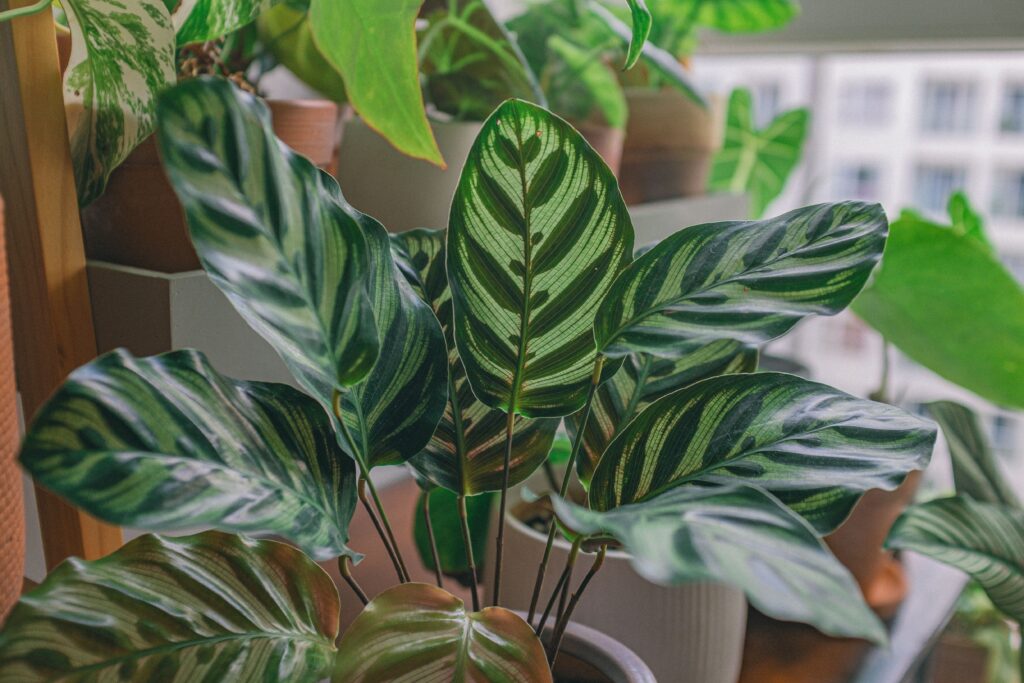
The daily leaf movement that gives this plant its name is driven by small, specialized structures at the base of each leaf called pulvini. These tiny, cushion-like joints control water pressure inside their cells, and as that pressure shifts through the day, the leaves lower and spread flat to catch available light. As evening falls, the pressure changes again and the leaves fold upward, resembling hands pressed together in prayer.
This movement, called nyctinasty, isn’t just a nice visual trick. It’s a genuinely useful health indicator. A prayer plant with leaves that are still lying flat late in the evening, rather than folded upward, is telling you something is off with its care, usually related to light, water, or temperature stress. Checking your plant’s leaves at night is a quick, free way to catch a developing problem before it shows up as browning or yellowing.
Light Requirements
Prayer plant care starts with getting light right, since this plant evolved in the dappled shade of a forest floor rather than in open sun. It wants bright, indirect light, similar to what you’d find a few feet back from an east facing window, filtered rather than direct.
Direct sunlight, especially in the afternoon, bleaches the leaf coloring and can scorch the foliage outright, undoing the exact patterning that makes this plant worth growing in the first place. Low light is tolerated for stretches, but growth slows considerably and the vivid contrast in the leaf pattern fades. A spot behind a sheer curtain, or a few feet from a north or east facing window, tends to hit the balance well across most seasons.
Watering the Right Way
Because Maranta leuconeura has shallow, fibrous roots built for rapid moisture uptake in humid understory conditions, prayer plant care requires a genuinely different watering approach than most common houseplants, and getting this one habit right solves more problems than any other single adjustment. Unlike a ZZ plant, which stores water in thick rhizomes and tolerates long dry stretches, this plant’s shallow root system has no similar reserve to draw on, so it wants soil that stays consistently and evenly moist, never soggy, never bone dry.
Check the top half inch (1.3 cm) of soil every few days rather than watering on a fixed schedule, and water thoroughly once it starts to feel dry, letting any excess drain away completely rather than sitting in a saucer underneath. Letting the soil dry out fully, even a single time, tends to cause real, visible damage in the form of crisping, browning leaves that won’t recover. At the same time, standing water at the bottom of the pot leads to root rot just as quickly as it would with any other plant, so this really is a balance that requires regular attention rather than a set-it-and-forget-it approach.
Tap water deserves its own mention, since it trips up more people than almost any other factor in prayer plant care. Chlorine, fluoride, and dissolved mineral content build up in the soil over time and commonly show up as browning tips or leaf discoloration, even when your watering frequency is otherwise correct. Letting tap water sit out uncovered overnight allows some of the chlorine to dissipate, and switching to filtered, distilled, or rainwater sidesteps the issue entirely in areas with hard or heavily treated water.
Soil and Potting
Getting soil right is another part of prayer plant care that traces directly back to this plant’s growth habit. Since this plant’s roots spread shallow and wide rather than deep, a shallower, wider pot generally suits it better than a tall, narrow one. A well draining, slightly acidic potting mix with good humus content works best, one that holds moisture without staying waterlogged for long stretches. A standard houseplant potting mix with a bit of added compost or peat is usually sufficient, and a pot with generous drainage holes isn’t optional given how easily this plant tips into either overwatering or underwatering territory.
Repot every 2 to 3 years, ideally in spring during active growth, sizing up by only 1 to 2 inches (2.5 to 5 cm) in diameter each time. An oversized pot holds more moisture than the roots can realistically use, which sets up exactly the kind of soggy soil conditions this plant struggles with.
Humidity and Temperature
Humidity is genuinely non-negotiable in prayer plant care, more so than with almost any other common houseplant, and it’s the single factor most likely to make or break your results. This plant wants at least 50%, and ideally closer to 60% or higher, levels well above what most homes provide naturally, especially once heating systems kick on for winter. Kitchens and bathrooms often sit naturally in that ideal range, which is why you’ll frequently see prayer plants recommended for those rooms specifically.
A humidifier placed nearby is the most reliable long-term fix, since misting only raises humidity for a few minutes at a time rather than holding it steady, and can actually encourage pests by creating repeated damp-then-dry cycles on the leaf surface. A pebble tray filled with water just below the surface of the stones can help supplement humidity too, as long as the pot itself never sits directly in the water.
Daytime temperatures between 65 and 85°F (18 to 29°C) suit this plant well, and nighttime temperatures shouldn’t drop below about 60°F (15°C). Keep it away from drafty windows and air conditioning or heating vents, since sudden temperature swings stress the foliage more visibly on this plant than on hardier houseplants.
Fertilizing and Pruning
Fertilizing is a smaller but still meaningful piece of prayer plant care. During spring and summer, feed monthly with a balanced liquid houseplant fertilizer diluted to about half strength, timed to match the plant’s natural active growing season. Taper off in fall and stop entirely in winter, when growth naturally slows and the plant has little use for extra nutrients it can’t actively put to work.
Because this plant spreads horizontally rather than climbing upward, pinching back leggy stems occasionally encourages a fuller, more compact shape indoors rather than one long stem stretching toward the nearest light source.
Propagating Prayer Plant
Propagation rounds out the practical side of prayer plant care, and division is the most reliable way to do it, which makes sense given how this plant naturally spreads by rhizome in the wild. Here’s the basic process:
- Remove the plant from its pot during repotting and gently separate the rhizome and root ball into sections by hand, making sure each division has both healthy roots and at least a few leaves attached.
- Pot each division into fresh, well draining potting mix in its own container.
- Water thoroughly and place in bright, indirect light, keeping humidity elevated during the adjustment period.
- Expect a short period of stress or minor leaf drop as each division settles in, followed by new growth within a few weeks.
Stem cuttings are also possible: a cutting around 4 inches (10 cm) long with three or four leaves, taken in spring and given gentle bottom heat, will often root successfully, though division tends to be faster and more reliable for most home growers.
Prayer Plant Care vs Calathea: Which Is Easier
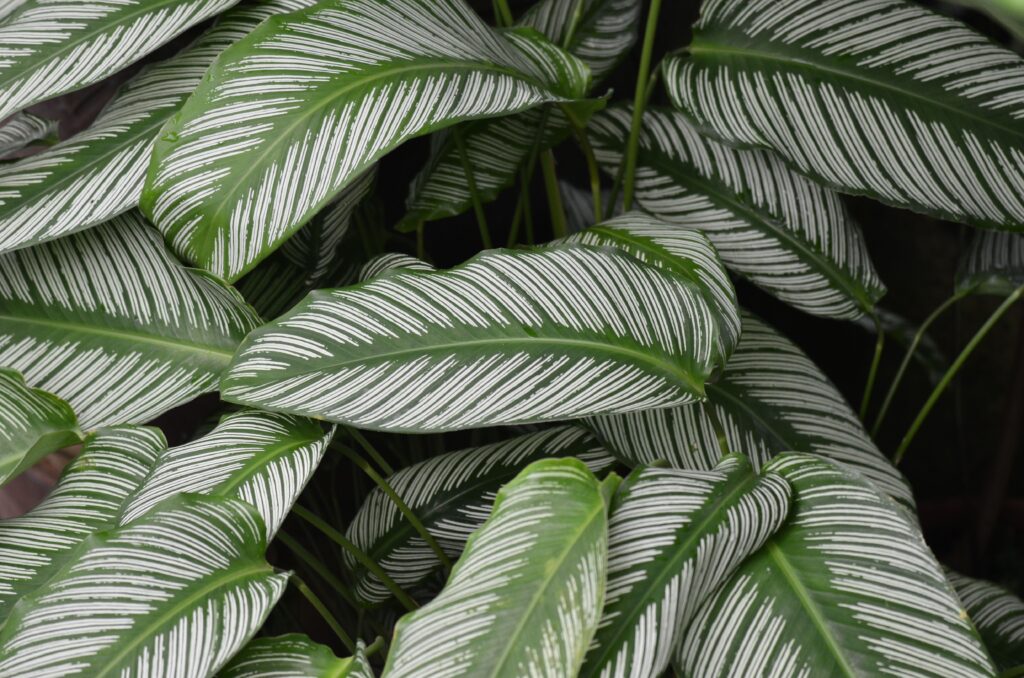
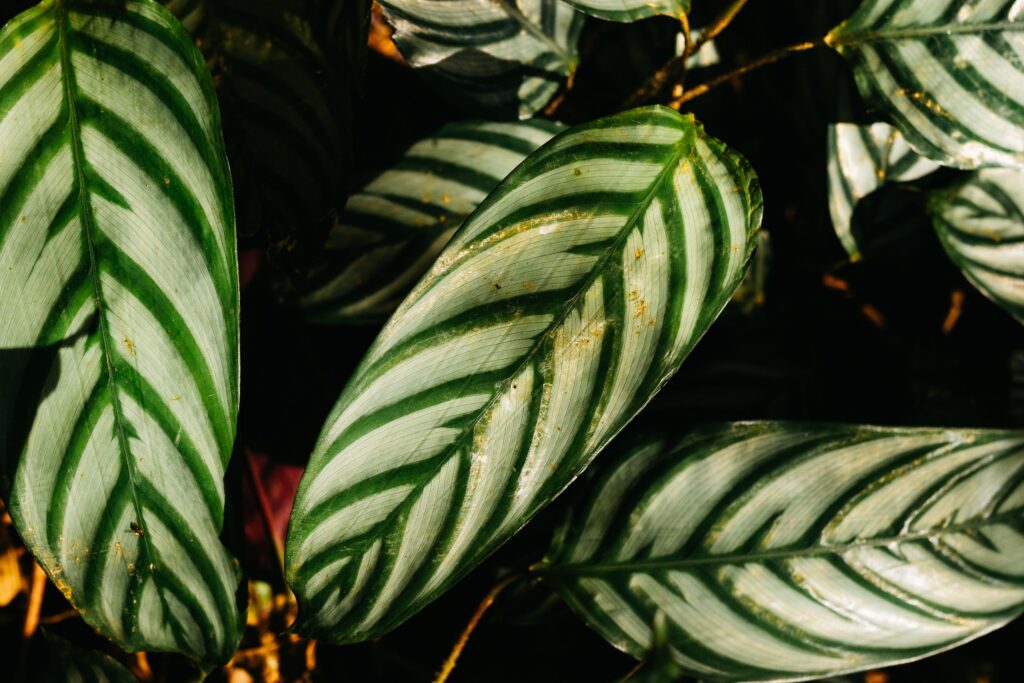
Since these two are so often confused, and sold under the same nickname, a direct comparison is worth including here. Both belong to the same nyctinastic, leaf-folding family and share nearly identical care requirements, but Calathea is widely considered the more demanding of the two, reacting faster and more visibly to lapses in humidity or water quality. True Maranta varieties, particularly the common red vein and Kerchoveana varieties, tend to bounce back more forgivingly from an inconsistent week than most Calathea cultivars will. If you’re new to this entire plant family, starting with a true Maranta is the more beginner-friendly entry point.
Common Problems in Prayer Plant Care
- Curling leaves almost always point to low humidity. If your prayer plant’s leaves start curling inward, that’s the first thing to address, typically with a humidifier or pebble tray, before troubleshooting anything else.
- Yellow leaves function more as a general stress signal than a symptom tied to one specific cause. When you see plant leaves turning yellow, work back through watering consistency, humidity, light exposure, and temperature rather than assuming any single factor is automatically to blame.
- Brown tips are most often tied to inconsistent watering or tap water with high mineral content, though watering unevenly around the pot, soaking one side more than the other, can also cause tips to brown asymmetrically on just one side of the plant.
- Leaves that won’t fold at night are one of the more reliable early warning signs available for this species. If the leaves are still lying flat well after dark, something in the care routine, usually light, temperature, or water, has drifted off track.
If a plant seems to be declining despite following every step in this guide, it’s worth checking thoroughly for pests first, and if the situation looks more serious than a quick fix can handle, my how to revive a dying plant guide walks through the recovery process step by step.
Pests
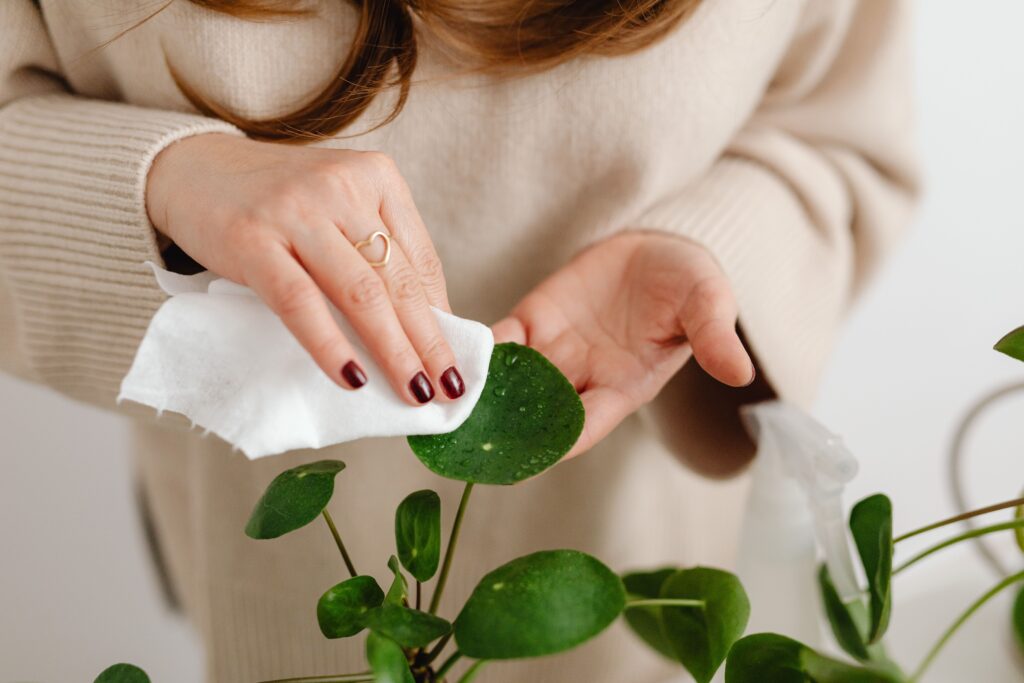
Pest management rounds out the last major piece of prayer plant care that’s easy to overlook until it becomes a problem. Mealybugs and spider mites are the most common pests affecting this plant, usually showing up first as small white spots, faint webbing, or tiny holes, followed by curling and yellowing leaves as the infestation progresses. A cotton swab dipped in rubbing alcohol handles small, localized infestations directly, while neem oil is the better choice for anything more widespread. Wiping leaves down periodically with a damp cloth as routine maintenance also helps, since dust buildup on the foliage can stress the plant over time even without any pests involved.
Is Prayer Plant Toxic to Pets
No. Unlike a number of popular houseplants, prayer plants are considered non-toxic to cats, dogs, and humans, which is a genuinely pet-friendly point in favor of this plant within a family that otherwise demands a fair amount of attention. That said, it’s still sensible to discourage pets from chewing on any houseplant, toxic or not, since ingesting large amounts of plant material can cause stomach upset regardless of species.
Mistakes That Undermine Good Prayer Plant Care
Even experienced plant owners fall into a few of these traps with prayer plant care, usually because habits that work fine for other houseplants get carried over without adjustment.
- Letting the soil dry out completely. Even once. This plant’s shallow root system needs consistently moist soil, not the dry-out-between-waterings approach that works well for so many other houseplants.
- Using straight tap water without a second thought. Chlorine and mineral buildup shows up as browning and discoloration over time, and it’s an easy cause to overlook since it doesn’t resemble an obvious watering mistake.
- Placing it in direct sun for better color. More light doesn’t intensify the leaf pattern, it bleaches and burns it instead. Bright, indirect light is the actual target, not brighter light in general.
- Relying on misting instead of real humidity. A quick spritz feels productive but barely moves the needle, and can encourage pests through repeated damp-dry cycles on the leaves. A humidifier or pebble tray does far more for actual humidity levels.
- Choosing a tall, narrow pot. Given this plant’s shallow, spreading root system, a wide, shallow pot suits it better and holds less excess moisture than a deep one.
- Assuming every “prayer plant” at the store is a true Maranta. Calathea and Stromanthe are frequently sold under the same nickname and are noticeably less forgiving, so it’s worth knowing which one you actually brought home.
FAQ
Do prayer plants need direct sunlight? No, prayer plant care calls for bright, indirect light. Direct sun bleaches or burns the leaves and fades their coloring rather than improving it.
How often does prayer plant care require watering? Check the soil every few days and water whenever the top half inch (1.3 cm) feels dry, keeping the soil evenly moist rather than letting it fully dry out between waterings.
Why are my prayer plant’s leaves curling? Curling is almost always a sign of low humidity. Increasing humidity with a humidifier or pebble tray typically resolves it within a week or two.
Is prayer plant care difficult for beginners? It’s more demanding than easier houseplants, mainly due to its humidity and consistent moisture requirements, but it’s very manageable once those two factors are dialed in.
Are prayer plants toxic to cats and dogs? No, prayer plants are considered non-toxic to pets and humans, making them a safer choice for households with curious animals.
Why does my prayer plant have brown tips? Brown tips usually trace back to inconsistent watering or tap water with high chlorine or mineral content. Switching to filtered water often resolves the issue within a few weeks.
Why do my prayer plant’s leaves stop folding at night? Leaves that stay flat after dark are a sign that something in the care routine has drifted, usually related to light, temperature, or watering consistency.
Is a Calathea the same as a prayer plant? Not technically, but the nickname is often used loosely across the whole Marantaceae family. Calathea shares the same leaf-folding behavior and similar, though slightly more demanding, care needs.
Final Thoughts
Good prayer plant care really comes down to respecting where this plant evolved: a shaded, humid forest floor with consistently moist soil and nothing resembling direct sun. Match those conditions as closely as your home allows, and consistent prayer plant care rewards you with foliage that looks intentionally painted and a daily leaf movement that never quite stops being interesting to watch, even years in.
If pests ever show up, my neem oil guide covers exactly how to treat them, and once you’ve got the basics down here, it’s worth pairing this plant with other humidity lovers rather than the drought-tolerant plants covered in my complete indoor plant care guide.
Happy planting!