
If you’ve ever seen mushrooms sprouting mysteriously after rain, you might have wondered, are mushrooms plants or animals? They look like plants, grow from the ground, and don’t move, yet they’re neither plants nor animals.
The truth is, mushrooms belong to an entirely different kingdom of life: the Fungi Kingdom. While they share some similarities with plants, such as growing in soil and possessing cell walls, their biology and life processes make them more closely related to animals in many fascinating ways.
In this article, we’ll explore what mushrooms really are, how they grow, why they aren’t plants or animals, and what makes them such an important part of our planet’s ecosystem.
What Exactly Are Mushrooms?
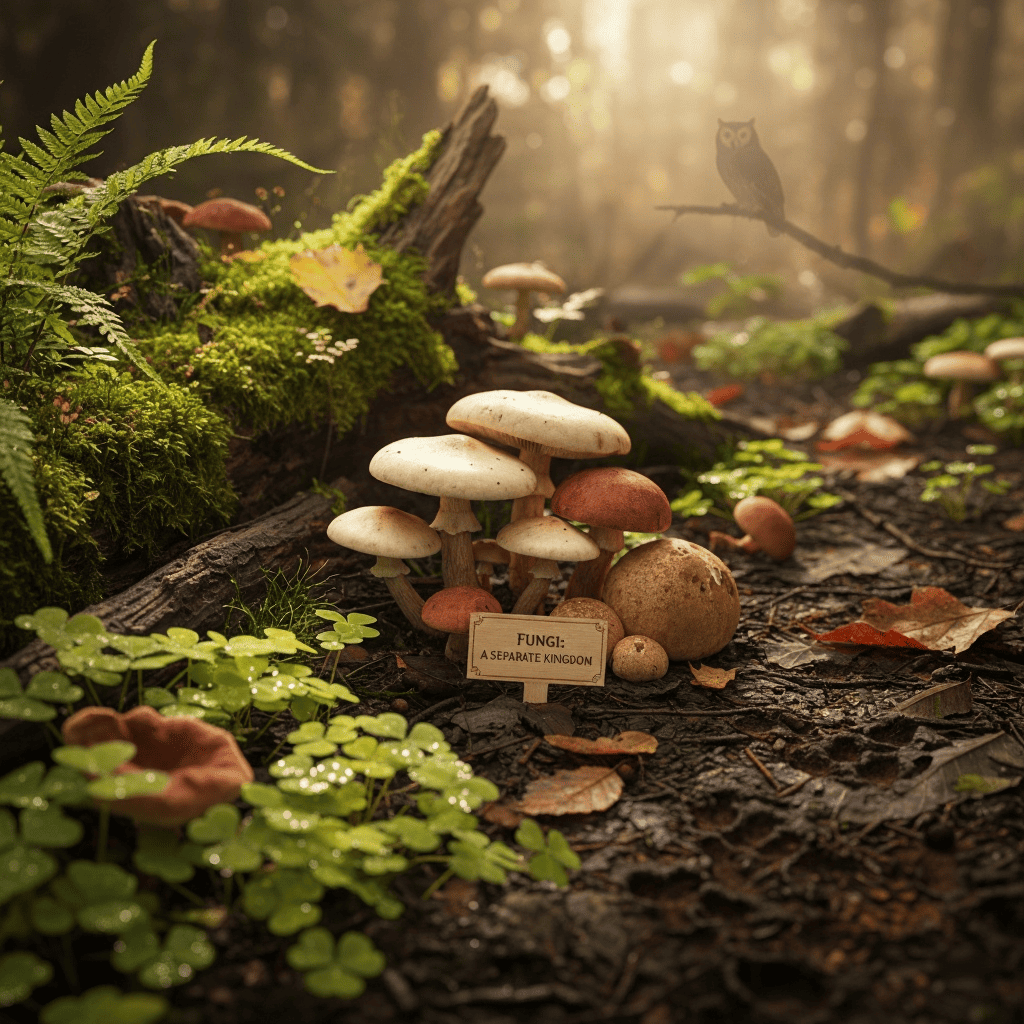
Mushrooms are the fruiting bodies of fungi, organisms that belong to the kingdom Fungi, separate from both plants and animals.
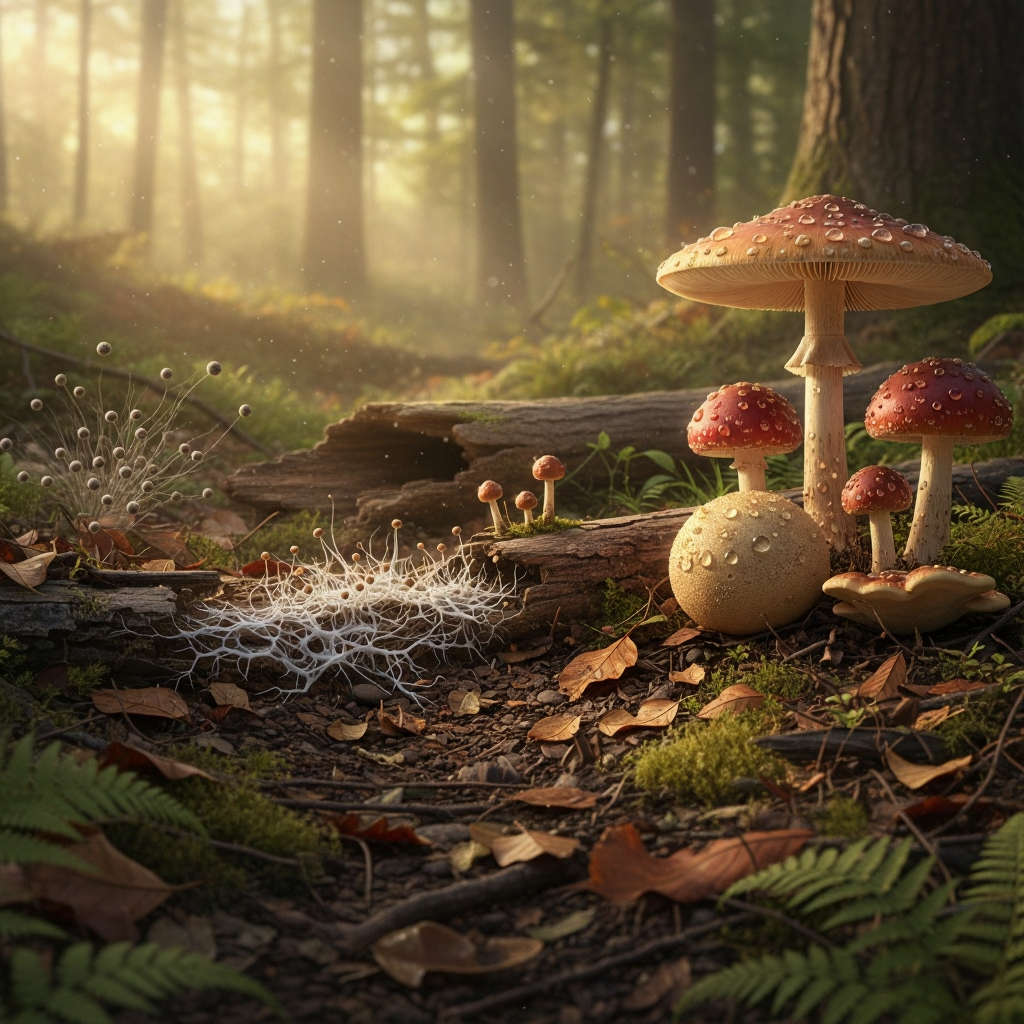
Think of a mushroom as the visible tip of a much larger organism living underground, the mycelium, a network of thread-like structures called hyphae that absorb nutrients from organic material.
Fungi are heterotrophic, meaning they can’t make their own food like plants do. Instead, they obtain nutrients by breaking down dead organic matter or forming relationships with living plants and trees. This makes them key recyclers in nature.
Why Mushrooms Are Not Plants
At first glance, mushrooms might look like plants because they grow in soil and have stems and caps that resemble leaves or flowers. However, the similarities stop there. Here’s why mushrooms don’t belong in the plant kingdom:
1. No Photosynthesis
Plants make their own food using sunlight through photosynthesis, a process powered by chlorophyll.
Mushrooms lack chlorophyll, so they can’t convert sunlight into energy. Instead, they get their nutrients from decaying organic matter, like fallen leaves, wood, and other dead plants.
2. Different Cell Composition
Plant cell walls are made of cellulose, while fungal cell walls are composed of chitin, the same tough material found in the shells of insects and crustaceans.
This makes fungal cells more similar in structure to animal cells than plant cells.
3. Unique Growth Process
Mushrooms don’t grow from seeds like plants do. Instead, they reproduce through spores, which are microscopic reproductive units that spread through air or water. When these spores land in a suitable environment, they germinate into new mycelium networks.
4. Energy Storage
Plants store energy as starch, but fungi (including mushrooms) store energy as glycogen, the same compound animals use to store energy.
This biochemical similarity further shows that mushrooms are more like animals than plants in terms of metabolism.
Why Mushrooms Are Not Animals
Despite their animal-like metabolism, mushrooms are not classified as animals either. Here’s why:
- No Movement: Animals can move, hunt, or react to their surroundings, while mushrooms are immobile.
- No Nervous System: Mushrooms lack brains, nerves, and sensory organs.
- No Organs: They don’t have organs for digestion or reproduction like animals do. Instead, they release enzymes into their environment to digest food externally.
Mushrooms exist in a unique biological category, performing vital roles that neither plants nor animals can do.
The Kingdom Fungi: A World of Its Own
Scientists classify all living organisms into five main kingdoms:
Animalia (animals), Plantae (plants), Fungi (fungi), Protista (single-celled organisms), and Monera (bacteria).
The Fungi Kingdom is diverse and ancient, containing millions of species, from microscopic molds and yeasts to giant mushrooms.
Mushrooms are just one part of this incredible kingdom, the reproductive structures of larger fungi that release spores to create the next generation.
How Mushrooms Grow
Mushrooms thrive in moist, dark environments where they can feed on decaying organic material. Their life cycle has several stages:
- Spore Release: Mature mushrooms release millions of spores into the air.
- Germination: When spores land on a suitable surface, they form fine threads called hyphae.
- Mycelium Formation: The hyphae grow and intertwine to form a dense network known as mycelium, the main body of the fungus.
- Fruiting Body Development: When conditions are right (usually humidity and temperature), the mycelium produces mushrooms as fruiting bodies.
- Reproduction: The cycle repeats as new spores are released.
This life cycle allows mushrooms to reproduce efficiently and adapt to many environments, from forest floors to decaying logs and even compost heaps.
How Mushrooms Benefit the Environment
Mushrooms and other fungi play crucial roles in nature’s balance:
1. Decomposers of the Ecosystem
Mushrooms break down dead plants, animals, and organic material, recycling nutrients back into the soil. Without them, forests would be buried in layers of dead matter.
2. Soil Enrichment
Fungal decomposition enriches the soil with nitrogen, carbon, and other nutrients, supporting healthy plant growth.
3. Symbiotic Relationships
Many mushrooms form mycorrhizal associations with plants, a mutually beneficial relationship where fungi help plants absorb nutrients and, in return, receive carbohydrates from the plant.
4. Medicinal and Edible Value
Some mushrooms, like shiitake, reishi, and lion’s mane, have powerful medicinal properties. They contain compounds that boost immunity, improve brain health, and even support cancer treatments.
However, not all mushrooms are safe to eat, some are highly toxic. Proper identification is essential before consuming wild mushrooms.
Mushrooms vs. Plants: Key Differences
| Feature | Mushrooms (Fungi) | Plants |
|---|---|---|
| Kingdom | Fungi | Plantae |
| Energy Source | Absorbs nutrients from organic matter | Produces food via photosynthesis |
| Cell Wall Material | Chitin | Cellulose |
| Energy Storage | Glycogen | Starch |
| Reproduction | Spores | Seeds |
| Chlorophyll | Absent | Present |
| Mobility | Immobile | Immobile |
| Example | Button mushroom, shiitake, reishi | Rose, fern, sunflower |
Fun Fact: Mushrooms Are Closer to Animals
Although mushrooms don’t move or think, genetic studies have revealed that fungi are more closely related to animals than plants on the evolutionary tree.
Both fungi and animals share a common ancestor that diverged around 1 billion years ago, which is why they share traits like energy storage and chitin-based structures.
Frequently Asked Questions (FAQs)
Mushrooms are fungi, a separate kingdom of life, distinct from both plants and animals.
They lack chlorophyll and can’t make their own food through photosynthesis. Instead, they absorb nutrients from organic material.
No, mushrooms don’t have roots. They grow from a network of fine threads called mycelium that absorb nutrients from their surroundings.
Yes, mushrooms are living organisms. They grow, reproduce, and respond to their environment, though they lack nerves and mobility.
No. While many mushrooms are edible and nutritious, some are toxic or even deadly. Always identify mushrooms carefully before eating.
Mushrooms store energy as glycogen, have chitin in their cell walls, and obtain food externally, all features that distinguish them from plants.
Conclusion
So, are mushrooms plants or animals?
The answer is neither. Mushrooms belong to the Fungi Kingdom, a distinct and vital branch of life. While they may look like plants, their biology, nutrition, and reproduction are completely different. In many ways, mushrooms bridge the gap between plants and animals, performing roles essential to both ecosystems and human life.
From enriching soil and sustaining forests to providing powerful health benefits, mushrooms are a fascinating reminder of nature’s complexity, proof that not everything fits neatly into the categories we once imagined.