
Christmas Cactus is one of the most rewarding indoor plants for people who want color, charm, and a plant that can bloom during the holiday season without needing complicated care. It is popular because it looks elegant in a home, stays manageable in size, and can live for many years when given the right light, water, and seasonal rest. Unlike a desert cactus, Christmas Cactus prefers gentler conditions, so it often does better in a bright room with steady moisture and a little humidity.
Christmas Cactus also has a special place among holiday plants because it can return with blooms year after year. Many plant owners buy it for the flowers, but keep it for the personality it brings to a room. The flat, segmented stems grow in a graceful shape, and when the plant is healthy, the blooms appear in bright shades that make winter spaces feel warmer and more alive.
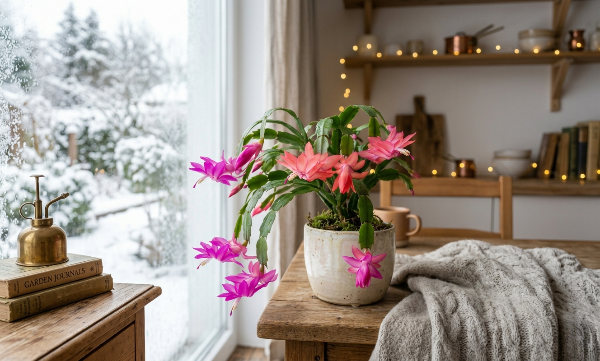
One important thing to know from the start is that Christmas Cactus comes from humid forest regions in Brazil, not from dry desert land. That background explains why it likes filtered light, careful watering, and a well-draining mix that still holds a little moisture. If you treat Christmas Cactus like a typical cactus, it usually reacts badly, but if you understand its true nature, it is much easier to grow successfully.
What Christmas Cactus Needs
The best way to care for Christmas Cactus is to think in terms of balance. It needs enough light to stay healthy, enough water to keep the stems plump, and enough rest in fall to trigger flower buds. When one part of that balance is off, the plant usually shows it through weak growth, dropping buds, or soft stems.
Christmas Cactus does not want harsh treatment. It prefers steady conditions and reacts badly to sudden changes in temperature, light, or watering. That is why a plant sitting in the right spot can bloom beautifully while another one in a stressful location struggles for months.
Light and Placement

Christmas Cactus grows best in bright, indirect light. An east-facing window is often ideal, and a position a few feet away from a south-facing window can also work if the light is softened by curtains. Too much direct sun can burn the stems, while too little light can keep the plant from blooming well.
Placement matters more than many people realize. Christmas Cactus can drop buds if it is moved around too much once flowering begins, so choose a stable spot early and try to leave it there. A room with consistent light and no hot draft from heaters or vents usually gives the best results.
Watering Christmas Cactus
Watering is the part that most often decides whether Christmas Cactus thrives or struggles. The plant likes its soil to dry slightly between waterings, but it should never be allowed to stay bone dry for too long. A simple rule is to check the top 1 to 2 inches of soil with your finger and water only when that layer feels dry.
When you water Christmas Cactus, do it thoroughly so the entire root ball gets moisture. Let water run through the drainage holes, then empty the saucer so the plant does not sit in excess water. That one habit can prevent a lot of problems, including root rot and stress from soggy soil.
Seasonal watering also matters. During spring and summer, the plant grows more actively and may need water more often. In fall and winter, it usually needs less because growth slows and flowering begins. If you water on a fixed schedule without checking the soil, you can easily overwater Christmas Cactus during the colder months.
Soil and Pot Choice
Christmas Cactus needs a loose, airy, well-draining mix. Regular dense potting soil can hold too much water, so it is better to mix in perlite, orchid bark, or another coarse ingredient that improves airflow. The roots of Christmas Cactus need both moisture and oxygen, and heavy soil blocks that balance.
Pot choice is just as important. Choose a pot with drainage holes, because standing water at the bottom can quickly damage the roots. A pot that is only slightly larger than the root ball is usually best, since a very large pot keeps the soil wet for too long.
If you are comparing soil options for your indoor collection, best soil for indoor plants is a useful internal link to place naturally in this paragraph. It helps readers understand why Christmas Cactus needs a different mix from many other houseplants.
Humidity and Temperature
Christmas Cactus appreciates moderate humidity, which is one reason it often does better in a typical home than many people expect. Dry indoor air, especially during winter heating season, can make the stems look less full and can interfere with bud formation. A pebble tray or a nearby humidifier can help if your home is very dry.
Temperature should stay steady and moderate. During normal growth, 65 to 75 degrees F, 18 to 24 degrees C, is a comfortable range. Cooler nights in fall can help Christmas Cactus set buds, but sudden swings from cold to warm can stress the plant and cause problems.
How to Get Blooms
Getting Christmas Cactus to bloom again is often the main goal for plant owners. The plant needs a period of cooler nights, longer darkness, and less disturbance in the weeks before blooming. If those conditions are met, flower buds usually begin to form along the stem tips.
Once buds appear, avoid moving Christmas Cactus from one room to another. Even small changes in light or temperature can cause bud drop. Keep watering consistent too, because drying out too much or staying too wet can interrupt the bloom cycle.
A light feeding schedule during spring and summer can help support healthy growth, but do not overdo fertilizer in the fall. Too much feeding late in the year can push leaf growth instead of flowers. Christmas Cactus blooms best when it feels stable, not overpampered.
Propagation and Repotting
Christmas Cactus is easy to propagate from stem cuttings. Take a healthy segment with a few joints, let it dry a little, then place it into a lightly moist mix. Roots usually form without much trouble, which makes it an easy plant to share with friends or family.
Repotting should not be done too often. Christmas Cactus often blooms better when slightly root bound, so only repot when the roots are crowded, the soil has broken down, or drainage has become poor. Spring is usually the safest time to repot because the plant can recover during active growth.

Common Mistakes to Avoid
A lot of Christmas Cactus problems come from a handful of repeated mistakes. These are the most common ones to watch for.
- Watering too often, which keeps the roots wet and can lead to root rot.
- Letting the plant dry out too much for long periods, which causes wrinkled stems and bud loss.
- Placing Christmas Cactus in strong direct sun, which can burn the segments.
- Using heavy soil that stays wet instead of a loose, airy potting mix.
- Moving the plant too much after buds form, which can make the flowers fall off.
- Fertilizing heavily in the fall, which can reduce blooming.
If a plant starts declining from wet roots, root rot treatment is a natural internal link to place in this section. It connects directly to the most common watering mistake and helps readers find a fix.
Signs of Overwatering
Overwatering is one of the most common reasons Christmas Cactus fails. The stems may become soft, yellowish, or limp, and the pot may feel heavy long after watering. In bad cases, the soil smells stale and the roots begin to rot.
If this happens, stop watering immediately and check the roots. Healthy roots should feel firm, while rotten roots will be dark, mushy, and weak. Move the plant into fresh, well-draining soil if needed, and give it time to recover before watering again.
Signs of Underwatering
Underwatering looks different from root damage caused by too much moisture. The stems may wrinkle, the plant may look tired, and the buds may dry up before opening. The soil often becomes hard, dry, or pulled away from the edges of the pot.
The good news is that underwatered Christmas Cactus is usually easier to save than an overwatered one. Water it thoroughly, let the pot drain, and return it to a stable spot with bright indirect light. If the roots are still healthy, the plant can often recover well.
For readers who want to compare different moisture habits in other plants, snake plant watering is another helpful internal link to use in the watering paragraph. It gives a natural contrast between a plant that needs much less water and Christmas Cactus, which likes a more balanced routine.
Seasonal Care Routine
Christmas Cactus follows a seasonal rhythm, and this is one of the most important things to understand. In spring and summer, focus on bright light, regular watering, and light feeding. In fall, start preparing the plant for blooming by reducing fertilizer and keeping the light and temperature more stable.
Winter is usually the flowering season, so Christmas Cactus needs calm conditions. Do not move it around too much, and do not let it dry out completely. If the plant gets the right signals in fall, winter bloom time can be very rewarding.
A broad indoor care reference like indoor plant care guide fits well in this part of the article because it helps readers connect Christmas Cactus care with general houseplant routines.
Pests and Plant Health
Christmas Cactus is fairly resilient, but it can still get pests when stressed. Mealybugs and spider mites are common problems, especially if the plant is dry or crowded. Checking the stem joints and lower sides of the segments from time to time can help you catch issues early.
Healthy plants are usually less attractive to pests. Good light, proper watering, and clean soil all help keep Christmas Cactus strong. If you see sticky residue, white cottony spots, or unusual webbing, isolate the plant quickly before the problem spreads.
When Buds Fall Off

Bud drop is one of the most frustrating Christmas Cactus problems because the plant can look healthy, then suddenly lose all its buds. This usually happens because of a sudden move, a temperature swing, dry air, or inconsistent watering. Even a draft from a window or heater can be enough to upset the plant.
The best prevention is stability. Once buds begin to form, keep Christmas Cactus in the same location, keep the soil evenly moist, and avoid major changes in light or temperature. A calm environment usually gives the best bloom results.
Holiday Plant Comparison
Christmas Cactus is often grown alongside other seasonal plants, but it has its own personality. Compared with poinsettia, it usually lives longer and can bloom again in future years instead of being treated like a short-term display plant. That makes it a better long-term choice for people who enjoy caring for houseplants.
If you already grow holiday plants, a related article like poinsettia plant care can be linked naturally in this section. It gives readers another seasonal plant guide to explore while keeping the topic relevant and useful.
FAQs
How often should I water Christmas Cactus?
Water when the top 1 to 2 inches of soil feel dry. During active growth, this may happen more often, while in winter the plant usually needs less water.
Why is my Christmas Cactus not blooming?
The most common reason is not getting enough cool nights and long darkness in fall. Too much fertilizer, too much movement, or the wrong light can also affect flowering.
Can Christmas Cactus grow in low light?
It can survive for a while in lower light, but it will not bloom well there. Bright, indirect light is much better for healthy growth.
Is Christmas Cactus safe for pets?
It is generally considered non-toxic, but chewing any plant can still cause mild stomach upset. ASPCA guidance is a good reference for pet safety.
When should I repot Christmas Cactus?
Repot in spring if the plant is root bound or the soil has broken down. It often blooms better when slightly snug in the pot.
Why do buds fall off Christmas Cactus?
Bud drop often occurs due to sudden temperature changes, plant movement, overwatering, or very dry indoor air. Keeping conditions stable helps prevent it.
Can I keep Christmas Cactus outdoors?
Only in frost-free conditions with mild temperatures and filtered light. In most homes, Christmas Cactus does best indoors.
Conclusion
Christmas Cactus is a beautiful and rewarding houseplant that gives back a lot when you understand its simple needs. With bright indirect light, careful watering, a light potting mix, and a little seasonal attention, it can bloom year after year and stay healthy for a long time.
The best thing about Christmas Cactus is that it does not need complicated care, just consistent care. If you keep the soil from staying too wet, protect it from harsh sun, and let it rest before blooming season, you will usually get a strong plant with lovely flowers.
Happy planting!