
After years of collecting houseplants, I’ve learned that there’s something magical about discovering a plant that makes your guests stop and stare. While pothos and snake plants are wonderful, sometimes you want something that sparks conversation and adds genuine personality to your space.
From my experience visiting plant shops across the country, I’ve encountered some truly spectacular specimens that most people have never seen. Today, I’m sharing my top 7 unique indoor plants that will transform your home from ordinary to extraordinary. These aren’t your typical houseplants – they’re conversation starters, living art pieces, and surprisingly manageable additions to any plant collection.
The Most Extraordinary Indoor Plants You’ve Never Heard Of
1. Lithops (Living Stones)
These fascinating succulents look exactly like colorful pebbles scattered across your windowsill. One mistake I made early on was overwatering them – they literally need water only a few times per year! Native to South Africa, lithops have evolved to mimic stones as camouflage from animals.
What makes them truly unique is their growth pattern. They shed their outer leaves annually, revealing fresh new “stones” underneath. During flowering season, bright yellow or white daisy-like blooms emerge from between the leaves, creating an almost surreal sight.
2. Begonia Maculata (Polka Dot Begonia)
This Instagram-famous beauty features silver polka dots scattered across deep green, asymmetrical leaves with vibrant red undersides. The contrast is absolutely stunning, especially when backlit by morning sunlight streaming through a window.
From my experience, these begonias are surprisingly easy to care for once you understand their needs. They prefer bright, indirect light and consistent moisture without soggy soil. The delicate white flower clusters that appear throughout the growing season add another layer of elegance to an already spectacular plant.
3. Hoya Kerrii (Sweetheart Plant)
Picture a thick, succulent heart-shaped leaf sitting in a tiny pot – that’s the adorable hoya kerrii. While many people buy single-leaf cuttings as novelty gifts, the real magic happens when you find a complete plant with multiple hearts trailing from a vine.
These slow-growing beauties eventually produce clusters of waxy, star-shaped flowers that smell incredibly sweet. I’ve had mine for three years, and watching new heart-shaped leaves unfurl never gets old. They’re practically indestructible and perfect for beginners wanting something truly special.
4. Calathea White Star
While regular calatheas are becoming more common, the white star variety remains relatively rare. Its deep green leaves feature bold white stripes that radiate from the center like a starburst, with purple undersides that create stunning contrast when the leaves move throughout the day.
What sets this calathea apart is its dramatic daily movement – the leaves fold up at night and open each morning again. It’s like having a living clock in your home. They do require higher humidity, but the visual impact makes the extra care worthwhile.
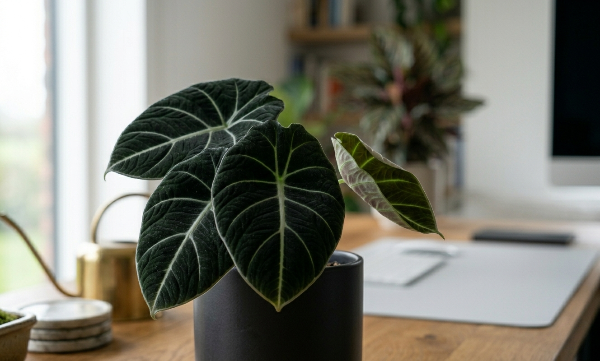
5. Alocasia Black Velvet
This compact alocasia looks like nature’s version of luxury fabric. The velvety, almost black leaves feature prominent white veining that creates an elegant, sophisticated appearance. Unlike its larger cousins, black velvet stays relatively small, making it perfect for desks or shelves.
From my experience, these plants are more forgiving than other alocasias. They prefer bright, indirect light and well-draining soil. When happy, they’ll occasionally produce new leaves that unfurl like scrolls, revealing their stunning coloration gradually.
6. Ceropegia Woodii (String of Hearts)
While trailing plants are popular, string of hearts offers something special – tiny heart-shaped leaves in silver and green that cascade from thin, purple stems. What makes this plant unique is the small tubers that develop along the vines, which you can propagate into new plants.
The delicate purple flowers that appear sporadically look like tiny lanterns. One thing I love about string of hearts is how quickly it grows – you’ll have long, flowing trails within months. It’s perfect for hanging baskets or high shelves where the hearts can dance in the breeze.
7. Oxalis Triangularis (Purple Shamrock)
This dynamic plant features deep purple, triangular leaves that fold and unfold throughout the day like tiny umbrellas. When closed, they look like sleeping butterflies; when open, they create a stunning purple carpet effect.
The delicate pink or white flowers that appear above the foliage add another dimension of beauty. What’s fascinating is how the entire plant “sleeps” at night, folding all its leaves, then wakes up each morning. It’s incredibly responsive to light changes and creates an ever-changing display throughout the day.
Care Requirements Comparison
| Plant Name | Light Requirements | Watering Frequency | Difficulty Level |
|---|---|---|---|
| Lithops | Bright, direct light | Monthly or less | Easy |
| Begonia Maculata | Bright, indirect light | Weekly | Moderate |
| Hoya Kerrii | Bright, indirect light | Bi-weekly | Easy |
| Calathea White Star | Medium, indirect light | Weekly | Moderate |
| Alocasia Black Velvet | Bright, indirect light | Weekly | Moderate |
| String of Hearts | Bright, indirect light | Bi-weekly | Easy |
| Purple Shamrock | Bright, indirect light | Weekly | Easy |
FAQs
Where can I find these unique indoor plants?
Many specialty plant shops, online retailers, and plant shows carry these varieties. I’ve had great success with local plant swaps and online plant communities where collectors trade unusual specimens. Some big box stores are starting to carry more unique varieties too.
Are these unique plants more expensive than common houseplants?
Generally yes, unique plants tend to cost more due to their rarity and specialized growing requirements. However, many of these plants propagate easily, so you can grow your collection over time. I always recommend starting with one special plant and expanding gradually.
Do unique indoor plants require special care compared to common houseplants?
Not necessarily more difficult, just different. Each plant has specific needs, but most unique varieties are quite adaptable. The key is researching each plant’s native environment and trying to replicate those conditions. From my experience, the reward far outweighs any extra effort required.
These seven unique indoor plants prove that houseplant collecting doesn’t have to be boring or predictable. Each offers something special – whether it’s dramatic foliage, interesting growth patterns, or simply the joy of owning something truly distinctive. Start with one that speaks to you, and prepare to fall in love with the wonderful world of unusual houseplants.