
You probably have a banana plant. That’s what people always say when they see mine for the first time. The fan-shaped leaves, the size, the tropical look. I’ve lost count of how many times someone’s asked “Is that a banana tree?” The truth is, Bird of Paradise Plant (Strelitzia reginae) looks so much like a banana plant that it’s genuinely confused in nurseries, home gardens, and even some garden centers. But here’s where it gets interesting: Bird of Paradise has something the banana plant doesn’t. If you get the conditions right, it produces the most spectacular, exotic flowers you’ve ever seen on a houseplant. Flowers that literally look like birds frozen mid-flight.
I bought my first Bird of Paradise five years ago expecting it to be a tall, dramatic foliage plant. That’s fine the leaves alone are stunning. But then, two years in, I finally got the lighting right, and suddenly my plant erupted into these impossible-looking orange and blue flowers. Since then, I’ve learned that getting Bird of Paradise to bloom indoors is rare but completely doable if you understand what this plant actually needs.
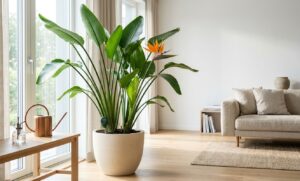
| Aspect | Details |
|---|---|
| Botanical Name | Strelitzia reginae (Orange Bird) / Strelitzia nicolai (White/Giant Bird) |
| Common Names | Bird of Paradise, Crane Flower, Strelitzia |
| Plant Family | Strelitziaceae (related to bananas, Musaceae) |
| Native Region | South Africa, subtropical coastal areas |
| Light | Very bright indirect light, 6+ hours daily (south/east/west window) |
| Water | Keep moist spring-summer, let dry slightly fall-winter |
| Humidity | 50%+ preferred, tolerates average household humidity |
| Temperature | 65-75 degrees F (18-24 degrees C), avoid below 50°F |
| Soil | Well-draining rich potting mix, good aeration needed |
| Mature Size | 4-6 feet tall (120-180 cm), 3-5 feet wide (90-150 cm) |
| Growth Rate | Moderate, faster with optimal light and warmth |
| Toxicity | Toxic to cats and dogs (mild to moderate), keep away from pets |
| Difficulty Level | Intermediate (needs space and bright light) |
| Time to Bloom | 3-5 years from maturity with ideal conditions |
| USDA Zones | 10-11 outdoors (freeze-tender below 50°F) |
Why Your Bird of Paradise Isn’t a Banana Plant (Even Though It Looks Like One)
The confusion is totally understandable. Both plants have massive, banana-shaped leaves. Both come from tropical regions. Both belong to families that are actually related botanically. But Strelitzia and Musa (bananas) are different plants with different care needs, and here’s the most important difference: Bird of Paradise gets its common name from its flowers, which genuinely look like exotic birds in flight. Bananas produce edible fruit. Bird of Paradise produces ornamental flowers that sit on long, sturdy stems like something from a bird sanctuary.
The plant names add to the confusion. “Strelitzia reginae” literally means “Strelitzia Queen” because it was named after Queen Charlotte of Mecklenburg-Strelitz. The plant was introduced to Europe in the 18th century from South Africa and became wildly popular during the Victorian era when tropical plants were status symbols. Today, it’s the official flower of Los Angeles and the national flower of Madeira.
Here’s something most people don’t know: the leaves naturally split as they mature. This isn’t damage. It’s a survival feature. In the plant’s native South African habitat, wind can tear large leaves and damage the plant. By splitting naturally, the leaf lets wind pass through without causing damage. This is why it resembles banana plants, which have the same leaf-splitting habit.
Light: The Most Important Factor for Everything
If you can only get one thing right about Bird of Paradise, make it light. This plant needs bright light. Not moderate light. Not “okay light.” Bright light that actually illuminates the space.
In my experience, insufficient light is the #1 reason Bird of Paradise doesn’t bloom indoors. The plant might survive and grow leaves, but it won’t flower without serious light exposure. A south-facing window is ideal. An east or west-facing window works if the plant sits close to it. A north-facing window simply won’t cut it for blooming, though the plant will tolerate it and stay leafy.
The good news is that Bird of Paradise actually tolerates direct sun better than most tropical houseplants. One or two hours of direct morning sun is fine and actually beneficial. Avoid intense afternoon sun in summer through a western window, which can scorch new leaves. But in winter, that same afternoon sun is welcome because it helps the plant photosynthesize with the weaker winter sun.
If you can’t provide enough natural light, grow lights are your solution. I’ve seen people successfully bloom Bird of Paradise with LED grow lights positioned above the plant. Set them on a timer for 12-14 hours daily and position them 12-18 inches above the canopy.
Pro tip: These plants are semi-dormant in winter and need less light then. But they still need bright light. Don’t move a winter Bird of Paradise into a dark corner you’ll set blooming back months.
Watering: Straightforward Once You Understand the Pattern

Here’s what confuses people about watering Bird of Paradise: it’s drought-tolerant in its native habitat but performs better with consistent moisture in your home. These aren’t contradictory statements it just means you don’t have to be perfect with watering, but the plant does best when you’re close to consistent.
Spring through fall (active growing season), water when the top 1-2 inches of soil feel dry. Stick your finger in and check. In my experience, that means watering every 5-7 days depending on pot size, season, and your home’s temperature. In fall and winter, reduce to every 10-14 days and let the soil dry out more between waterings.
The key is drainage. Use a pot with excellent drainage holes. If water sits on top of the soil after watering, either the pot needs more holes or the soil is too dense. Well-draining soil plus proper watering habits equals a happy plant.
Interestingly, slightly drying out the plant in winter can actually encourage blooming. Some growers intentionally reduce water in late winter to stress the plant slightly, which triggers it to produce flowers. Sounds weird, but it works.
Never leave the pot sitting in standing water. Empty saucers after watering. Wet feet lead to root rot, which kills this plant.
Read more: overwatering vs underwatering
Humidity: Not Critical, But Appreciated
Bird of Paradise tolerates average household humidity just fine. Unlike tropical ferns or Calatheas that demand 60-70% humidity, Bird of Paradise is more forgiving. It originally comes from coastal South Africa which has moderate humidity, not rainforest humidity.
That said, the plant does look better and grows faster with 50%+ humidity. I mist mine occasionally in winter when heating dries the air, but I don’t do it obsessively.
If you want to boost humidity without effort, group your Bird of Paradise with other plants or place the pot on a pebble tray with water. Just don’t let the pot touch the water directly, that invites root rot.
Bathroom humidity is actually beneficial. I know people who keep theirs on a bright bathroom shelf and get fantastic leaf growth because of the humidity from showers.
Temperature: This Plant Hates Cold
Bird of Paradise comes from subtropical South Africa where temperatures stay warm year-round. It absolutely despises cold.
Keep it between 65-75 degrees F (18-24 degrees C) during the growing season. In winter, temperatures can drop slightly to 60 degrees F, but below that and you’re asking for trouble. Never expose it to temperatures below 50 degrees F. Even brief cold exposure can damage leaves and stress the plant significantly.
Keep it away from heating vents, air conditioning vents, cold drafty windows, and anywhere with temperature swings. Cold shock causes leaf damage that doesn’t reverse. Warm is good. Stable and warm is better.
If you live in a cold climate and want to move your Bird of Paradise outside for summer, do it gradually. Acclimate the plant to outdoor light over a week or so. Don’t suddenly move it from an indoor window to full blazing sun, the leaves will sunburn.
Soil and Repotting: The Space Question
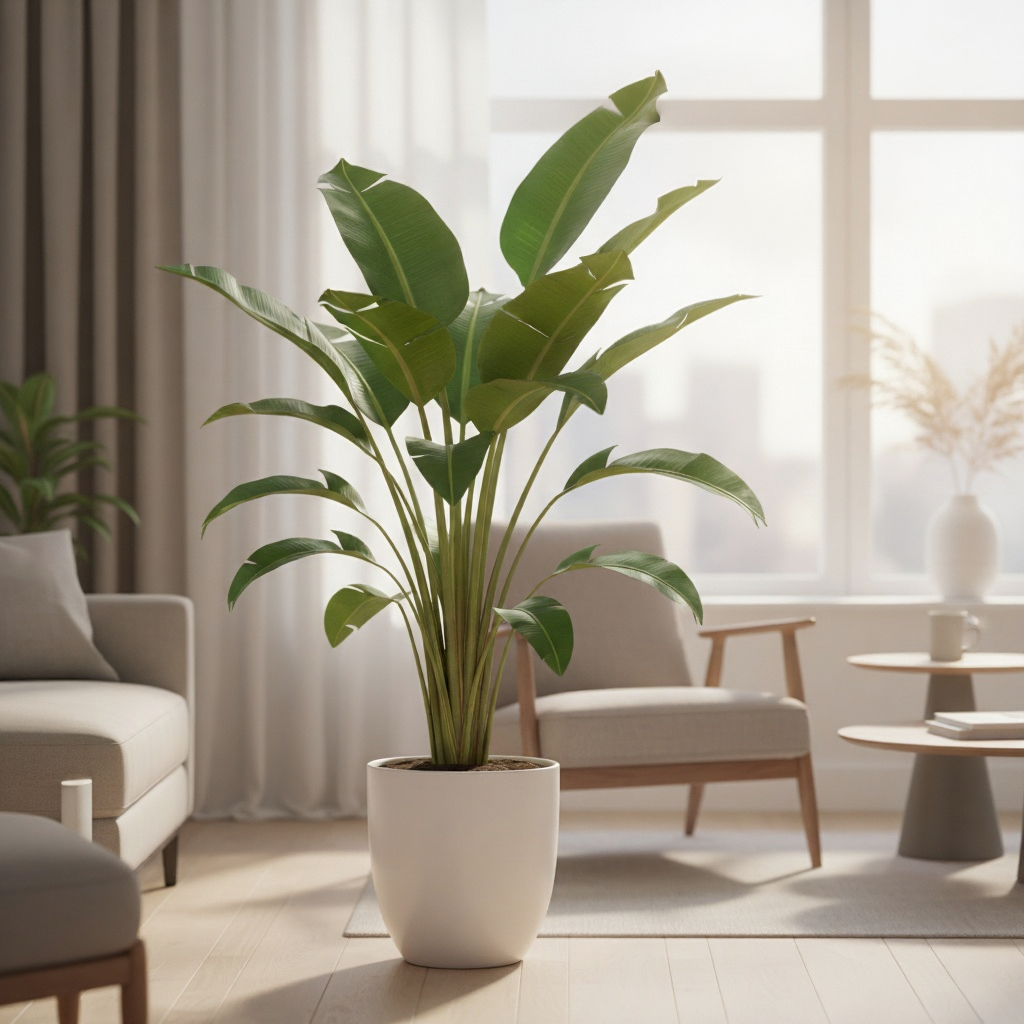
Bird of Paradise is a big plant. It gets 4-6 feet tall and 3-5 feet wide when mature. This means you need to think about space and repotting upfront.
Use a well-draining, rich potting mix. A good recipe: 2 parts potting soil, 1 part perlite or orchid bark. The plant needs good aeration around the roots but also some nutrient-rich organic matter. Standard potting soil works, but amending it with perlite prevents compaction.
Repot every 2-3 years in spring. This plant isn’t root-bound-sensitive like some plants are. It actually grows better with adequate room. When you repot, use a pot only 1-2 inches larger than the current one. Too much extra soil holds moisture and invites root issues.
As the plant grows, you may need larger pots. A 5-year-old mature Bird of Paradise might be in a 12-14 inch pot. That’s a lot of soil to manage. Make sure you have space for it or you’re prepared to repot every few years.
Pro tip: Heavy pots look better than light plastic, but Bird of Paradise gets massive and heavy potted soil is hard to move. A large plastic pot with a decorative pot-cover is a practical solution.
Fertilizing: Feeding for Growth and Blooms
During spring and summer, fertilize every 2-3 weeks with a balanced fertilizer diluted to half strength. Use something like 10-10-10 or 5-5-5. The plant is a heavy feeder and responds to consistent nutrition with better growth and more blooming potential.
In fall and winter, reduce to monthly feeding or stop completely. The plant’s growth slows naturally and it doesn’t need as much nutrition.
Some growers use a slightly higher phosphorus formula during late winter (like 5-10-5) to encourage blooming. The extra phosphorus supports flower production.
Don’t over-fertilize. A buildup of salts from too much fertilizer can damage roots and cause brown leaf tips. Stick to the schedule and you’ll be fine.
Encouraging Blooming: The Reality Check
Let me be honest: indoor Bird of Paradise blooming is rare. It happens, but it requires specific conditions maintained consistently for years.
The plant needs to be mature (usually 3-5 years from planting), have very bright light (preferably 6+ hours daily), warm consistent temperatures, and the right balance of nutrients. Then, sometimes, it still doesn’t bloom. That’s just the plant.
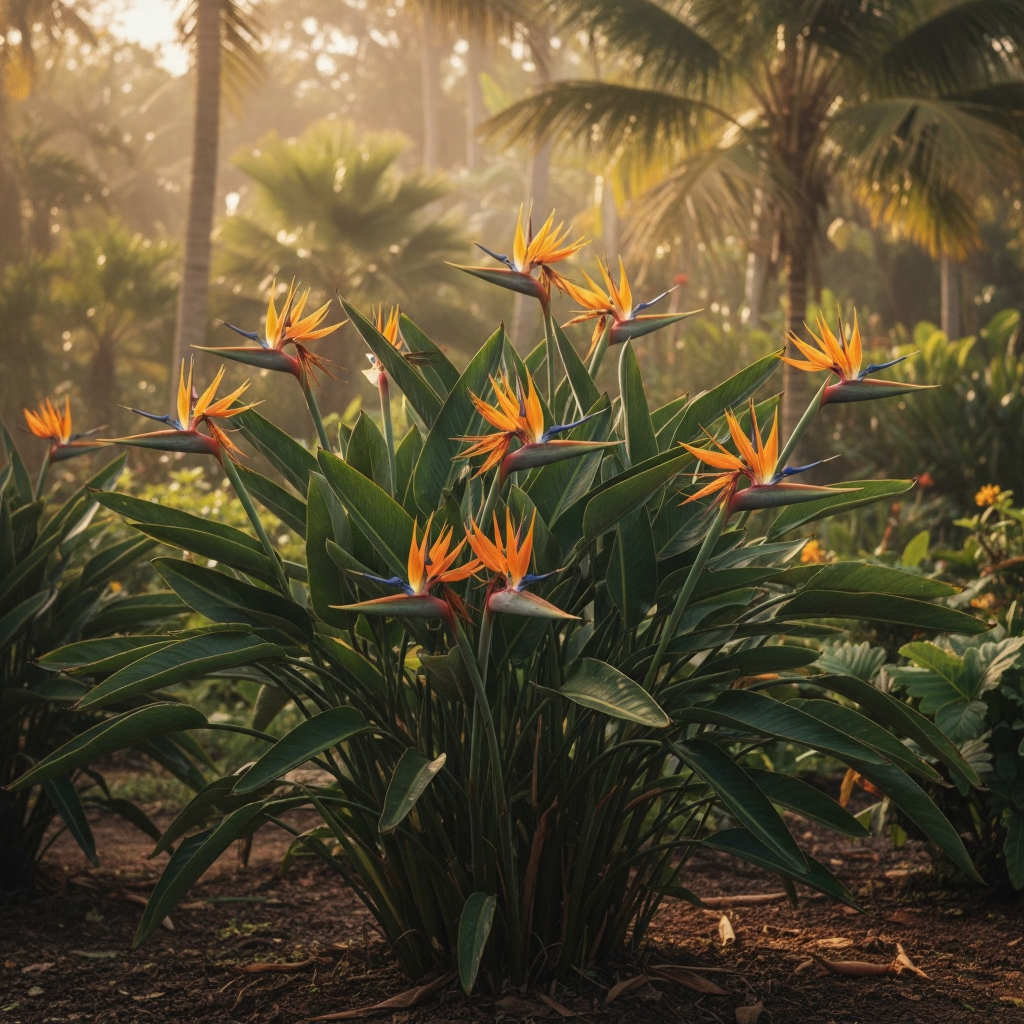
The flowers are worth the wait though. They emerge on long, sturdy stems with a boat-shaped green bract (called a spathe) and the actual flower is this impossible-looking structure with orange petals and a blue tongue-like stamen. Each flower lasts weeks.
To maximize blooming potential: give it the brightest light possible, fertilize consistently during growing season, keep temperatures warm, and be patient. Some growers report that a brief dry period in late winter stimulates blooming, but this is anecdotal.
Read more: Best Grow Lights for Indoor Plants
Leaf Splitting: Don’t Panic
As your Bird of Paradise grows, you’ll notice the older leaves develop natural splits or tears along the edges. This isn’t disease. It’s not damage. It’s just what happens.
This is a completely normal feature of the plant’s growth pattern. The large leaves naturally split to allow air and wind to pass through. In nature, this prevents tearing in strong wind. In your home, it’s just how the plant grows.
Don’t try to “fix” split leaves by taping them or treating them. Leave them alone. Remove only dead or severely damaged leaves.
Common Problems and Their Fixes
- Yellow leaves: Usually overwatering or insufficient light. Check drainage holes are clear. Let soil dry out slightly more between waterings. Move to brighter location.
- Brown leaf tips: Low humidity combined with dry air. Increase misting or use a pebble tray. Also check if you’re using cold water, use room temperature water instead.
- Slow or no growth: Insufficient light. This is the most common problem. Move plant to brightest location available or add grow lights.
- No flowers after 3+ years: Light is still likely too low. Also check temperature, if it’s consistently below 65 degrees F, blooming won’t happen.
- Leaf drop: Cold exposure or sudden temperature change. Move away from drafts and cold windows. Ensure temps stay above 60 degrees F.
- Spider mites: Less common but possible in warm, dry conditions. Look for fine webbing on undersides of leaves. Spray with insecticidal soap or neem oil every 3 days for two weeks.
Read more: How to Get Rid of Spider Mites on Indoor Plants (2026)
Important: Pet Safety Warning
Bird of Paradise is toxic to cats and dogs. The toxins are primarily concentrated in seeds and fruit (which rarely develop indoors), but the leaves also contain compounds that cause gastrointestinal upset if ingested.
If your cat or dog eats foliage, they may experience drooling, nausea, vomiting, or diarrhea. Oral irritation is common, they may paw at their mouth. Symptoms appear within 20-30 minutes.
The good news: indoor Bird of Paradise rarely blooms, which means rarely produces toxic fruit and seeds. The leaves contain milder toxins that usually cause only mild stomach upset, not serious poisoning.
Still, if you have curious pets or small children, keep the plant elevated and out of reach. If you suspect ingestion, contact your vet immediately.
4 Mistakes That Stop Bird of Paradise from Thriving
Mistake 1: Placing it in low light and expecting growth. This plant needs bright light to thrive. Low light means slow growth and zero blooming. Non-negotiable.
Mistake 2: Overwatering because you think tropical means wet. Bird of Paradise actually tolerates dryness. Let soil dry between waterings. Wet soil causes root rot.
Mistake 3: Keeping it in cold conditions. This plant hates cold. Below 50 degrees F and you’re damaging it. Keep it warm.
Mistake 4: Repotting too frequently or using poorly draining soil. Root issues are rare if you use good soil and repot every few years. Overrepotting or using dense soil invites problems.
Varieties Worth Growing
- Strelitzia reginae (Orange Bird of Paradise): The classic. Orange and blue flowers. This is what most people grow indoors. Reaches 4-6 feet tall.
- Strelitzia nicolai (Giant Bird of Paradise): Larger plant, can reach 8-10 feet indoors. White flowers. Needs more space. Equally beautiful but dramatically larger.
- Strelitzia alba (White Bird of Paradise): Rare in cultivation. White flowers. Harder to find but gorgeous if you can locate one.
- Strelitzia juncea (Slender Bird of Paradise): Smaller growing, narrow leaves. Easier to manage in smaller spaces.
For most people, Strelitzia reginae is the right choice. It’s the most commonly available and stays a more manageable size indoors.
Should You Grow a Bird of Paradise?
Yes, if you have space, bright light, and patience. No, if you live in a dark apartment or have limited room.
This plant is a long-term commitment. It takes years to mature. It needs space to grow. It demands bright light. But if you can provide those things, it’s one of the most spectacular houseplants you can own. The foliage alone is worth growing. The flowers, when they come, feel like a victory.
It’s also relatively low-maintenance compared to fussy tropical plants. Watering is straightforward. Pest problems are rare. It’s more forgiving than people think.
If you want an architectural houseplant that looks tropical without needing constant humidity and fussing, Bird of Paradise delivers.
Frequently Asked Questions
How long until my Bird of Paradise blooms?
Usually 3-5 years from planting, and only if light is very bright and temperatures stay warm. Some plants bloom faster, some never do indoors. It depends on conditions.
Why does my plant have leaves that look split or torn?
This is natural. The leaves split as they grow. It’s not damage it’s the plant’s normal growth pattern. Leave them alone.
Can I keep a Bird of Paradise outside in winter?
Only if you live in USDA zones 10-11 where temperatures don’t drop below 50 degrees F. In cold climates, bring it indoors before first frost.
Is Bird of Paradise toxic to cats and dogs?
Yes, it’s mildly to moderately toxic. Ingestion causes gastrointestinal upset. Indoor plants rarely produce flowers or seeds, which are the most toxic parts. Still, keep it away from pets if possible.
Why isn’t my plant growing?
Light is usually the culprit. These plants need bright light to thrive. A north-facing window won’t provide enough. Move it to a brighter location or add grow lights.
How much water does a Bird of Paradise need?
Water when top 1-2 inches of soil dry out. Usually every 5-7 days in spring-summer, every 10-14 days in fall-winter. Depends on pot size, temperature, and humidity.
Can I propagate Bird of Paradise from cuttings?
No, it’s very difficult. Propagation is from seeds, which is slow and requires stratification. It’s easier to buy an established plant than propagate from cuttings.
What’s the difference between Strelitzia reginae and Strelitzia nicolai?
Reginae is smaller (4-6 feet), has orange-blue flowers, and is more common indoors. Nicolai is giant (8-10+ feet), has white flowers, and needs much more space.