
Rainforests are among the most biologically rich ecosystems on Earth. Although they cover less than 7% of the planet’s surface, they are home to more than half of the world’s plant species. To truly understand what type of plants are in the rainforest, it helps to look at how these plants are organized and how they survive in such a dense, competitive environment.
Rainforest plants are not random, they are structured in layers, each with unique plant types adapted to light, moisture, and space.
Understanding the Rainforest Environment
Rainforests are defined by:
- High rainfall throughout the year
- Warm temperatures
- Dense vegetation
- Limited sunlight at ground level
Because of these conditions, plants have developed specialized features to survive and thrive.
Rainforest Plant Layers Explained
Rainforest plants grow in four main vertical layers, and each layer supports different types of plants.
1. Emergent Layer Plants – The Tallest Giants
The emergent layer is the highest part of the rainforest. Only the tallest trees reach this level.
Types of plants found here:
- Kapok trees
- Brazil nut trees
- Giant hardwood trees
Key characteristics:
- Extremely tall trunks (up to 200 feet)
- Small leaves to reduce water loss
- Strong trunks to withstand wind
These plants receive full sunlight and play a major role in carbon storage.
2. Canopy Layer Plants – The Heart of the Rainforest
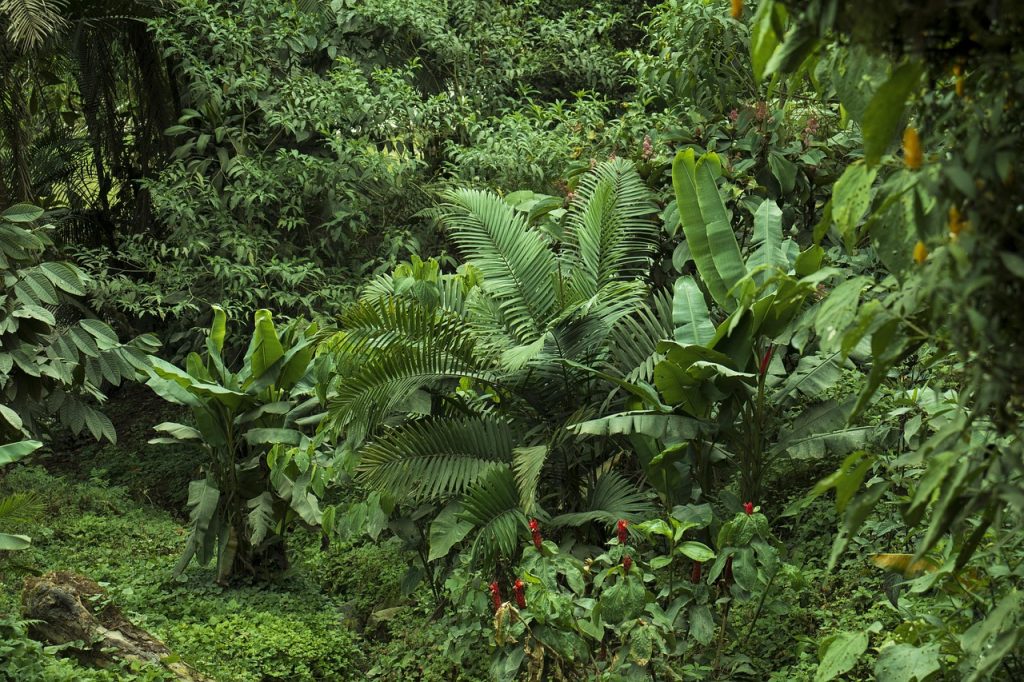
The canopy forms a thick green roof over the forest and contains the largest variety of rainforest plants.
Common plant types:
- Broadleaf evergreen trees
- Flowering trees
- Fruit-bearing trees
Why is this layer important:
- Captures most sunlight
- Produces the majority of food
- Supports countless animal species
Most rainforest photos show this dense canopy layer.
3. Understory Plants – Life in Low Light
The understory lies beneath the canopy and receives limited sunlight.
Typical understory plants:
- Small trees
- Shrubs
- Ferns
- Young canopy trees
Special adaptations:
- Large, dark green leaves
- Slow growth rates
- Ability to thrive in shade
Many popular houseplants originally come from this layer.
4. Forest Floor Plants – Survival in the Shadows
The forest floor receives less than 2% of sunlight.
Types of plants found here:
- Mosses
- Fungi
- Seedlings
- Ground-cover plants
Key traits:
- Rapid nutrient absorption
- Short life cycles
- Dependence on decaying matter
These plants play a crucial role in nutrient recycling.
Epiphytes – Plants That Grow on Other Plants
One of the most fascinating groups of plants in the rainforest is the epiphytes.
Examples include:
- Orchids
- Bromeliads
- Air plants
Epiphytes:
- Grow on trees, not in soil
- Absorb moisture from air and rain
- Do not harm host plants
Lianas – The Climbers of the Rainforest
Lianas are woody vines that climb trees to reach sunlight.
Why they matter:
- Connect different canopy levels
- Provide pathways for animals
- Compete with trees for light
Examples include:
- Rattan
- Tropical vines
Types of Rainforest Plants by Function
Instead of species names, rainforest plants can also be grouped by function.
Structural plants
- Tall trees
- Woody vines
Decorative plants
- Orchids
- Flowering understory plants
Support plants
- Mosses
- Ferns
This functional diversity keeps the rainforest stable.
Why Rainforest Plants Are So Diverse
Several factors contribute to high plant diversity:
- Constant warm climate
- Abundant rainfall
- Long evolutionary history
- Intense competition for light
This diversity is the result of millions of years of adaptation.
How Rainforest Plants Differ From Other Forest Plants
| Feature | Rainforest Plants | Temperate Forest Plants |
|---|---|---|
| Leaf size | Large | Medium to small |
| Evergreen | Mostly yes | Often seasonal |
| Light adaptation | Extreme | Moderate |
| Growth speed | Fast | Slower |
Can Rainforest Plants Be Grown at Home?
Some rainforest plants adapt well to indoor environments.
Popular examples:
- Ferns
- Philodendrons
- Calatheas
- Peace lilies
They prefer:
- Indirect light
- High humidity
- Consistent moisture
Why Rainforest Plants Are Important to Earth
Rainforest plants:
- Produce oxygen
- Store carbon
- Regulate climate
- Support global biodiversity
Without them, Earth’s ecosystems would collapse.
Threats to Rainforest Plant Life
Major threats include:
- Deforestation
- Climate change
- Illegal logging
- Agriculture expansion
Protecting rainforest plants helps preserve life worldwide.
Final Thoughts
Understanding what type of plants are in the rainforest reveals how complex and perfectly balanced this ecosystem is. From towering emergent trees to shade-loving ferns and air plants, every plant plays a role. Rainforest plant life is not just diverse, it is essential for the health of the planet and the future of life on Earth.