
A single compound called azadirachtin, found in the seeds of the neem tree (Azadirachta indica), disrupts the hormonal systems of over 200 species of plant-damaging insects without meaningfully harming beneficial insects like bees and earthworms at standard application rates. Neem oil for plants has earned its reputation as one of the most versatile organic pest control tools available to home gardeners because it works simultaneously as an insecticide, a miticide, and a fungicide, and because the active compounds break down in UV light within 3 to 22 days, leaving no persistent residue in soil or on leaf surfaces.
Understanding how to use neem oil for plants correctly the right concentration, the right timing, and the right application technique is what separates effective treatments from ineffective ones. Most houseplant failures with neem oil come from incorrect dilution, applying in direct sun, or expecting one treatment to solve a multi-generational pest problem. This guide covers all of it.
| Aspect | Details |
|---|---|
| Source | Seeds of Azadirachta indica (neem tree) |
| Active Compound | Azadirachtin (primary), plus limonoids |
| Mode of Action | Disrupts insect hormonal and reproductive systems |
| Type | Organic, OMRI-listed insecticide/fungicide/miticide |
| Pests Controlled | Spider mites, aphids, fungus gnats, scale, mealybugs, whiteflies, thrips |
| Diseases Controlled | Powdery mildew, black spot, leaf spot, botrytis |
| Standard Mix Ratio | 1-2 tsp neem oil + ½ tsp dish soap + 1 quart (1 L) warm water |
| Application Frequency | Every 7-14 days |
| Best Time to Apply | Early morning or evening (never in direct sun) |
| Safe When Dry | Yes, residue is non-toxic to humans and pets after drying |
| USDA Organic Approved | Yes (cold-pressed neem oil) |
How Neem Oil for Plants Actually Works
Most pesticides kill insects on contact or through ingestion. Neem oil for plants works differently it disrupts the biological systems that insects depend on to survive and reproduce. Azadirachtin, the primary active compound in cold-pressed neem oil, binds to insect hormone receptors and interferes with molting, feeding behavior, egg-laying, and larval development. An insect exposed to neem oil does not immediately die. Instead, it stops feeding, cannot complete its molt from larva to adult, and loses the ability to reproduce. The pest population collapses over 7 to 21 days as existing adults die off and new generations fail to develop.
This mechanism is why neem oil for plants requires repeated applications spaced 7 to 14 days apart rather than a single spray. Each application targets the current stage of the infestation, while subsequent applications catch the next generation before it matures. Neem oil also works as a contact killer on soft-bodied insects like spider mites, aphids, and mealybugs when sprayed directly, providing faster knockdown alongside the hormonal disruption effect.
The fungicidal action works separately neem oil forms a physical barrier on leaf surfaces that prevents fungal spores from germinating, making it effective against powdery mildew and leaf spot diseases when applied preventively or at early infection stages.
Two Types of Neem Oil for Plants: Which One to Buy
Not all neem oil products are the same, and the difference matters for efficacy.
| Type | Description | Azadirachtin Content | Best For | Examples |
|---|---|---|---|---|
| Cold-Pressed Neem Oil (100%) | Raw extracted oil, yellow-amber color, strong smell | High (3,000-5,000 ppm) | Maximum pest control, DIY mixing | Neem Bliss, Southern Ag, Pure Organic |
| Clarified Hydrophobic Neem Extract | Processed azadirachtin removed or reduced | Very low | Fungal issues, as leaf shine, milder use | Many “Neem Oil Spray” RTU products |
| Ready-to-Use (RTU) Sprays | Pre-diluted, sometimes clarified extract | Varies | Convenience, minor infestations | Natria, Safer Brand Ready-to-Spray |
Buy cold-pressed, 100% pure neem oil for the most effective treatment of pest infestations. The strong smell and yellow color indicate high azadirachtin content. Avoid any product labeled “clarified hydrophobic neem extract” if pest control is your goal most of the active compound has been removed during processing.
Brands widely available in the US at Home Depot, Lowe’s, and Amazon include Southern Ag Triple Action Neem Oil, Neem Bliss 100% Cold-Pressed, and Bonide Neem Oil Concentrate.
How to Mix Neem Oil for Plants: The Correct Recipe
Neem oil does not dissolve in water on its own. An emulsifier typically a few drops of liquid dish soap or insecticidal soap breaks the oil into fine droplets that suspend in water and adhere to leaf surfaces.
Standard Spray Mix (Most Houseplants and Garden Plants)
1 quart (1 liter) warm water
1 teaspoon cold-pressed neem oil (100%)
½ teaspoon liquid dish soap or insecticidal soap
Preparation:
- Fill a spray bottle with warm water (not hot – heat degrades azadirachtin).
- Add the dish soap first and swirl to mix.
- Add the neem oil and shake vigorously for 30 seconds.
- Use immediately neem oil emulsions degrade within 8 hours.
Concentrated Mix (Severe Infestations)
1 quart (1 liter) warm water
2 teaspoons cold-pressed neem oil
½ teaspoon liquid dish soap
Do not exceed 2 teaspoons per quart. Higher concentrations do not improve efficacy and increase the risk of leaf burn, particularly on plants with thin or sensitive foliage.
Soil Drench Mix (Fungus Gnats Larvae)
1 gallon (3.8 liters) warm water
2 tablespoons cold-pressed neem oil
1 teaspoon liquid dish soap
Pour this directly into the soil around the base of the plant to kill fungus gnat larvae living in the top 2 to 3 inches of potting mix. Apply once per week for 3 to 4 weeks to break the full larval cycle. For a complete guide to eliminating fungus gnats including the soil conditions that cause infestations, our guide on how to get rid of fungus gnats covers the full treatment protocol.
When and How to Apply Neem Oil for Plants
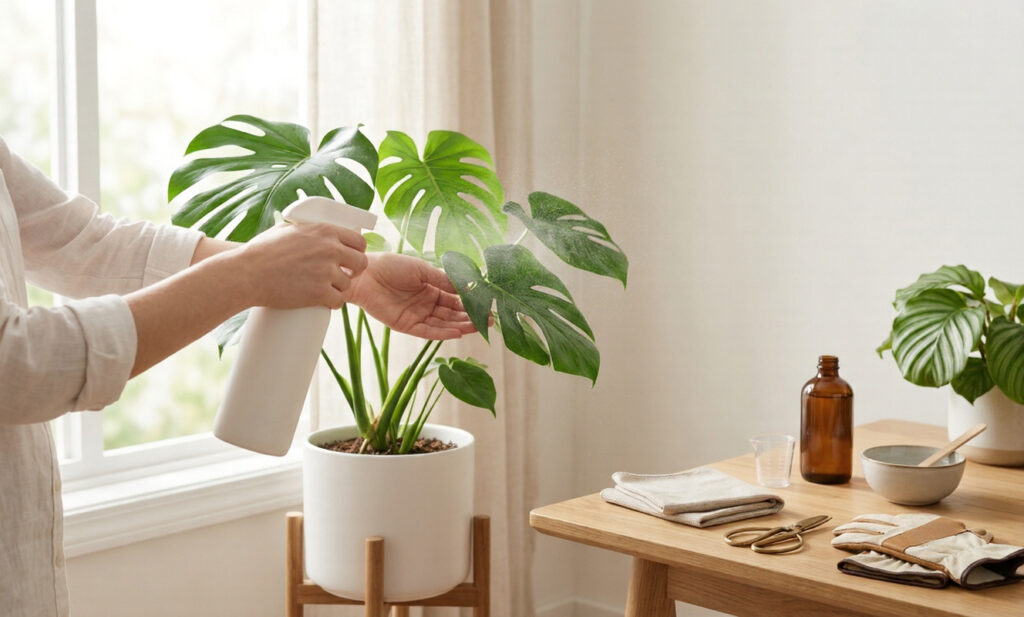
Timing: Always apply neem oil for plants in the early morning or evening when temperatures are below 90 degrees F (32 degrees C) and the plant is not in direct sunlight. Applying in midday sun causes two problems: the spray evaporates before being absorbed into the leaf surface, and the oil-water mixture on leaves can focus light in a way that causes burn spots on sensitive foliage.
Application method:
- Test on one or two leaves first if treating a plant for the first time. Wait 24 hours and check for burning or discoloration before treating the whole plant.
- Spray the entire plant including the undersides of leaves, where most pest infestations begin and concentrate.
- Apply until leaves are thoroughly wet but not dripping.
- Do not rinse the plant after application the residue must remain on the leaf surface to be effective.
- Repeat every 7 days for active infestations. Extend to every 14 days once the infestation is cleared, as a preventive maintenance spray.
For soil drench application: Water the soil surface first, then apply the drench mixture. Dry soil will cause the solution to run along the pot walls rather than being absorbed evenly through the root zone.
Neem Oil for Plants: Pest-by-Pest Reference Guide
| Pest | Application Type | Mix Strength | Frequency | Expected Results |
|---|---|---|---|---|
| Spider mites | Foliar spray | Standard | Every 7 days | Population reduction visible in 2-3 weeks |
| Aphids | Foliar spray | Standard | Every 7 days | Fast knockdown + prevention of return |
| Fungus gnats (adults) | Foliar spray | Standard | Every 7-10 days | Reduces adults; pair with soil drench |
| Fungus gnats (larvae) | Soil drench | Drench mix | Weekly for 4 weeks | Kills larvae in soil, breaks cycle |
| Mealybugs | Foliar spray + Q-tip application | Standard | Every 7 days | Slower; pair with isopropyl alcohol spot treatment |
| Scale | Foliar spray | Concentrated | Every 7 days | Softens shell, kills crawlers |
| Whiteflies | Foliar spray | Standard | Every 7 days | Reduces egg-laying and adult populations |
| Thrips | Foliar spray | Standard | Every 7 days | Disrupts larval development |
| Powdery mildew | Foliar spray | Standard | Every 10-14 days | Preventive and early-stage treatment |
For the complete treatment protocol for spider mites specifically including how to identify early infestations, remove eggs from leaf surfaces, and prevent reinfestation our guide on how to get rid of spider mites covers every stage of treatment alongside neem oil as part of a full response plan.
Using Neem Oil for Plants Preventively
One of the most underused applications of neem oil for plants is prevention rather than active treatment. A monthly spray with standard-strength neem oil solution during the growing season makes plant surfaces hostile to pest eggs and fungal spores before any visible infestation begins. This is particularly effective for plants that have had pest problems before, plants grouped closely together (where mites and aphids spread quickly), and any plant that has recently been moved or repotted.
Preventive application works best on a consistent schedule rather than as an occasional response to symptoms. Apply once per month during spring and summer to all houseplants regardless of whether you see active pests. By the time you see spider mites, for example, the colony has been developing for several weeks and is already well-established. Monthly preventive neem oil application catches the problem before it reaches a visible threshold.
Is Neem Oil for Plants Safe for Pets and Humans?
Neem oil is generally considered low-toxicity for mammals when used as directed. The EPA classifies cold-pressed neem oil as a biochemical pesticide with minimal risk to humans and non-target organisms at normal application concentrations. Residue on leaf surfaces is essentially non-toxic once dry, which typically takes 1 to 2 hours after application.
- For cats and dogs: Keep pets away from treated plants until the spray has fully dried typically 1 to 2 hours. The wet spray can cause mild gastrointestinal upset if licked in quantity. Once dry, neem oil residue on leaves poses no meaningful risk at the concentrations used for houseplant treatment.
- For edible plants: Always wash edible plants treated with neem oil thoroughly before consuming. The strong smell and taste of neem dissipates quickly outdoors but can linger longer indoors due to lower air circulation.
- For beneficial insects: At standard concentrations, neem oil is significantly less harmful to bees and beneficial insects than most conventional pesticides because it degrades rapidly in sunlight and the hormonal disruption mechanism is relatively specific to pest species. Apply indoors or outdoors in evening to minimize any contact with pollinators.
For reference on which plants to keep with pets, our guide on indoor plants safe for cats covers confirmed non-toxic options that remove the concern about any spray residue entirely.
Common Neem Oil Mistakes That Reduce Effectiveness
- Using clarified hydrophobic extract instead of cold-pressed oil. Most of the azadirachtin has been removed during processing. The product smells and looks like neem oil but delivers a fraction of the pest-control potency. Check the label for “cold-pressed” and “100%” before purchasing.
- Not shaking the bottle during application. Neem oil emulsions separate as you spray. The first half of the bottle may deliver mostly water while the second half delivers a concentrated oil hit. Shake the bottle every 20 to 30 seconds during application.
- Applying in direct sunlight. The combination of heat, light, and an oily coating on leaves creates the perfect conditions for leaf scorch. Apply in early morning or evening without exception.
- Stopping treatment after one application. Neem oil for plants does not kill pest eggs on contact. One application kills adults and disrupts larvae but misses the egg stage. The next application 7 days later catches the eggs that hatched after the first spray. Skipping the follow-up is why most single-spray treatments appear to fail within two weeks.
- Applying to stressed or wilted plants. A plant under water stress, root stress, or disease stress is more susceptible to the surfactant in the neem oil mixture than a healthy plant. Water the plant normally and allow it to recover before applying any spray treatment. If the plant is wilting from overwatering-related root issues, our guide on root rot treatment addresses the underlying problem that should be resolved before any pesticide application.
- Mixing a batch and saving it. Neem oil emulsions degrade within 8 hours of mixing. Leftover mixed solution loses efficacy by the next day. Mix only what you need for each application session.
FAQs
How often should I use neem oil for plants?
For active pest infestations, apply neem oil for plants every 7 days for 3 to 4 consecutive treatments. Once the infestation is cleared, switch to preventive monthly applications through the growing season to prevent reinfestation. Always wait the full 7 days between applications rather than treating more frequently overuse increases the risk of leaf burn without improving pest control outcomes.
Can I use neem oil for plants on all houseplants?
Most houseplants tolerate neem oil spray at standard concentrations. Plants with sensitive or delicate foliage ferns, succulents, and newly propagated seedlings should be tested on one or two leaves first and monitored for 24 hours before full treatment. Herbs intended for immediate consumption should be thoroughly washed after treatment regardless of the claimed safety profile.
Does neem oil for plants kill spider mites?
Yes. Neem oil kills spider mites on contact when sprayed directly onto affected leaves, particularly the undersides where mites live and lay eggs. It also disrupts the molting cycle of mite larvae, preventing the next generation from maturing. For severe spider mite infestations, combine neem oil spray with a strong water rinse of the leaves before applying to physically remove adult mites and reduce the population before treatment begins.
Why does my neem oil smell so strong?
The sulfurous, garlic-like smell of cold-pressed neem oil is normal and indicates a high azadirachtin content the active compound responsible for pest control. Odorless or mildly-scented neem products have typically been processed in ways that reduce azadirachtin concentration and therefore reduce efficacy. The smell dissipates within a few hours of application indoors with normal air circulation.
Is neem oil for plants effective against powdery mildew?
Yes, particularly as a preventive spray and for early-stage infections. Neem oil forms a physical coating on leaf surfaces that prevents powdery mildew spores from germinating. For established powdery mildew covering more than 30 percent of the leaf surface, combine neem oil with a baking soda solution (1 tablespoon per gallon of water) for more aggressive treatment. Apply every 10 to 14 days.
Can I use neem oil for plants in soil?
Yes. The soil drench application 2 tablespoons per gallon of water with dish soap kills fungus gnat larvae living in the top layer of potting mix. It does not harm beneficial soil organisms at these concentrations and breaks down within 3 to 22 days without leaving harmful residue. Apply weekly for 4 weeks to break the complete fungus gnat lifecycle. Our guide on how to get rid of fungus gnats covers how to pair soil drench treatment with yellow sticky traps for faster overall elimination.
Neem oil for plants earns its place in every indoor gardener’s supply kit because it handles the three most common houseplant problems pest infestations, fungal disease, and preventive maintenance with a single product that is organic, affordable, and low-risk when used correctly. The key is consistency: cold-pressed oil, correct dilution, evening application, and repeated treatments every 7 days until the problem is fully resolved. Used that way, neem oil for plants delivers results that most conventional pesticides match only with significantly more risk to the plants, the grower, and the growing environment.
Happy planting!