
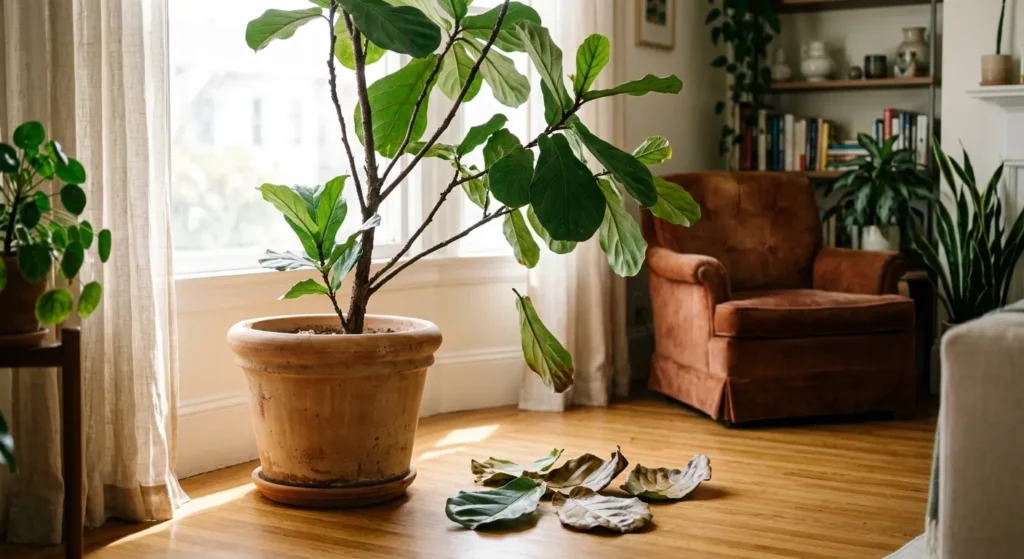
I watched my first fiddle leaf fig drop fourteen leaves in eleven days. I had moved it from a bright east-facing window to a slightly dimmer south corner to make room for a new bookshelf, and the plant responded by shedding nearly a third of its foliage within two weeks. That was my introduction to what every fiddle leaf fig owner eventually discovers: this plant drops leaves to communicate stress, and the specific pattern of how it drops them is the most reliable diagnostic tool available. Fiddle leaf fig dropping leaves is not a death sentence. It is, in most cases, a very specific signal pointing to a very specific cause, and once you read the signal correctly, the fix is usually straightforward. This guide walks through all nine causes of fiddle leaf fig dropping leaves, how to identify which one you are dealing with, and what to do about it before the problem compounds.
Why Fiddle Leaf Figs Drop Leaves: The Biology Behind It
Ficus lyrata evolved in the humid, warm understory of West African rainforests where conditions are remarkably stable — consistent moisture, consistent light filtered through the canopy above, consistent temperatures with minimal seasonal variation. When conditions change in ways that threaten the plant’s ability to sustain all its leaves, the fiddle leaf fig initiates a process called abscission, deliberately releasing leaves to reduce the surface area it needs to support. This is not random decay or weakness. It is a calculated biological response to stress, and understanding it changes how you approach fiddle leaf fig dropping leaves entirely.
The key insight: the plant does not drop leaves randomly. It drops specific leaves first, and the location of those leaves bottom, top, scattered throughout, or in one section tells you almost exactly what the stressor is. Before touching the watering can, checking the soil, or moving the plant, look at Where the dropping is happening.
Rapid Diagnosis: Where Leaves Are Falling Tells You Why
| Drop Location | Leaf Condition When Falling | Most Likely Cause | Urgency |
|---|---|---|---|
| Oldest lower leaves, gradually | Yellow or slightly pale before falling | Overwatering/root stress | Moderate |
| Older lower leaves, suddenly | Dry, crispy, no yellowing | Underwatering | Act fast |
| Leaves throughout the plant | Green when falling, no discoloration | Relocation / environmental shock | Moderate |
| New growth at the top | Small, deformed, or yellow before drop | Root rot / severe root stress | High |
| One side of the plant | Normal coloring, no pattern | Uneven light or draft exposure | Moderate |
| Multiple large leaves at once | Any condition | Major watering swing or temperature shock | High |
Cause 1: Overwatering – The Most Common Reason for Fiddle Leaf Fig Dropping Leaves
Fiddle leaf fig dropping leaves from overwatering starts with yellowing leaves at the base or developing brown spots before eventually falling. The soil feels wet days after you last watered. The pot feels heavy. Lower, older leaves yellow and fall first as root damage progresses upward. Overwatered fiddle leaf figs often develop soft brown patches on leaves that spread inward from the center a sign that pathogenic fungi are developing in the waterlogged root zone.
The fix: Stop watering immediately and do not water again until the soil is dry at 2 inches (5 cm) depth. Check the drainage hole — if it is blocked or the saucer is holding standing water, address this before the next watering. If multiple leaves have dropped rapidly and the soil smells sour, remove the plant from the pot and inspect the roots. Black, soft, mushy roots need to be trimmed. Our guide on root rot treatment covers the complete recovery process for a plant at this stage.
Recovery timeline: 3 to 5 weeks after correcting watering. New leaf production signals recovery. Is it reversible? Yes, if caught before advanced root rot sets in.
Cause 2: Underwatering – Sudden Drop Without Yellowing
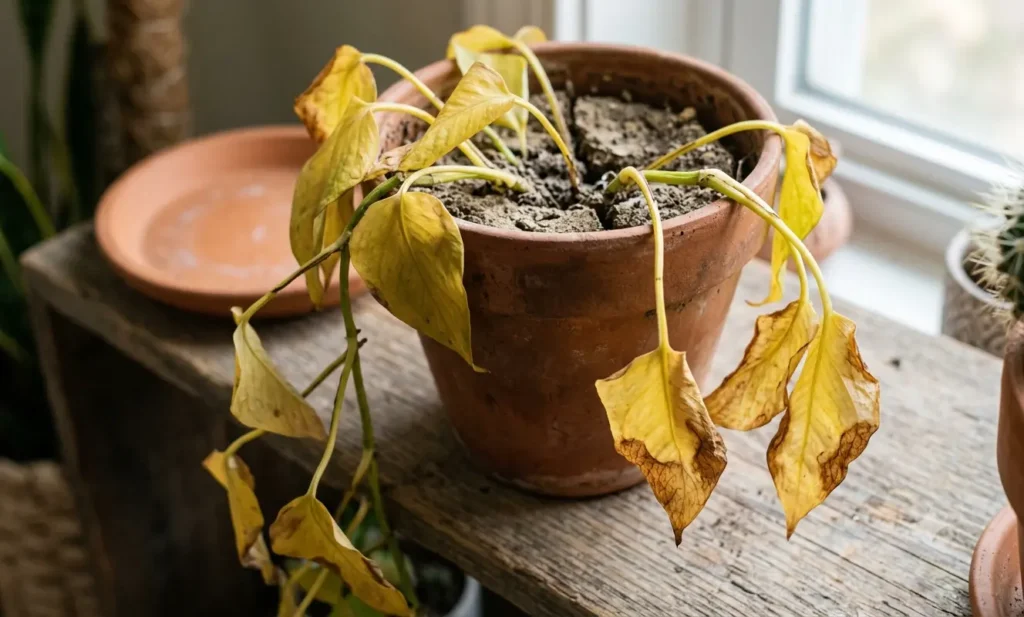
Underwatered fiddle leaf fig dropping leaves looks different: the leaves do not yellow first. They simply drop — sometimes still green, sometimes dry and crispy at the edges, but falling suddenly rather than progressively yellowing. The soil is bone dry and pulling away from the pot walls. The pot feels noticeably light.
The fix: Water thoroughly at the sink until water drains freely from the bottom. If the soil has dried so completely that it repels water (water running straight through without absorbing), place the entire pot in a basin of water for 30 minutes to allow the soil to rehydrate from the bottom. After this, establish a consistent watering schedule using the finger test water only when the top 2 inches (5 cm) are dry.
Recovery timeline: 1 to 3 weeks. The plant bounces back faster from underwatering than overwatering if roots are still healthy. Is it reversible? Yes, usually quickly if the plant still has healthy roots.
To understand the visual difference between overwatered and underwatered symptoms before they lead to fiddle leaf fig dropping leaves, our guide on overwatering vs underwatering covers every diagnostic detail clearly.
Cause 3: Relocation Shock – The #1 Preventable Cause
Fiddle leaf fig dropping leaves after being moved is one of the most documented frustrations in houseplant ownership, and it happens even when the move seems minor. Moving the plant across the room, turning it to face a different direction, or changing from one window to another can trigger significant leaf drop within 7 to 14 days. The fiddle leaf fig has oriented its entire vascular system around a specific light angle and environmental position. Disrupting that orientation forces the plant to reallocate resources, and dropping leaves is how it conserves energy during the transition.
The fix: Once you have placed your fiddle leaf fig in a good position, leave it there permanently. If you must move it, move it gradually shift it 1 to 2 feet closer to the destination position every 3 to 4 days rather than making the full move at once. Once it is dropping leaves from relocation shock, the most important thing is to stop moving it further. Stable conditions allow recovery. Additional moves compound the stress.
Recovery timeline: 4 to 8 weeks after stabilizing. Do not change any other care variables during this period. Is it reversible? Yes, if you stop moving the plant and hold conditions steady.
Cause 4: Insufficient or Changed Light
Fiddle leaf fig dropping leaves from light problems follows a specific pattern: the lower leaves, which receive the least light in any canopy, fall first as the plant prioritizes resources toward the upper leaves closest to the light source. New leaves may come in smaller than expected. The plant generally looks less vibrant over weeks rather than showing sudden dramatic drop.
A Ficus lyrata needs a minimum of 6 hours of bright indirect light daily. Less than this and the plant begins shedding leaves it cannot sustain. Equally problematic: a sudden significant reduction in light — such as moving from a bright room to a darker one, or the natural light reduction that occurs as days shorten in fall.
The fix: Place the fiddle leaf fig within 3 to 5 feet (90 to 150 cm) of a south or east-facing window. If natural light is inadequate, supplement with a quality grow light running 10 to 12 hours daily. Our guide on best grow lights for indoor plants covers the most effective options for large, light-hungry plants. Increase light gradually rather than all at once if the plant has been in low light for an extended period.
Recovery timeline: 4 to 6 weeks for new leaves to indicate improved light is working. Is it reversible? Yes, though dropped leaves do not regrow.
Cause 5: Low Humidity and Dry Air
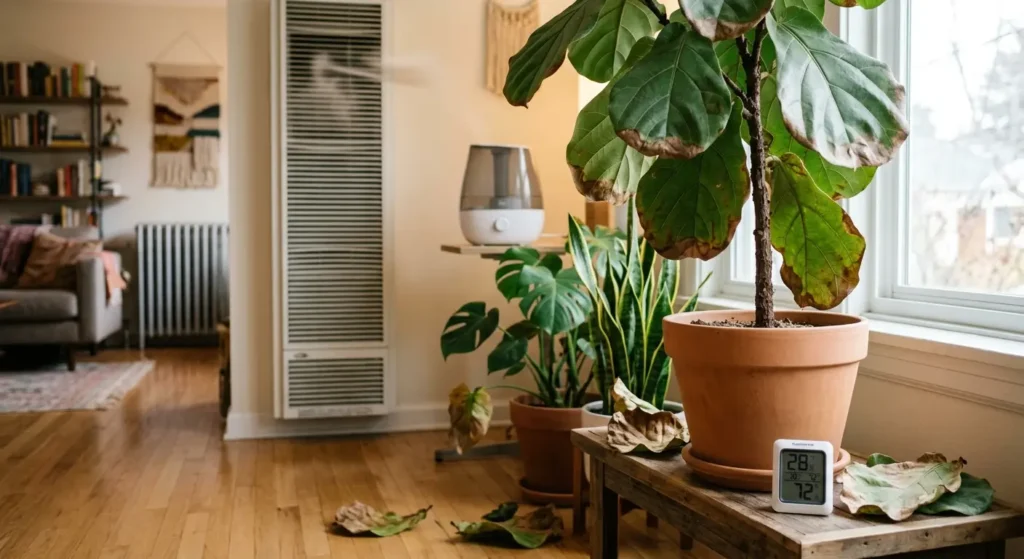
Ficus lyrata is a tropical plant from an environment with consistent high humidity. When indoor humidity drops below 30 to 40 percent — which happens frequently in winter when central heating runs — the plant loses moisture from its large leaves faster than the root system can supply it. Fiddle leaf fig dropping leaves from low humidity is often accompanied by browning at leaf edges and tips, a curling or cupping of leaves, and a general dullness to the normally glossy leaf surface.
The fix: Maintain indoor humidity above 40 to 50 percent near your fiddle leaf fig. A dedicated humidifier is the most reliable solution. Our guide on best humidifier for plants reviews the best options for tropical plants in different room sizes. Grouping the plant with other tropical plants raises ambient humidity through shared transpiration and provides supplemental help alongside a humidifier. Keep the plant away from heating vents, which blast the driest possible air directly at the leaves.
Recovery timeline: 2 to 4 weeks after humidity is increased. New leaves will indicate improvement. Is it reversible? Yes.
Cause 6: Cold Drafts and Temperature Shock
Fiddle leaf fig dropping leaves after exposure to cold air is fast and dramatic. A plant positioned near an exterior door, a drafty window, or directly under an air conditioning vent can drop several leaves within 48 to 72 hours of a cold exposure event. The leaves may fall green the drop is not from gradual decline but from acute shock. This is particularly common in winter when exterior doors are opened repeatedly in cold climates, or when a centrally air-conditioned room gets very cold overnight.
The fix: Move the plant away from any cold draft source immediately. The ideal temperature range for a fiddle leaf fig is 65 to 80 degrees F (18 to 27 degrees C). Exposure below 55 degrees F (13 degrees C) causes immediate stress. Check the location carefully for intermittent drafts a door that opens occasionally or a window with poor sealing in cold weather can produce brief cold exposures that are easy to miss.
Recovery timeline: 3 to 4 weeks once the cold source is eliminated. Is it reversible? Yes, if the exposure was brief. Prolonged cold exposure causes more extensive damage.
Cause 7: Root Rot – When Fiddle Leaf Fig Dropping Leaves Becomes an Emergency
Advanced root rot is the most serious cause of fiddle leaf fig dropping leaves and the one that requires the fastest response. It develops from chronic overwatering and produces a distinct symptom pattern: the plant wilts and drops leaves despite the soil feeling moist. Multiple leaves fall within days. New growth at the top may look deformed or stunted. If you pull the plant from its pot, the roots are dark, soft, and may smell sour or musty.
The fix:
- Remove the plant from its pot immediately.
- Shake off as much soil as possible from the roots.
- Use clean scissors sterilized in rubbing alcohol to cut away all dark, soft, or mushy root tissue.
- Let the exposed, trimmed root ball air dry for 30 to 60 minutes.
- Repot into fresh, well-draining soil in a pot with clean drainage holes.
- Do not water for 5 to 7 days after repotting to allow cut root ends to callus.
Our complete guide on root rot treatment covers every step of this process in detail. For the correct soil composition that prevents waterlogging after treatment, our guide on best soil for indoor plants covers the right amendment ratios for Ficus lyrata specifically.
Recovery timeline: 6 to 10 weeks if intervention is timely. Is it reversible? Yes, if at least 30 percent of the root system is still healthy.
Cause 8: Pests – A Hidden Cause of Leaf Drop
Pest infestations cause fiddle leaf fig dropping leaves in a pattern that looks different from environmental causes: leaves may develop stippling, discoloration, or sticky residue before falling, and you will find evidence of the pest itself on close inspection of leaf undersides, stem junctions, and the soil surface.
Spider mites produce fine webbing and pale stippling on leaf surfaces. Scale insects appear as brown or tan bumps along stems and leaf undersides. Mealybugs form white cottony clusters at growth points. All three can cause leaf drop when infestations are severe enough to disrupt the plant’s vascular system.
The fix: Isolate the plant immediately to prevent spread. Rinse the plant thoroughly in the shower to remove adults and eggs. Apply neem oil spray to all leaf surfaces including undersides and stem junctions, and repeat every 7 days for 4 weeks. Our guide on neem oil for plants covers the correct mixing ratio and application timing for treating all three pest types effectively.
Recovery timeline: 3 to 5 weeks after pest elimination. Is it reversible? Yes, if the infestation has not been ongoing for months.
Cause 9: Repotting Stress

Fiddle leaf fig dropping leaves after repotting is common and, in most cases, temporary. Root disturbance during repotting even careful, well-executed repotting signals to the plant that its root system has been compromised. The plant responds by dropping some leaves to reduce the foliage it needs to support while the root system re-establishes. Repotting into a significantly larger pot also places the plant in excess soil that holds more moisture than the roots can absorb quickly, increasing overwatering risk immediately after repotting.
The fix: After repotting, keep the plant in the same light position, do not fertilize for 4 to 6 weeks, and water only when the top 2 inches (5 cm) of soil are dry. Do not move the plant to “a better spot” immediately after repotting the root disturbance plus environmental change is too much stress at once. Our complete guide on how to repot houseplants without stress covers timing, pot sizing, and post-repotting care that minimizes the leaf drop response.
Recovery timeline: 2 to 4 weeks before new growth signals the root system has re-established. Is it reversible? Yes — temporary drop is normal and not alarming if limited to 2 to 4 leaves.
Is Any Fiddle Leaf Fig Leaf Drop Normal?
One leaf here and there is nothing to worry about, but if your plant has lost multiple leaves within a few days, you will need to act fast. Occasional loss of the very oldest, lowest leaves one or two per month is within the range of normal leaf cycling as the plant redirects energy to new growth. What is not normal is rapid fiddle leaf fig dropping leaves (three or more within a week), loss of new growth before it fully expands, or dropping from the upper or middle sections of the plant where leaves are typically the youngest and most recently produced.
Preventing Fiddle Leaf Fig Dropping Leaves Long-Term
Most cases of fiddle leaf fig dropping leaves trace back to one of three failures: inconsistent watering, an environmental change the plant was not prepared for, or chronic dry air from heating systems. Address these three and the plant will stabilize more quickly than most guides suggest:
Establish a consistent watering routine. Check the soil every 5 to 7 days. Water only when the top 2 inches are dry. Water thoroughly each time do not give partial amounts. Our guide on overwatering vs underwatering explains how to tell which direction the plant is signaling before leaf drop begins.
Stop moving the plant. Find the right position bright indirect light, away from vents and drafts, 65 to 80 degrees F (18 to 27 degrees C) and commit to it. Rotate a quarter turn every two weeks for even growth, but avoid full relocations.
Maintain humidity above 40 percent year-round. This single intervention prevents more cases of fiddle leaf fig dropping leaves during heating season than any other care change.
For the complete care framework that prevents these stress triggers from developing in the first place, our full fiddle leaf fig care guide covers every aspect of seasonal care in detail.
FAQ
Why is my fiddle leaf fig dropping leaves suddenly?
Sudden fiddle leaf fig dropping leaves — especially when leaves fall green without yellowing first — almost always points to one of three causes: relocation shock from being moved, cold draft exposure from a nearby vent or window, or a significant watering swing (either severely dry or severely wet all at once). Check whether the plant was recently moved or repositioned, and check for any draft sources near its current location before adjusting watering.
Is fiddle leaf fig dropping leaves normal?
One or two older lower leaves dropping gradually over several weeks is within normal range. Rapid fiddle leaf fig dropping leaves multiple leaves in a short period, or dropping from the middle or top of the plant is not normal and indicates a specific stressor that needs to be identified and corrected.
How do I stop my fiddle leaf fig from dropping leaves?
The approach to stopping fiddle leaf fig dropping leaves depends on diagnosing the specific cause first. Use the location and condition of dropping leaves to identify the cause (see the diagnosis table above), then apply the targeted fix for that specific cause. Attempting multiple fixes simultaneously makes it impossible to determine what actually worked and often compounds the stress.
Will my fiddle leaf fig recover after dropping leaves?
In most cases, yes — fiddle leaf fig dropping leaves is a stress response rather than a terminal condition. The plant does not regrow dropped leaves, but it produces new growth once the underlying cause is corrected. Most recoveries from environmental causes show signs of improvement within 3 to 6 weeks. Root rot recovery takes longer, 6 to 10 weeks, but is achievable if at least 30 percent of healthy roots remain.
Why is my fiddle leaf fig dropping leaves in winter?
Winter creates a specific combination of stressors for fiddle leaf figs: reduced natural light as days shorten, dry indoor air from central heating, occasional cold drafts from windows and exterior doors, and the temptation to keep watering at the same frequency as summer despite the plant’s reduced growth rate. Fiddle leaf fig dropping leaves in winter is almost always a combination of low humidity and overwatering during the slower growth period. Reduce watering frequency by 30 to 50 percent and run a humidifier near the plant to address both factors.
How many leaves can a fiddle leaf fig lose before it dies?
A fiddle leaf fig can recover from losing 30 to 40 percent of its leaves if the underlying cause is corrected promptly and the remaining root system is healthy. Losing leaves from the upper canopy is more serious than losing lower older leaves, as upper leaves are newer and losing them indicates a more severe or active stressor. A plant with healthy root tissue and a stable growing environment will regrow foliage over 2 to 6 months once conditions are corrected.
Fiddle leaf fig dropping leaves is the plant’s most direct form of communication. It is specific, it is patterned, and once you understand the language it speaks through the location and condition of falling leaves, diagnosing the cause takes minutes rather than weeks of guesswork. Fix the one correct thing, hold everything else stable, and give the plant enough time to show you whether the fix is working. That is the approach that saves more fiddle leaf figs than any product, supplement, or care calendar ever could.
Happy planting!