
Is your morning coffee routine secretly helping your plants or quietly damaging them? Coffee grounds have become one of the most shared DIY plant care tips on the internet, passed around gardening forums and social media with enthusiastic confidence. Sprinkle them in the soil. Use them as mulch. Acidify your soil. Feed your plants for free. The advice sounds compelling, and it is not entirely wrong. But coffee grounds for plants come with real limitations, specific use cases, and a handful of widely repeated myths that send well-meaning plant owners in the wrong direction.
The truth about using coffee grounds for plants is more nuanced than most guides acknowledge, and getting it right means understanding what coffee grounds actually contain, which plants respond well to them, and which plants you should keep them away from entirely.
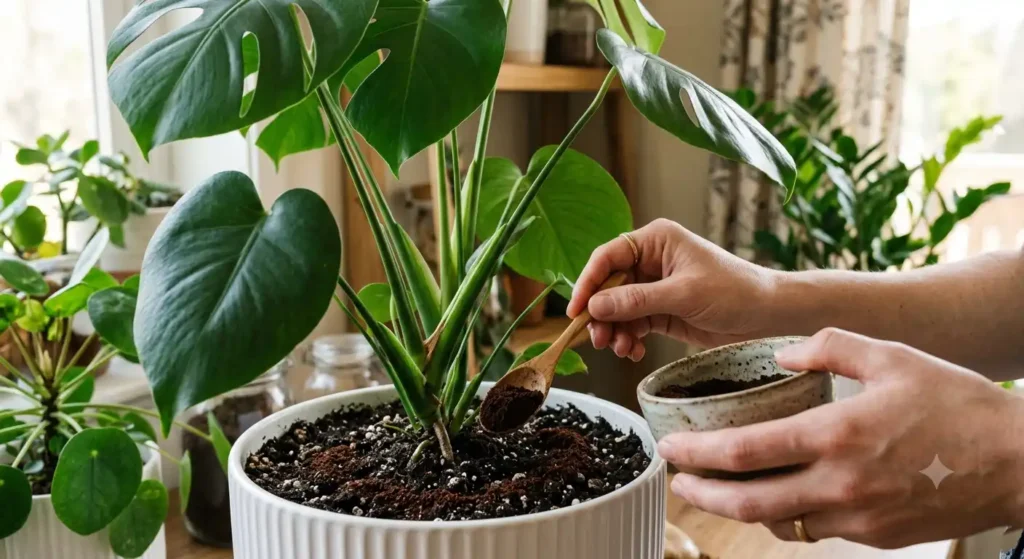
What Coffee Grounds Actually Contain (And Why It Matters)
Before applying coffee grounds for plants, it helps to know what you are actually adding to the soil. Used coffee grounds contain:
- Nitrogen: Approximately 2 percent by weight a meaningful addition to depleted soil
- Potassium: Small but measurable amounts that support overall plant health
- Phosphorus: Present in small quantities, though less bioavailable than commercial fertilizers
- Magnesium and copper: Micronutrients that some plants use in trace amounts
- Organic matter: Coffee grounds improve soil structure and drainage when mixed in at appropriate ratios
The biggest misconception about coffee grounds for plants involves their pH. Fresh, unbrewed coffee beans are acidic but by the time you have brewed a cup of coffee and you are holding used grounds, most of the acidic compounds have been extracted into the liquid. Used coffee grounds sit at a pH of approximately 6.5 to 6.8, which is very close to neutral. They are not the powerful soil acidifier most guides claim them to be. If you want to genuinely lower soil pH for acid-loving plants, coffee grounds alone will not do the job reliably. They provide modest nutritional benefits and organic matter, and those are the claims worth taking seriously.
According to research from Oregon State University Extension, coffee grounds can inhibit plant growth at high concentrations a finding that directly contradicts the popular advice to apply them generously. At low concentrations mixed through the soil, benefits are real. At high concentrations or used as a thick surface mulch, coffee grounds can compact, repel water, and create conditions that harm the very plants they were meant to help.
Coffee Grounds for Plants: Which Plants Benefit Most
Using coffee grounds for plants works best with species that prefer slightly acidic to neutral soil and respond well to a gradual nitrogen boost. These categories of plants see genuine benefit from correctly applied coffee grounds:
| Plant Type | Examples | Why Coffee Grounds Help |
|---|---|---|
| Nitrogen-hungry foliage plants | Pothos, Monstera, Ferns | Gradual nitrogen release supports leaf growth |
| Acid-tolerant houseplants | African violets, Peace lily | Comfortable in near-neutral to slightly acidic soil |
| Heavy outdoor feeders | Tomatoes, peppers, roses | Benefit from nitrogen + organic matter |
| Vegetable garden plants | Lettuce, spinach, radishes | Leafy vegetables use nitrogen for rapid growth |
| Blueberries | All varieties | Genuinely acid-preferring coffee grounds help over time |
| Roses | All varieties | Nitrogen supports bloom production and leaf health |
For fast-growing tropical foliage plants indoors, coffee grounds for plants make a practical nitrogen supplement during the growing season. Our guide on pothos plant care and our full monstera plant care article both cover fertilizing during peak growth coffee grounds work as a supplemental addition between regular fertilizer applications rather than as a primary feeding method.
Plants You Should Never Use Coffee Grounds On
This is the section most coffee grounds guides skip, and it is arguably the more important one. Coffee grounds for plants are genuinely harmful to certain species, and knowing this list prevents more damage than knowing the benefits.
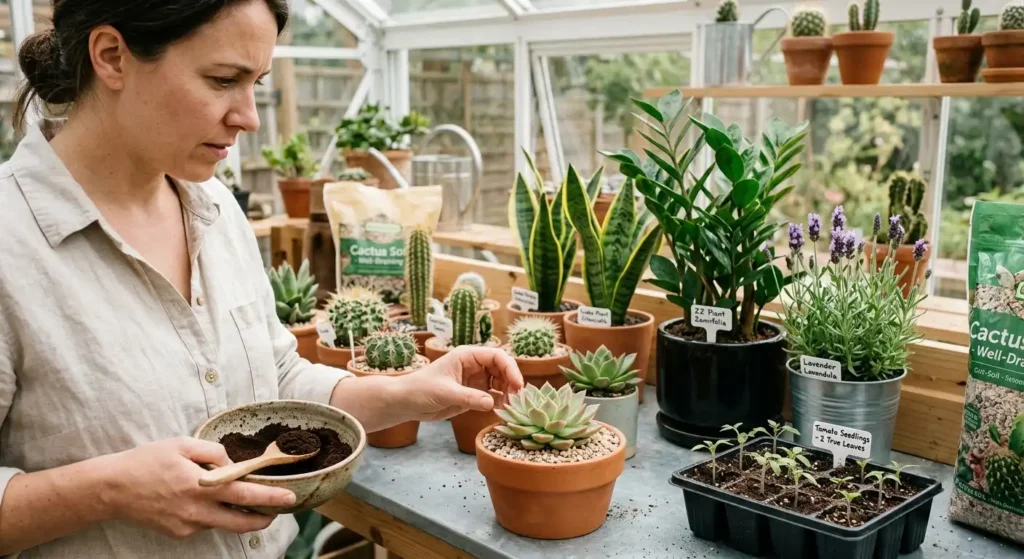
Succulents and cacti: These plants evolved in nutrient-poor, fast-draining soils with minimal organic matter. Adding coffee grounds changes the soil texture in ways that reduce drainage and hold excess moisture — the exact condition that causes root rot in drought-adapted plants. Never use coffee grounds on succulents, cacti, or any desert-adapted plants. For everything you need to grow succulents correctly, our guide on how to care for succulents covers the specific soil and drainage requirements that coffee grounds would undermine.
Snake plants and ZZ plants: Both of these popular houseplants prefer lean soil and infrequent watering. Coffee grounds add nitrogen and organic matter these plants neither need nor benefit from in typical indoor conditions. Our full snake plant care guide covers their soil and nutrition needs, which are minimal compared to most tropical foliage plants.
Lavender and rosemary: Both prefer alkaline to neutral soil. Coffee grounds, despite their near-neutral pH, still shift conditions in a direction that reduces these herbs’ natural growing environment quality over time.
Seedlings and young transplants: Research has consistently shown that coffee grounds inhibit germination and early seedling growth. Never apply coffee grounds directly to seed-starting mixes or around very young transplants. Wait until plants are established with several sets of true leaves before introducing any coffee ground amendments.
Tomatoes (in excess): While tomatoes respond well to nitrogen, too much nitrogen from coffee grounds shifts energy toward leaf production and away from fruit development. Use coffee grounds sparingly on tomatoes — a light incorporation once monthly is enough.
The 4 Correct Ways to Use Coffee Grounds for Plants
Understanding how to apply coffee grounds for plants correctly makes the difference between genuine benefit and accidental harm.
Method 1: Soil Amendment (Most Effective Indoors)
The safest and most effective use of coffee grounds for plants indoors is mixing them into the potting soil before planting or during repotting.
How to do it:
- Allow used coffee grounds to dry completely before using — wet grounds left in a pile develop mold within 24 to 48 hours.
- Mix coffee grounds into your potting mix at a ratio of no more than 10 to 15 percent by volume. This means roughly 1 cup of grounds per 7 to 8 cups of potting mix.
- Do not exceed this ratio. Higher concentrations compact over time, reduce drainage, and can release too much nitrogen at once.
- Plant normally into the amended mix.
This method works particularly well for nitrogen-hungry plants like ferns, pothos, and monstera when combined with a quality potting mix. For the specific soil blend that works best as a base for this amendment, our guide on best soil for indoor plants covers every option available at US garden centers.
Method 2: Liquid Coffee Ground Tea (Gentlest Application)
Coffee ground “tea” is the most beginner-friendly application of coffee grounds for plants because it delivers diluted nutrients without any risk of soil compaction or mold.
How to make it:
- Steep 2 tablespoons of used coffee grounds in 1 gallon (3.8 liters) of water for 24 hours.
- Strain out all solid grounds through a fine mesh strainer or coffee filter.
- Use the liquid to water plants at the base.
- Apply no more than once per month during the growing season (spring through summer).
The resulting liquid is very diluted — think of it as the mildest possible liquid fertilizer rather than a concentrated feeding. It is safe for most plants and carries minimal risk of overdose.
Method 3: Thin Surface Topdressing (Outdoor Garden)
For outdoor garden beds, coffee grounds can be applied as a thin surface layer that breaks down over time and is incorporated by earthworms.
How to do it correctly:
- Apply no thicker than 0.5 inches (1.25 cm) — a very thin layer.
- Do not pile them against plant stems.
- Mix the surface layer lightly into the top inch of soil to prevent the top layer from drying into a water-resistant crust.
- Never use as a thick mulch layer — a thick coffee ground mulch repels water rather than retaining it.
This method works well around established roses, blueberry bushes, tomatoes, and other garden plants during the growing season. It is not appropriate for indoor houseplants where the confined pot environment concentrates the effect.
Method 4: Composting (Best Long-Term Use)
The most consistently recommended way to use coffee grounds for plants is to compost them first. In a compost pile, coffee grounds function as a “green” (nitrogen-rich) material that balances “brown” (carbon-rich) materials like dried leaves, cardboard, and straw.
Composting ratio: Add coffee grounds at no more than 20 to 25 percent of your total compost pile by volume. Exceeding this creates an overly nitrogen-rich environment that can stall the composting process.
When composted coffee grounds are eventually applied to garden beds or mixed into potting soil, the nutrients have been processed into stable forms that plants absorb more readily and with less risk of nitrogen burn than fresh grounds applied directly.
Coffee Grounds as a Pest Deterrent: Does It Actually Work?
One of the most repeated claims about coffee grounds for plants is that they repel slugs, snails, ants, and cats. The reality is mixed. Some studies have shown that caffeine in concentrated doses can be toxic to slugs, but used coffee grounds contain very little residual caffeine after brewing. The physical texture of dried coffee grounds creates a surface that slugs find uncomfortable to cross, which provides some deterrence but not elimination. Ants tend to avoid disturbed soil areas generally, which may explain the anecdotal reports of deterrence rather than any chemical repellent effect. For genuine pest control particularly spider mites, aphids, and fungus gnats on houseplants our guide on neem oil for plants covers a proven organic treatment that works reliably across the pest species that affect indoor plants.
Signs Coffee Grounds Are Harming Your Plants
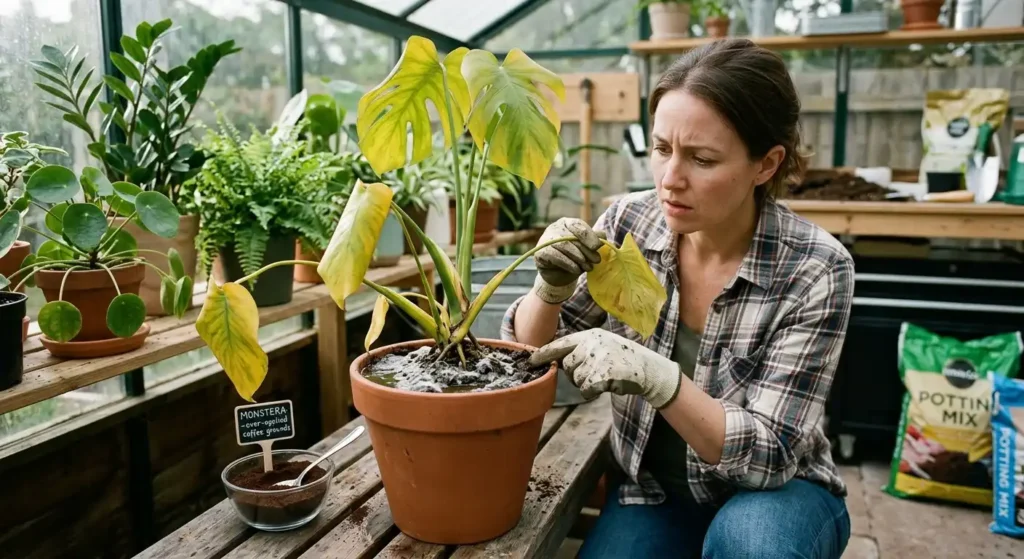
If you have been using coffee grounds for plants and notice any of the following, the coffee grounds may be the cause:
Yellowing leaves: Excessive nitrogen from over-application creates a nitrogen flush that can paradoxically cause yellowing by interfering with other nutrient uptake. If leaves are turning yellow after you started using coffee grounds, reduce or stop application and reassess. Our guide on plant leaves turning yellow covers how to distinguish nitrogen-related yellowing from other causes.
Mold or fungus growth on the soil surface: Wet coffee grounds left on the soil surface or applied too thickly develop white mold within days. This mold is generally not harmful to mature plants but signals that the application method needs to change. Remove the moldy layer, allow the soil surface to dry, and switch to the liquid tea method or composted grounds instead.
Poor drainage after watering: If water sits on the soil surface rather than absorbing, coffee grounds may have compacted into a water-resistant layer. This is more common when grounds are applied as thick mulch. Break up the surface layer and reduce future applications significantly.
Stunted or slowed growth: At high concentrations, coffee grounds inhibit growth rather than support it. If a plant that was growing well has stalled after you introduced coffee grounds, remove as much of the ground amendment as possible and flush the soil with plain water to dilute the concentration.
For root damage from overuse combined with moisture retention, our guide on root rot treatment covers the full diagnosis and recovery process.
Common Mistakes When Using Coffee Grounds for Plants
- Using fresh, unbrewed grounds. Fresh coffee grounds are significantly more acidic than used grounds and contain higher caffeine concentrations that can inhibit plant growth. Only use grounds that have already been brewed.
- Applying coffee grounds for plants too thickly. This single mistake is responsible for most coffee ground gardening failures. A thin layer or a soil amendment at 10 to 15 percent is effective. A thick mulch layer is harmful.
- Not drying grounds before storing. Wet coffee grounds develop mold within 24 to 48 hours. If you are not applying them immediately, spread grounds in a thin layer on a baking sheet and allow them to dry completely before storing in an airtight container.
- Using on every plant without distinction. Coffee grounds for plants is not a universal gardening fix. Applying them to succulents, cacti, snake plants, and lavender causes more harm than leaving the soil alone. Match the amendment to the plant’s actual needs.
- Expecting them to replace fertilizer. Coffee grounds provide modest, slow-release nitrogen and trace minerals. They are a useful supplement during the growing season but cannot replace a balanced fertilizer for plants that need consistent, reliable nutrition. Our guide on best fertilizer for houseplants covers which products deliver dependable nutrition across different plant types.
FAQ
Are coffee grounds good for all houseplants?
No. Coffee grounds for plants work well with nitrogen-hungry foliage plants like pothos, ferns, and monstera, and with acid-tolerant plants like African violets. They are harmful to succulents, cacti, snake plants, ZZ plants, lavender, and seedlings. Matching the amendment to the plant’s specific soil and nutrition preferences is essential.
How often should I use coffee grounds for plants?
Once per month during the growing season (spring through summer) is the maximum appropriate frequency for most plants. Using coffee grounds more frequently than monthly leads to nitrogen accumulation and soil compaction. Stop all coffee ground applications from September through February when most houseplants are in slow-growth or dormant phases.
Do coffee grounds make soil acidic?
Used coffee grounds have a pH of approximately 6.5 to 6.8 nearly neutral rather than acidic. The popular claim that coffee grounds significantly lower soil pH is a myth based on confusing fresh ground coffee beans (which are acidic) with used, brewed grounds (which are not). If you need to genuinely acidify soil for blueberries or azaleas, coffee grounds help marginally over time but should be combined with horticultural sulfur or an acidifying fertilizer for reliable results.
Can I pour leftover brewed coffee on my plants?
Occasionally and diluted, yes. Black coffee poured directly from the pot is too strong and too warm to apply directly. Let it cool to room temperature and dilute with equal parts water before using as an occasional watering alternative for nitrogen-hungry plants. Never pour sweetened coffee or coffee with milk on any plant the sugar and dairy create conditions for fungal growth in the soil.
Which outdoor plants benefit most from coffee grounds?
Coffee grounds for plants work best outdoors on roses, blueberries, tomatoes (in moderation), peppers, leafy greens, and rhododendrons. Apply as a thin surface layer (under 0.5 inches) around the base of the plant and lightly work it into the soil rather than leaving it as a dry mulch layer on the surface.
Do coffee grounds attract pests?
Dry coffee grounds applied correctly do not typically attract household pests. Wet grounds left in piles can attract fungus gnats indoors and fruit flies in warm weather. Always dry grounds before applying indoors and incorporate them into the soil surface rather than leaving them on top.
Coffee grounds for plants sit in a genuinely useful but genuinely limited category. When you apply them correctly, in low concentrations, to the right plants, at the right time of year, they provide real nitrogen benefits, improve soil texture, and give your morning coffee routine a practical second use. When you apply them incorrectly too thickly, to the wrong plants, year-round without consideration for seasonal growth patterns they create more problems than the free fertilizer is worth.
Use them thoughtfully, match them to plants that actually benefit, and treat them as one helpful tool in a broader care routine rather than a cure-all. That approach gets results that the enthusiastic online advice rarely mentions: actual, visible improvement in the plants that are genuinely suited to them.
Happy planting!